
by Christina | Jun 8, 2017 | Recipes, Wellness
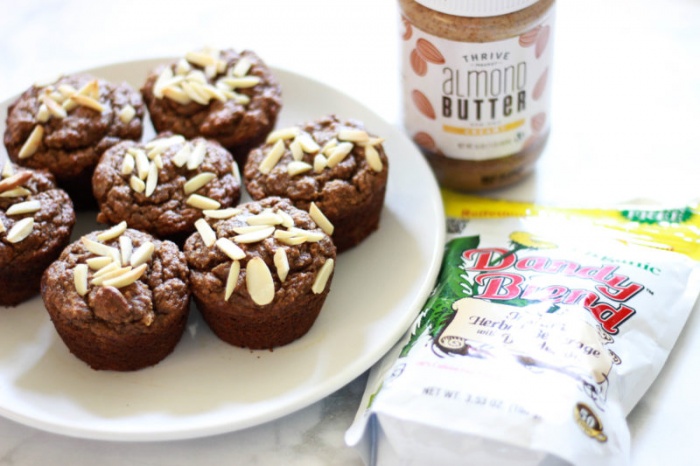
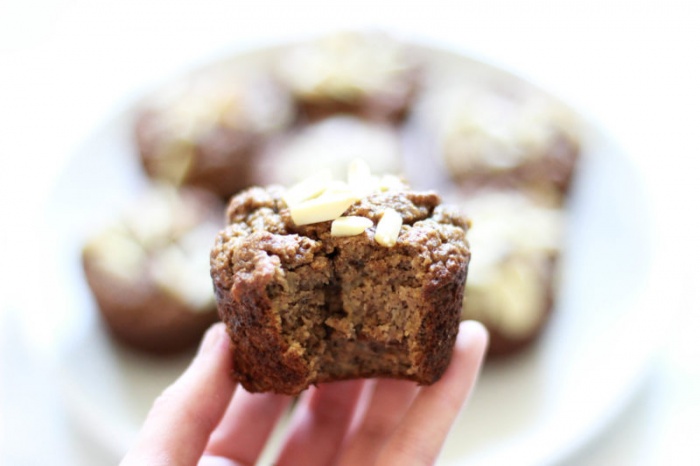
Since the moment these beauties first came out of the oven, I’ve been dying to share this recipe with you! These muffins got an overwhelmingly positive response from all of my taste-testers, so I have full confidence you will fall in love with them as well. Especially because they’re sugar-free!
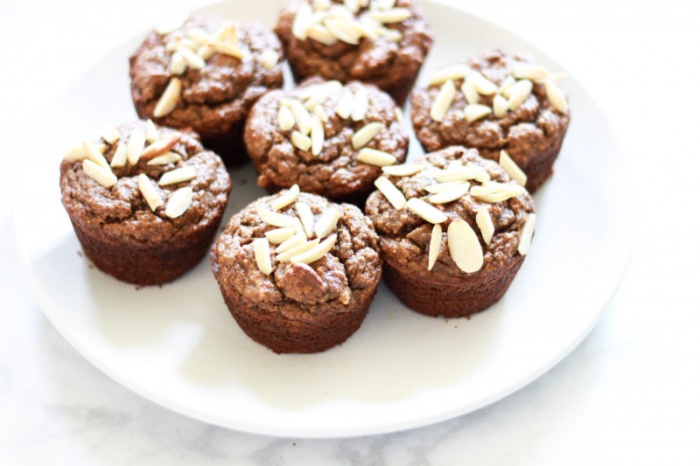
Since going on my anti-Candida/anti-food-intolerances diet, I’ve been really into experimenting with sugar-free baking. I think that most people consume too much sugar. So many people feel dependent on sugar, whether or not they have Candida, and I really want to show people that you don’t need to add sugar or sweeteners to everything. There’s nothing wrong with added sugar here and there, of course, but it definitely does not need to be an everyday ingredient.
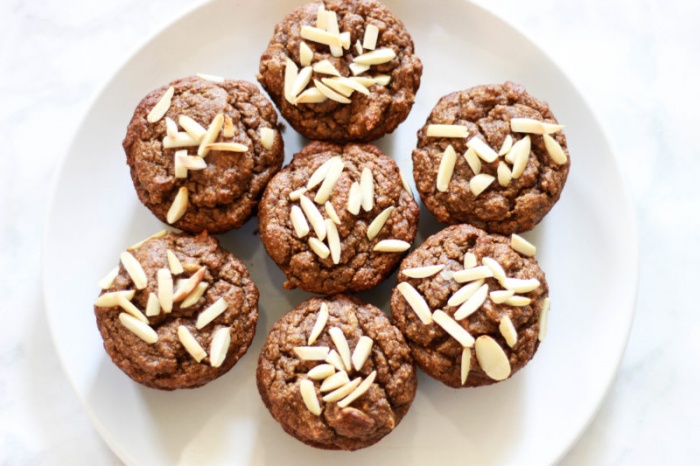
Playing around with sugar-free baking has been extremely interesting for me because it has given me concrete evidence that people respond differently to food based on their initial assumptions about it. If they don’t know it’s sugar-free before they taste it, they’ll love it. They’ll appreciate the sweetness that’s naturally there much more than if you tell them ahead of time that it’s sugar-free. It’s all about expectations.
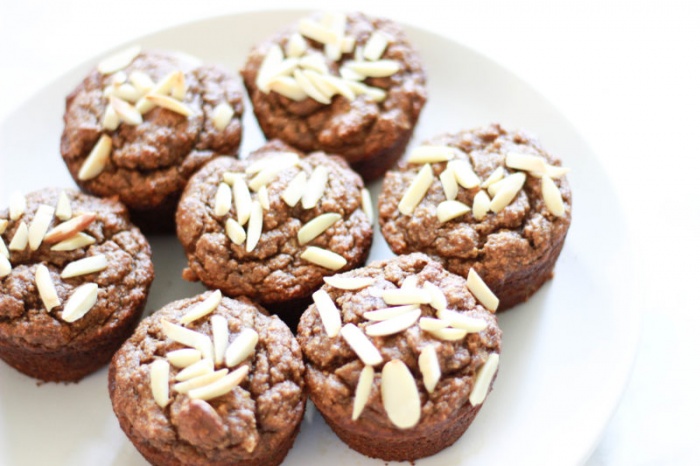
It’s a fun experiment to do, though, because I really do love proving to people that they can enjoy cake, cupcakes, muffins, or cookies that don’t have any added sweeteners at all. Most people can’t even imagine that that would be an option, but trust me – it is.
Because of the sugar-loving mindset that has been ingrained into our brains and bodies since birth, many people automatically feel extremely restricted when they are put on anti-inflammatory/healing diets for their health. They immediately panic and think of all of the things they can’t have anymore. The first thing that comes to mind is usually sweets.
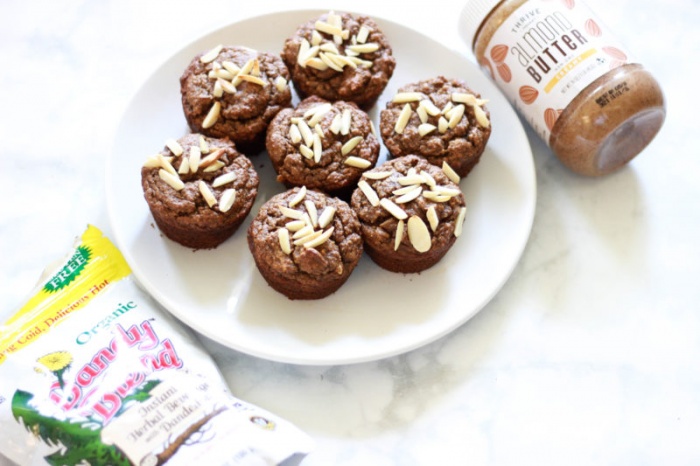
But what if you could make your favorite food without the added sweetener and have it still taste delicious? Guess what – you can. These muffins are the perfect example.
My friend Alison is currently on a diet to help heal her gut. It’s a combination of low-FODMAP, SCD (Specific Carbohydrate Diet), and eliminating all of the foods that her food intolerance test showed sensitivities too. When people go on elimination diets, it’s pretty common for them to find a few meals that work best and to just stick with those. It makes it easier and more manageable. But it can also get boring.
I wanted to make Alison a baked good that she could enjoy – one that would make her forget about her low-FODMAP diet for a second. Immediately I knew I wanted to make her some kind of banana-bread inspired recipe. Bananas are low-FODMAP and SCD, so they’re an ideal base. A muffin also seemed perfect because a single serving would stay within low-FODMAP boundaries. If you’re unfamiliar with low-FODMAP diets, basically you can consume a limited quantity of each food each day. So since she’s only allowed to have a certain amount of coconut flour or almond butter in one day, one muffin would stay within the allowed range.
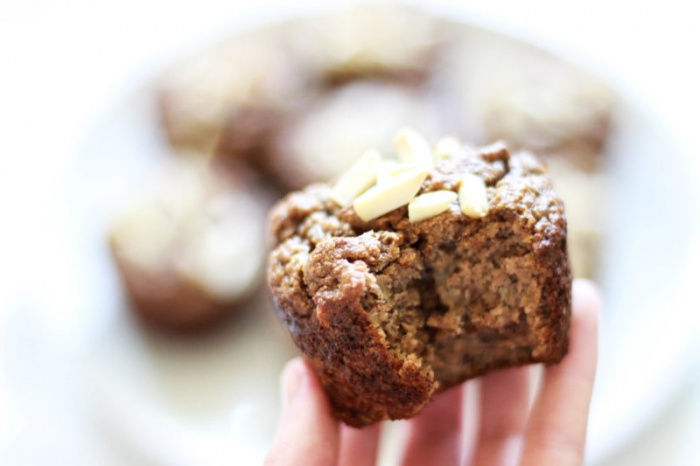
The main appeal of recipes that are banana-bread based are that they’re naturally sweet. Most people don’t realize just how sweet bananas, especially ripe ones, truly are. So while most people toss in cups of sugar into their banana breads and muffins, they could really go without that and still achieve a delicious bread in the end. I really think people need to give themselves a chance to enjoy things without added sugar, instead of assuming they need it. Give real food a chance to show off its natural flavors! Your taste buds will adjust, and you will eventually think that unsweetened things are actually really sweet.
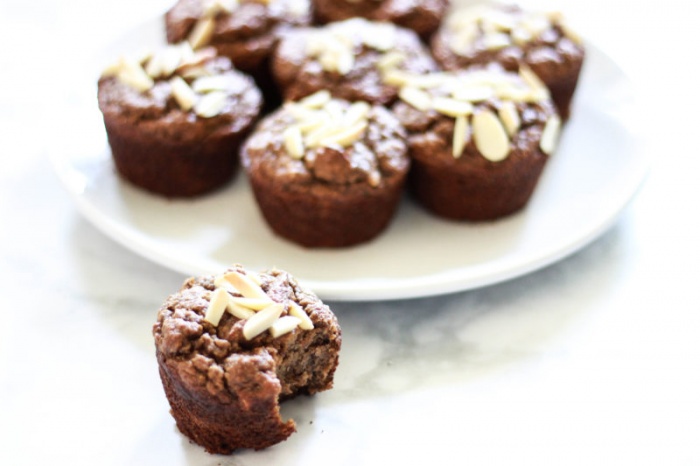
It’s easy enough to come up with a recipe that aligns with the low-FODMAP/SCD diets – but avoiding the food intolerances is harder. One of the things Alison has to limit right now is coffee, and that also happens to be one of her favorite things to consume. When I think of Alison, I think of coffee. She’s the coffee queen, and I know that it’s been killing her to give it up for so long.
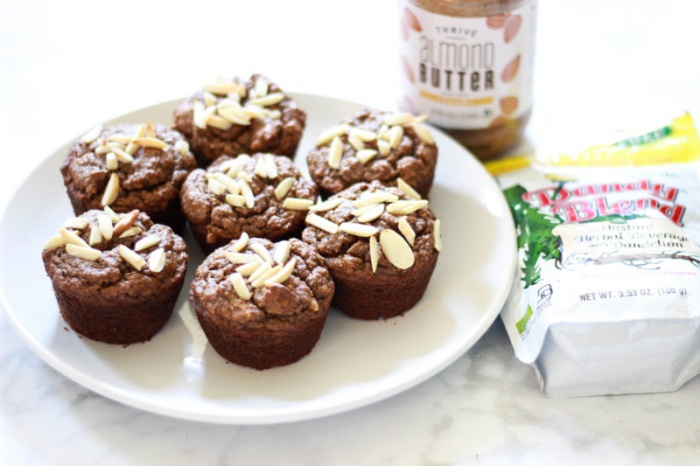
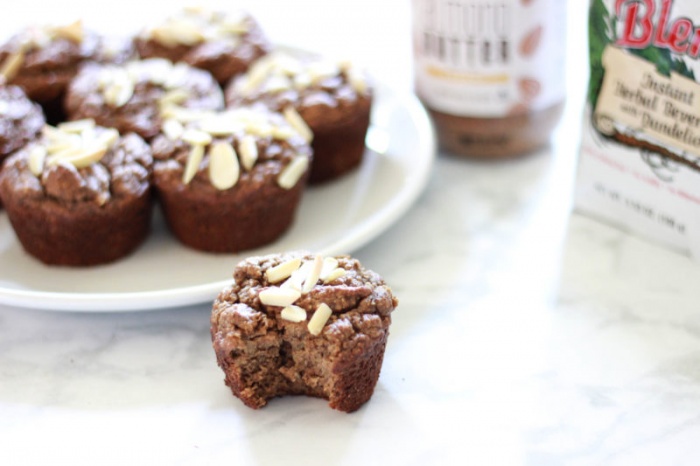
Because of that, I wanted to create something that was coffee-inspired without the coffee. This is perfect for anyone who wants to avoid caffeine in general or anyone who needs to avoid coffee specifically but loves that rich, earthy flavor. The secret is Dandy Blend! Dandy Blend is the best non-coffee, coffee alternative I have ever found. It’s a dandelion-based beverage, but it has a delicious, coffee-like flavor that really satisfies the coffee craving when it hits. It’s one of my favorite warm morning-time beverages. Besides tea, of course! 😉
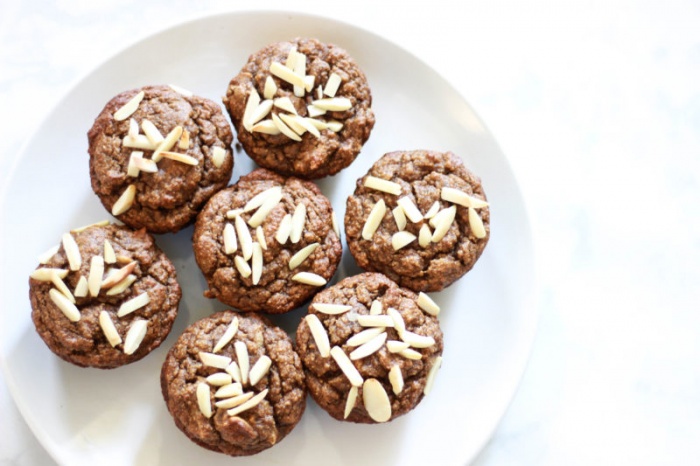
Since Dandy Blend works so well as a coffee replacement when it comes to a warm beverage, why not use it to add coffee flavor to a baked good, too?! Pretty genius, if you ask me. It adds a rich, earthy, nutty flavor that pairs really nicely with the sweet banana. Honestly, the perfect breakfast muffin! In my humble opinion…
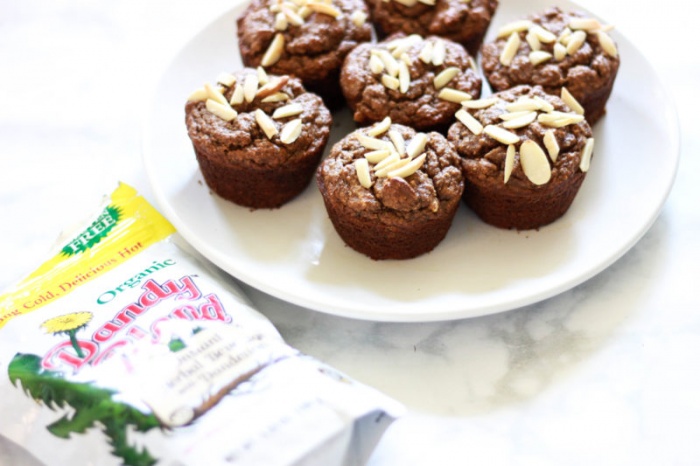
I also used Thrive Market‘s Almond Butter to add moisture and an almond flavor to the banana bread. I swear, adding nut butter to any type of baked good will instantly make it better. Always. Try it. Side note: I always shop for pantry staples, especially for baking, through Thrive Market. The membership is totally worth it and saves me so much money longterm. It’s way cheaper than buying those items at the store, and Thrive’s Almond Butter is one of the best I’ve ever tried. Super clean ingredients, and it’s so delicious. I always use it when baking.
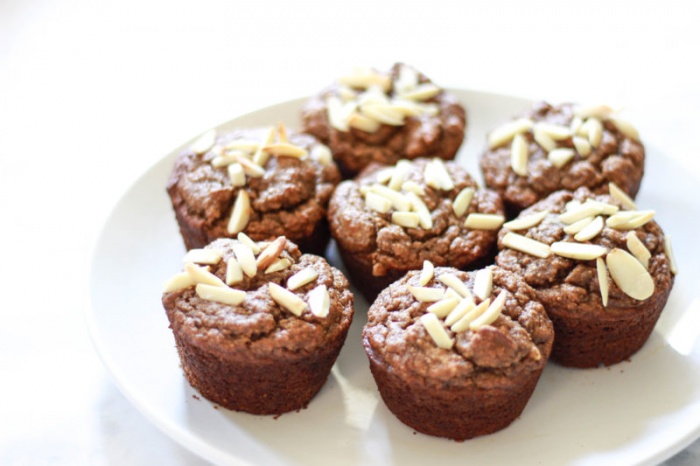
In the end, I created the perfect muffins for Alison’s protocol, and I’m pretty sure anyone not on her protocol will love these too. If you love banana bread, almond butter, and coffee, you will adore these. The flavors compliment each other perfectly. They’re the perfect sweet treat or breakfast muffin for someone on the go!
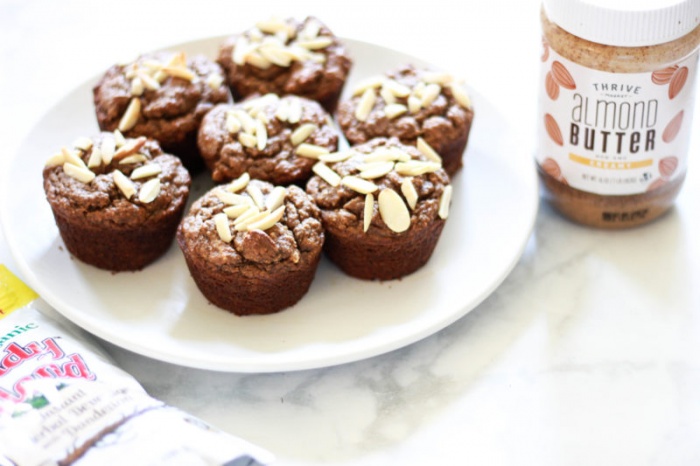
I tested these out on a few of my friends who are sugar-fanatics. You know, the kind that live off of Sour Patch Kids and McDonald’s. They all loved them. My one friend asked me to make her some ASAP so she could have them for breakfast. I happily obliged!
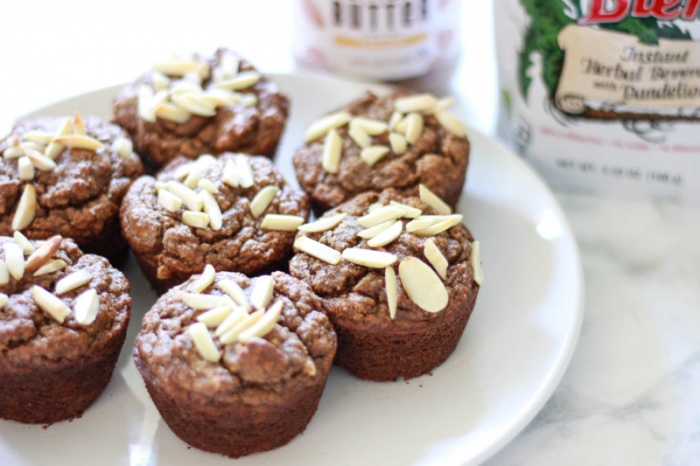
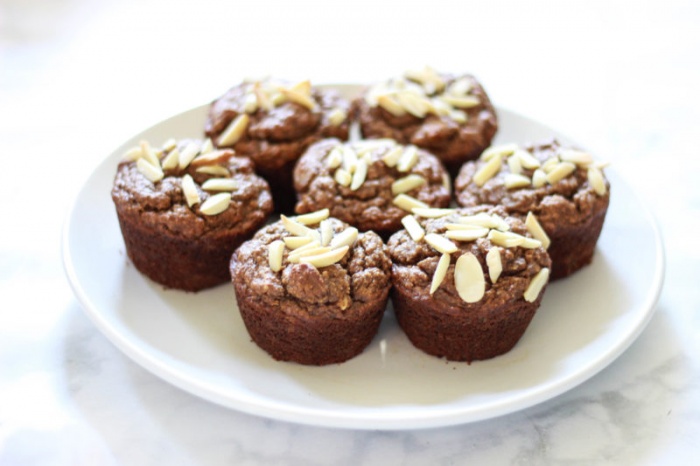
So here they are – paleo, sugar-free, low-FODMAP, SCD-friendly, caffeine-free coffee almond banana bread muffins! Is that descriptive enough for you? Hopefully these prove to you that you don’t need sugar in your baked goods, and that you can always replace coffee. I have a few more sugar-free recipes coming your way, which I’m very excited about! You can also definitely make these as a bread. Instead of using muffin tins, pour it into a bread pan and bake it for longer (maybe 50 minutes?) – check with a knife or toothpick to see when it’s cooked all the way through!
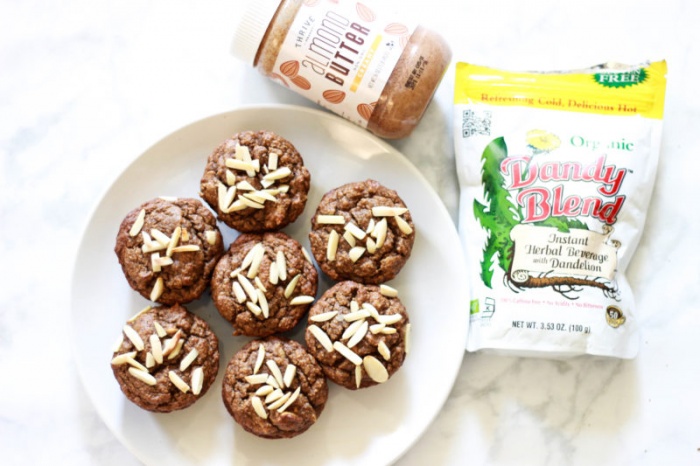
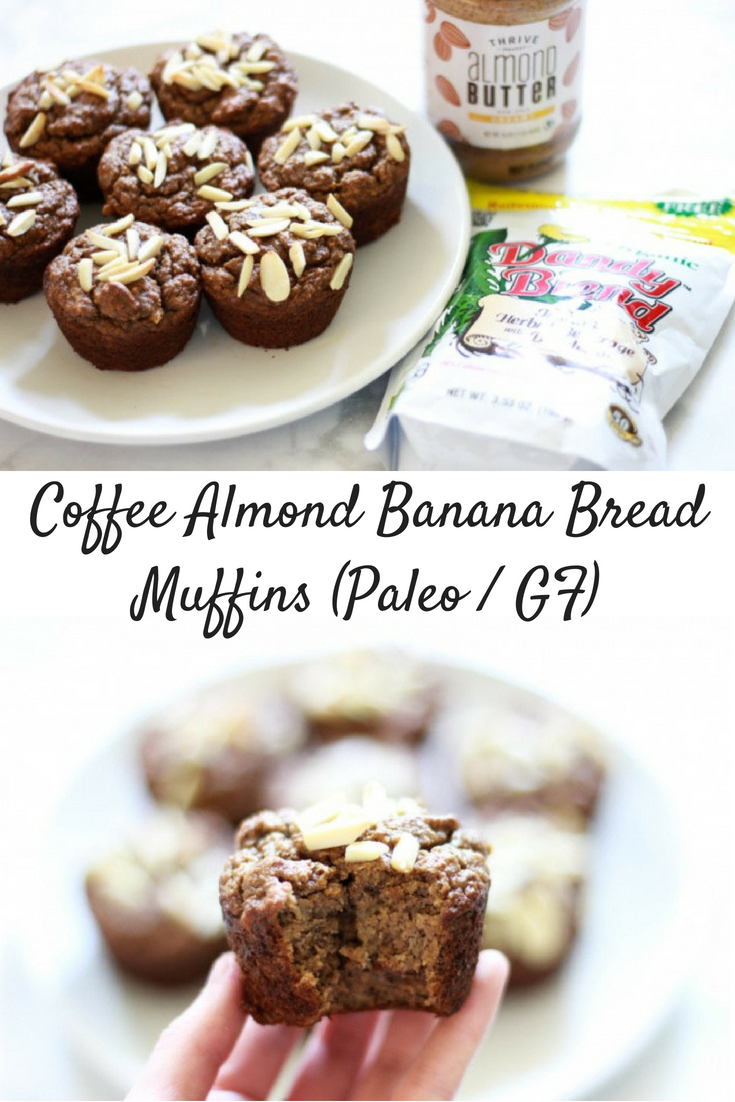
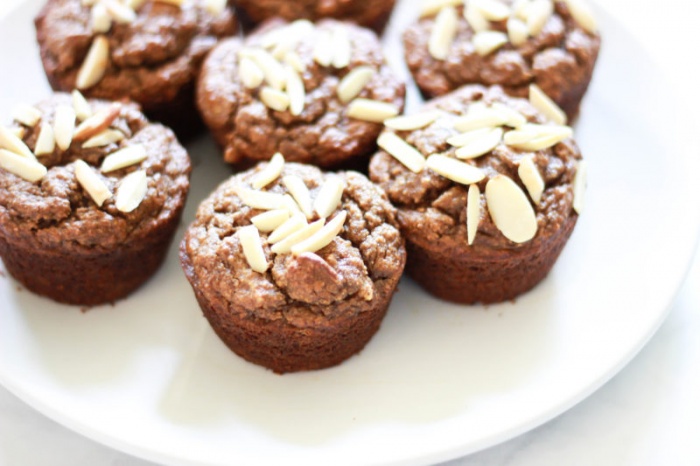
Caffeine-Free Coffee Almond Banana Bread Muffins (Sugar-Free, Paleo, Low-FODMAP, SCD)
Total Time: About 35 minutes
Makes: 8-9 muffins
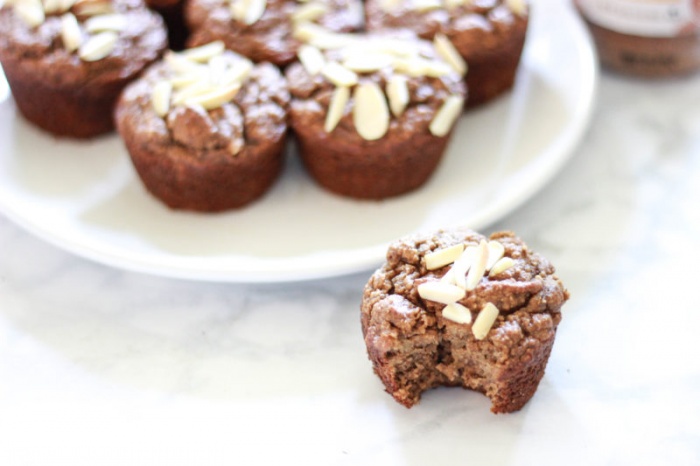
Ingredients:
- 3 mashed bananas (the riper they are, the sweeter the bread will be)
- 1/2 cup coconut flour
- 3 eggs
- 2 tsp vanilla extract
- 1 tsp baking soda
- 1/2 cup organic creamy almond butter (make sure it’s sugar-free!)
- 1/8 tsp Celtic sea salt
- 3 tsp Dandy Blend
- Optional: Slivered almonds for topping
Instructions:
- Preheat your over to 350*F. Grease a muffin tin with coconut oil, or use muffin liners in the tray. (Or grease a bread pan if making a bread instead of muffins.)
- In a large bowl, add the coconut flour, Dandy Blend, salt, and baking soda. Mix together.
- Add in the mashed bananas, eggs, almond butter, and vanilla. Mix everything together until it’s all incorporated thoroughly.
- Pour the batter into the muffin tins evenly. If you want, top with slivered almonds.
- Bake for about 25 minutes. You can stick a toothpick or knife in the center of the muffins to see if they’re cooked through. If it comes out clean, then you’re good to go! (If making a bread, bake for about 50- 60 minutes.)
- Allow to cool for about 20 minutes.
- Enjoy!

by Christina | Jun 2, 2017 | Recipes, Wellness
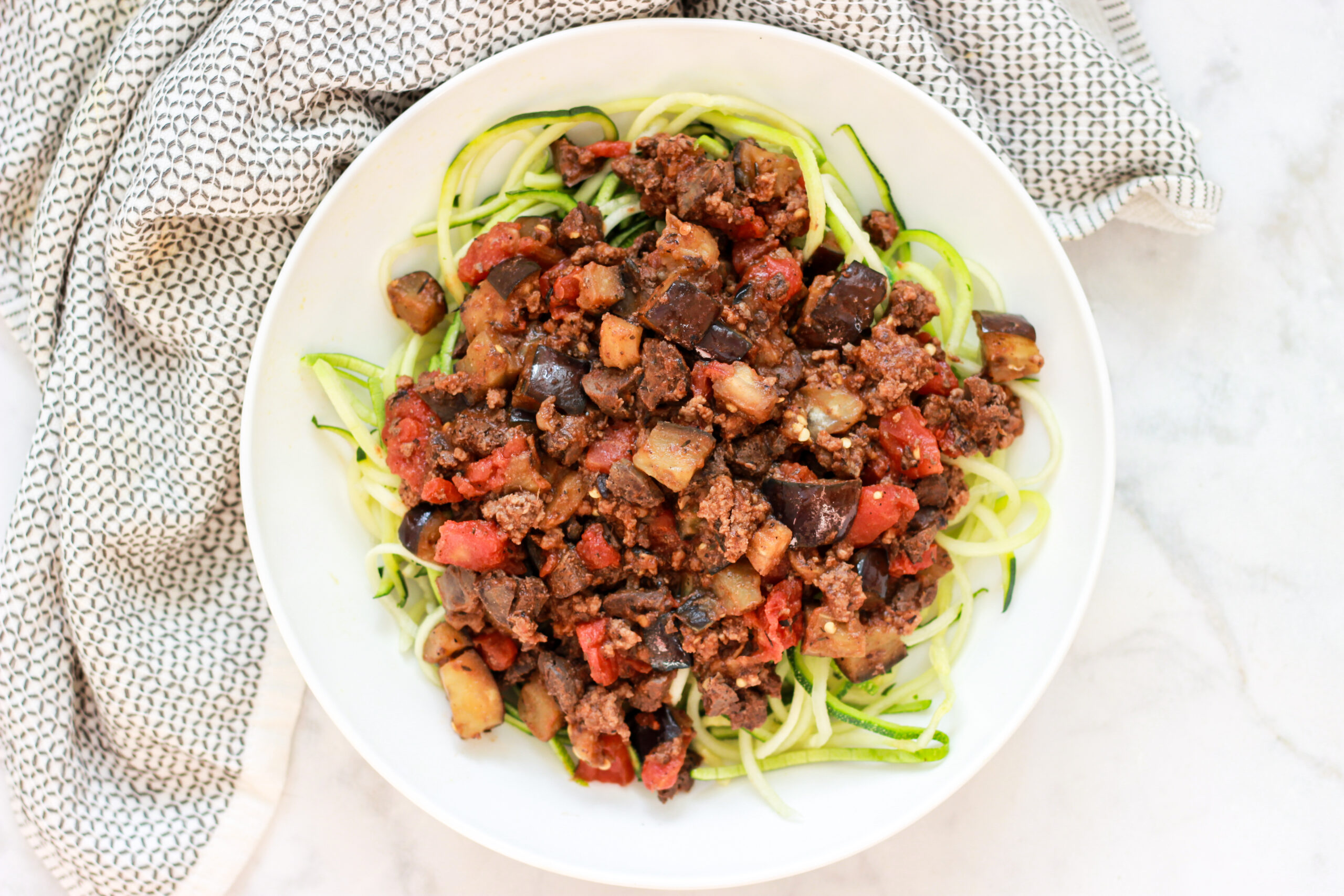
My last post was all about the benefits of organ meats and why they’re so important in our diets. If you haven’t read that post yet, you can read it here. In sum, livers are nutritional powerhouses. They contain a ton of vital nutrients that are really hard to get from other food sources, like Vitamin A, B12, folate, and so on. In that post, I promised to share one of my favorite sneaky liver recipes with you, and here it is. Liver bolognese!
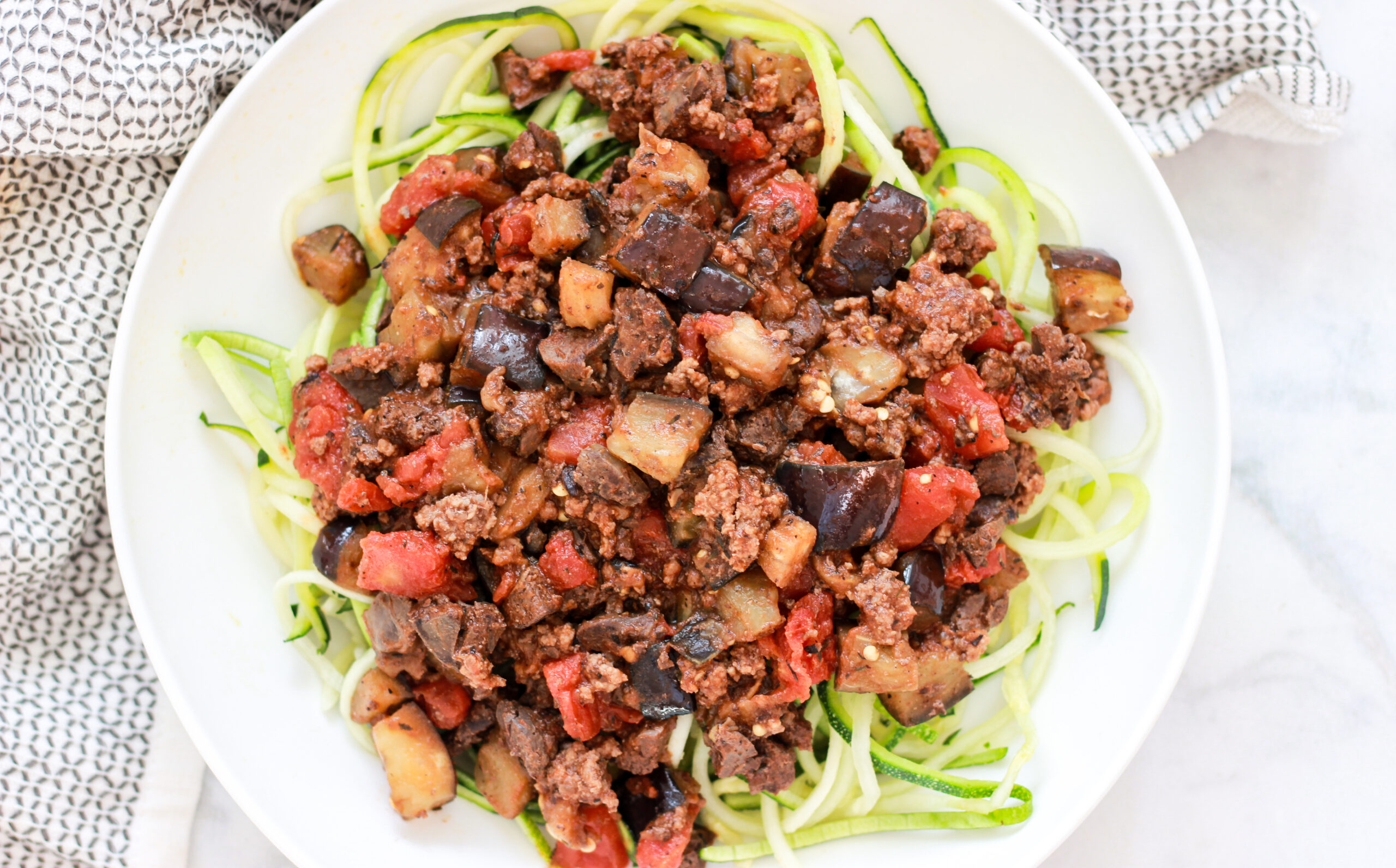
Who doesn’t love a good bolognese sauce, right?! Honestly, good ones are pretty hard to find. I’m very picky. This one has a twist, though. Livers, of course! They give the sauce a really delicious flavor, and you can’t even tell there’s anything out of the ordinary in the recipe while you’re eating it.
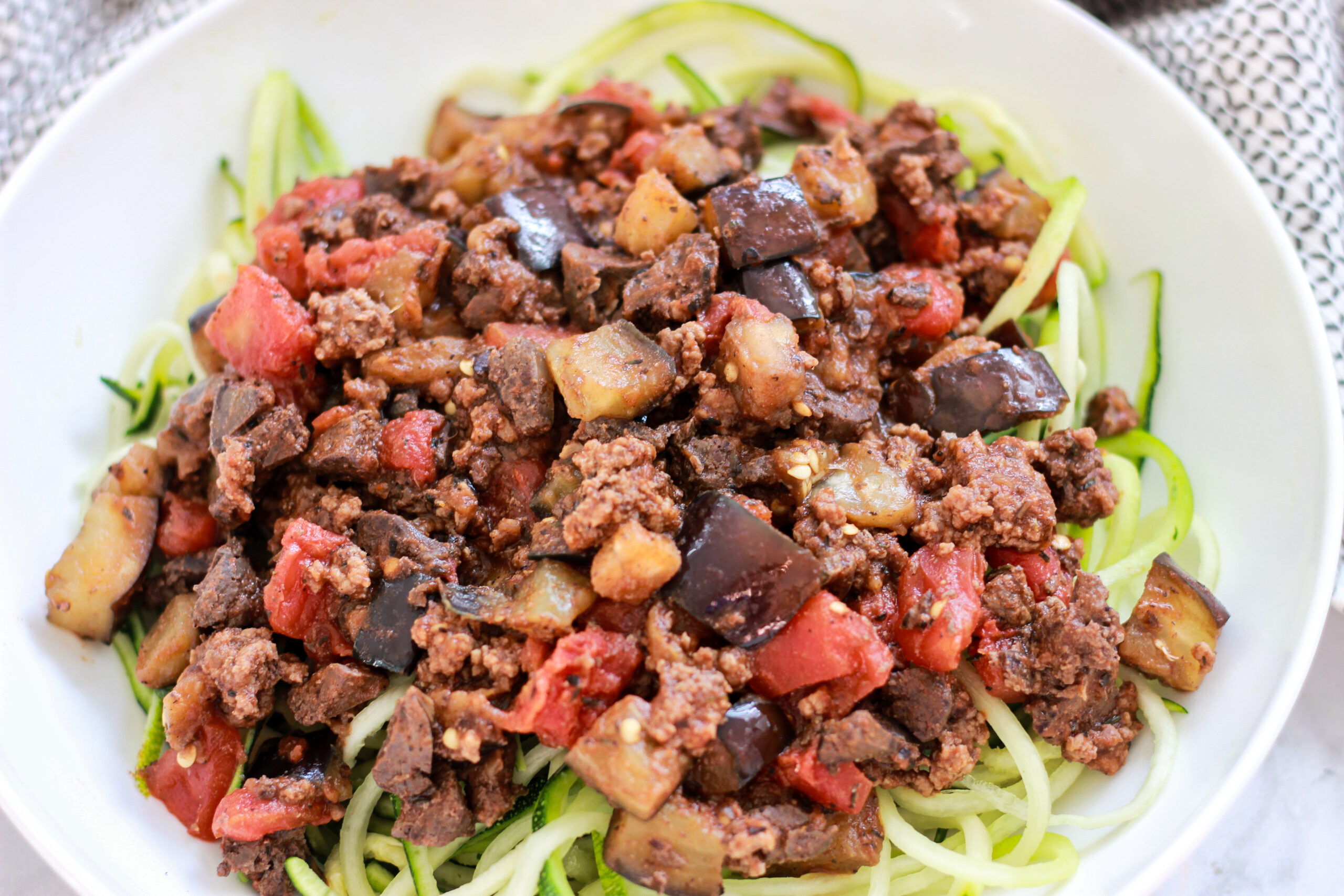
I always looked forward to it when my mom or grandma would make bolognese growing up. It was only on special occasions. I was always a pasta girl. I was convinced I was Italian. Anyways, I always noticed that the bolognese I ordered out at restaurants tasted a little… funny. Off. I didn’t like the ones at restaurants. I was used to the homemade version, but I never knew what made the difference.
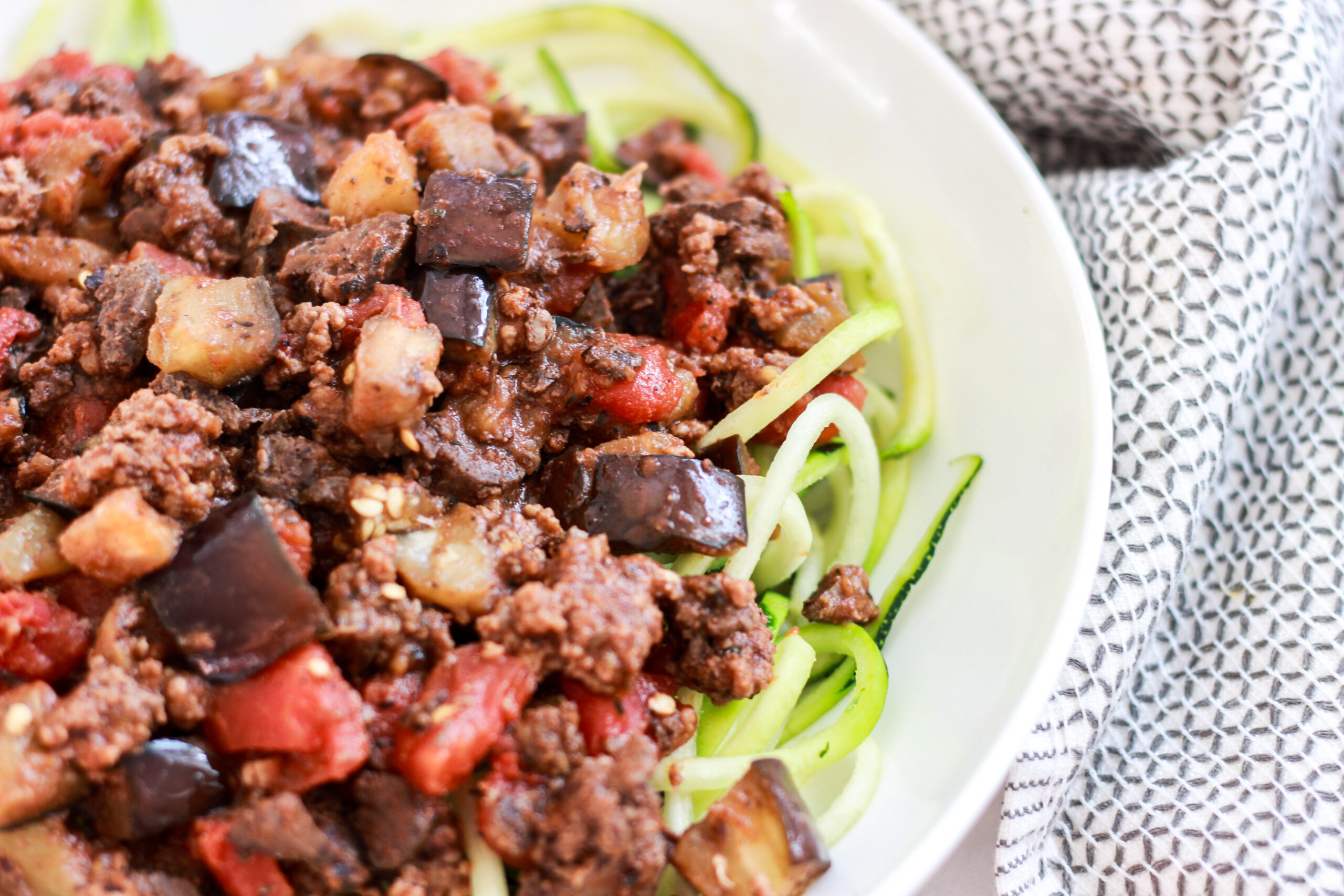
I bet you can guess what it was.
It wasn’t until years later that I learned about the secret ingredient – livers. I had no idea. And I never would’ve known if I hadn’t asked! There are a few ways to add livers into bolognese sauces. The way my grandma did it was to blend up the livers and mix them in with the tomato sauce. That way, you didn’t get any of the texture.
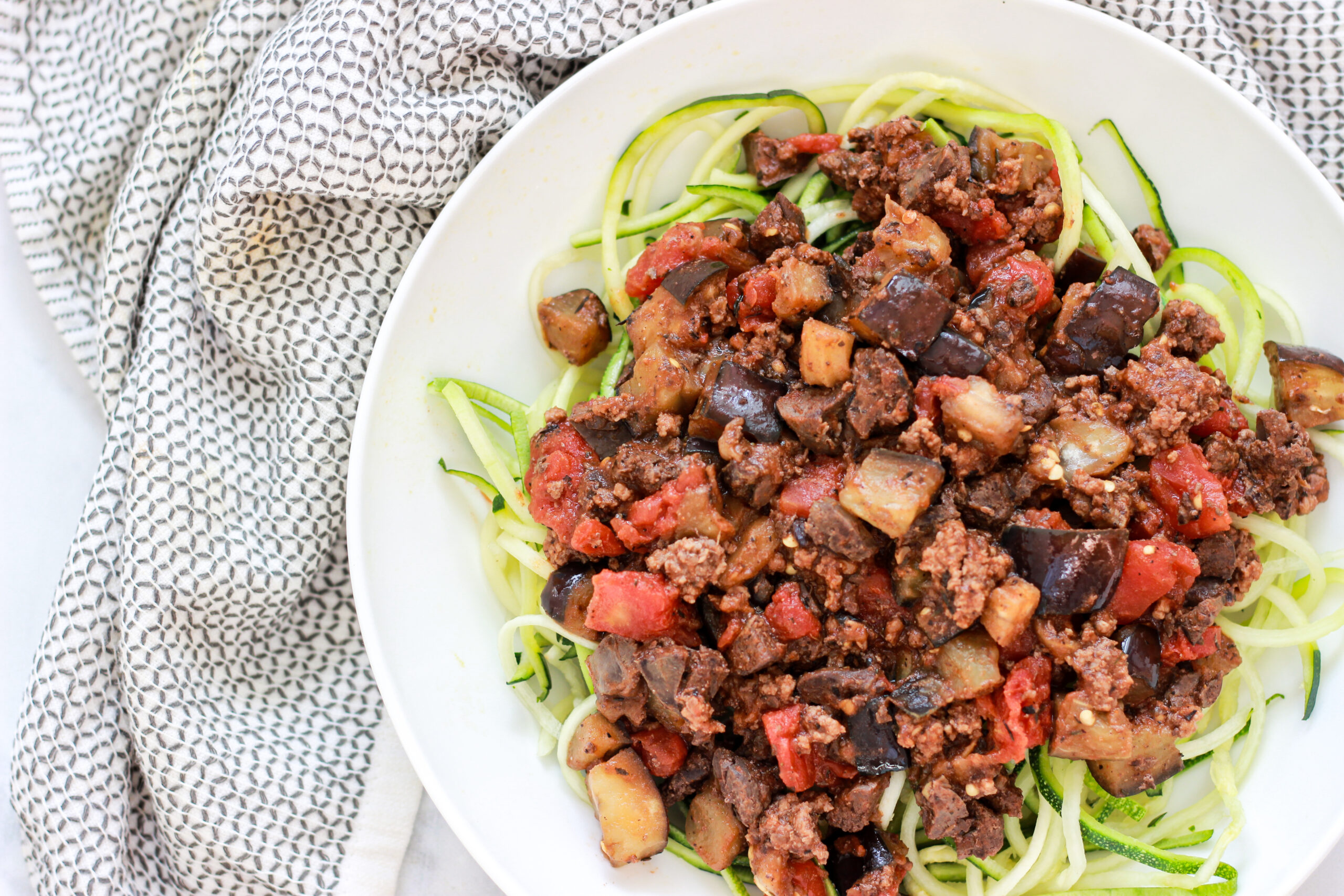
However, I prefer to cook the livers and leave them in the sauce as part of the meat. It gives the bolognese a better texture, in my opinion, and adds more to the flavor profile. The key is to add other textures alongside the livers so you’re not only eating livers. You definitely can do that – that’s actually what I personally do pretty often. When I’m cooking for other people, though, I want the livers to be undetectable. Just to prove to them that they can like liver.
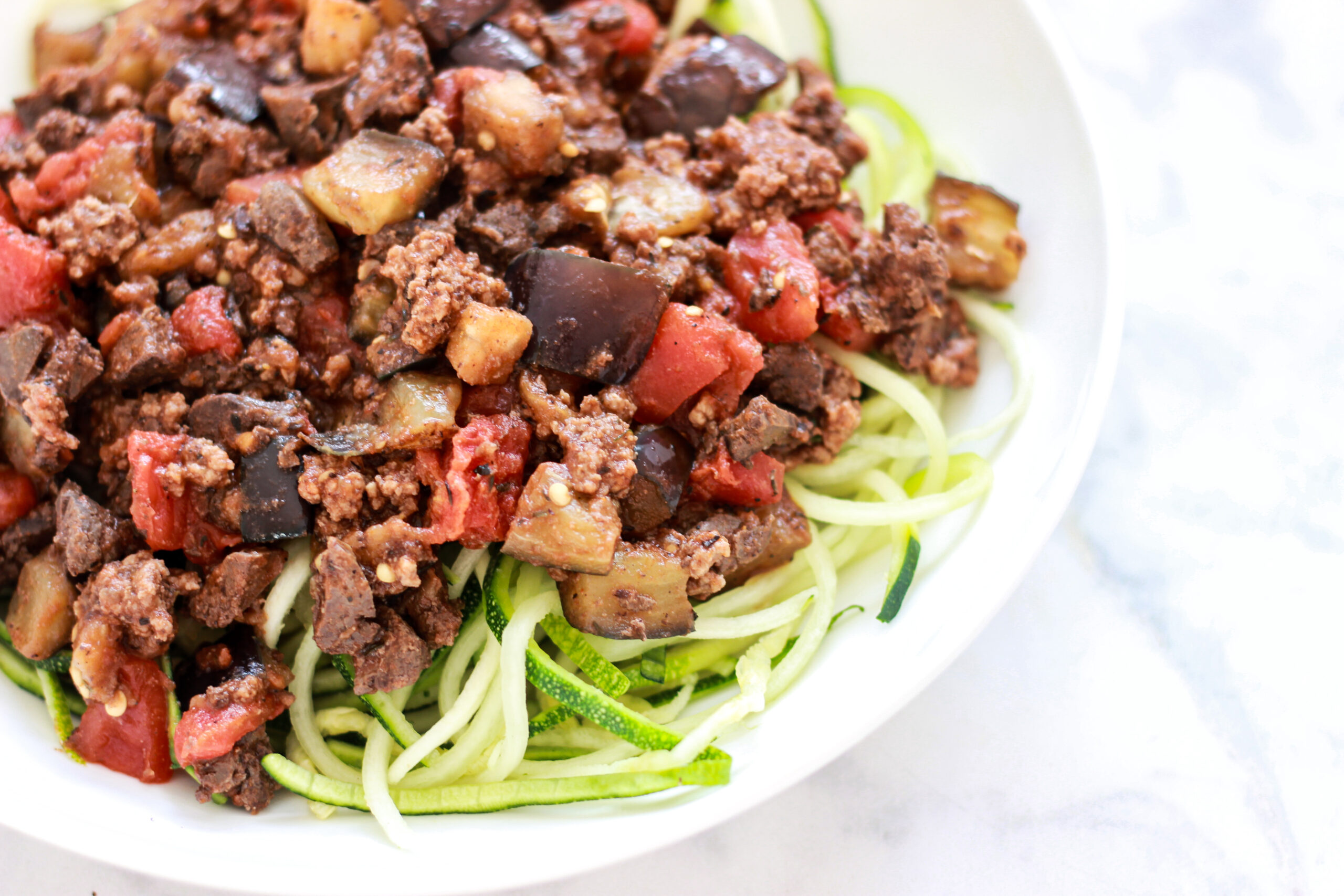
In order to be sneaky about the liver content, this bolognese has three different aspects to the “meaty” part of the sauce. First we have the liver, which provides all of the incredible nutrients. Then we have the ground beef or lamb, which will blend in with the liver and mask the taste for those who don’t like organ meats. Finally, we have the eggplant, which gives another sort of “meaty” texture while sneaking in some vegetables. The idea is to combine multiple flavors and textures and meld them together so you don’t even notice you’re eating organ meats!
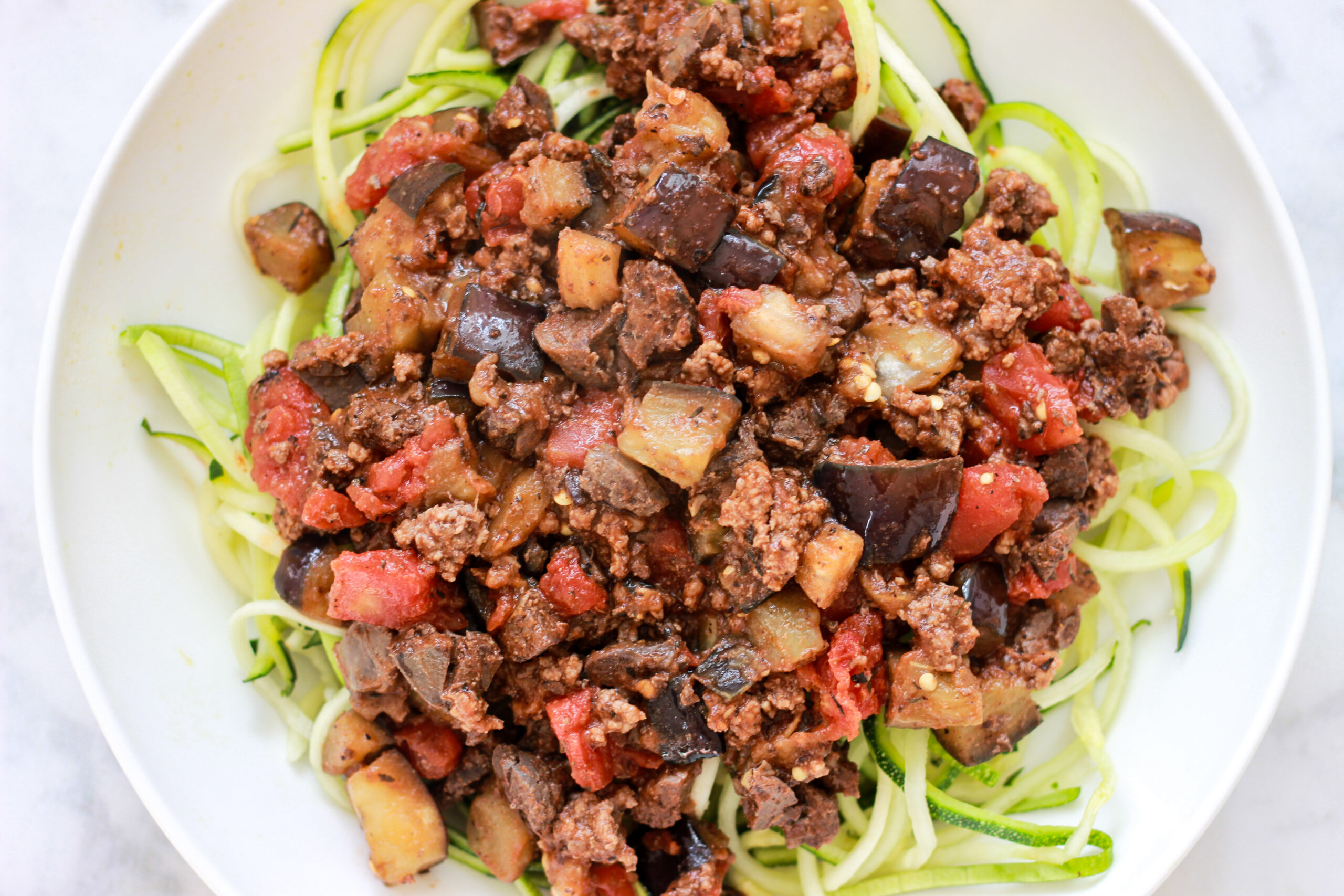
If you’re someone who is afraid to try organ meats, or wants to but doesn’t know where to start, this recipe is perfect for you. It’s also a great way to give some livers into your kids’ diets, or any picky family member’s. If you make this for someone else, don’t say anything about the livers. I bet they won’t even notice! You can also modify it as needed. You can use all livers and no ground meat, like I tend to do, or you can increase the amount of ground meat and lessen the amount of liver to ease into it. Do what works for you! Remember, there are no “rules” when it comes to cooking.
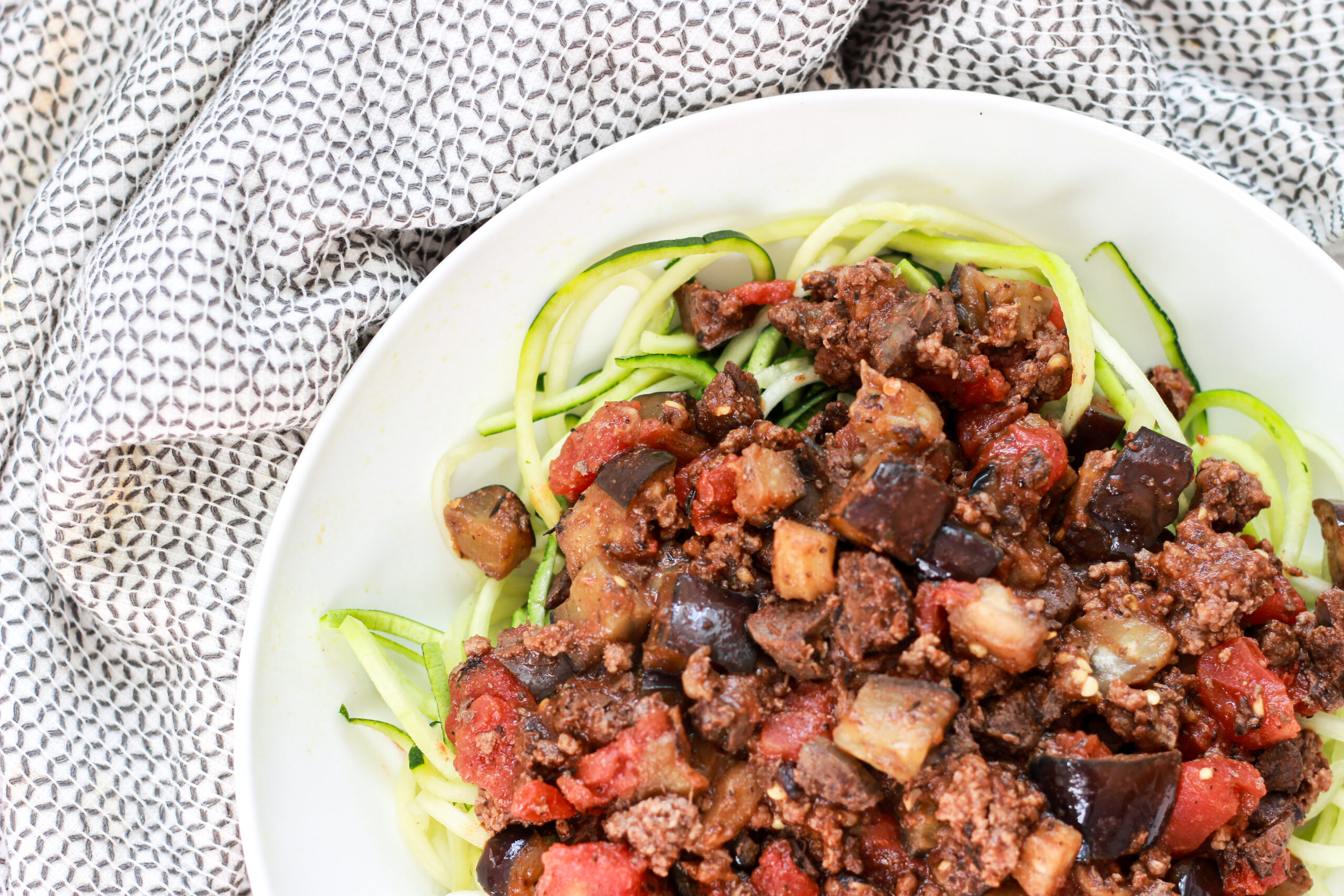
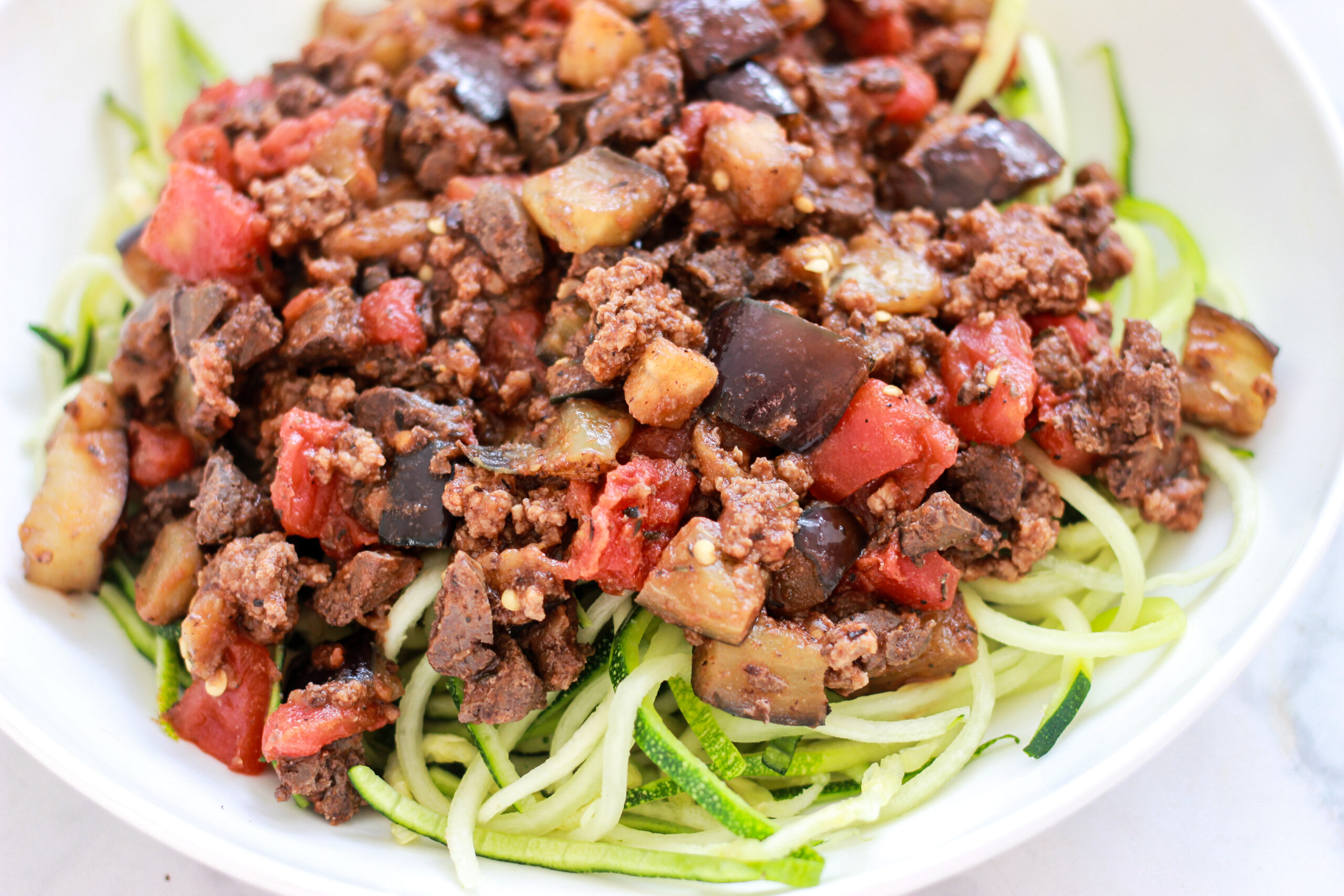
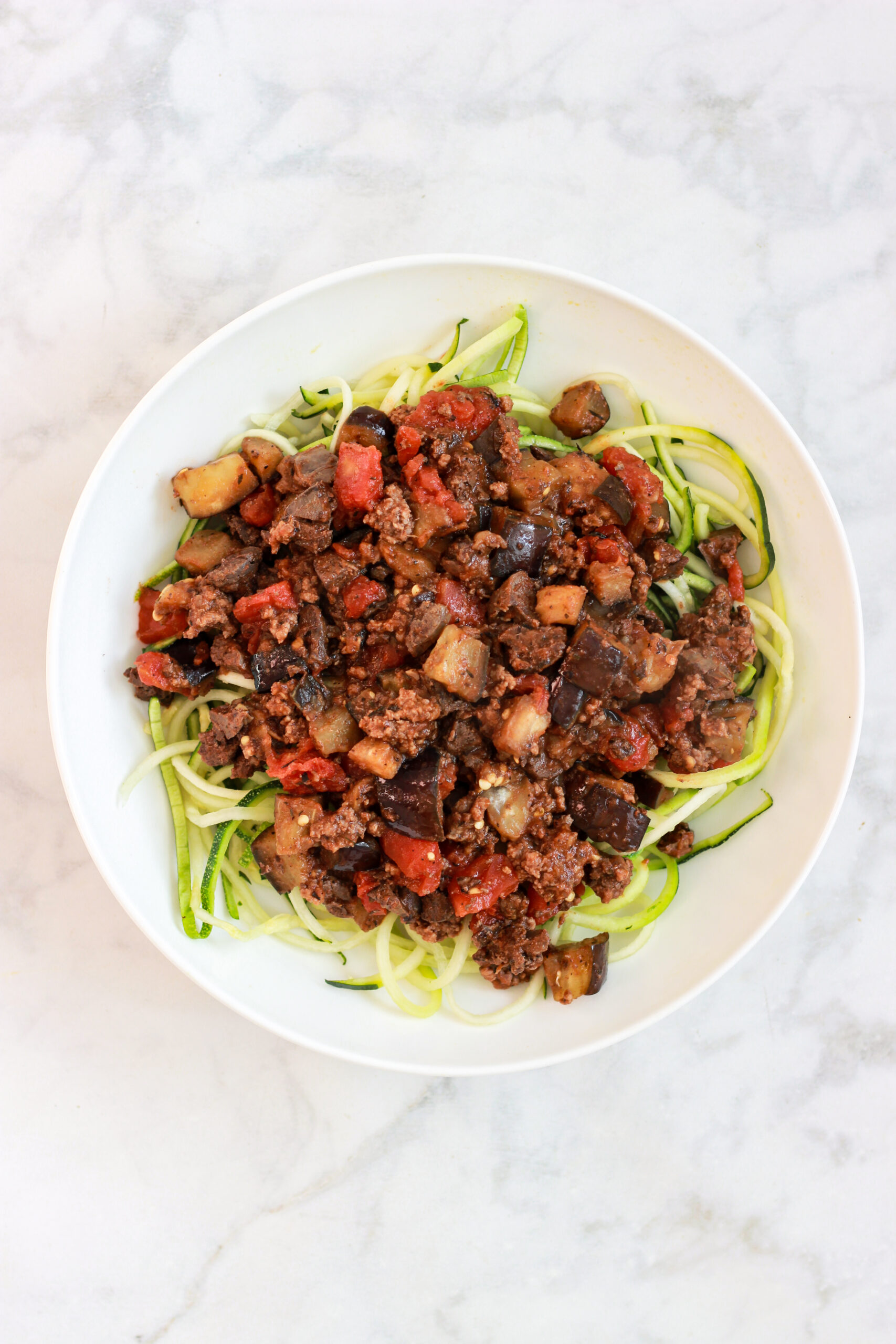
I served this sauce over zucchini noodles, but you could use any kind of noodle you like! Spaghetti squash is another great option. This recipe is paleo, gluten-free, dairy-free, AIP-friendly, keto, low carb, and nut-free. In other words, you have no excuse not to enjoy your livers now!
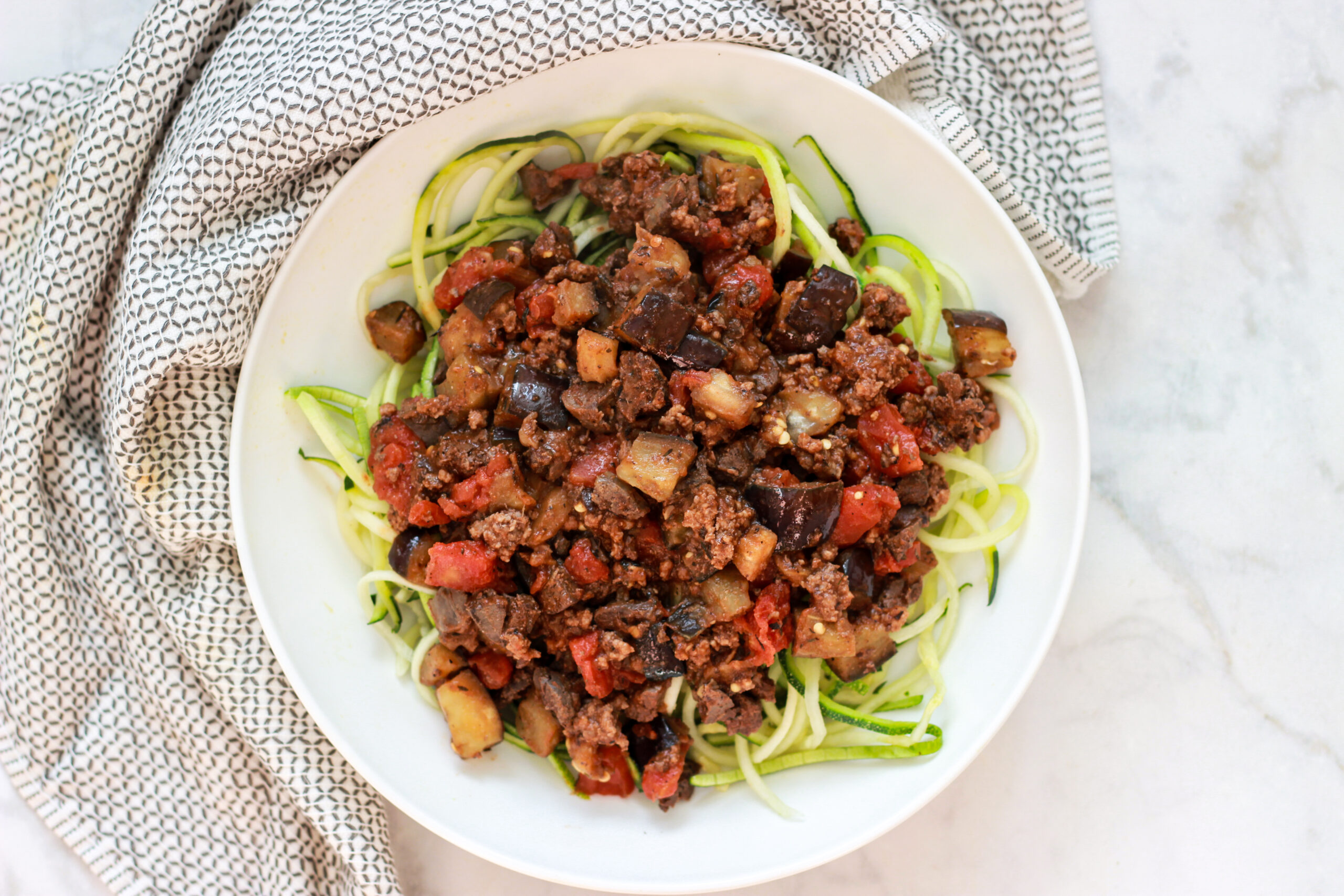
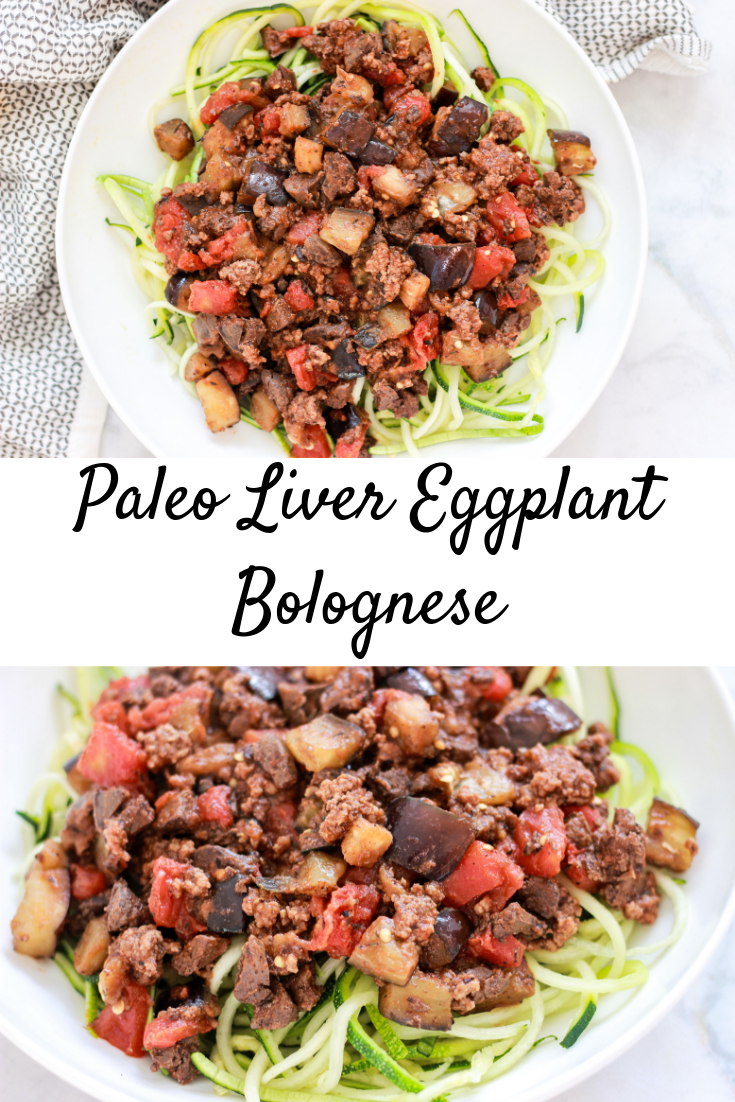
Liver Eggplant Bolognese (Paleo)
Time: 15-20 minutes
Serves: 4-6
Ingredients:
- 1 lb grass-fed ground beef or ground lamb
- 1 lb livers (chicken, beef, etc.) (You can also do 1/2 pound livers if you’re nervous about the taste, which you shouldn’t be!)
- 1 large eggplant
- 1 jar of tomato puree / diced tomatoes (Make sure there are no extra ingredients/sweeteners. It should just be tomatoes. Here’s one from Thrive Market.)
- 1 tsp Himalayan pink salt or Celtic Sea Salt
- 1 tsp black pepper
- 1 tsp paprika
- 1 tsp thyme
- 1 tsp basil
- 1/2 tsp nutmeg
- Coconut oil/ghee/avocado oil for your pan
- Veggie noodles for serving (I used zucchini noodles. Spaghetti squash would also be a great option, but you can use any spiralized veggie, or serve it over a salad.)
Instructions:
- Heat your cooking oil of choice in a very large sauté pan. Add the chicken livers to the pan and sprinkle a dash of salt on them. Allow them to cook for a few minutes, until they’re about halfway cooked through. They’ll be about half pink.
- Remove the livers from the pan. Add the ground beef/liver into the pan, add some salt, and allow it to cook for a few minutes, until it’s about halfway done (the pink meat will start to turn brown). Use your spatula to break up the meat so it separates into ground meat.
- While the meat is cooking, dice the half-cooked livers into pieces as small as possible, and dice the eggplant into small cubes.
- When the meat is about halfway done, add the cooked livers and eggplant into the pan. Allow to cook for 1-2 minutes, mixing everything together.
- Pour the tomato puree and spices into the pan as well, mixing everything together thoroughly. Allow everything to cook until the meat is cooked through and the eggplant is soft.
- Pour on top of veggie noodles of your choice. I used zucchini noodles. (Spiralize your zucchini and throw it in a sauté pan with some coconut oil and salt for 2-3 minutes!)
- Enjoy!
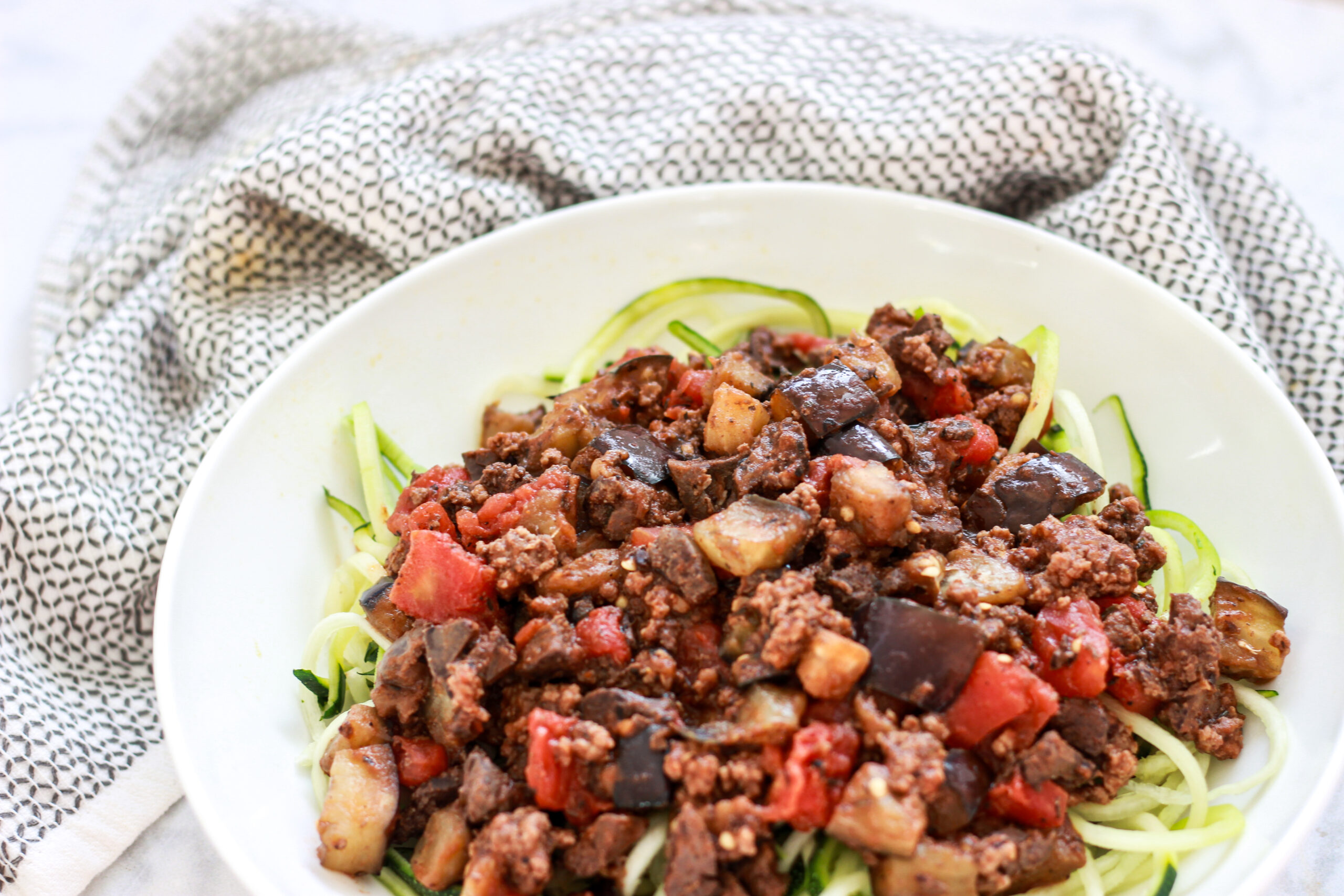
If you try this out, I would love to hear what you think! It’s my favorite bolognese. I personally can’t even taste the livers in this, and I’m curious to know how you like it!

by Christina | May 31, 2017 | Wellness
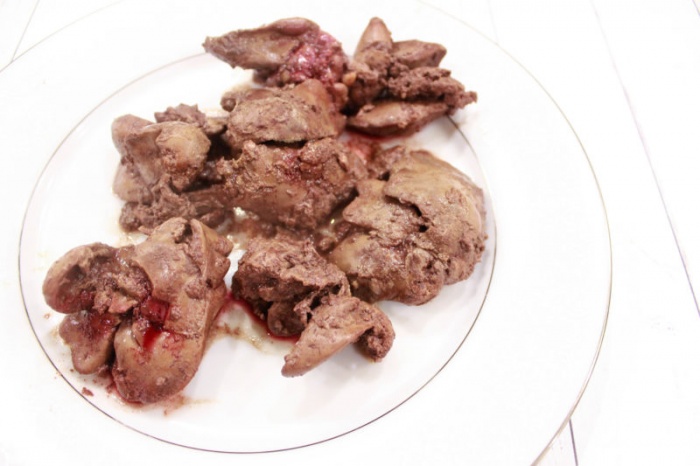
A lot of people in the wellness community talk about “superfoods.” To be honest, I don’t usually buy into the whole “superfoods” thing. If anything is a superfood, though? I’m voting for organ meats.
I’m sure you’ve heard it before, but I’ll tell you again – organ meats truly are nutritional POWERHOUSES. When it comes to organ meats, there are a ton of different options – tongue heart, livers, kidneys… the list goes on. I started incorporating organ meats into my diet about a year ago, and I truly believe they’ve had a monumentally positive effect on my health. Thanks to all of the very in-depth testing I get done with my FMD, I could actually see noticeable improvements in the levels of different vitamins and minerals in my body.
I’m not sure why, but people nowadays seem to be repulsed by organ meats. It’s really not that weird to eat them. A lot of traditional cultures reserved organ meats for the most important people in society. Some societies actually only ate organ meats and would throw away the muscle meats, a.k.a the part of the animal that we typically eat today. Organ meats have been pretty commonplace in people’s diets up until relatively recently, if you really think about it. There’s a good chance your grandma has a good liver recipe hiding in her recipe book!
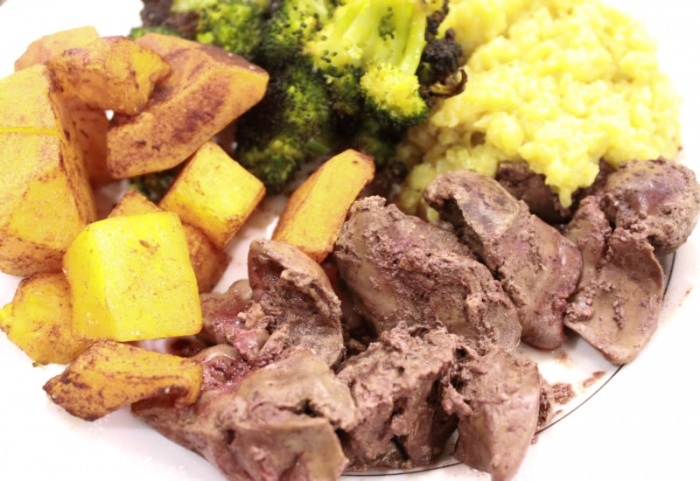
Not only are organ meats NOT “weird” to eat, but they’re actually incredibly important to include in your diet, in my opinion. Like I said, organ meats are superfoods. Especially livers. Livers contain a ton of nutrients that are extremely hard to get from any other food sources. Consuming livers has actually been shown to increase energy, improve brain function, and help with muscle growth. It even increases libido! Bet that caught your attention. 😉
Let’s talk about the nutrient density. You can’t compare it to any other food. Organ meats have the highest concentration of fat-soluble and water-soluble vitamins you’ll find in any food source. Liver is the best source of all of the B vitamins, especially B12. Organ meats are also a great source of vitamin A (retinol – hello pretty skin!) and pre-made vitamin D. They’re also full of zinc, magnesium, phosphorus, and other minerals. Organ meats also contain a high concentration of the fat-soluble vitamins, D, A, E, and K, as well as omega-3s. You know I love those healthy fats! Organ meats are also an amazing source of creatine, carnitine, alpha-lipoic acid, and Coenzyme Q10! Heart is actually the best source of CoQ10, which is extremely important for energy production and reducing oxidative stress. For all of you Dave Asprey fans, you know how important it is to help your mitochondria function at their best! CoQ10 is also especially important for anyone who suffers from a chronic illness.
Of all organ meats, my favorite is liver. It’s actually the easiest for me to find, and luckily, it’s probably the most nutrient-dense food on the planet. Liver especially is an extremely concentrated source of Vitamin A, folate, choline, and B12. In terms of B12, liver really stands out – it has more than you’ll find pretty much anywhere else. If you don’t like egg yolks, then liver is a great option for getting more choline into your diet.
Someone recently asked me if it’s safe to eat livers if livers store toxins in your body. Well, the liver actually neutralizes the toxins in your body – it doesn’t store the toxins. What the liver stores are the important nutrients (vitamins A, D, E, K, B12, folic acid, iron, copper, etc.) that get rid of the toxins. If the toxins end up being stored, it’s normally in the body’s fatty tissues. So yes, eating livers is more than safe. It’s desirable!
I really want to encourage you to try new foods in your diet – especially when they are extremely nutrient dense like organ meats. I know a lot of people are turned off by the idea of organ meats. Some don’t like the idea of it, while others don’t like the taste. If you don’t like the idea of it, then you really just need to have an open mindset and try it. Just because it’s not pretty and topped with a flower on Instagram doesn’t mean it won’t taste amazing or make you feel incredible.
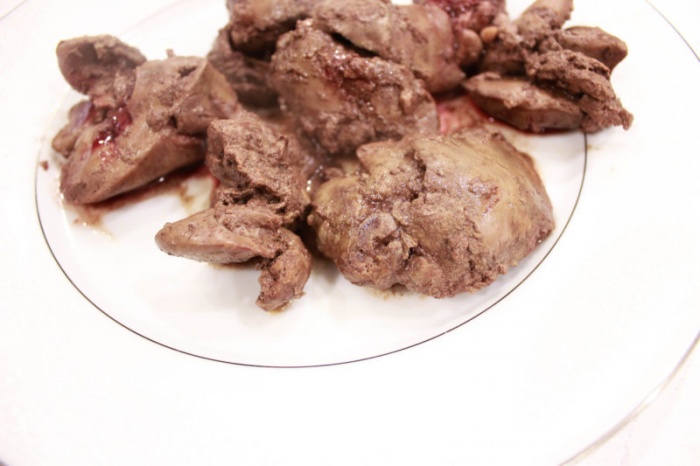
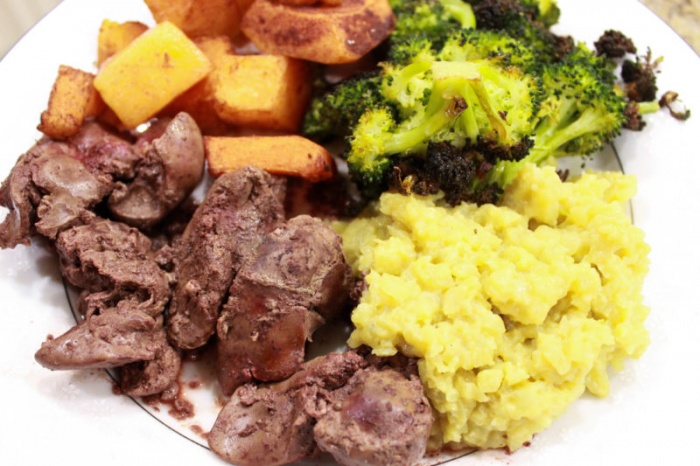
People always ask me how I eat livers. I personally love the taste of liver, and I eat it like any other protein source. I cook it the same way I cook chicken, beef, or fish, and I just pair it with veggies on my plate. However, there are definitely more creative ways to incorporate organ meats into meals.
If you don’t like the taste, then I have a few ideas for slipping organ meats into your diet. I think a good starting place is to hide it in other foods so you don’t really realize you’re eating an organ meat. Here‘s a great recipe for liver pate from Diane Sanfilippo from Balanced Bites, and here is another delicious recipe for Rosemary Balsamic Chicken liver Pate from Leanne Vogel from Healthful Pursuits. I think pate’s are a great way to dip into organ meats, if you catch my drift! 😉
Another sneaky way to add organ meats into dishes are to cut them up into very small pieces, blend them, and add the liquid into soups or sauces. You could put it in chili, pasta sauce, or any other dip. It’s a great way to still get the nutrients in without actually tasting the organ meat.
It might be less intimidating to start with heart or tongue, which have a milder taste than livers to many people. They also might look more appetizing. Beef tongue is pretty easy to cook, and a lot of people say heart tastes like steak.
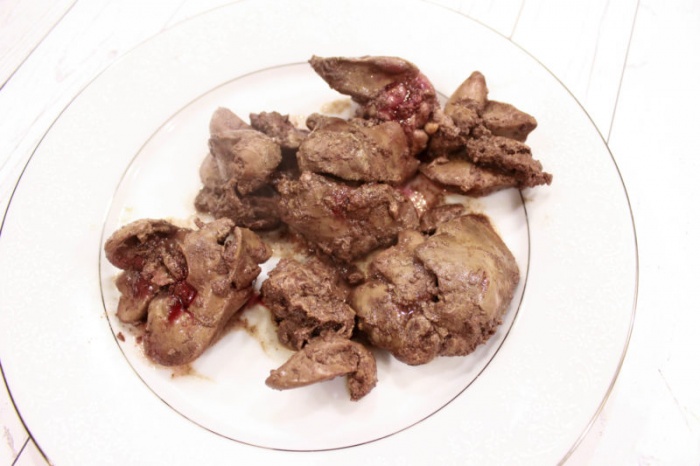
When cooking organ meats, remember that they stay juicer when they’re not cooked for as long, and they also hold more vitamins that way. If you want them crispy, dry them before cooking. I usually like to just sauté livers in a pan with coconut oil or duck fat, salt, and pepper. I love ’em plain like that. However, I also think organ meats are really nice when made in the slow cooker, because they’re left soft and moist.
Another pro is that organ meats are usually extremely cheap. I get my livers from the Farmer’s Market or from Whole Foods if they happen to have them in stock. Make sure the livers are from healthy animals – grass-fed and pasture-raised. If you can get beef liver, I highly suggest that! However, any organ meats will have a ton of health benefits.
I hope that this got you at least a little curious about organ meats. I personally love them – liver is a true superfood in my eyes! I’ll be sharing one of my favorite liver recipes later this week, so keep an eye out for that!
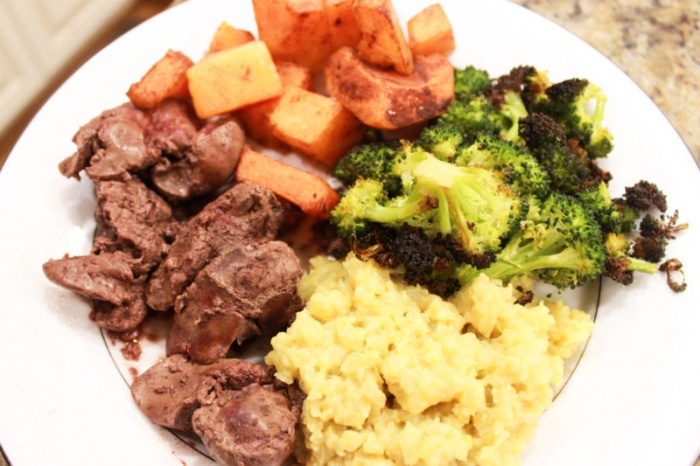
Do you incorporate organ meats into your diet? I would love to hear how you like to eat them!

by Christina | May 28, 2017 | Wellness
When it comes to evening out my skin tone and getting rid of my acne scars, I feel like I’ve tried everything under the sun. I’ve easily wasted thousands of dollars on products and treatments, generally left feeling hopeless and frustrated. I’ve tried masks, serums, chemical peels, lasers, and everything in between. I struggled with cystic acne for years, and although I got rid of it, it did leave me with pigmentation and acne scars that really bothered me. So, typical me – I spent years of my life researching “how to get rid of acne scars” and tried almost every single suggestion I found. I spent way too much time on Google. Don’t repeat my mistakes.
I’m basically just trying to explain that I’ve tried it all. I can’t speak for what will work for everyone, but I can tell you about my own personal experience. I had always hoped that something simple and relatively cheap, like a serum or even microdermabrasion, could get rid of my scarring if I was diligent and persistent enough, but I learned that the only things that really made a big difference for my stubborn scars were more drastic measures. Until the dermaroller. More on that in a second.
The two things that I felt made the biggest difference in my acne scars were Fraxel laser and microneedling. I started off with chemical peels and microdermabrasion, but they didn’t give me the results I wanted. I then decided to try out microneedling.

If you’re not sure what microneedling is, it’s basically a battery-powered pen that contains a ton of little needles that pierce your skin very quickly. It’s kind of like a stamp that creates really small punctures/wounds in the skin. This can create “pinpoint bleeding,” which basically looks like microscopic blood droplets on your skin. The idea is that these pricks will increase collagen production because the body will work to rebuild the skin in the area. You trick the skin into thinking it’s wounded, so it grows back with a thicker, more even texture. It’s also helpful because it allows any serums that you put on after to really penetrate, making them much more effective. It’s supposed to be good for scars, wrinkles, sun damage, and aging skin in general. The results are cumulative, so it takes multiple treatments to see those results. You go in, get the microneedling, allow your skin to heal, and then go back after a few weeks/months and do it again. Most people need 6 to 8 treatments to start seeing results. Patience is key!
The first time I got microneedling done, I loved it. It doesn’t hurt, but they usually numb the area anyways. I had my dermatologist only focus on my scarred areas because I didn’t want my entire face done. I had really small dried blood marks in the area where it was done, but they were so small you could hardly see them. It looked like I had a sunburn for a few days, and the area on the skin was really dry and red. I made sure to stay out of the sun, apply a lot of moisturizer, and let my skin heal. It was a little sore, but not too bad.
After two rounds of microneedling, I was really impressed with my results. My scars weren’t gone, but they looked better than before. My dermatologist told me I would get better, faster results with lasers, so at that point I switched over to lasers and left microneedling behind. Go big or go home. I wrote about my experience with laser here, so you can check that out if you’re interested. Long story short, I’m happy I got the laser done. However, it didn’t get rid of my scarring completely, which is what I wanted. I am so vain.
I’ve spent so much money on products and treatments that after laser, I told myself I wasn’t doing any more. I told myself that if the laser didn’t work, then that’s just how it was going to be. Well, about a year later I went back on my promise to myself and ended up trying a different laser. I got 5 rounds of that, and still didn’t see good enough results to justify the money spent. It was disappointing.
At that point, I reflected on what I felt was most worth my money, and it was definitely the Fraxel and the microneedling. Microneedling was the first thing I did that actually gave me hope that my scars could fade! I decided to look into dermarolling, something I had previously written off before.
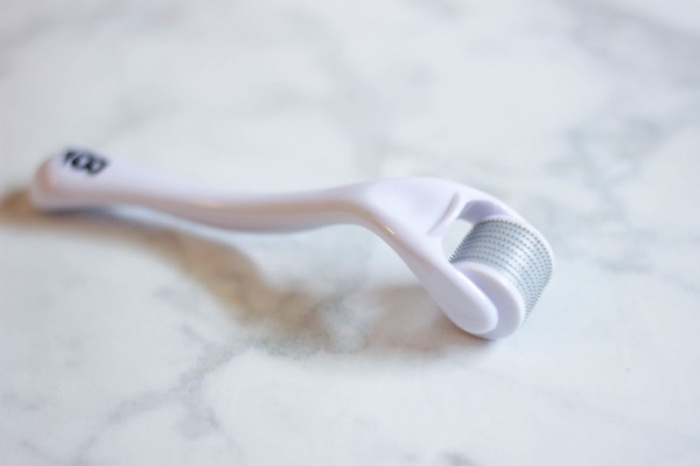
Dermarolling is similar to microneedling because you’re puncturing the skin with a bunch of very thin needles to cause trauma to the area and encourage collagen production. The difference, though, is that dermarolling is when you roll those needles into your skin. Microneedling is typically done with a Dermapen, which goes up and down on the skin like a stamp. When I was first researching all of this, I stayed away from dermarolling because I didn’t want to mess up my own skin – I wanted to leave it to a professional.
Also, I felt better about a pen/stamp going up and down on my skin rather than needles rolling into my skin. The danger with that is in the angle. Think about it. When something is stamping needles into your skin quickly, the needle is going straight down vertically. When the needles are rolling onto your skin, though, they can go into your skin at a weird side angle and potentially tear the skin in a way you might not want. This could cause even bigger scars. There are also a ton of different choices to make when it comes to dermaroller needle sizes, and I didn’t want to have to choose. Too much effort.
Although those things initially deterred me, after my second round of laser, I reached a point where I was completely fearless with my skin and knew it could withstand a lot. I’m used to using myself as a guinea pig now, and I’m more than willing to try anything. So in December I decided to invest in a dermaroller and see how it went! I know a lot of you have been asking me to write this post sooner, but the one thing I know is that changes in your skin take a long time to show up. I personally think you have to give anything at least 3 months to start noticing a difference. Now that I’ve been using the dermaroller for almost six months, I feel comfortable sharing my opinions on it.
To be blunt, I think that dermarolling is the best option for acne scarring when weighing the pros/cons of cost and results. Microneedling gave me better results because it was more intense, but dermarolling is cheaper and I can do it myself. It might take longer, but it’s much more cost effective and I think I can get the same results with a little more time. I honestly feel like I’ve gotten better results from dermarolling and microneedling than from the lasers I’ve used. I think that stronger lasers would give the best results, but those are way out of my price range, and I don’t want the down time. With the strongest lasers, you’re basically out of commission for a few weeks.
My acne scars are not gone, but they are less noticeable than ever before. It took about 3 months for me to really notice any differences, but I noticed that my dented scars were a bit more filled in, and the color had started to blend in with the rest of my skin. Basically, things were evening out. Some of my very small scars are completely unnoticeable now, but the big ones are still there. Again, they’re much better than they were before. Probably about 80% improvement, which is huge for me. At this point, I’m pretty sure I’m the only person who notices them, and I’m comfortable not wearing makeup.

Details. Ok.
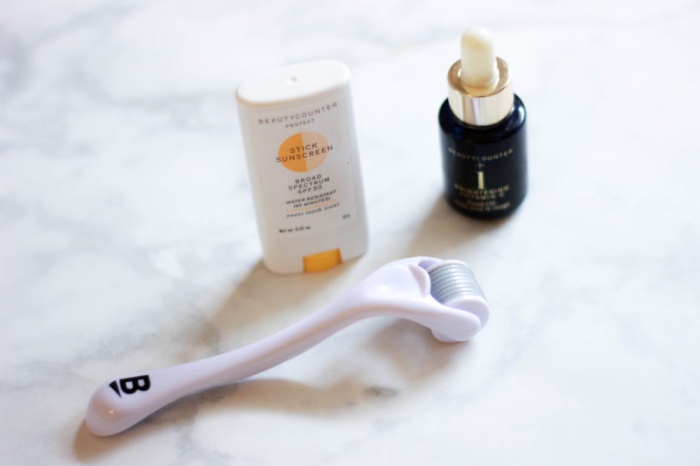
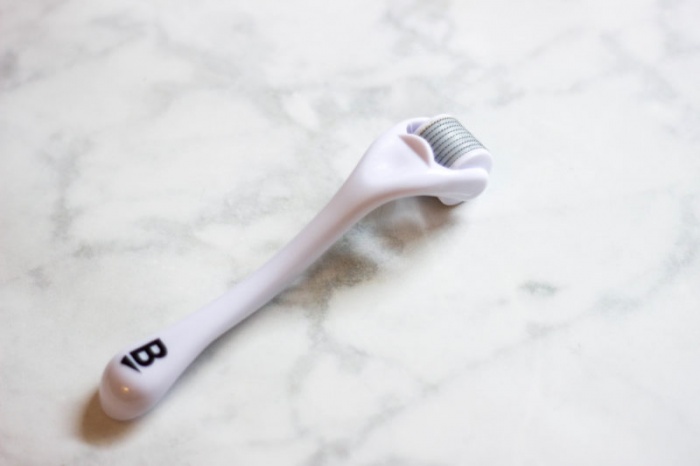
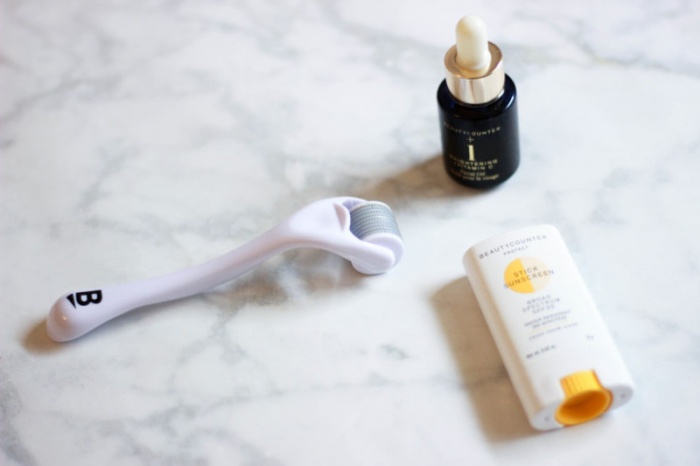
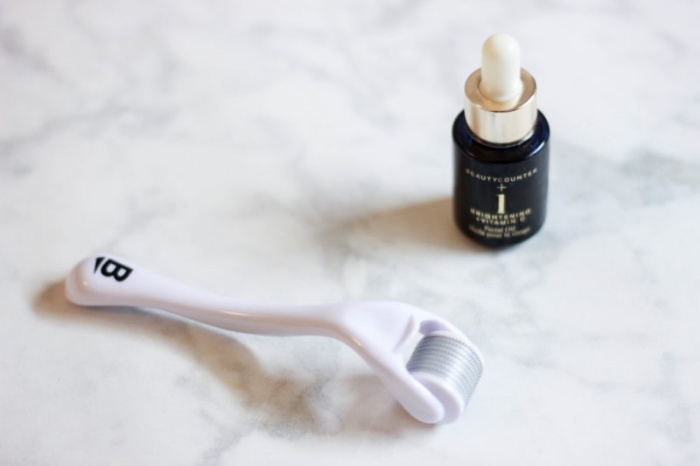
First of all, the dermaroller I decided to buy was from Banish. There are a lot of cheaper ones on Amazon, but I would rather be safe than sorry. If I’m going to put needles into my skin and potentially pulling blood, I don’t want those needles to be from a questionable source. I also replace my dermaroller every once in awhile for sanitation reasons and also in case the needles start to get dull. I want to make sure the needles are sharp so they effortlessly penetrate my skin. If the needles are dull and start to drag, they could pull at your skin and make tears at undesirable angles.
Because I know how much my skin can handle, I was pretty aggressive with my treatments. I started off doing it twice a week and rolling away until I was bleeding. I would not recommend this to other people, especially if you’ve never gotten a treatment on your face like this before. If I had never had any treatments before, I would do it once and then wait until my skin completely healed before doing it again, and I also wouldn’t roll long enough to make my skin bleed.
So I went at it. The next day, my skin was sore and very red. There were a few blood marks. The redness lasted for about a week, and within that time, my skin began to peel off. Every time I dermaroll, I know that area of my face is not going to look cute for awhile. Usually a week and a half. I’ve been using my dermaroller at least once a week for the past five months, but often two or three times a week. When I use it multiple times in a week, it’s because my treatments aren’t as aggressive. When I’m really aggressive, I need to give my skin more time to heal. Now that my results have kind of evened out, I only use it once every one or two weeks.
How exactly do I do it? First of all, I make sure my skin is clean and dry. I soak the needles in rubbing alcohol for at least five minutes prior to using it to sterilize it. Then I roll away at the area I want to target, in all different directions. First I go up and down, then I go side to side, then I go diagonal, and then I do it all again. It’s really important to go at different angles so that the skin grows back as uniformly as possible, and so that you’re not just making the same exact tears over and over again. After I’m done, I soak my dermaroller in rubbing alcohol for about 10 minutes again, then I dry it and put it away.
After I’m done, I wipe the area clean with some witch hazel and a cotton round, and then I apply my Vitamin C serum from Beautycounter. This is the most important part, in my opinion. I either use the Rejuvenating Radiance Serum followed by the No. 1 Brightening Facial Oil, or just the No. 1 Brightening Facial Oil. Either way, it’s SO important to apply a serum afterwards. One of the main benefits of dermarolling is to allow the serums to really penetrate deeply into the skin. These serums not only add moisture and help the skin heal, but they contain ever-so-important Vitamin C. Vitamin C is an amazing antioxidant that brightens and evens out skin tone and texture by enhancing collagen production. It’s been shown to reduce wrinkles, red marks, sun damage, and other skin spots, and I personally think it’s a must in every person’s skincare routine.
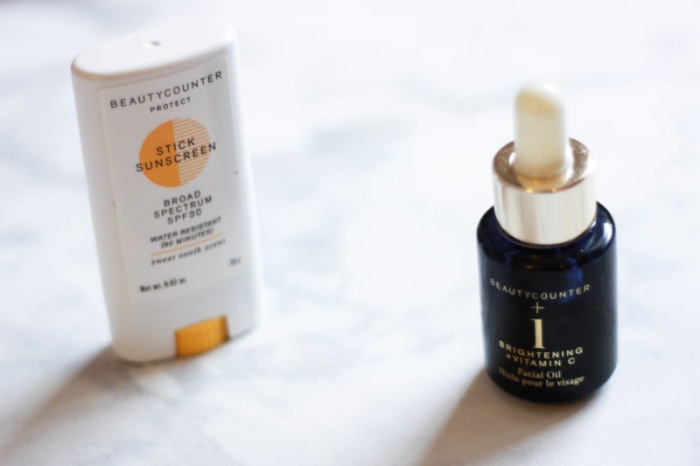
In the days following my dermarolling, I take extra care to stay out of direct sunlight if possible, and I always wear sunscreen on my face. I use the Beautycounter Sunscreen Face Stick for this because it’s non-toxic and in a stick form, which is the most reliable form of sunscreen. So many sunscreens are filled with ingredients that are terrible for our health, so using a SAFE sunscreen is extremely important. You want to make sure you’re protecting your skin from the sun after dermarolling because the skin will be extra sensitive to photo damage at that time. You don’t want to cause more sun damage in the process of trying to even out your skin tone!
I would definitely look into using a dermaroller if you struggle with acne scars or pigmentation, but I think you need to be cautious with it. It is causing trauma to the area, and there are risks associated with that. You can cause more damage than healing if you’re not careful. For some people, it gives them scarring and pigmentation when they didn’t have that before. Also, know your skin. If your skin doesn’t heal well, then this might not be the thing for you. If you have the money to get professional microneedling done, I would recommend that. A licensed dermatologist will know what he/she is doing. However, if you don’t have access to that and you feel very confident in yourself when it comes to playing with your skin (like me), then dermarolling is a great option. I personally have seen great results with it, and I am going to continue to use it from here on out!

by Christina | May 25, 2017 | Wellness
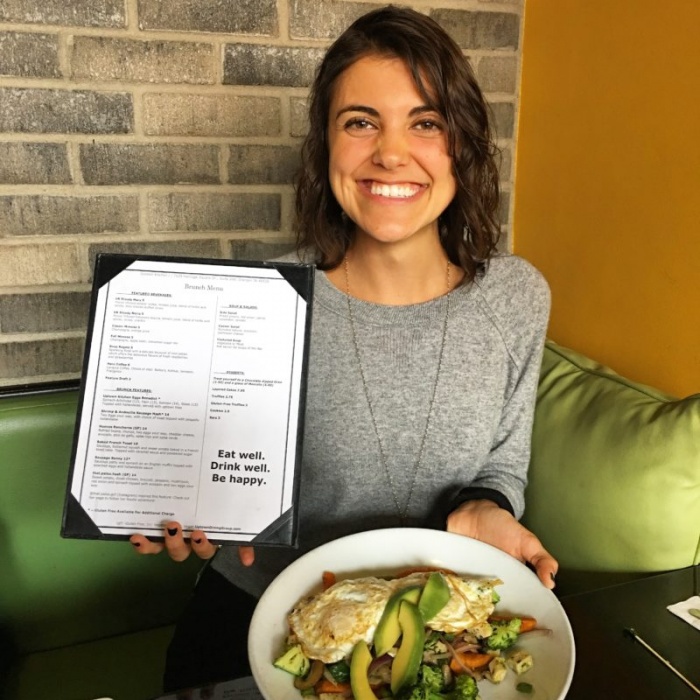
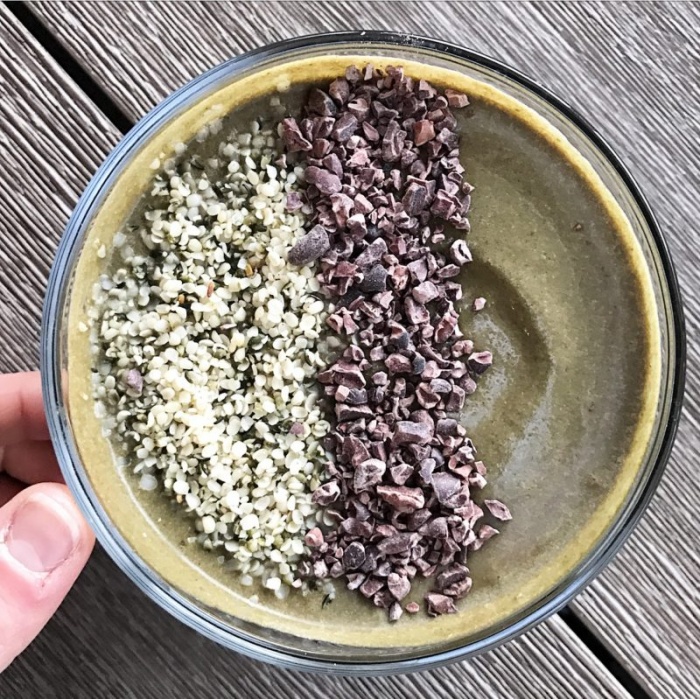
The person I’m featuring on the blog today is extremely special to me, probably in more ways than she knows. Today I’m sharing an interview with one of my dear friends, Liz Anthony from That Paleo Girl. I first found Liz on Instagram (@that.paleo.girl), of course, and quickly realized that we basically have the same exact taste buds. Her food always makes me drool. I really love her because she’s so real and down to earth, and her Instagram account reflects that. She doesn’t worry about topping smoothies with flowers and using a $900 dollar camera. She shares delicious, healing food – no “fluff” necessary. Also, her Chocolate and Greens Smoothie Bowl recipe is TRULY the best smoothie bowl recipe I have ever tried. It is so thick, creamy, and delicious. You absolutely have to make it ASAP.
Like me, Liz used food to heal her body. Whenever I find people like that, I’m immediately intrigued and want to know their full story. I learned that Liz and I have a lot more in common than just using a Paleo diet to heal ourselves. We had similar experiences with weight loss, stress, mysterious illnesses, and more.
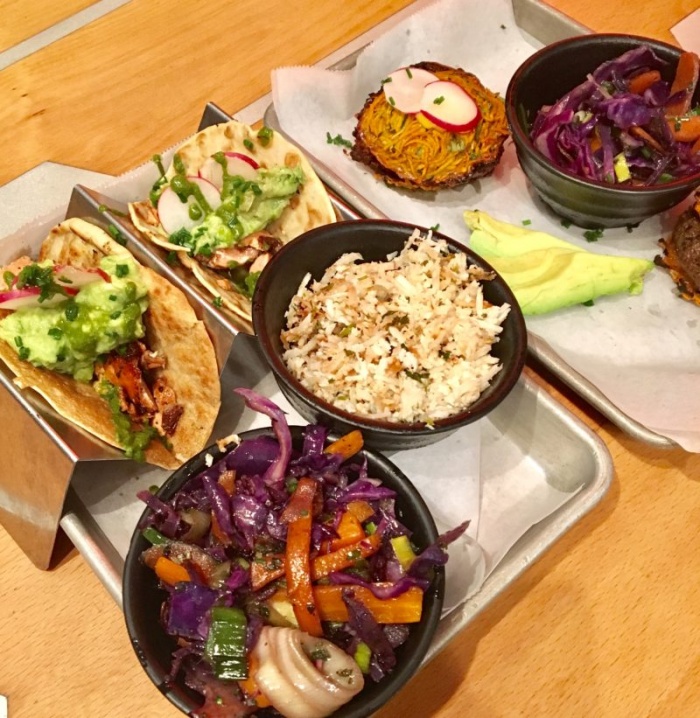
Liz came to Los Angeles a few months ago, so we finally got the chance to meet up in real life. We went to Bulletproof Cafe in Santa Monica, and then we immediately went to Erewhon. And then to Kippy’s. I mean, would you expect anything else? She’s one of the only humans on this planet who would do that with me. It was my ideal night. Long story short, we hit it off and talked for hours about EVERYTHING. She is truly one of the most genuine people I have ever come across in my life. She’s hilarious, intelligent, authentic, and a true friend. She just gets it. You know? I feel like I’ve known Liz forever. She’s one of the only people I’ve ever met who really understands my experiences with my health issues because she’s been through it, too. That instantly bonded us.
She recently published a blog post called “So Skinny It Hurts” that gave me chills to the root of my bones. I broke down in tears when I read it, because it perfectly described exactly how I felt only a year ago. You can read the full post here. Every sentence in that post was profound and struck a chord deep in my heart, but I wanted to pull a quote that really hit home for me.
“What hurts is knowing that women in our society equate beauty with a number on the scale. People assume that skinnier is always better without having even the slightest idea of what lies below the skin. Losing weight contributed to one of the darkest periods of my life but gaining weight did not reverse it. Beauty and happiness lie in confidence in and peace with yourself rather than a dress size. Health lies in nourishment and self-care, strength and self-love – not a certain weight.”
Mic. Drop.
Liz is extremely humble. As I learned more about her story, I grew to admire her even more. She is incredibly strong, and has a complex story of being diagnosed with lupus, Celiac disease, and PCOS. She has gone through so much, but has done it with so much grace, and no resentment. I don’t think she knows how incredible she truly is. She inspires me more than words can describe, and for that reason, I need to share her story with you guys, too. This interview brought me to tears, because it was just so powerful. I’m honored that Liz was willing to share it, and honored that she is allowing me to share it here. I’ll let you hear it from Liz herself to fully understand what I’m talking about.
Introduce yourself to my readers!
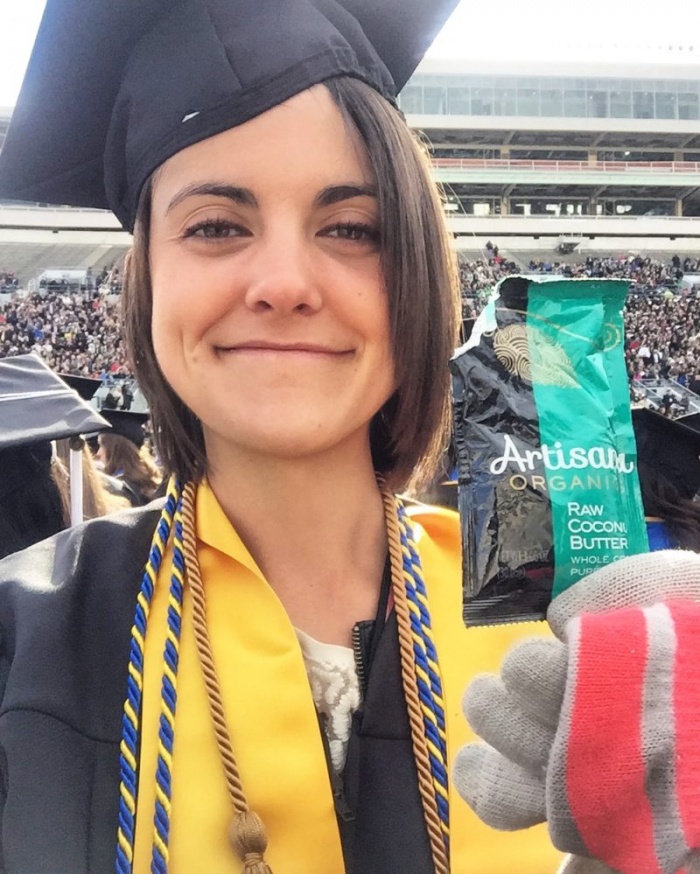
Hi friends! My name is Liz and I am from a small town in northern Indiana. I graduated from the University of Notre Dame last year and work for the University now. I was a philosophy major undergrad (probably explains my love for Birkenstocks) but I have always been super passionate about education and now I work with Catholic schools. I still live in my hometown (where Notre Dame is located) in my parents’ house…don’t judge me.
When I’m not taking pictures of my food, I love to do pilates and yoga, spend time with my family and friends, and experiment in the kitchen. I am 100% basic and boring.
When did you first get into healthy eating? Have you always been healthy?
Prior to being diagnosed with lupus (more on that later), I did not eat healthy at all – in fact, I prided myself on being one of the few girls I knew who would eat a burger or a slice of pizza and not feel guilty about it. I definitely ate salads and veggies, but I also ate a ton of sugary cereal, pasta, bread, etc.
When did your health problems begin?
At 18 years old, I felt on top of the world – I was a straight-A student, ran 5-7 miles most days, tried to be the leader of every club, went out with my friends, and somehow managed to conquer the day on 6 hours of sleep. My only “health problem” was a bright red rash on my cheeks that appeared during the spring of my senior year of high school and just would not go away. Purely out of vanity, I decided to go to the doctor to get it figured out. My primary care doctor referred me to a rheumatologist who basically diagnosed me with lupus immediately upon seeing me for the first time (I now realize I had a very severe and distinct “lupus rash”). At this point, I was about two weeks into my freshman year of college.
The time span between my first visit to my primary care doctor about my rash and receiving my accurate diagnosis was less than two months, which is extremely rare for those with autoimmune diseases, so I consider myself very lucky in that regard. The ironic part is that the only symptom I had was the rash on my cheeks. Despite the fact that I did not experience any of the other classic lupus symptoms at the time, my doctor put me on multiple medications: a temporary steroid to aggressively treat the rash and another medication (which I was to take indefinitely) intended to manage lupus by suppressing my immune system. It wasn’t until I had been on these medications for a few months that the problems really began.
When did you first realize something was really wrong?
At first I started to feel more tired, get aches in my joints, find bald spots on my head, and occasionally lose my appetite – all classic lupus symptoms. My doctor and I took these to mean that my lupus was getting worse so we proceeded to increase my medications. After my third or fourth round of steroids coincided with a stressful start to my sophomore year, my appetite completely disappeared and I started to lose weight – fast. I didn’t want to lose weight, but I developed a total aversion to food and could not seem to stomach anything. I lost 25 pounds between the start of the semester and fall break that year (nearly 40 pounds total) and all of my friends, family members, and even professors and classmates worried about me. I spent countless hours curled up in a ball with stomach pain and laying in the doctor’s office with tears in my eyes that semester, but no one could figure out what was wrong. I hit rock bottom when I got an upper GI endoscopy to test for celiac disease and the doctor told me and my mom that I was “just anorexic and needed to eat.”
So I did. I stopped all of my medications (which I knew were contributing to my nausea) and forced myself to eat. Though I had started to become interested in the role that food plays in autoimmune disease, I ate literally anything that sounded good to me in an effort to gain weight. By the end of my sophomore year, I still felt terrible but I had gained back about five of the pounds I had lost – not many, but enough that my parents and my doctors permitted me to spend the summer in Ghana.
I left America in pretty poor health, but I returned two months later right on the brink of hospitalization. I had some sort of stomach infection or virus during my last few days in Ghana and developed a kidney infection almost immediately upon returning. When my doctor ran my blood work and saw that I was severely deficient in almost every vitamin and mineral, she ordered the blood test for celiac disease, which quickly and CLEARLY confirmed our suspicion that there was something else going on. It turns out that no one had ever bothered to run this very simple blood test – which is the most reliable way to diagnose celiac disease – until that point, despite the insane GI symptoms I had been experiencing for almost a year, the fact that my grandma has celiac disease and I had another autoimmune disease, AND the fact that one doctor specifically told me I did not have celiac disease and I was “just anorexic.” It still to this day makes me mad because one simple blood test could have changed my life a year earlier.
How did people react to you losing so much weight?
Most of my friends reacted just as I would have reacted in their places – they approached me with concern about my eating disorder and wanted to help me. The hardest part was convincing them that I did not, in fact, have an eating disorder but was actually experiencing very intense but very invisible health problems that caused me to lose weight. It’s important for me to mention that there were a select few people – including my parents, siblings, cousin, boyfriend at the time, and closest friends – who reacted with concern but never questioned whether or not I was telling the truth. I don’t know if I could have gotten through that time without knowing that these key people believed me.

How did you feel in response to losing all of that weight?
The truth is that when I look back on my weight loss, I remember losing my sense of self. I was forced to stop running because I was too weak. I stopped going to parties or even to dinner with my friends because I was either too exhausted, in too much pain, or too ashamed of the looks I would get as people stared at my emaciated body. I wondered if I was going crazy when doctor after doctor told me there was nothing wrong with me (have you ever questioned your own sanity? It’s not fun). I quit doing so many of the things I loved and I felt so far away from the person I once was, the person I had been so proud to be.
How did you finally start gaining back weight?
Right after I was diagnosed with celiac disease, I went to see a holistic doctor who helped me see that the food and medications I was putting in my body were destroying it rather than healing it. At this point, I had completely lost hope in the traditional medical system so I was willing to try anything, including a radical diet and lifestyle change. Upon leaving my first appointment, I jumped head first into the GAPS diet (basically a super low-carb version of the paleo diet) and stopped taking my medications (side note: this was one week before leaving to study abroad in Rome for the semester).
It took almost a full year of the GAPS diet and switching to a higher-carb version of paleo – in addition to really dialing in my sleep, stress, and self-talk – for me to start gaining weight again. Once it started, though, I was able to gain back nearly 30 pounds almost as quickly as I had lost it. This amazing, life-changing transformation all took place under the guidance of my nutritionist, Meg, whose help I sought after I found her on Instagram and saw that she also used a real-food diet to gain weight. I knew I needed to heal my gut and manage my autoimmune diseases if I was ever going to gain weight, but I needed Meg’s expertise, accountability, and friendship to make it all happen.
What all have you been diagnosed with? For people who aren’t familiar with those, can you give a basic definition of what each diagnosis means??
My major diagnoses are lupus, celiac disease, and PCOS. Lupus is a chronic inflammatory disease that causes your immune system to attack your own tissues and organs. It is an autoimmune disease and has a wide variety of possible symptoms, from fatigue and joint pain to liver and kidney failure. Celiac disease is another autoimmune disease in which gluten causes your body to attack the lining of your stomach. The most obvious symptoms of Celiac disease are stomach-related (like diarrhea and bloating) but other symptoms include migraines, insomnia, and mood disturbances. Finally, PCOS (polycystic ovarian syndrome) is a hormonal imbalance coupled with multiple ovarian cysts that together can cause irregular periods, infertility, etc.
What was the most difficult diagnosis for you?
Strangely enough, I think PCOS was the most difficult diagnosis for me because it came after my two other diagnoses when I was just so sick of being sick. I was on a good path to healing at that point but getting yet another diagnosis was such a shot at my positive outlook at the time. My lupus diagnosis meant nothing to me because I didn’t really know what it meant and it didn’t immediately impact me, and my Celiac diagnosis was an enormous relief to me because it finally explained all the problems I had been experiencing.
How did you balance everything while still being a student?
It would be misleading to say I “balanced” everything while still being a student because I gave up so much. I forfeited many nights out with friends and activities I would have loved to do in order to prioritize my health. In hindsight, I realize that I should have put less stress on myself to excel academically because that stress significantly hindered my progress on the health front, but I was doing the best I could to heal while still doing all the things I dreamed of doing for so long.
What was it like going abroad while battling your health issues? Did you ever regret it or fear you wouldn’t be able to do it?
Though it was EXTREMELY difficult at times and I most definitely feared I wouldn’t make it through, I never regretted my decision to go to Ghana or to go to Rome. The two months I spent in Ghana were two of the most trying months of my life – the culture was unfamiliar, the lifestyle was uncomfortable, my friends and family felt galaxies away, and I was sick as a dog every single day (eating white bread at every meal before I knew I had Celiac). But I chose to go to Ghana and I chose to stay because I knew that I was more than my illnesses and I was determined to preserve the other parts of myself that I feared I would lose forever. I had always dreamed of living in other countries, traveling, and having unique experiences; maybe I should have put those dreams on hold to prioritize my health, but I honestly think the emotional blow of doing that would have been too much for me to handle. In hindsight, I am amazed at my own audacity but so, so grateful for those two experiences.
Does anyone else in your family have an autoimmune disease?
Yes. My mom’s mom has Celiac disease and Hashimoto’s and my mom’s brother has Type 1 diabetes.
How do you eat now?
I eat a real-foods diet rich in vegetables (including starchy veggies), healthy fats, and animal proteins. I spend WAY less time thinking about the food I eat now than I once did because it has become second nature to me. I love the foods that I eat and the feeling that comes from truly nourishing my body. I try not to spend too much time thinking about the amount of fat vs. carbs vs. protein that I eat; instead, I seek to maximize the number of micronutrients I get at each meal and focus on the way food makes me feel – everything else just seems to fall into place.
My diet can most easily be classified as paleo but I am starting to get more and more frustrated by that term because people use it as dogma or a rulebook instead of a template or philosophy. I will never turn down a food because it “isn’t paleo” – I might turn down a food because my body does not process grains well or I don’t care for the way refined sugars make me feel, but I think those reasons involve a different level of empowerment and knowledge than “it’s not paleo.”
At what point did you feel like you started to really get better?
I had a few different turning points in my health journey.
1. When I started GAPS – my inflammation dropped dramatically, I could finally eat food again, my immune system improved, and my energy came back (at least a little bit). If I had not switched to GAPS, I do not think I could have studied abroad or even stayed in school in South Bend.
2. When I started working with Meg – after almost a year on the GAPS diet, Meg helped me refine my diet to actually start to gain weight. But even more importantly, she helped me develop a new attitude towards my illnesses, my body, and myself. I started to treat myself with more compassion and love, a critical move in my healing process.
3. When I graduated college – I absolutely LOVED my university and my friends there, but it wasn’t until I graduated college that I realized how much stress I had been under every. Single. Day. I now have a job that I love and lifestyle that makes me happy and promotes my health – and there is no guilt associated with any of that. Moving on to this new phase of my life and leaving so many stressors behind me really allowed me to turn the final corner on my healing journey.
What was your overall experience like in the medical system? What have you learned in dealing with so many doctors?
I still see my traditional rheumatologist in addition to my holistic doctor because my rheumatologist is an expert in my disease and I trust her knowledge. Having said that, she still suggests that I restart medications every time I see her despite the fact that my health only continues to improve, which I have to politely decline. I think this relationship illustrates how I feel about the traditional medical system: doctors are well-trained and SMART, so I think they should serve as a source of knowledge for us; however, doctors do not always have the right answer. We have to do our own research, listen to our bodies, and decide for ourselves what is right for us. No doctor is the expert on your body. If you feel sick, no one can tell you that is not true. Trust your gut and empower yourself to make the best decisions for your own health.
How did your health journey affect the relationships in your life? Did you lose/gain friendships? What about how it affected your family?
This may sound cheesy, but the truth is that my health journey helped me see who my real friends are. When I lost so much weight, there were tons of people who told other people I had an eating disorder or talked behind my back about what was going on, but there were a select few people who supported me every step of the way – those were my real friends. When I stopped drinking alcohol and staying out late at parties, there were tons of people who stopped talking to me entirely or lost interest in me because I wasn’t “fun” anymore, but there were a few people who always went out of their way to make me feel included or do different things that were more fun for me. Those were my real friends. I left college with a large group of acquaintances but a very small group of true friends, and I am strangely thankful for the opportunity to find and appreciate true friends.
And as far as my family goes, this journey has led me so much closer to each of my siblings and both of my parents. Our relationships have certainly changed as we all have changed, but I have never felt closer to them. I have seen/heard every single one of them go to bat for me at one point or another. I know that even if they do not fully understand my lifestyle now, they support it because it makes me healthy and happy. I am so fortunate to have a supportive, loving, and generally awesome family that has stood by me every step of the way.
What made you start your Instagram account?
I felt pretty isolated eating such nontraditional, healthy food on a college campus in the Midwest where hardly anyone was gluten free, let alone paleo. I started following a bunch of food accounts on Instagram for inspiration and connecting with a huge, virtual community. I eventually decided that I should start contributing to the community instead of just stalking other people, so I started my food Instagram account (@that.paleo.girl) but didn’t tell anyone I knew in real life because I was too embarrassed. Eventually one of my friends accidentally stumbled upon my profile and then I had to let the cat out of the bag. I thought all of my friends would ridicule me, but they all absolutely loved it and have been huge supporters since the day they found it.
How did you transition into starting a blog?
As my Instagram following started to grow, I found myself sharing the same recipes, stories, tips, and tricks over and over and over again via comments, DMs, emails, texts, etc. I finally decided to start a blog so that I would have a single place to share all of my resources. I also thought that having a blog would give me the opportunity to share more than just food. I love pics of smoothie bowls just as much as the next basic bitch, but I want people to know that there is so much more to real health and happiness than just food, and I hope that some of my blog posts will help me communicate that.
What are your some of your go-to meals/ favorite recipes?!
My two favorite recipes of all time are my hamburger stew and chocolate and greens smoothie bowl. I eat one of these two recipes every single day that I can. More generally, though, my meals are not complicated or fancy. I generally eat a loaded salad every day for lunch and some combination of meat and veggies for dinner. I looooove almost all soups and I will add avocado to just about anything. I’m sure my food is weirder than I make it seem because people are always very curious about it, but this way of eating has become second nature to me now so I don’t even think twice about it!
What’s been the most important lesson you’ve learned on your health journey?
Know yourself, trust yourself, love yourself, and be yourself. If I did not know myself and trust myself, I never would have continued to search for answers after so many doctors told me I was crazy or prioritized sleep in college instead of going out like everyone else. If I wasn’t confident being myself, I would have caved to societal pressures to drink or to take meds instead of committing to a process of natural healing. Most importantly, if I did not love myself, I never would have given myself the grace to forgive my body for the many ways in which I felt it had betrayed me. Know yourself, trust yourself, love yourself, be yourself. Health and happiness will follow.

There you have it. She’s incredible, right? Make sure to follow her on Instagram (@that.paleo.girl) and check out her blog, thatpaleogirl.com, for delicious recipes! Thank you, Liz, for taking the time to answer my questions and for sharing your story with the world. You are truly a lovely human.
