
by Christina | Feb 23, 2018 | Wellness
I never thought I would write a post like this. When I first started blogging, I was planning on writing many posts about how to deal with depression and anxiety, what it was like struggling with it, and how to continue on with life despite having it. I hoped to be a resource to others who struggled with the same things, in the context of how you could live a normal live even while having depression or an anxiety disorder. I didn’t expect to ever actually overcome it, though.
Years ago, having generalized anxiety disorder and major depressive disorder had become a part of my identity in my eyes. It came on in middle school, and it was always there hovering over me throughout high school and college. Always anxious, always depressed. I felt like it was just part of my being. I knew I had to work through it so that I could live my daily life, but I had accepted the idea that it would always be a part of me. I had gotten used to it, and I saw no way out. I thought I had tried everything I could, but nothing was making me as happy as I knew I should have been. Why couldn’t I just shrug things off? Why couldn’t I be fully happy when good things happened? Why wasn’t laughing and smiling easy and natural? Why did I always feel emotionally heavy? Why did I focus on the negative? Why did I have panic attacks or cry on the floor for hours in response to things that other people didn’t think twice about? Why was I always overly emotional? Accepting that things would never be rainbows and sunshine was much easier for me than continuing to struggle against a monster I thought I could never beat.
Things ebbed and flowed over the years with my depression and anxiety, and I certainly had happy days. But happiness was never my being. The best analogy I can use, and the one I always come back to, is that my depression was like a dark cloud hanging over my head. Sometimes it moved to the side and the sun was able to shine through on a special occasion, but I always knew that the cloud was there, ready to bring the darkness again. Depression was my default, and happiness was a rare visitor. I truly saw the world in greyscale, and I got used to it.
With the anxiety, the only thing I knew to do was to avoid the things that made me the most anxious. I just had to finish school, avoid people who gave me panic attacks, and make up excuses for events I was supposed to attend or responsibilities I was supposed to take.
The main reason why I studied Psychology in college was to better understand myself. I learned a lot about the brain and mood disorders, and it made it easier for me to accept what I was going through. There was a chemical imbalance causing this. It wasn’t me. I wasn’t doing anything wrong. It was my brain. I wasn’t as hard on myself after I realized that there was an actual chemical reason.
The options I learned about in school and offered by my family, friends, and the Internet were therapy and antidepressants. I tried both, many times. If anything, I felt like the harder I tried with therapy and pills, the more frustrated I became. I wanted them to work desperately. I just wanted to feel “normal.” They weren’t working, though, and it was making me even more anxious and depressed. I was tired of feeling like no mental health professional truly understood me or could help me, and I was exhausted from trying to explain myself over and over again. I was tired of trying pill after pill, suffering from debilitating side effects and feeling like a zombie. I wasn’t meant to live that way, either.
Halfway through college, I started addressing major digestive problems and eventually multiple eating disorders. This was also all tied up in my anxiety and depression. Over the years, I made a lot of overall lifestyle changes to work on my physical and mental health, and somehow I realized that I overcame much more than I ever sought out to.
It wasn’t until a few months ago that I fully realized that my underlying emotional being had changed. It was a change I noticed slowly over time, and then it finally hit me. My default was no longer depressed and anxious – it was happy and content. I noticed that my overall attitude and reactions to events and people in my life had shifted. Even when I had bad days, at the end of the day, I was still happy. I could be sad or frustrated in the moment, or longer, but I eventually actually moved on. Even if I cried over something or got angry, weirdly enough, I always smiled or laughed at the end of the night. My default was now the sunshine – now the cloud was the rare visitor, and it never stayed long. One misstep in my life no longer left me feeling like giving up on everything, like there was no hope for the future, or that things would never get better. I reached a point where I was finally actually generally content, happy, and excited to wake up in the morning.
I never thought I would get to this state. Like I mentioned, the depression and anxiety had become a part of my identity, but now I no longer feel like they are. I had gotten really comfortable in the victim mentality, and now I don’t want any part of that. I have no desire to go back to that place. Life will never be perfect, and frustrating things will always happen, but my reaction to them is completely different now. It doesn’t stunt me for too long or make me feel like the world is crashing down around me when something “bad” happens. I’m always excited for the future. I’m not constantly on edge, afraid a panic attack coming anymore. I know that my core is now the happiness, the positive. I can hardly believe I’m saying this, and every day I feel blessed that somehow it happened.

So, how did I get here? I’ve been thinking about it a lot. By a lot, I mean journaling hard every single day for almost a year about this and researching a million things related to it. The truth is that it took me a long time to get to this place – it certainly was not an overnight shift. It also wasn’t just one change that I made, but many added together. There is a lot of science behind why all of these changes helped, but in the interest of time (since this post is already incredibly long), I’m going to focus on my personal experience rather than the research. I’m happy to write more on this topic and explain more of the science behind each of these things, if you’d like, at a later time. In the meantime, though, let’s just get down to the meat of things.
- Addressing my gut health is what I believe made the biggest difference in overcoming my depression and anxiety. This was a long, long road, because I’ve struggled with gut issues for a long time, and it’s taken a lot to do all of the healing that I have so far. Addressing my Candida overgrowth, SIBO, and other bacterial overgrowths were key to this. I realized this very much as it was happening. After I got rid of my Candida overgrowth the first time a few years ago, I felt a major shift in my mood. A few months later, I noticed my depression and anxiety started to come back. That was a sign to me that I had another issue with my gut. Sure enough, test results showed I had a few other bacterial overgrowths pop up. For me, the mood and anxiety were much clearer indicators of my gut than even the bloating or digestive problems were, but it took hindsight to realize that.
Besides simply addressing those overgrowths, it was incredibly important for me to repopulate my gut with good bacteria, as well. Fixing my leaky gut and incorporating probiotic and prebiotic foods have made a huge difference.The majority of serotonin is found in our guts, and serotonin is the neurotransmitter that regulates our mood (amongst many other things) and improves our mood. Low serotonin is linked to depression. When the gut is in bad shape, this has a direct impact on our serotonin levels and our brains in general. The gut is referred to as the second brain for a reason! Gut health has a clear impact on mental health, mood, and brain function, which is why focusing on gut health is so incredibly important and something I am very passionate about.
- Related to improving my gut health, changing my diet in general had a huge impact on my anxiety and depression. There are many aspects to this, and the connection between food and mental health is something I have been researching deeply recently and find incredibly fascinating. In terms of healing my gut in order to address my mental health, I eliminated inflammatory foods from my diet like inflammatory oils, gluten, dairy, grains, legumes, sugar, and poorly-sourced food in general. Taking a paleo approach made an enormous difference for me.
Beyond that, removing foods that I am specifically sensitive to or intolerant to has been key. Gluten and sugar are my two biggest triggers. Chocolate, garlic, and caffeine also have a huge impact on me. It took me awhile to be as in tune with my body as I am now and to realize these things. I know that caffeine really increases my anxiety. I can handle garlic here and there, but if it’s above my “dose,” my anxiety and depression return. Chocolate in any amount greater than about two tablespoons puts me into a pretty deep depression and also gives me great anxiety. Sugar, including natural sugars, do this to me as well. Gluten is by far my biggest trigger, but I never consume that so it’s never an issue. The chocolate and the sugar are more relevant, though, and that’s a big reason why those will never be “regulars” in my diet again. I realized this only after reaching a place where I was truly happy and wasn’t struggling with my depression anymore. Then, when I had the sugar and chocolate, it hit me like a ton of bricks. I don’t usually say this to people because I know it freaks them out, and that’s not my intent, but after I eat sugar and chocolate in larger quantities I often get suicidal thoughts, which is extremely out of the norm for me now. That might seem extreme, but it’s my personal experience. In smaller quantities, sugar and chocolate usually leave me with depression and anxiety for at least 3-4 days. Sugar in general has a number of harmful effects on the body besides just affecting my mood, so I really don’t have a problem giving it up most of the time anyway. When it comes to sugar and chocolate, I choose wisely. I have them on rare, special occasions, and I know what I should expect to feel like for the next few days. I take responsibility for it.
Insulin resistance is linked to depression, and I think that addressing my insulin resistance and balancing my blood sugar was a huge piece to this. That meant eliminating sugar, but also leaning towards a diet lower in carbs in general. In terms of macronutrients, I focus on fat and protein to feel my best. Following a high fat diet has been life-changing. It is incredibly important to get enough protein and fat in our diets so our bodies have the materials necessary to create hormones and neurotransmitters. Amino acids are precursors to neurotransmitters, so it’s important to provide our bodies with those necessary building blocks. I notice a clear difference in my mood when I increase my fat and protein intake. On days when I’m not getting enough of one or both, I feel a bit more irritable and “down.” Focusing on nutrient density in general has also been key. Getting plenty of omega-3s in my diet, organ meats, and sea veggies is crucial, as well as including plenty of vegetables to support my gut microbiome. Food quality is incredibly important to me, as well. When it comes to animal products, I always am sure to get wild-caught fish, pastured eggs, and grass-fed meat, everything organic. I know this is controversial, but I believe that when we eat unhealthy, sick animals, that affects our mood and cognition as well.
- We all know exercise gives us endorphins. Exercise is very important to my mental health. For me, the key was finding the right amount. Not too much, and not too little. Too much exercise makes me an anxious and angry person, and too little makes me depressed and unhappy. Movement really helps me manage my stress, and I think it’s a big reason why I no longer struggle with depression.
- Speaking of exercise and movement, walking more, specifically, has been really helpful for me. Everyone knows me for my #addictedtolovelywalks, but these are really important in my life for exactly this reason. Calming walks have been shown to reduce cortisol, and I noticed a huge improvement in my mood when I started making daily walks a non-negotiable in my life. I have to walk and move my body regularly in order to feel my best.
- Getting outside more is another must for me. Vitamin D boosts serotonin levels. I used to be the kind of person who hated going outside. Now, I love it, because I know how big a difference it makes on my mood. If I spend even one day completely inside, I become a debbie downer. Even if I can only make it outside for 5 minutes, that’s better than nothing. Fresh air and exposure to the sun makes all the difference in the world, and it’s FREE. Once I got in the habit of going outside every day, I realized how important it really is for my mental health. Given that the effect of antidepressants can be observed only a few weeks after the start of therapy, the use of benzodiazepines at the beginning of treatment for relief of anxiety and insomnia doesn’t yet have an alternative. Due to the risk of developing drug dependence, we recommend you to use Valium for a few weeks followed by gradual withdrawal. In cases where this period is not enough to achieve a stable therapeutic effect, patients can use the drug longer subject to the careful dynamic observation.
- Utilizing essential oils were really what made the final turning point for me in my journey. I know people think oils are woo-woo, but I don’t care. I can’t explain to you how much these have helped me and how powerful they are. It would be too long for me to go in depth about everything I’ve used in terms of essential oils, but in brief – I utilize Lavender, Serenity, and Frankincense the most when I need to feel calmer, comforted, and at peace. I use citrus oils like Wild Orange, Citrus Bliss, and Lemon to uplift my mood during the day. Oils like Rose and Balance also help ground me and calm me down. I generally diffuse these oils or apply them to my pulse points. They are like my instant, natural “antidepressants.”
- I would not have made it this far without seeing a therapist regularly and working through my deep issues. This was key. Never be afraid to ask for help. I believe that everyone should see a therapist or a health coach to help them talk things out and work through deep-rooted issues. It can take time to find someone you click with, someone who really gets you, but when you do – it makes all the difference in the world. It took me years to find someone who was the right fit, but I’m so glad I did. That being said, making the rest of my lifestyle adjustments are what allowed me to be open and present enough in my sessions to do that deep emotional work and make the breakthroughs I needed. I am a huge advocate for therapy and coaching. So much of my depression and anxiety was rooted in things I hadn’t addressed or come to peace with from my past, and having someone help me work through those things was incredibly valuable. Even at times when I felt like I wasn’t getting anywhere, I was. This only works, though, if you’re completely honest and open in sessions. It can take time and commitment, but it’s worth it. I went twice a week for a year, and moved to once a week, but would go to therapy much more if I could! It’s freeing.
- Journaling has been a huge help to me because it allows me to really get in tune with myself, my thoughts, and my emotions. Writing down my thoughts allows me to see on paper what I’m really thinking and feeling, and it’s a completely judgment-free zone. No one else is ever going to see it, so I can really lay it all out on the table. There are a lot of things I write that I don’t even realize I’m thinking before I start. It really just helps me to talk things out. In moments when I’m anxious or sad, seeing the words on paper puts things into perspective. I also gain a new outlook on my life in general, what I want, and what I don’t. It’s like talking to a friend, but the friend is me.
- Meditation and deep breathing are two more very important tools in my toolbox. Even if I’m not full-out meditating, taking a minute to breathe deeply truly calms me down and allows me to get in touch with myself. I can clear my brainspace, take a step back, and put myself in a parasympathetic state.
- Getting more sleep has also been really important. I spent most of my life running on 2-6 hours of sleep, and that was definitely not enough. I’m always striving to find more sleeping time, but once I started to finally get 7 hours consistently, I noticed a huge difference in my mood during the day. Now, I know that I definitely will feel down if I get less than that – 7 is a bare minimum. I’m now at a place where I always get at least 7.5, but usually 8, hours a night, and I notice that the more I get, the better I feel.
- Eliminating things and people that were negatively impacting my life was crucial. This is hard, and it was one of the final steps because of that. I had to free myself of relationships that were not serving me and commitments I didn’t actually want to have in order to free myself of my anxiety and depression. Learning to say no is hard. I am still working on this. Learning to listen to your heart is hard, but doing things that felt like the biggest risk turned out to be the greatest reward. I ended relationships with friends and family that were one-sided, ones that were just out of convenience or feelings of obligation, and ones that had any drama at all. I also got rid of responsibilities that I thought I had to take, but I didn’t really want. As they say… Say “no” to shit that you hate. This all was only possible after I finally became much more in tune with myself and what I want and need in my life, and how people around me affect me. I am a highly sensitive person, and I take on the emotions of those around me. Once I came to better understand myself, I was ready to take the steps necessary to relieve myself of shit I hated. All of the factors listed before this are what allowed me to become in tune with myself in that way.
- I learned to love myself. That in itself was a long journey, but it was the most important part. I can’t love others or be there for them if I don’t love myself. I can’t truly see the good in the world or the positive parts of any situation if I don’t love myself and trust myself. I realized that when I was insecure and didn’t like who I was, it was much easier to just hate the world around me. So I got to know myself, learned to love what made me different, learned to stop comparing myself to other people, and decided that my relationship with myself was the most important one of all.
I know this post was long, but I really wanted to share all of the things that personally helped me overcome my anxiety and depression. This is not to say that I never feel sad or anxious – that’s life! But I move on quickly from things that upset me, and sadness is now longer my core being. At the end of the day, I feel happy. I don’t identify as the girl with depression anymore. It’s important to me to keep up with these lifestyle changes so that I maintain my mental health. If you’re struggling, never be afraid to reach out for help, and never give up hope. If I can make it through, so can you. It doesn’t define you. If you’d like me to address anything in this post in more detail, please let me know, and I am happy to share more.

by Christina | Feb 19, 2018 | Recipes, Wellness
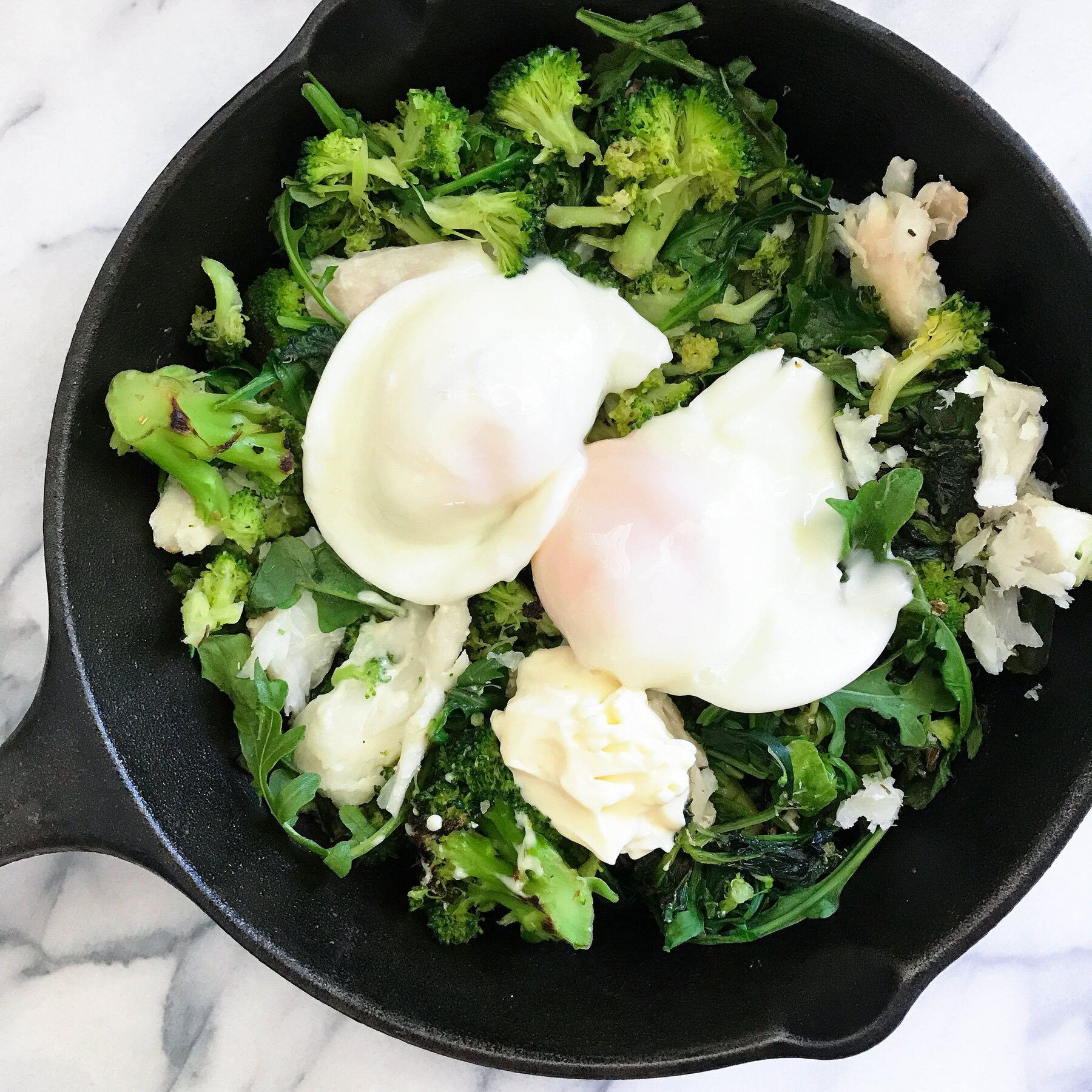
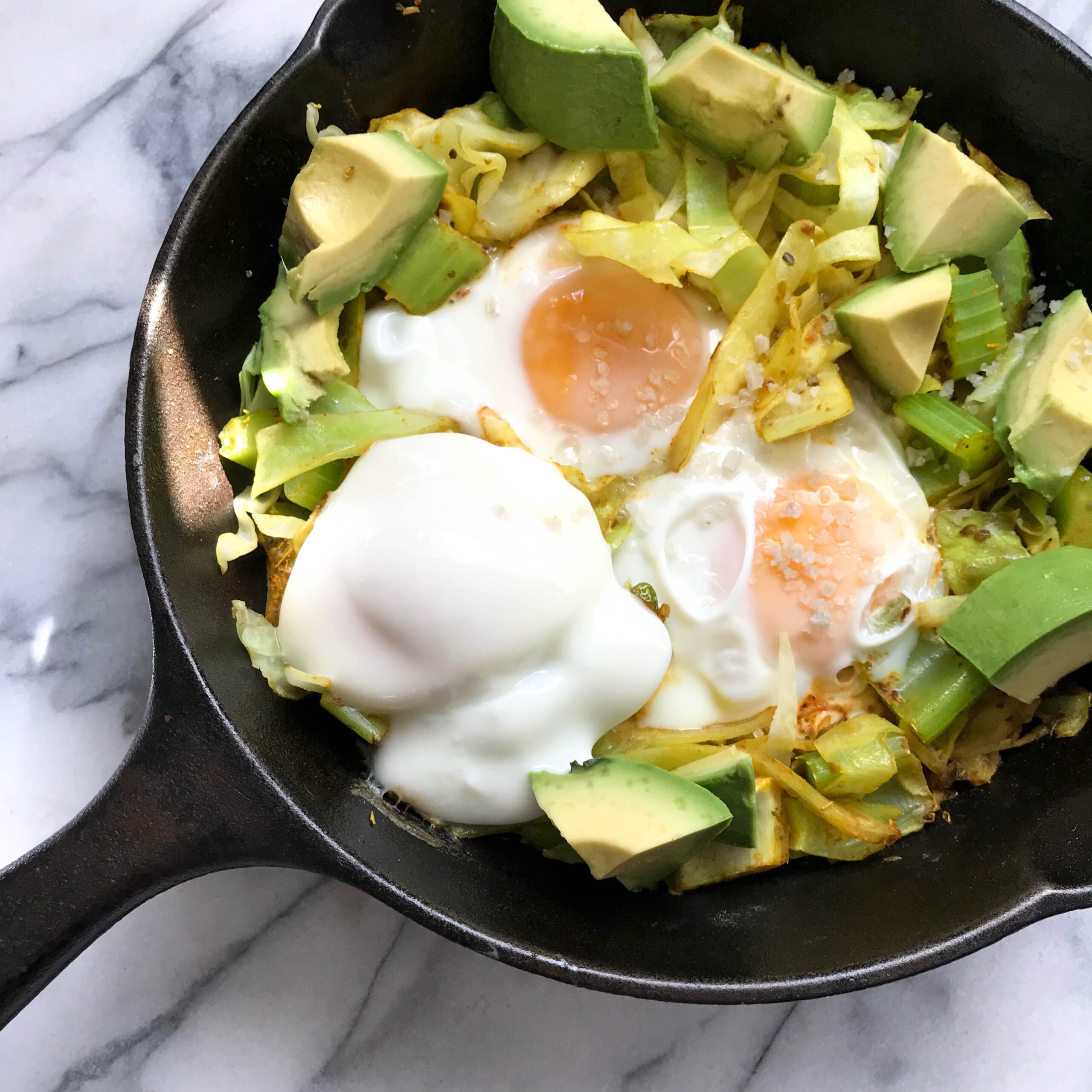
There is nothing quite like a perfectly poached egg. I’ll eat eggs pretty much any way they’re cooked, but poaching is by far my favorite. My heart skips a beat when that delicious yolk drips down over my vegetables — anyone else?
As much as I love poached eggs, I’m always too lazy to make them the old-fashioned way. It takes longer than other cooking methods, and I like to keep my cooking quick and simple. I’m also really not that great at poaching eggs anyways, to be completely honest. It usually falls apart whenever I try, so I guess I should work on my technique.
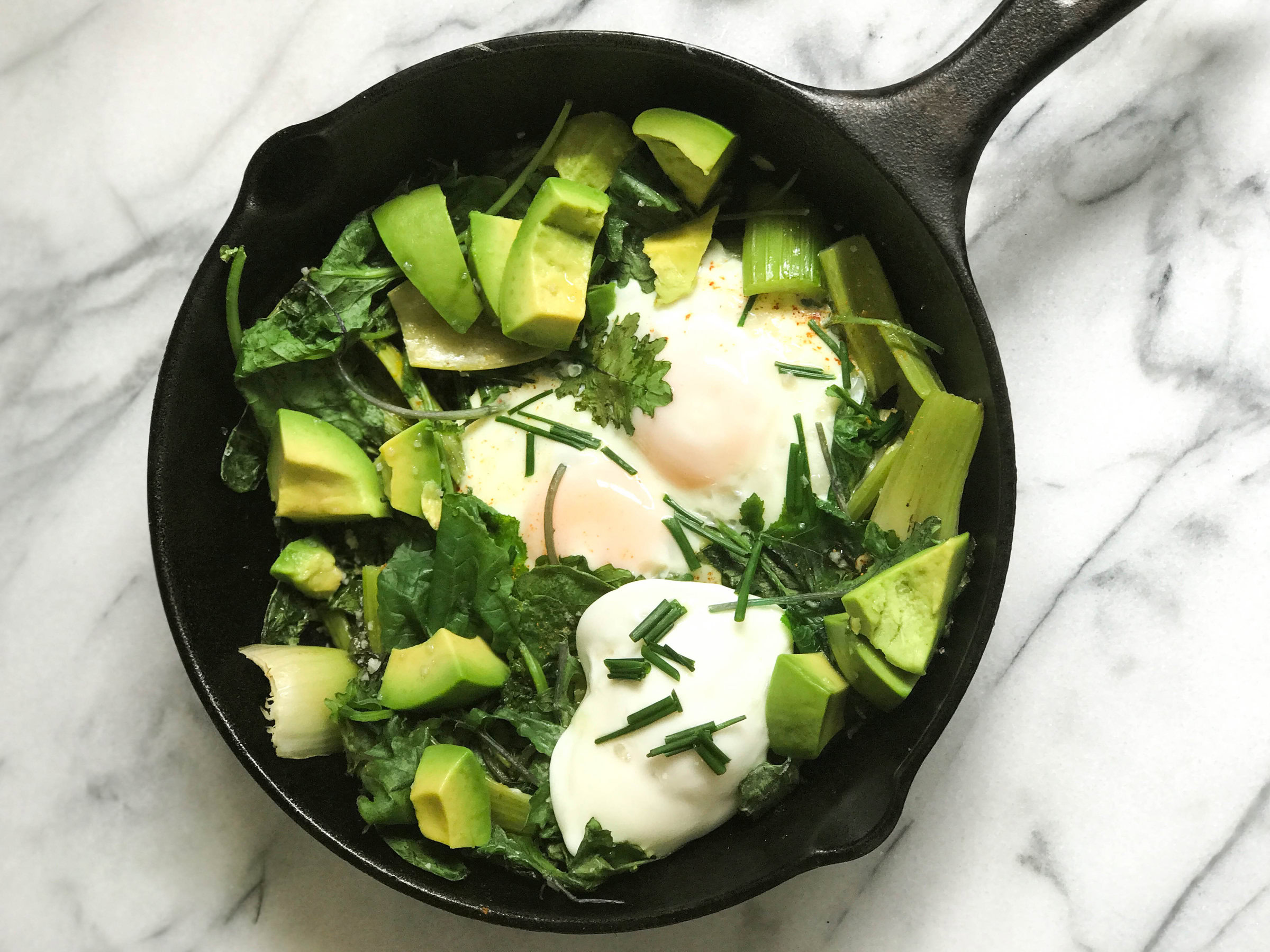
When I was in college, I found this trick for poaching eggs in the microwave, and it totally changed my life. It saved me when a microwave was the only way I had to cook food in the dorms, but now that I have a full kitchen, it’s still my go-to method. It literally only takes 1 minute, requires barely any effort, and zero skill is required. Any time you see a poached egg on my plate, this is what I did.
I should probably address the issue of microwave use. I definitely don’t think microwaves are the ideal cooking method, but I see no issue using them every so often in the context of a modern lifestyle. That’s my personal decision that works best for my life, so make whatever decision suits you! Putting a cell phone to my head every day isn’t ideal for my health either, but it’s unlikely I’ll stop that anytime soon given the state of modern society. I typically heat up my food in the oven nowadays, but I’ll use a microwave on the rare occasion when I need to. I still don’t know how convinced I am that microwaves are that bad, anyways, but that’s for another time.
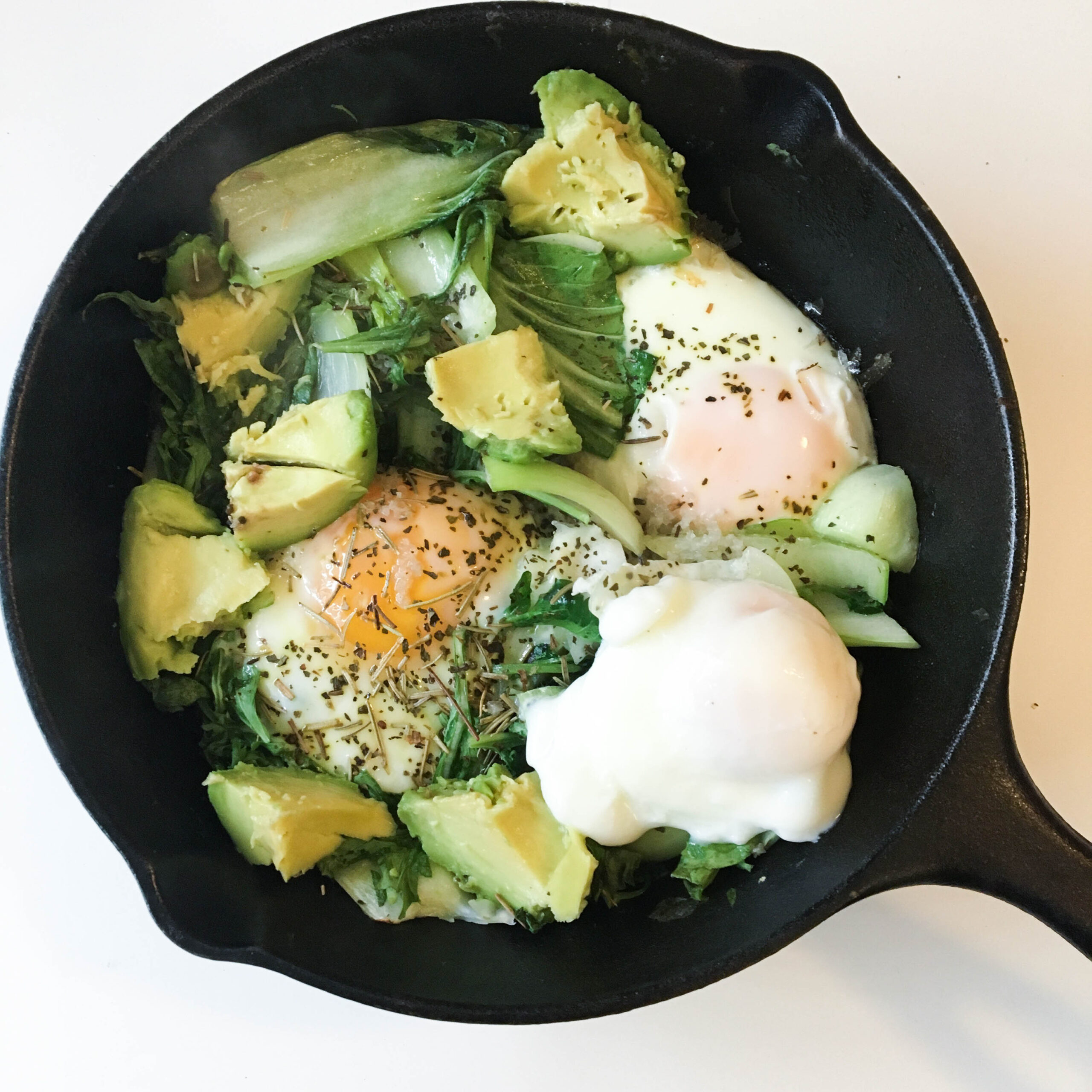
Whenever I post this microwave hack to Instagram, people are FLOORED that it actually works, and they always ask me for more instructions. I figured it was finally time to post it to my blog, even though I’m sure you could google it! This makes poached eggs so incredibly easy – you’ll never go back. It really is as simple as I say.
The key to this hack is figuring out exactly how long it takes your specific microwave to poach the egg, because every microwave is slightly different. I suggest starting off with a minute of cooking time, and adjusting from there. If you cook for a minute and the egg doesn’t look totally cooked, add 3-5 more seconds. Some microwaves might need slightly under one minute. My microwave in college was 57 seconds, and my microwave now is 1 minute and 3 seconds. Yes, it’s that exact. Every second counts! Toy around, and you’ll figure out the perfect timing!
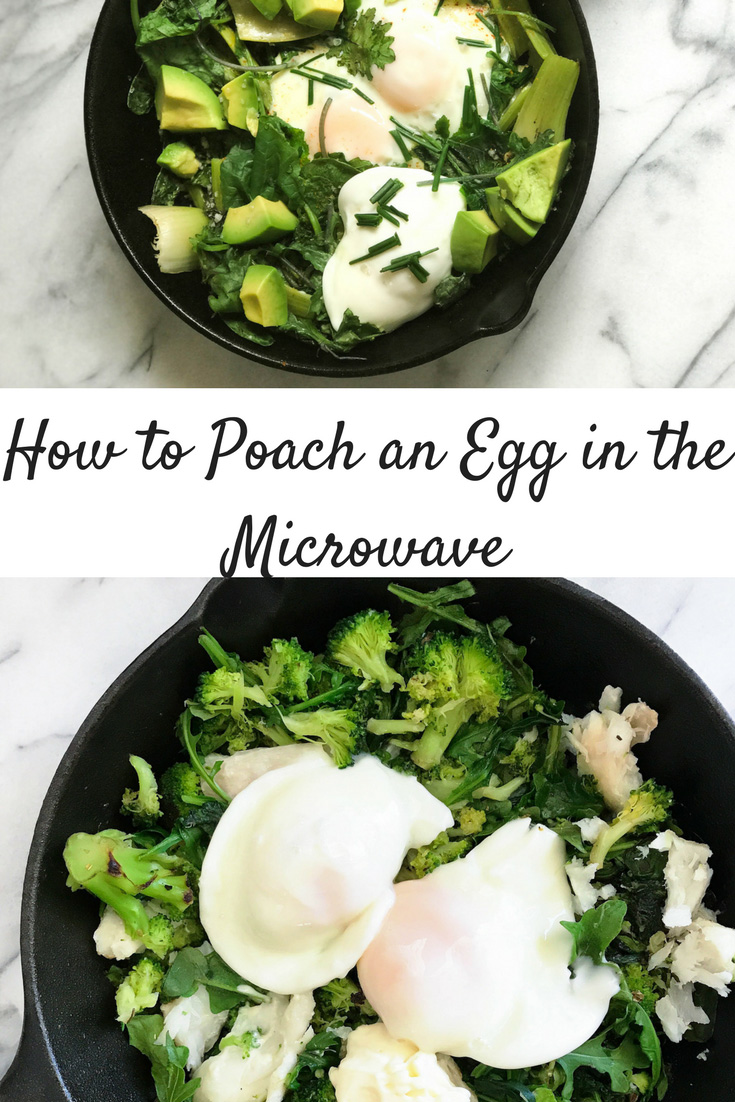
How to Poach an Egg in the Microwave
Ingredients:
- 1 egg
- 1 cup of filtered water
- 1 small bowl
- Microwave
Instructions:
- Pour one cup of water into a small bowl.
- Crack your egg into the bowl of water.
- Place the bowl in the microwave, and then microwave for a minute. This might take a little more or less than a minute depending on the microwave, but I suggest starting with 60 seconds. If it’s undercooked, add a few more seconds. If it’s still undercooked, add a few more until you find the perfect time. If it’s overcooked after 60 seconds, next time try 50 seconds and add from there. It takes trial and error, but it’s worth it when you figure out the perfect poaching time!
- Use a spoon to gently remove the egg from the water, and place the egg on your meal!

by Christina | Feb 13, 2018 | Recipes, Wellness
Valentine’s Day is this week, so of course I had to post a V-Day inspired dessert! Valentine’s Day is actually one of my favorite holidays, believe it or not. Love is in the air, and all around me I see pink, flowers, and chocolate. That’s my kinda day. What’s better to celebrate than love?!
I couldn’t let the day go by without posting a festive recipe, but I’ll be honest – I haven’t really been in the baking mood, which is strange for me. I’ve been feeling a bit lazy recently. I’m also still not eating sugar, so I thought an easy, no-fuss, sugar-free dessert option was very necessary.
I’m honestly in disbelief that these don’t have any sugar. I can’t tell if my taste buds have changed so much in the last year that I consider anything not savory to be extremely sweet, or if these really are as genius as I think they are. I’m thinking it’s a combination of both.
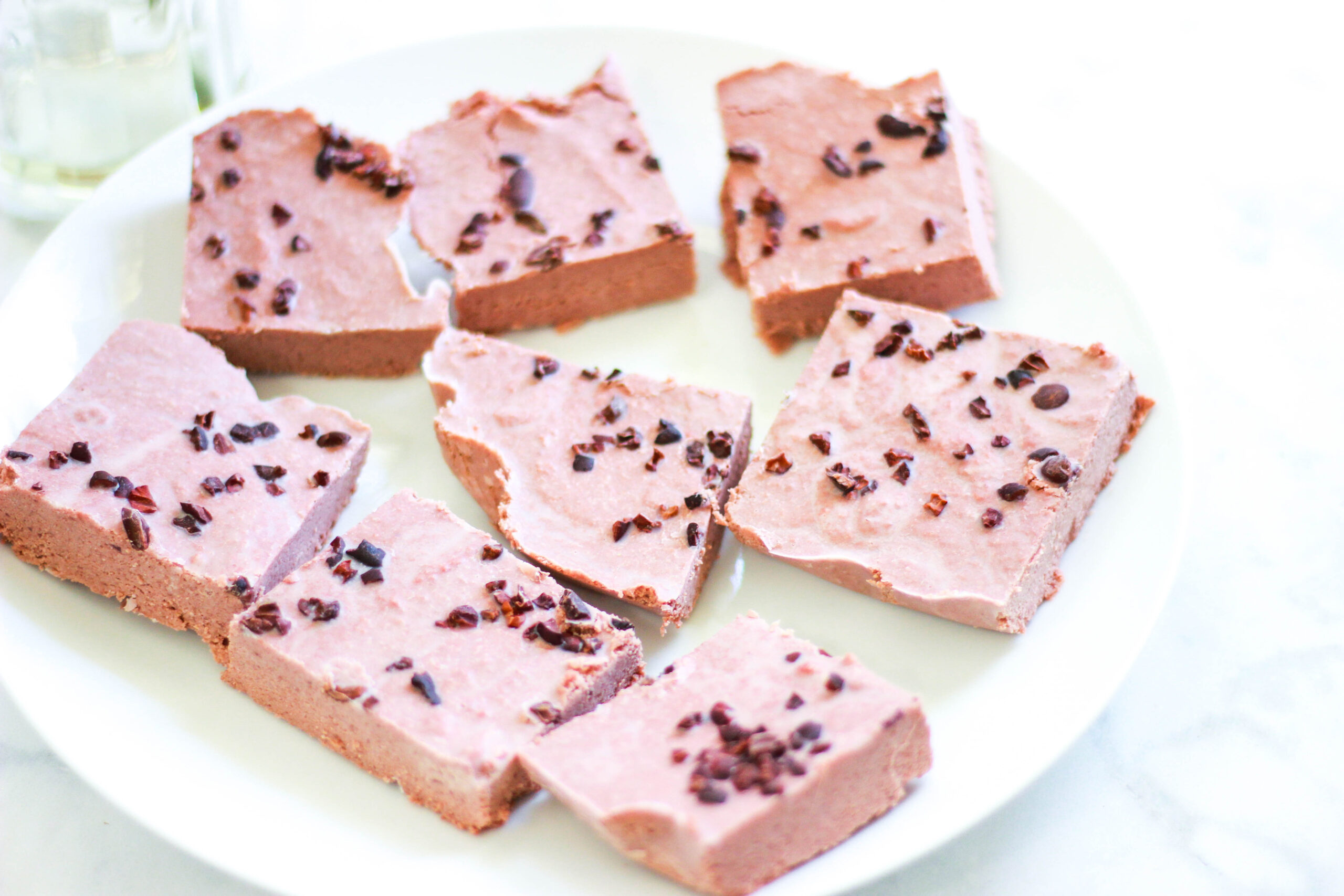
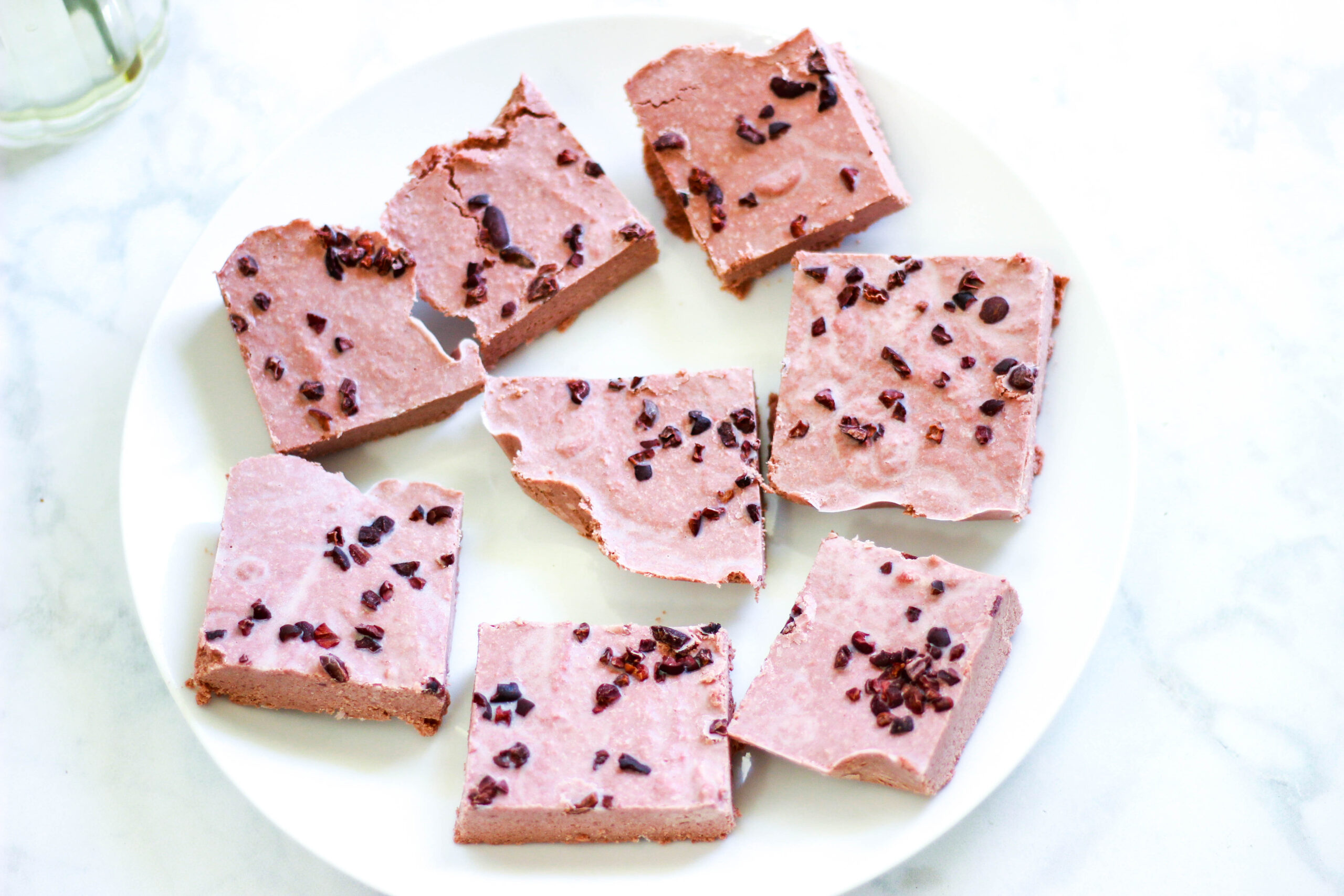
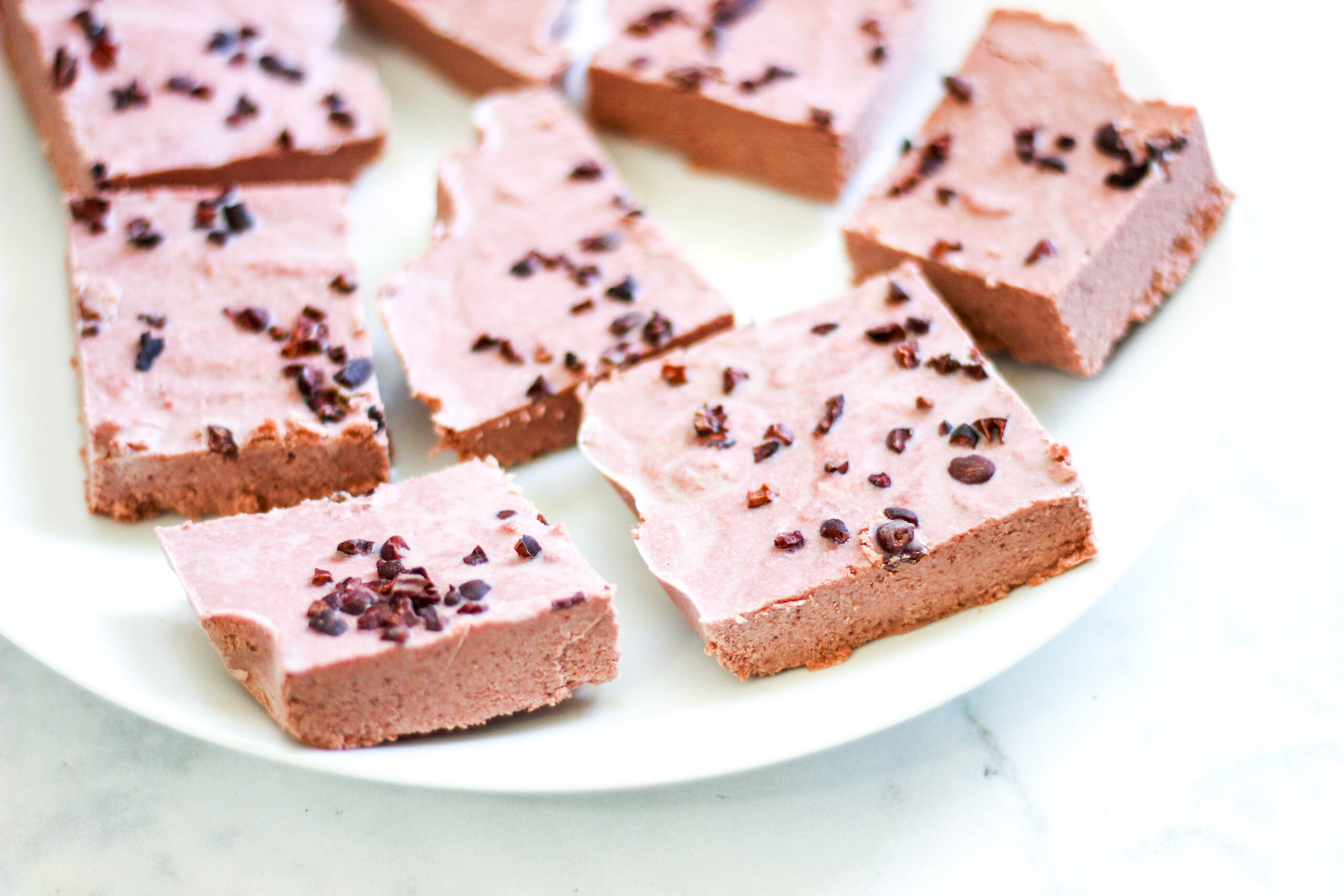
When you use coconut butter, coconut milk, cacao, and vanilla in a recipe, you don’t need much else to make a naturally sweet treat! If you are transitioning into a sugar-free lifestyle or are following a sugar-free health protocol, coconut butter is your friend. It tastes like frosting, but there’s no sweetener. This red velvet freezer fudge is the perfect dessert to convince anyone that they definitely don’t need sugar to satisfy a craving for sweetness. For anybody who’s having a sugar-free Valentine’s Day — these are for you.
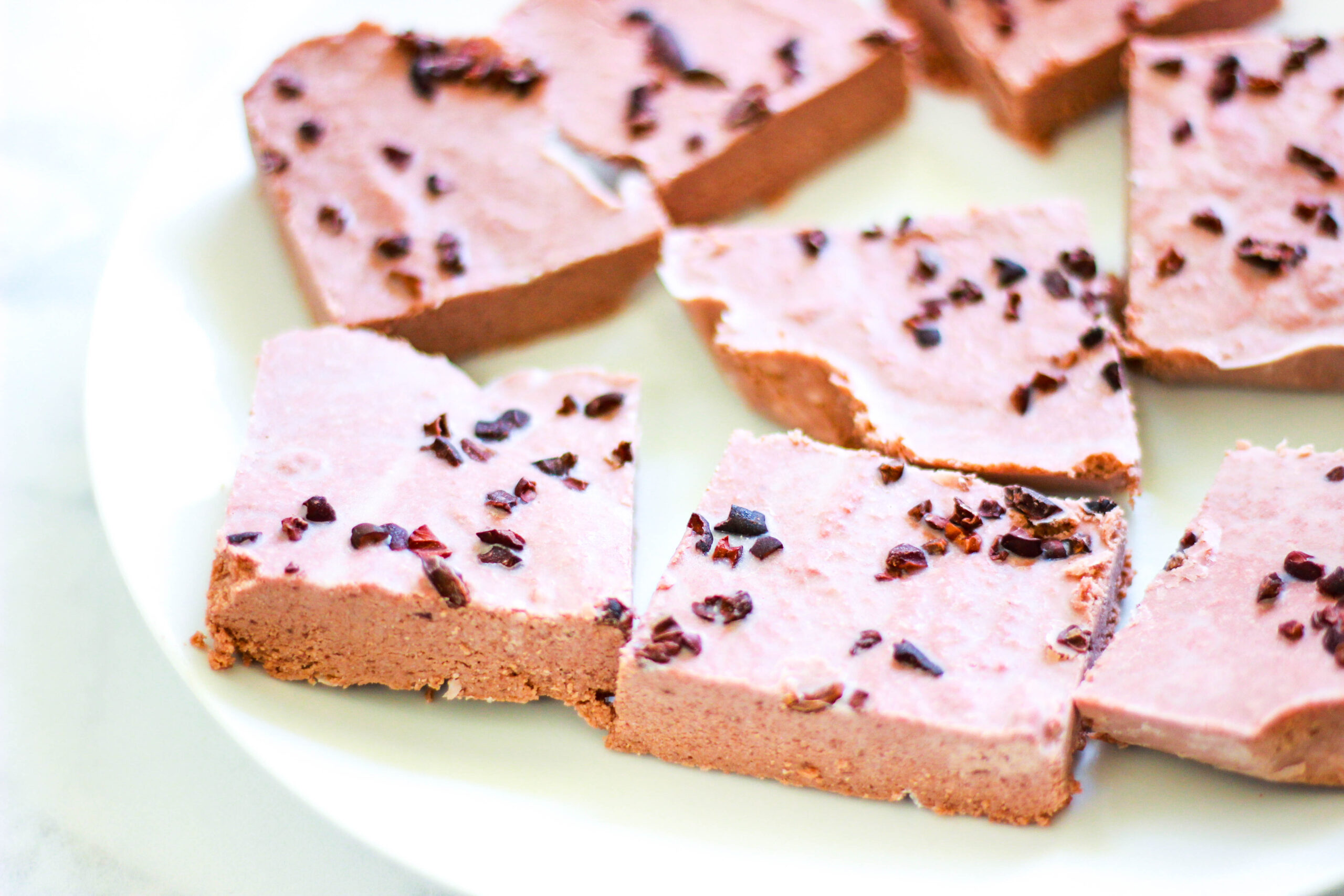
This year, I really wanted to make something that was red velvet. Red velvet anything sounds so luxurious and fancy. Why does chocolate taste even better when it’s red? The only thing I’ve ever made myself that was red velvet were some cookies about two years ago, and I used dye to create the red color. While these aren’t deep red in color like most red velvet (artificial) treats you’ll find, they’re also completely natural in color. You don’t need food dye. Also, did I mention they’re sugar-free?
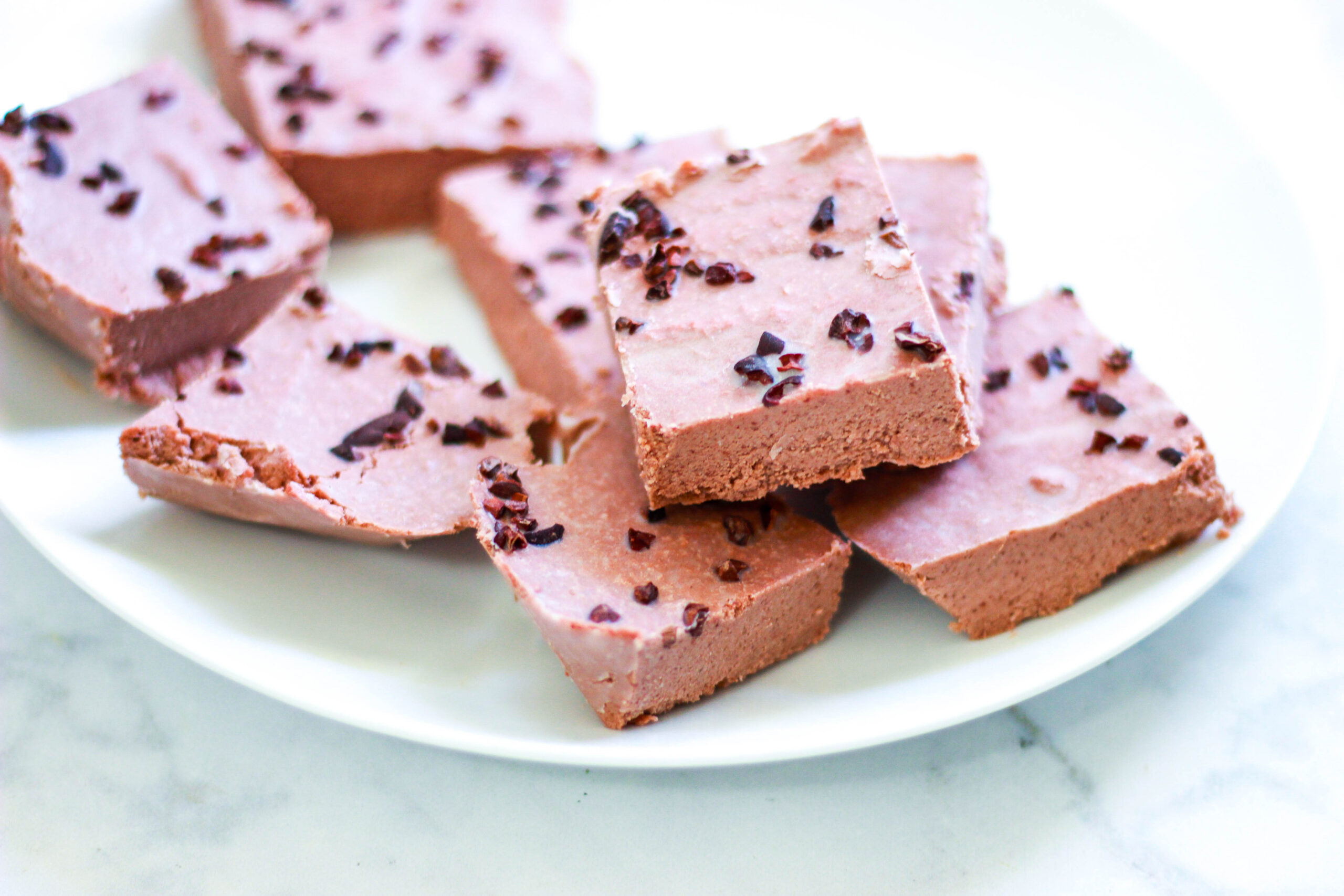
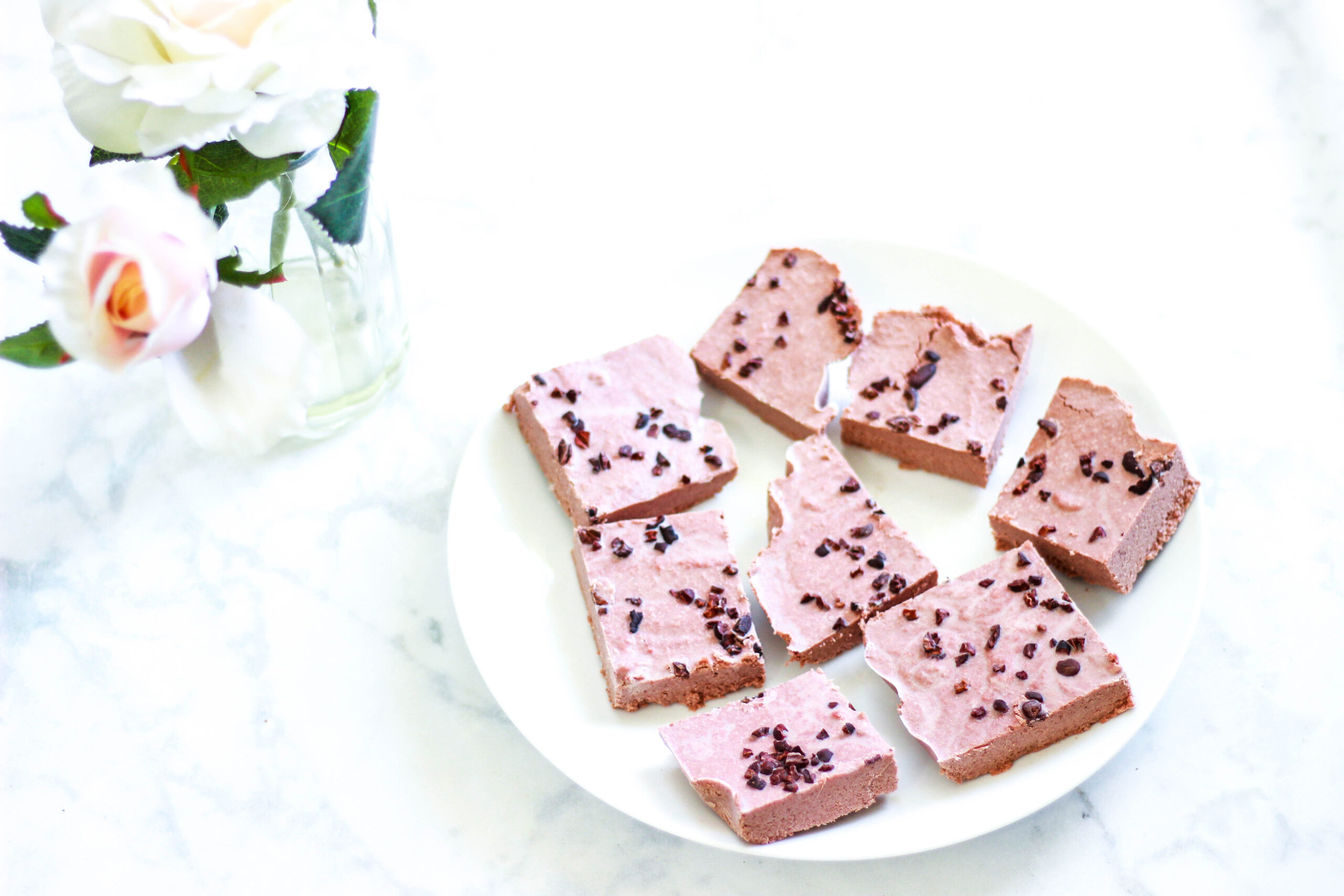
I dig the light red shade, though. It’s almost like a pink. Either way, I think it’s perfectly festive for Valentine’s Day! The shade comes from the hidden beets inside. Beets are an excellent vegetable for many reason, but besides their nutritional benefits, they’re also great for staining things. Usually, my hands (I kid), but in this case, fudge “batter.” The beets act as a natural food dye while also adding in even more natural sweetness! Who knew coconut, chocolate, and beets went together so well?!
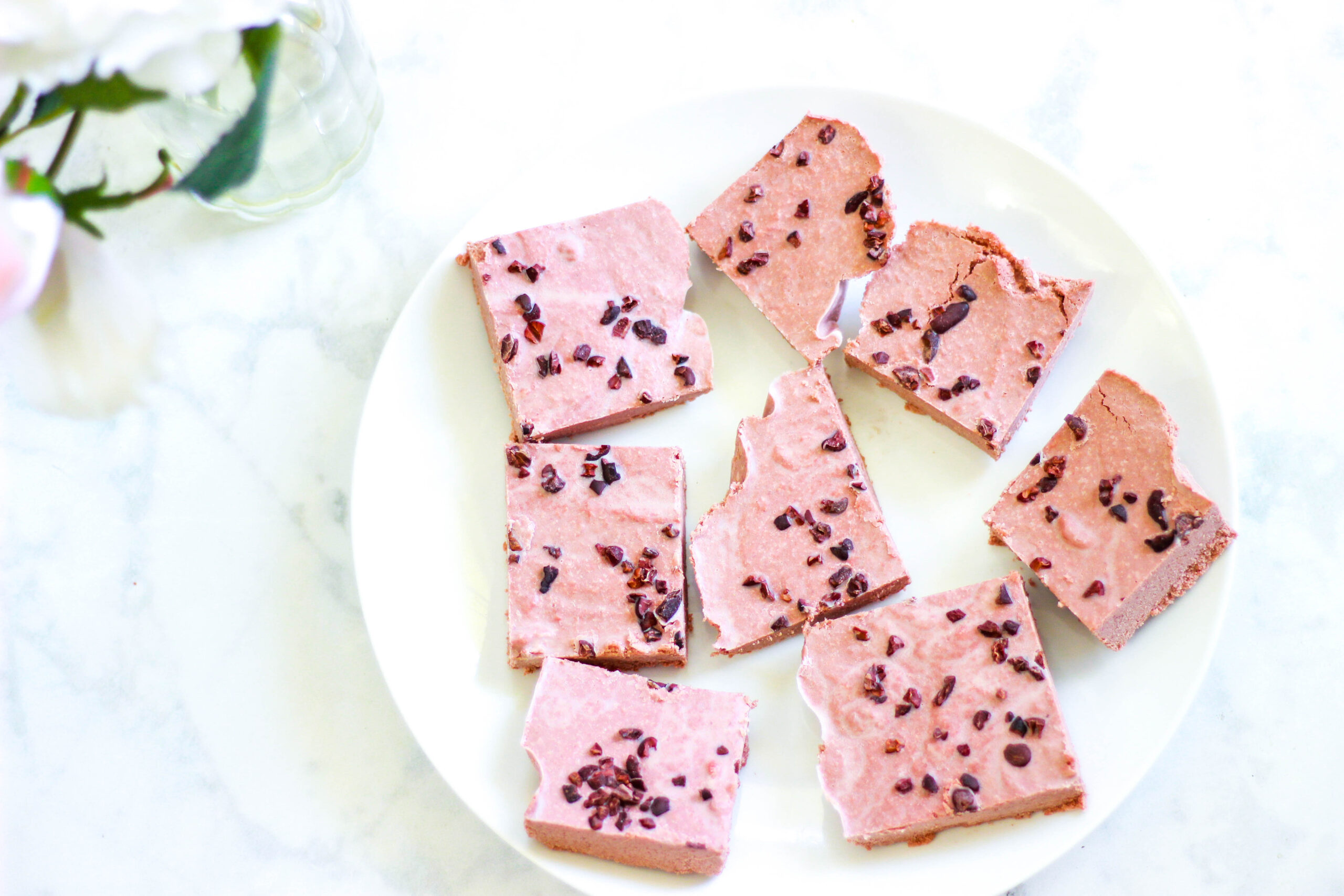
Beets are high in vitamin C, fiber, and the B vitamin folate. They’re a great source of antioxidants, have anti-inflammatory benefits, and aid in detoxification. If your liver needs a bit of support and detoxification, beets are the perfect addition to your diet. That’s one reason why I really should be eating more beets than I currently do, but to be honest… I don’t really like the taste of beets on their own.
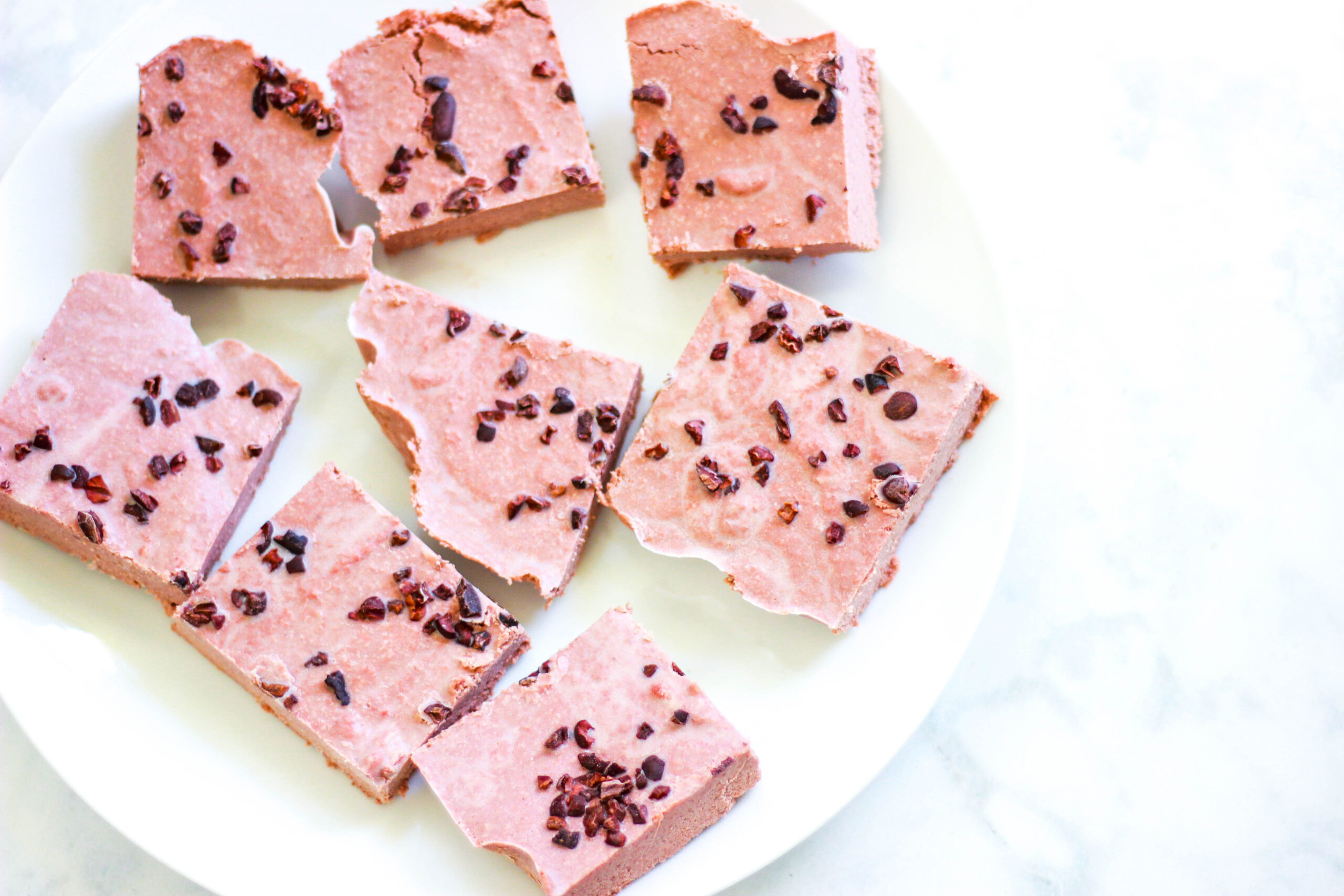
This recipe quite literally changed my life. I will happily eat beets when they’re in freezer fudge form like this – you cannot even taste them! So if you need some liver detoxing but hate the taste of beets, these are right up your alley.
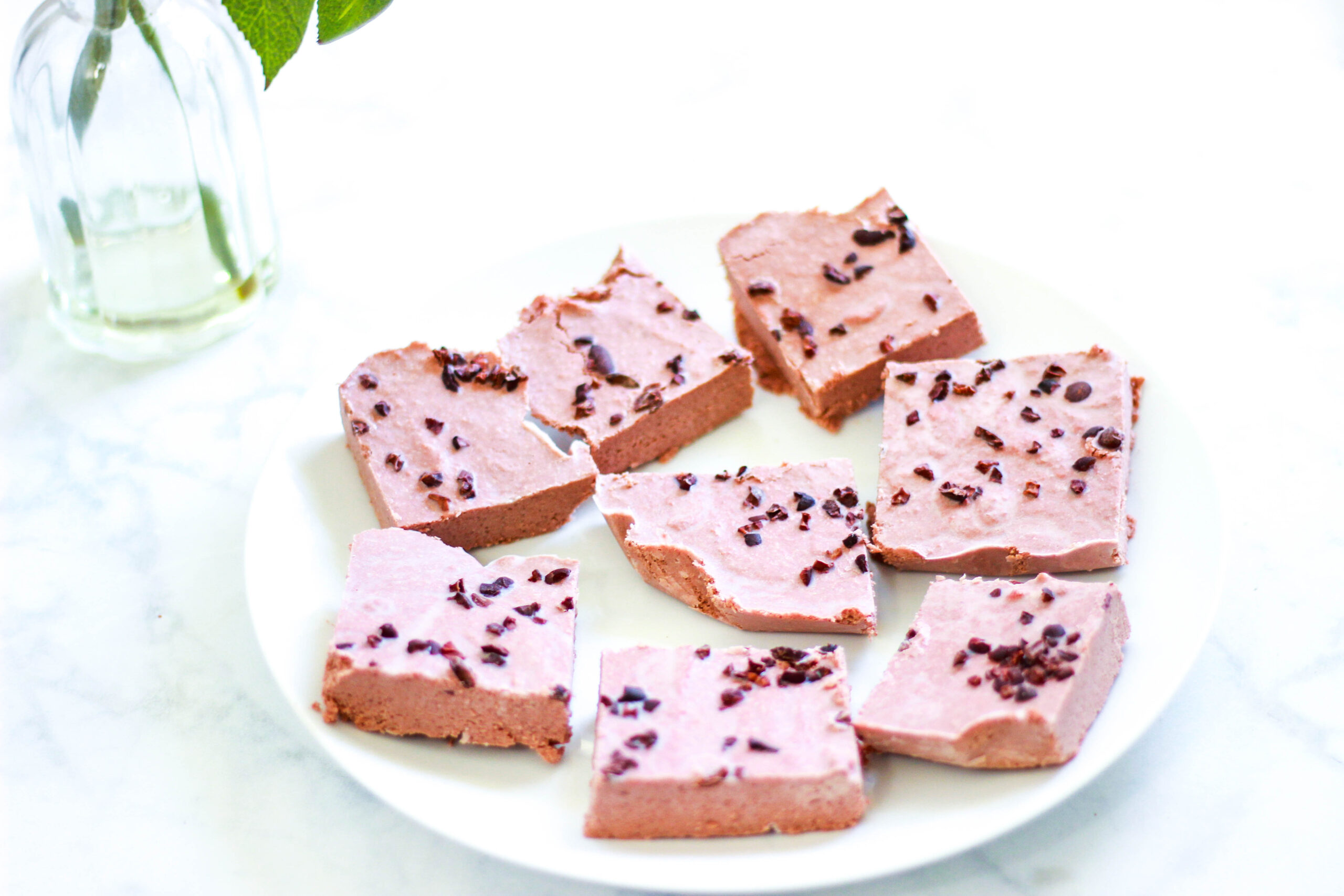
Cooking beets can be quite the nuisance, so I recommend picking up some pre-cooked beets to make your life easier. That’s what I did! Lots of stores carry pre-cooked, plain beets in the refrigerated section that you can just grab and open up when you need them. Most of those come in packs of four, and luckily that’s exactly how much you need for this recipe! I like “I Love Beets!” and the ones from Trader Joe’s. Just make sure they’re plain!
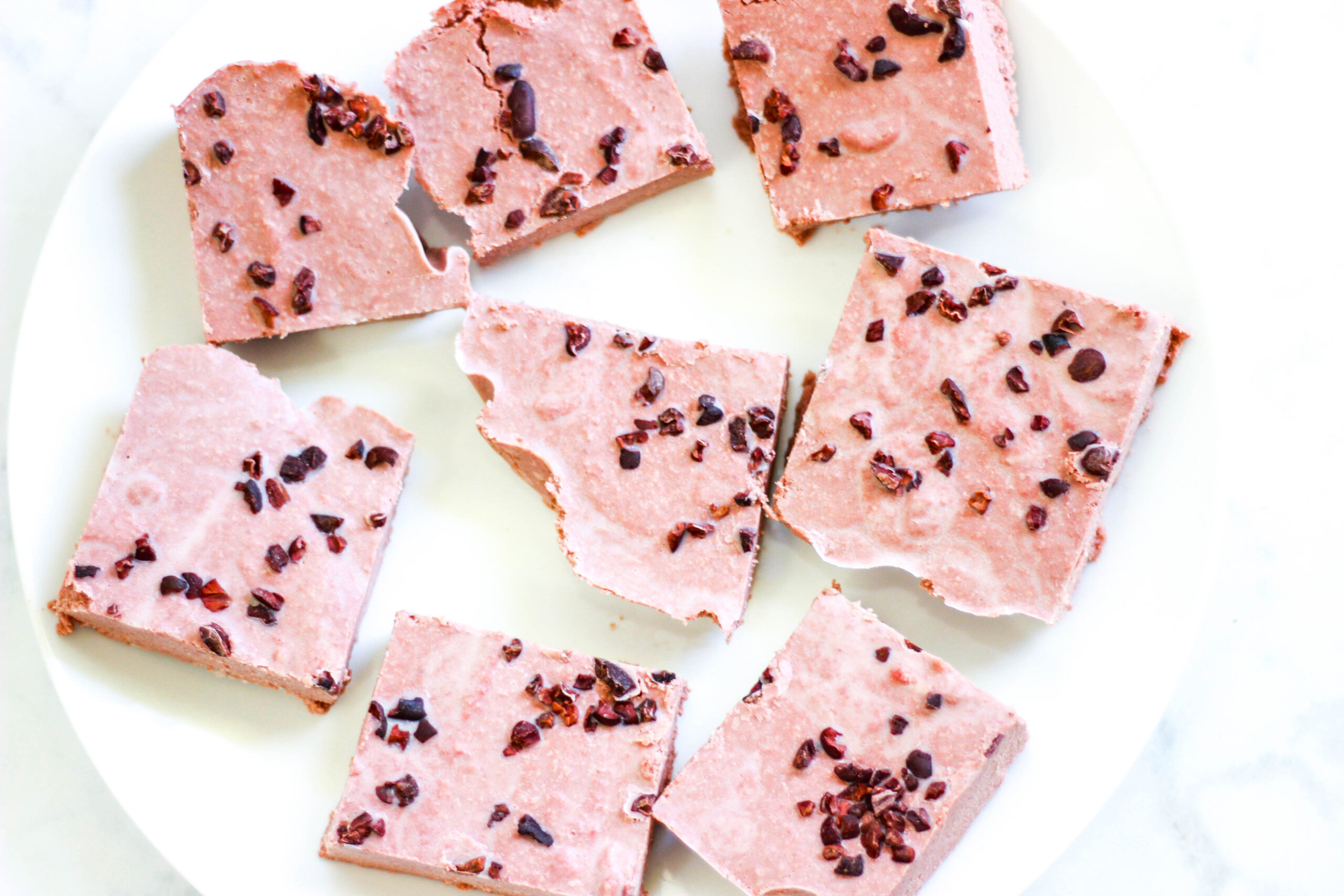
I had a really hard time naming these, and I was deciding between freezer fudge and no-bake brownies. They’re really a mix between fudge and raw brownies, but I went with the fudge. The whole idea is that these are minimal effort. Like I mentioned, I really haven’t been in the mood to do anything too difficult in the kitchen recently. It’s just a phase, but I’m basically trying to make everything as easy as possible when it comes to cooking since my brain is currently extremely cluttered with so many other things. Therefore, I wanted a quick and easy dessert recipe, and throwing ingredients into a food processor and tossing it in the fridge sounded like the perfect answer.
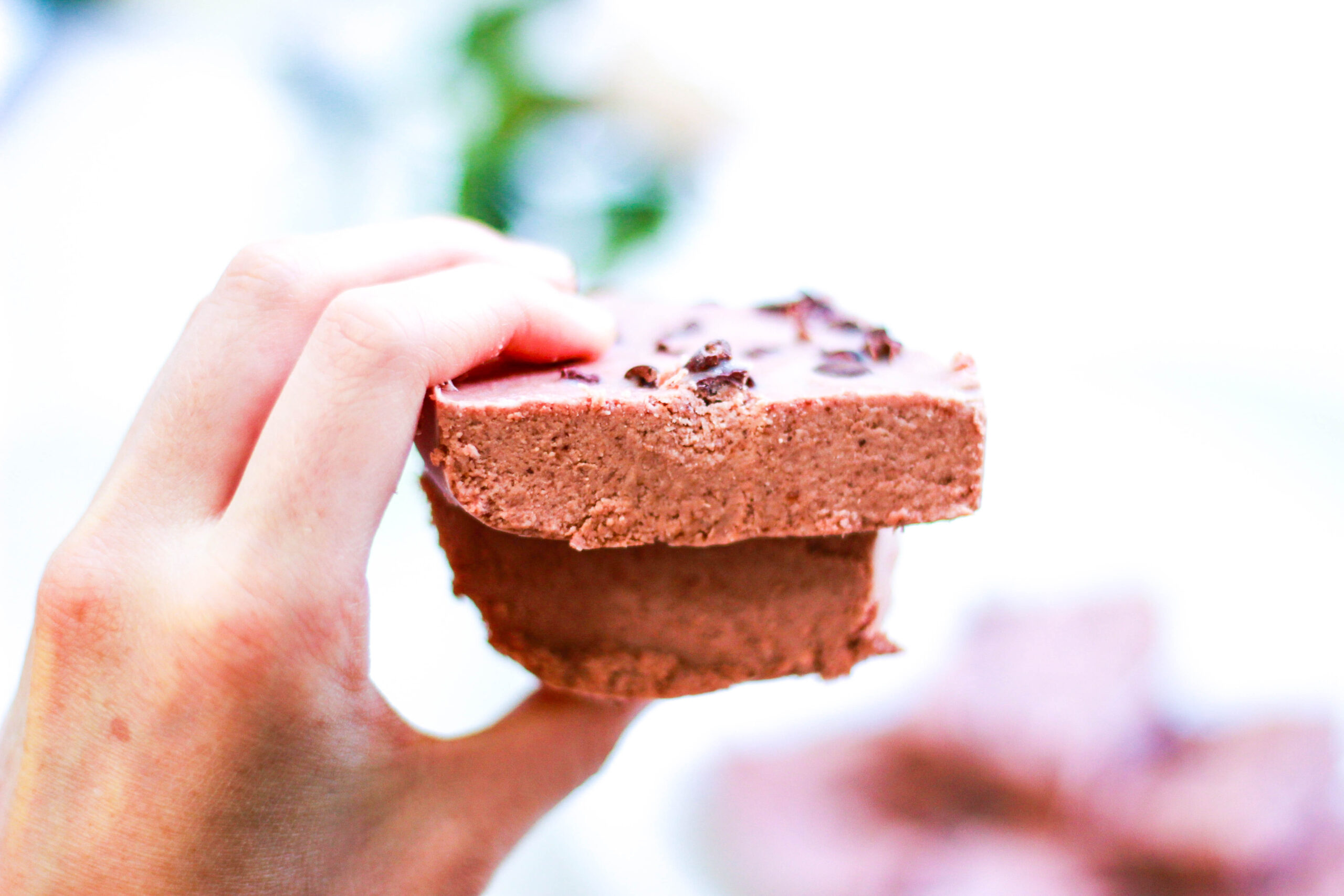
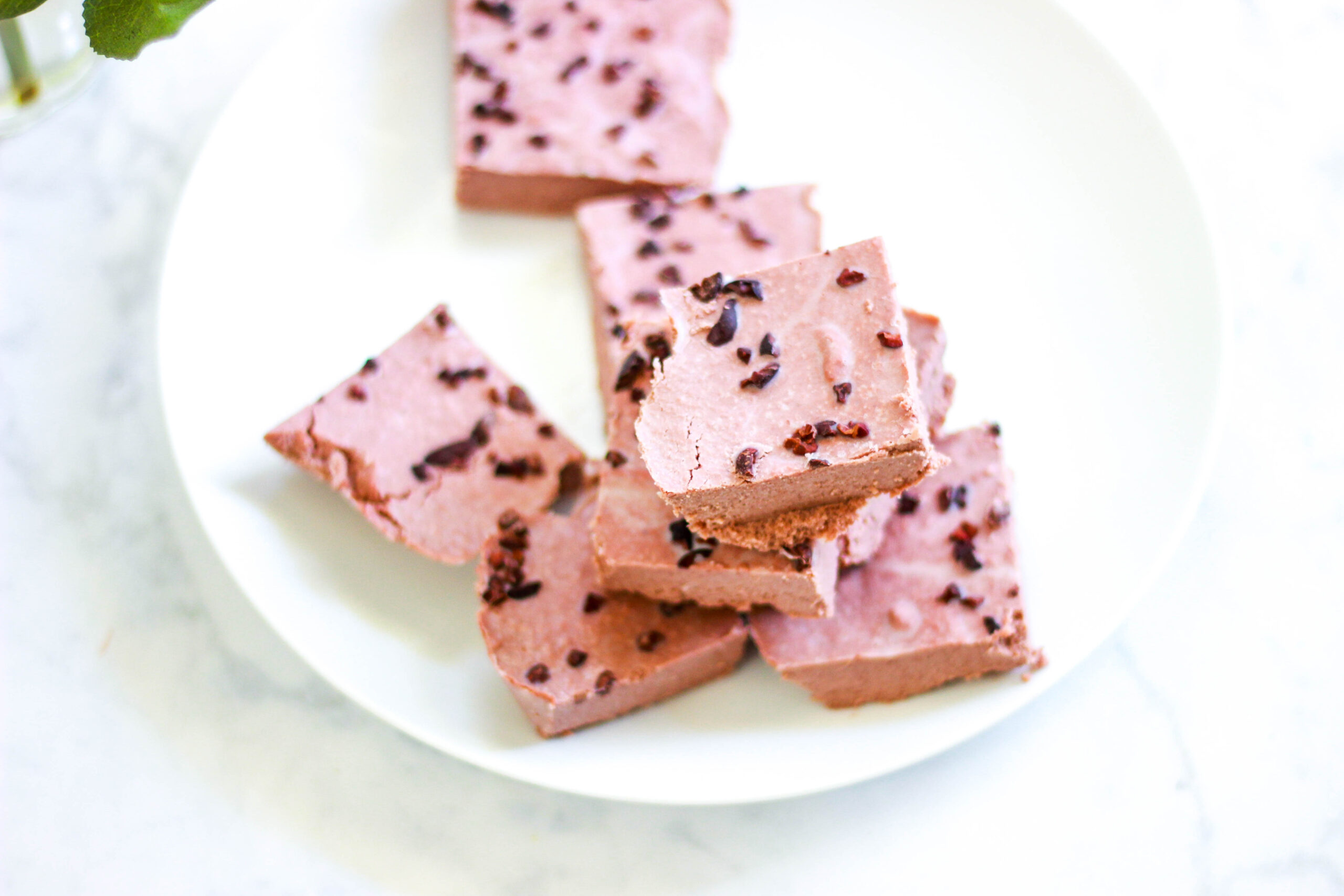
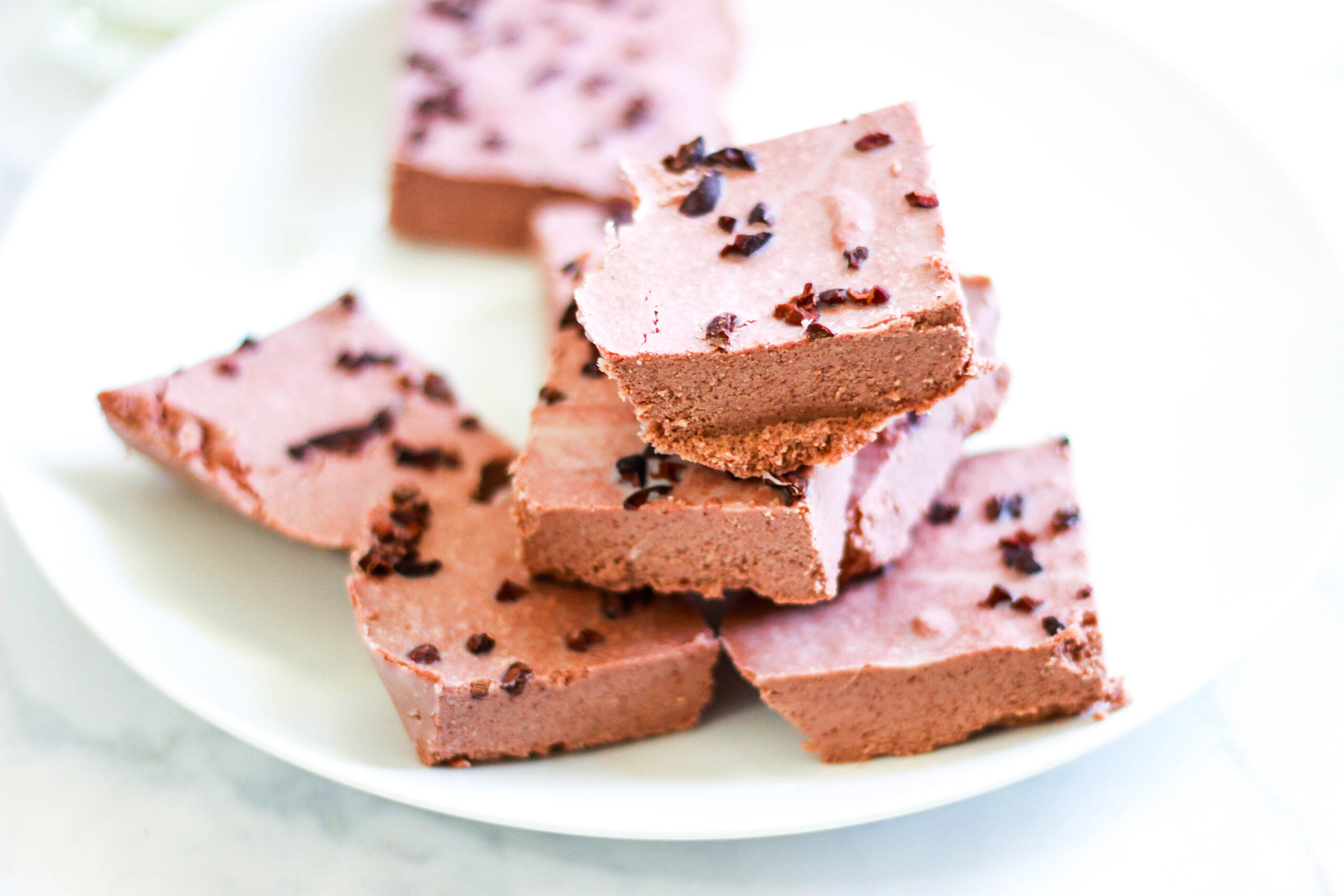
Once you mix up all of the ingredients, you can either freeze or refrigerate these to let them set. They’ll take longer to set in the fridge and they’ll come out a bit softer, more like raw brownies. If you put them in the freezer, they will freeze, obviously, and become harder. When they’re in the freezer I let them thaw a bit before I eat them! I personally prefer the texture from the fridge, but I’ve been storing these in the freezer for the convenience. Don’t leave these out for too long if you’ve been storing them in the fridge – they’ll melt if it gets too warm!
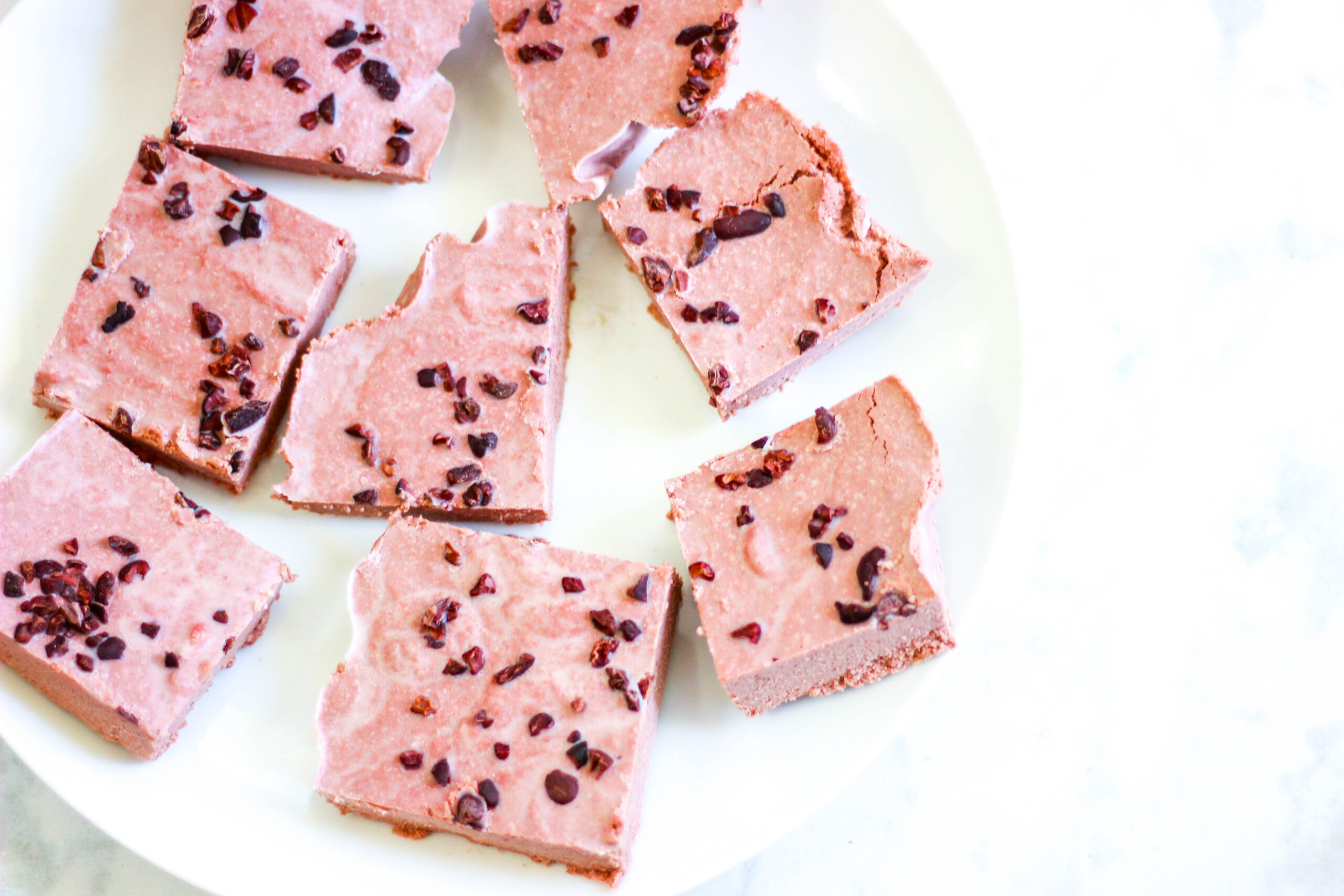
These are the perfect reminder that yummy treats don’t require sugar or anything fancy. You’ll get plenty of healthy fats in here mixed with a hidden veggie, so these can be great as a “fat bomb” recipe too! I dare you to give these to someone who eats a lot of sugar. They’ll never guess what’s inside! I think these are also a great treat for kids! Plus, I love how simple these are to make. They’re the perfect lazy girl’s dessert. If you like chocolate, anything fudgey, and coconut, these are meant for you.
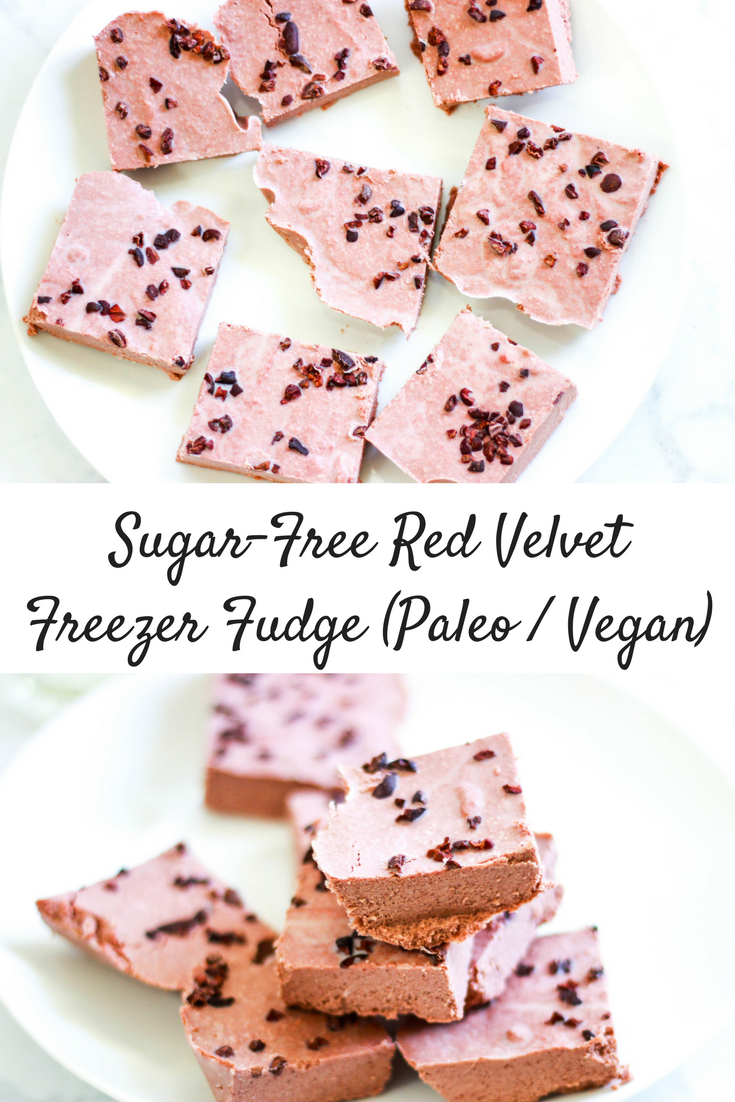
This Sugar-Free Red Velvet Freezer Fudge is paleo, vegan, and keto-friendly. If you’re AIP, replace the cacao with carob! This freezer fudge is soft, creamy, rich, and oh-so-delicious. It’s a cross between fudge, a raw brownie, and a fat bomb. No kitchen skills required. All you need is a food processor, five minutes, and patience while you wait for them to set in the fridge! If you’re in the mood for red velvet but don’t want to enter into a sugar coma, you need these in your life!
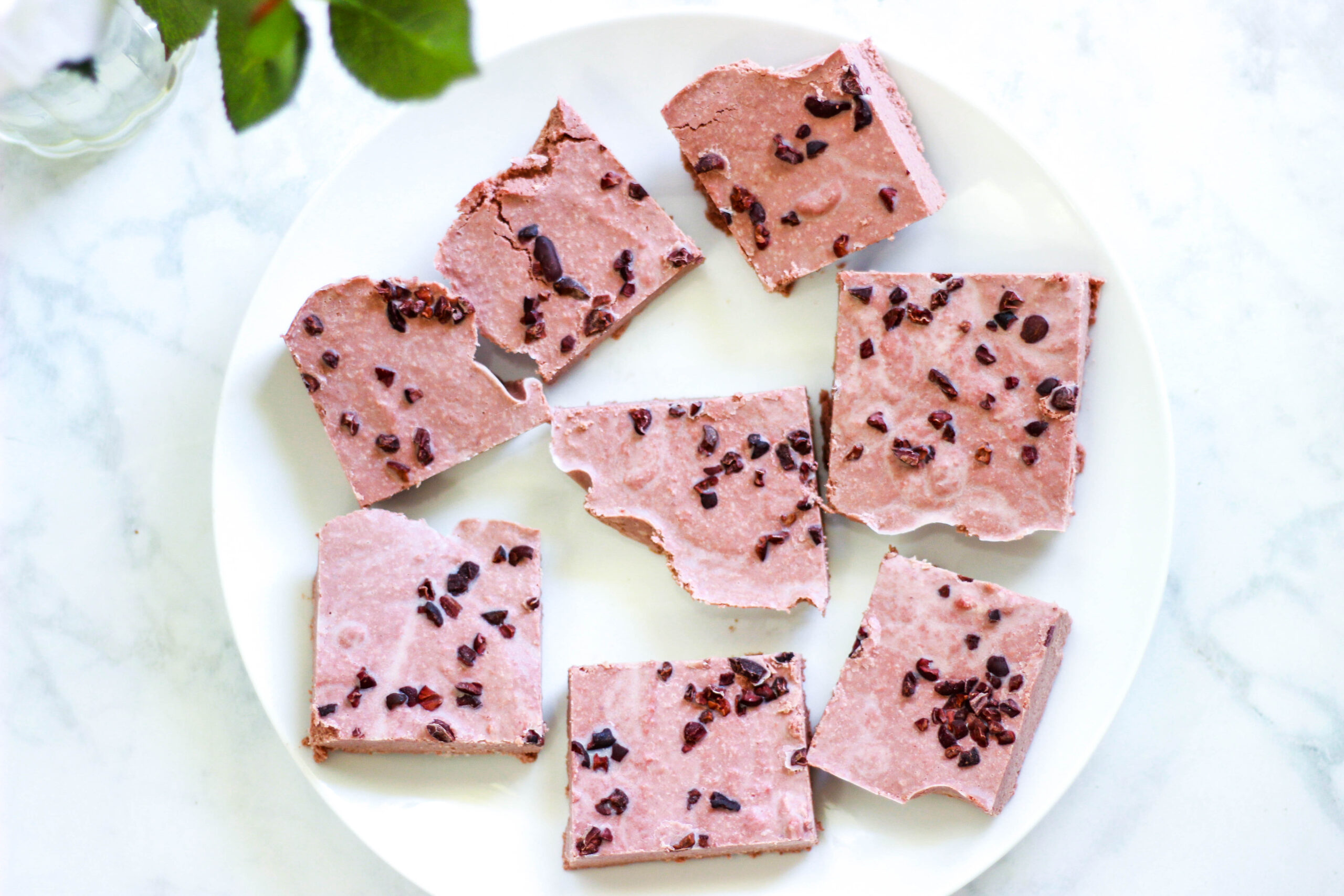
Sugar-Free Red Velvet Freezer Fudge (Paleo / Vegan)
Time: 5 min prep, 1 hour to freeze / refrigerate
Serves: 10-12
Ingredients:
- 4 cooked and cooled beets (about 1 1/3 cups worth – I used a pack of four pre-cooked beets that I got from the store!)
- 1/2 cup melted coconut oil
- 1/2 cup melted coconut butter
- 1/2 cup full-fat canned coconut milk
- 2 tbsp cacao powder
- 2.5 tsp vanilla
- 1/4 tsp Himalayan pink salt
- 3 tbsp cacao nibs (optional)
Instructions:
- Add all ingredients except for cacao nibs into a food processor. Process until the mixture is smooth and creamy.
- Line an 8×8 baking pan with parchment paper, or get out silicone molds. Pour the mixture into the baking tray or molds. Sprinkle cacao nibs evenly on top.
- Place in the fridge overnight or in the freezer for 1-2 hours. If you put them in the fridge, they’ll be a bit softer, like a raw brownie. If you put them in the freezer, they’ll get frozen like fudge.
- Once the fudge has hardened, cut into squares and enjoy! Store leftovers in the fridge / freezer.

by Christina | Feb 11, 2018 | Recipes, Wellness
“I don’t have time to eat healthy.” How many times have you heard that?! How many times have you said it? I’ll speak for myself – I hear that a lot. Let’s be honest… that is not a good excuse. Nowadays, we are all extremely busy. I know that I certainly am! Between seeing clients during the day, doing schoolwork, working on my blog, hosting two podcasts, working on other outside projects like my Paleo Women Lifestyle Program and ebooks, I still make time to exercise and eat healthy. You can absolutely do it! There is always time for what you prioritize. Beyond that, though, nowadays it’s pretty darn easy to create a healthy meal in less than 15 minutes thanks to amazing new products and kitchen appliances.
Many people say they’re too busy to eat healthy instead of admitting what the actual issue is, which is usually that they just don’t know what to eat that’s healthy or how to cook quickly. The truth is that it’s just as quick and easy to make a healthy, whole-foods based meal as it is to make an unhealthy one. My meals usually take me 15 minutes to throw together, 30 max. Usually even less than 15 minutes, though. If it’s 30 minutes, most of that is just waiting time during which I’m doing other things. I’ve always been a busy gal, and there are a few key strategies I’ve found and stuck with over the years to make sure that I always fit in a delicious paleo meal every night, made with real-food ingredients. Time to share!
- Always keep an emergency stock of healthy food in your freezer. All of my clients and the women in my Paleo Women Lifestyle Program know how serious I am about this! Keep a bag of frozen veggies and frozen proteins in the freezer. Anytime you’re in a pinch and have no groceries, you can pop those out of the freezer and toss them in a sauté pan or in the oven. You don’t even have to defrost! I also recommend always keeping smoothie ingredients in the freezer. If you ever need a really fast meal, you can just blend up a smoothie!
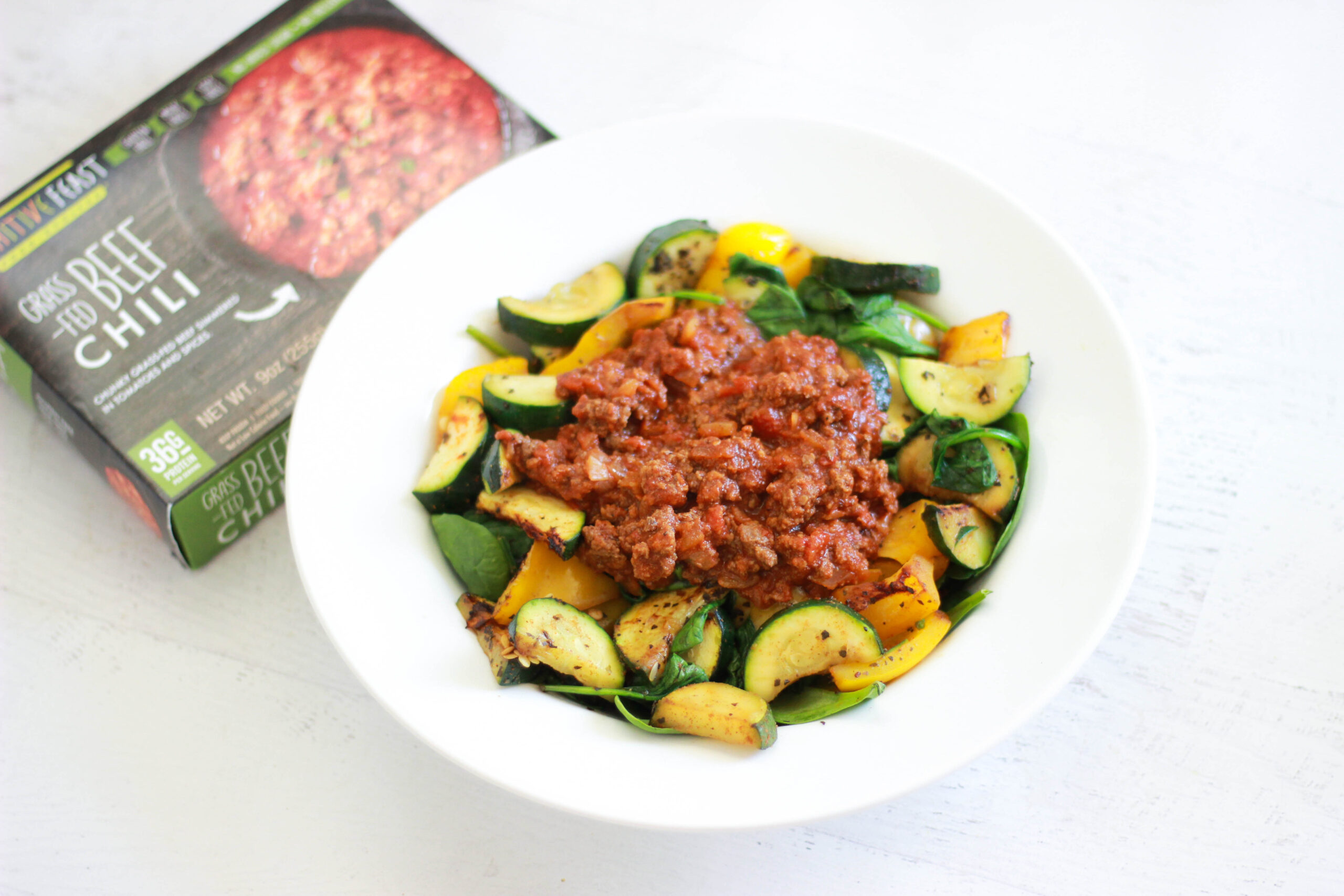
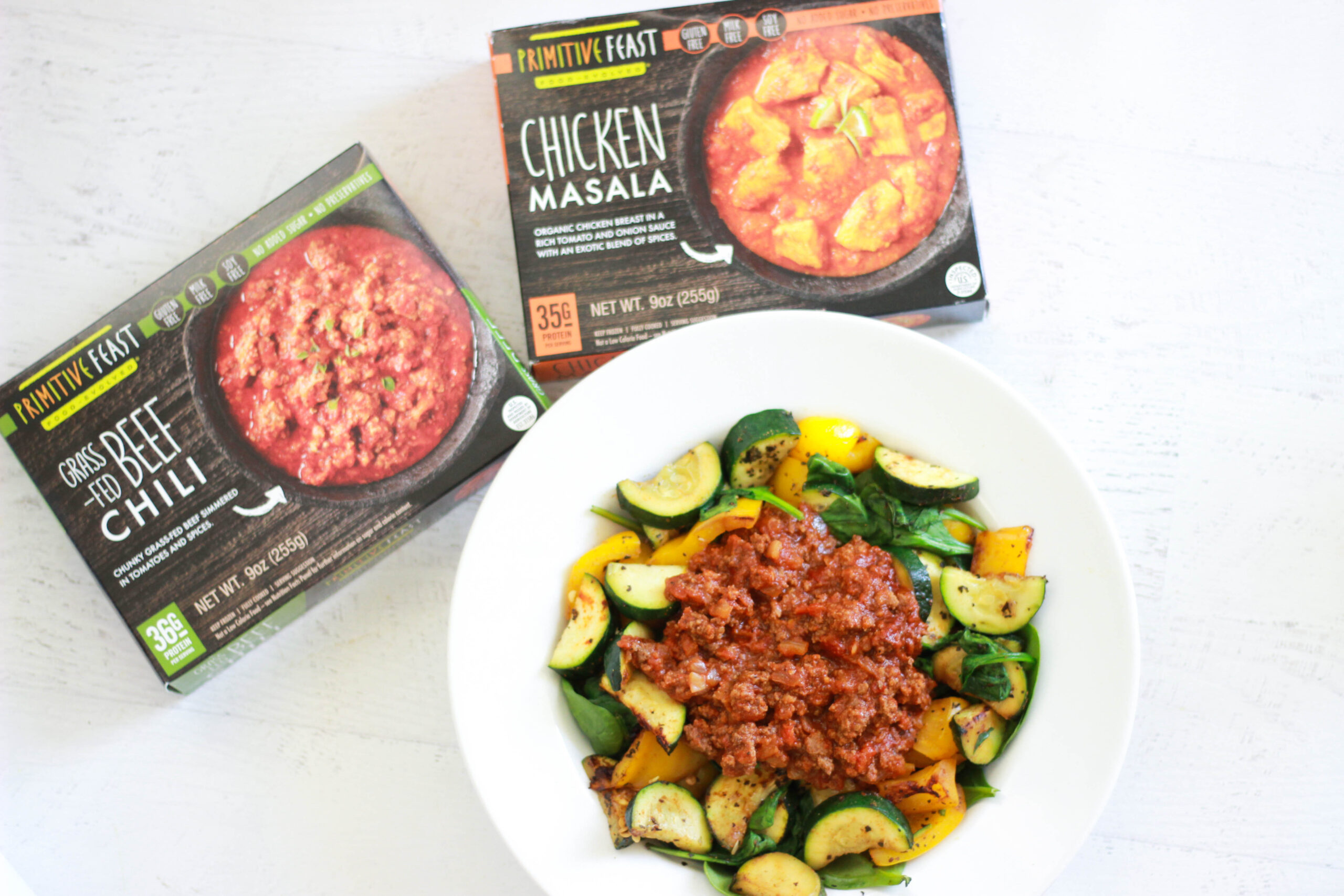
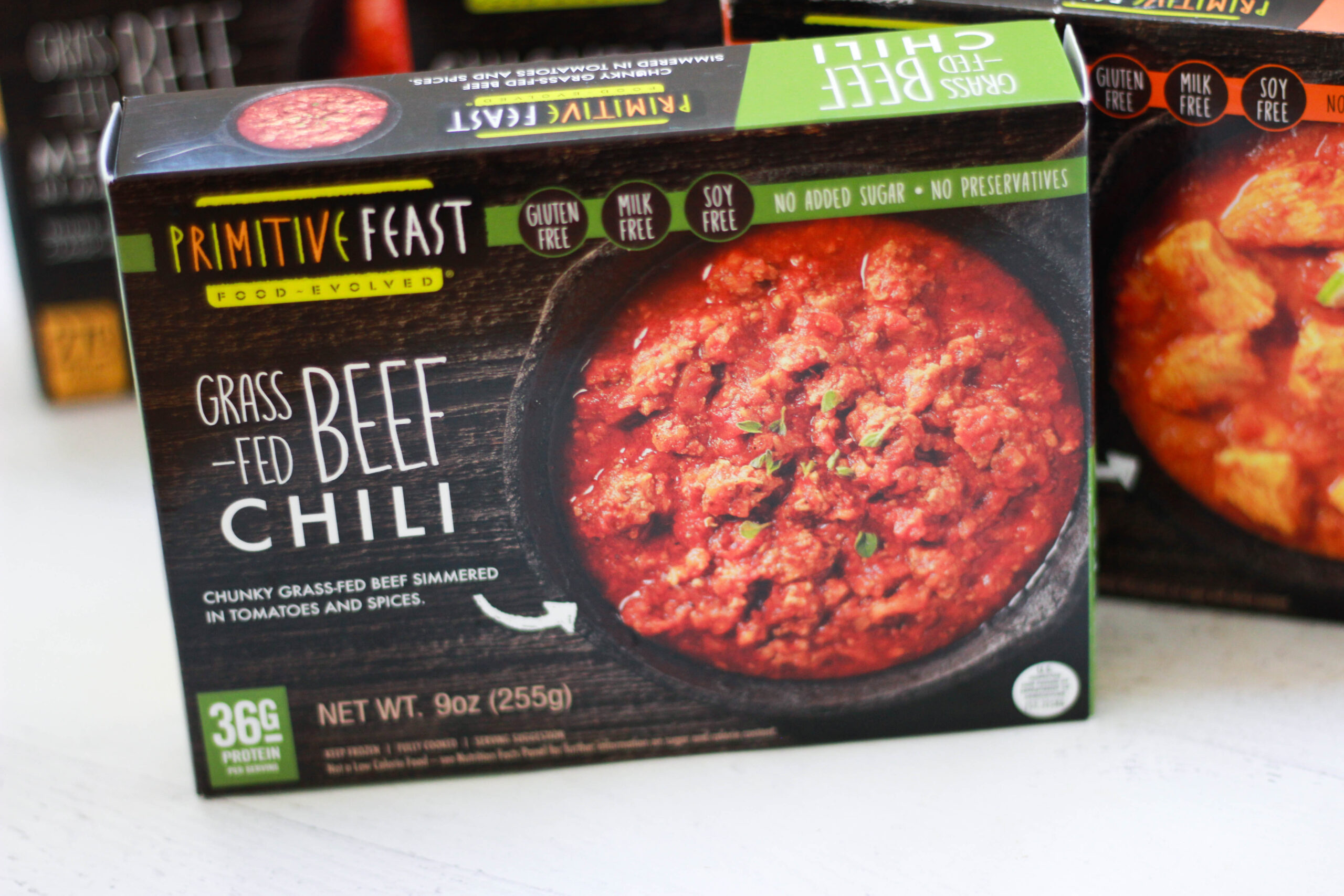
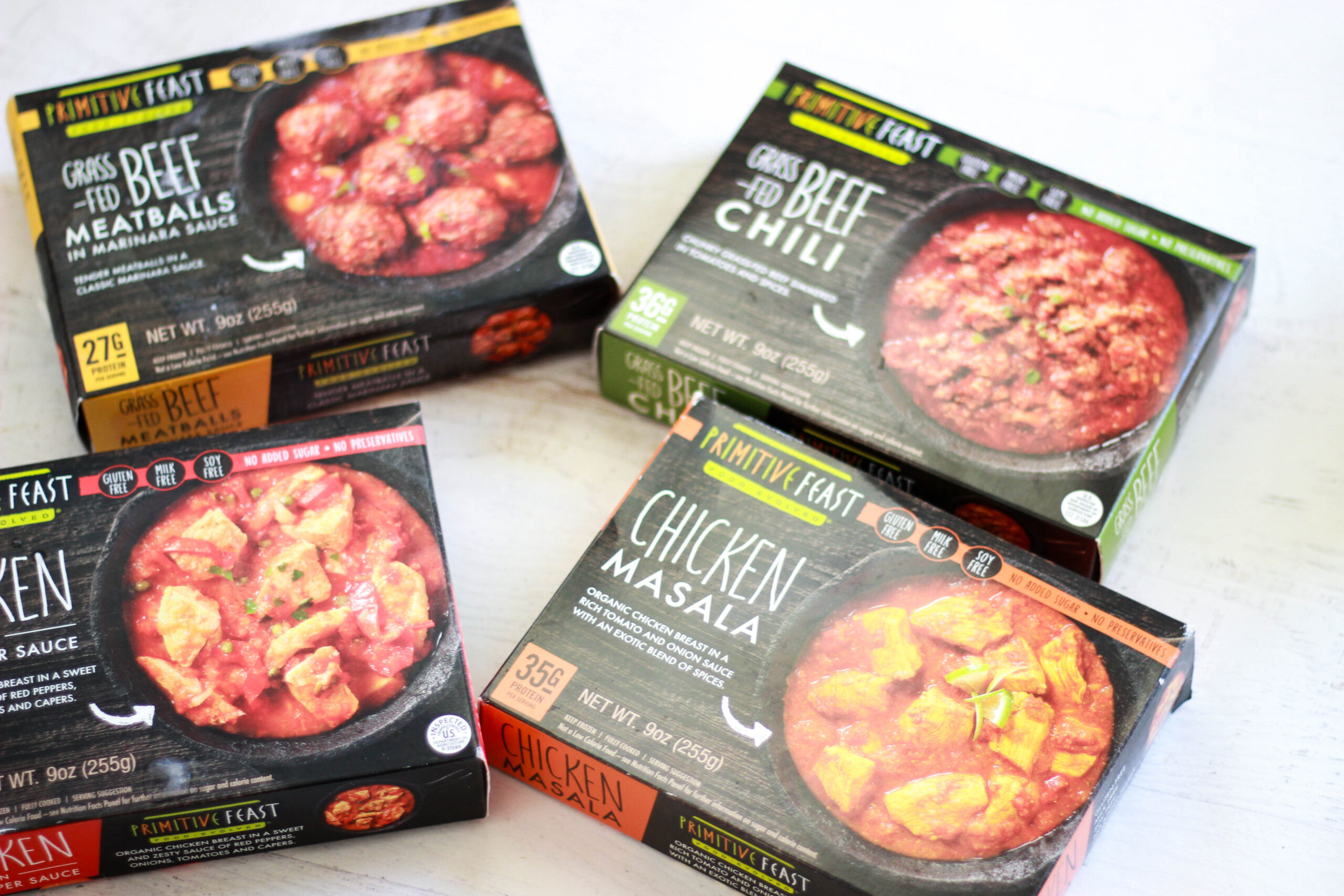
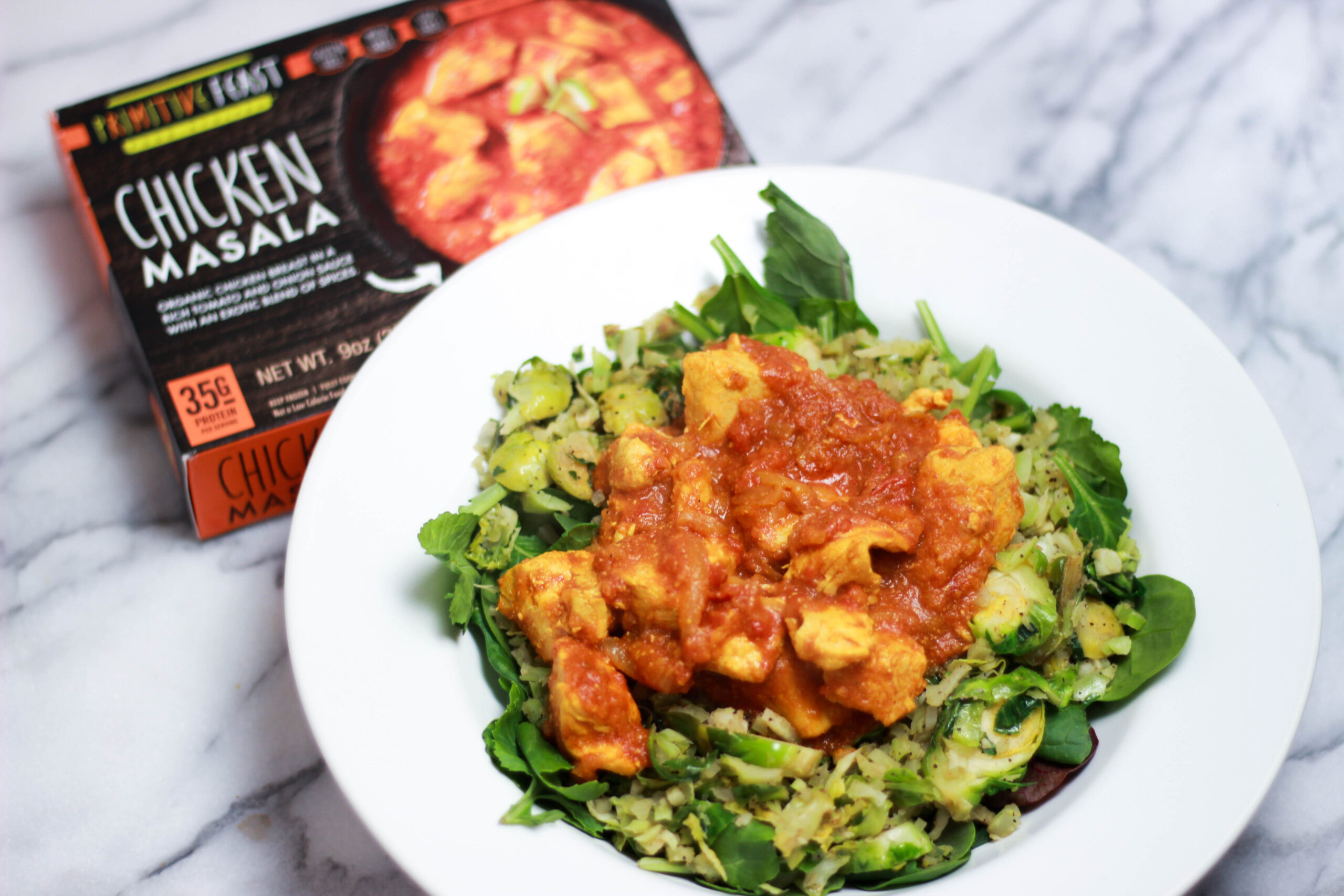
- Stock up on some pre-made Paleo frozen meals. We are lucky to live in an age where healthy food is just as easy and convenient as unhealthy food. I was so excited when I recently found out about Primitive Feast, a company that makes high-quality, paleo frozen meals. They have grass-fed beef meatballs in marinara, chicken masala, grass-fed beef chili, chicken in bell-pepper sauce, and chili verde with chicken! All you have to do is pop one of the meals in the microwave for about 4 minutes, or you can heat them up in a pan for a few minutes.
I also always have Paleo on the Go meals stocked in my freezer! These are delicious, AIP-friendly paleo meals that can be heated up in their containers and taste divine. They specialize in making comfort food that’s healthy, paleo, and autoimmune-paleo-friendly! My code “WELLNESS” will get you $10 off your first order!
I also love Balanced Bites Meals! During the week I often heat one of these up and throw it over some extra greens I have on hand. These meals have generous protein portions and taste incredible. You can heat these up in the microwave for just a few minutes and you’re good to go! If you use the code “crwellness” at checkout, you’ll get a free chicken broth (20 oz, $10 value) with your order!
- Keep non-perishable items in your pantry for an emergency, preferably proteins and fats. Foods like canned fish and nuts are great to always have on hand for when you’re in a pinch. Worst case scenario, you eat canned fish and nuts for dinner. Not very exciting, but it’s still a healthy meal!
- When you’re cooking, always cook in bulk. Do not cook for just one meal at a time. This is an easy way to make one meal extend into many. If you’re going to have chicken for dinner, cook 1-2 pounds. If you’re having broccoli, cook two heads of it. If you’re making zucchini, fill up a whole tray. Just cook as much as you can at once! That way, you have leftovers. If you always have leftovers, you can always reheat them from the day before. Also, take a bit of some of your cooked food and freeze it! That way you can always pull it out and heat it up really quickly, since it’s already been pre-cooked.
- Get it out of your mind that cooking takes a long time. It does not. Utilize all of your burners and all racks of your oven. If you’re pressed for time, chop everything up into smaller pieces, turn up the heat, and throw a lid on any pans to get your food to cook faster. Sautéing veggies can take anywhere from 5-15 minutes, and roasting vegetables takes anywhere from 15-30 minutes. It’s not ideal to cook at high heat, but it’s much better to eat a whole-foods meal that was cooked at high heat than resort to unhealthy takeout. Proteins usually take less than 10 minutes to sauté and about 15-25 minutes to bake.
- Plan ahead, and grocery shop in bulk. Think about how much food you might need, and buy enough food for the week at the store, not just enough for 1-2 days. I can get by with going to the grocery store once every 7-10 days. Only buy healthy food at the grocery store so that that’s your only option throughout the week. Also, think about what you’re going to have for your meals. A lot of people get home after work and haven’t thought about what they’ll have for dinner, and then they get overwhelmed with making a choice. If you already know and have a plan, you can head straight to the fridge, take out whatever you’re cooking, and cook it! If deciding beforehand stresses you out, make a pact with yourself to cook whatever you see first in the fridge. Planning can be as simple as just thinking about what you’re going to do as soon as you get home while you’re driving there. Plan in your mind with something like, I’m going to immediately walk in the door, open the fridge, pull out my chicken and cauliflower, and toss it in the oven. Have a plan of attack so you don’t waste time.
- Have a go-to one-pan meal. One pan meals are easy and quick because you can pop everything onto one pan and it all cooks at the same time. Having a go-to meal in general is helpful, because you can always just make that whenever you don’t know what to make. A common one-pan meal is something like salmon with asparagus and zucchini, since they all cook for about the same time. You could toss those all in the oven on the same baking sheet at 415*F for 15-20 minutes, and they will all be ready by the time you finish putting your things away and getting comfy for dinner!
- While foods are cooking, you can multi-task on other things. While something is in the oven or microwave or sauté pan, you could be changing your clothes, pulling out the dishes and getting your silverware ready, putting away your things from work, and so on. The first thing you should do when you get home is put your food in the oven or on the pan, and then do everything else. While I have food in the oven, I usually take off my makeup and wash my face, change my clothes, maybe answer a few emails or messages, and get out my plate and silverware. By the time I’m done with all of that, my meal is ready. If you get home and wait until you get fully “settled” before cooking, you’ve wasted time that you could’ve spent “settling” while your food was cooking!
- Pre-cut your veggies or buy them pre-cut. This saves so much time. If I feel like I’m going to have a busy week, I will usually buy all of my vegetables pre-cut from the store. Trader Joe’s is great for this! If I feel like I will have a busy week but I have time at the beginning, I’ll set aside 30 minutes after I grocery shop to chop up everything I bought so it’s ready to go throughout the week, and I’ll just listen to a podcast or watch a video while I’m doing it!
- Make sure your cooking tools are easily accessible. If you can, leave your pans out on the burners. Leave your baking trays in the oven. When they’re already out and ready to go, that’s one less step for you to take. Also, keep your cooking oils right next to your stove so you can quickly grab and go. I also like to buy pre-cut parchment paper so that I can just pull out a sheet and toss it on my pan to roast.
- Utilize a slow cooker. Slow cookers are great because you can throw all of your ingredients in at the beginning of the day, leave, and come home to a cooked meal. This is also great for making huge batches of soup! You could toss in ground beef, tomato sauce, peppers, and zucchini, and come home to a nice chili. You could toss in chicken, broccoli, and cauliflower and come home to a big batch of protein and veggies to get you through the week. Slow cookers will keep your food warm until you’re ready to eat, and there’s nothing better than walking in the door to a hot meal! All you have to do is remember to toss the food in at the beginning of the day – write yourself a sticky note!
- Use a microwave if you need to. I think we all know by now that microwaves are generally not a “healthy” way to cook your food. However, I’m also a realist. When you’re short on time, there’s no shame in using a microwave to cook up a healthy meal. I poach eggs in the microwave, steam vegetables in the microwave, and heat up proteins in the microwave when I need to. It’s much better to have microwaved meat and veggies than order in a Domino’s pizza!
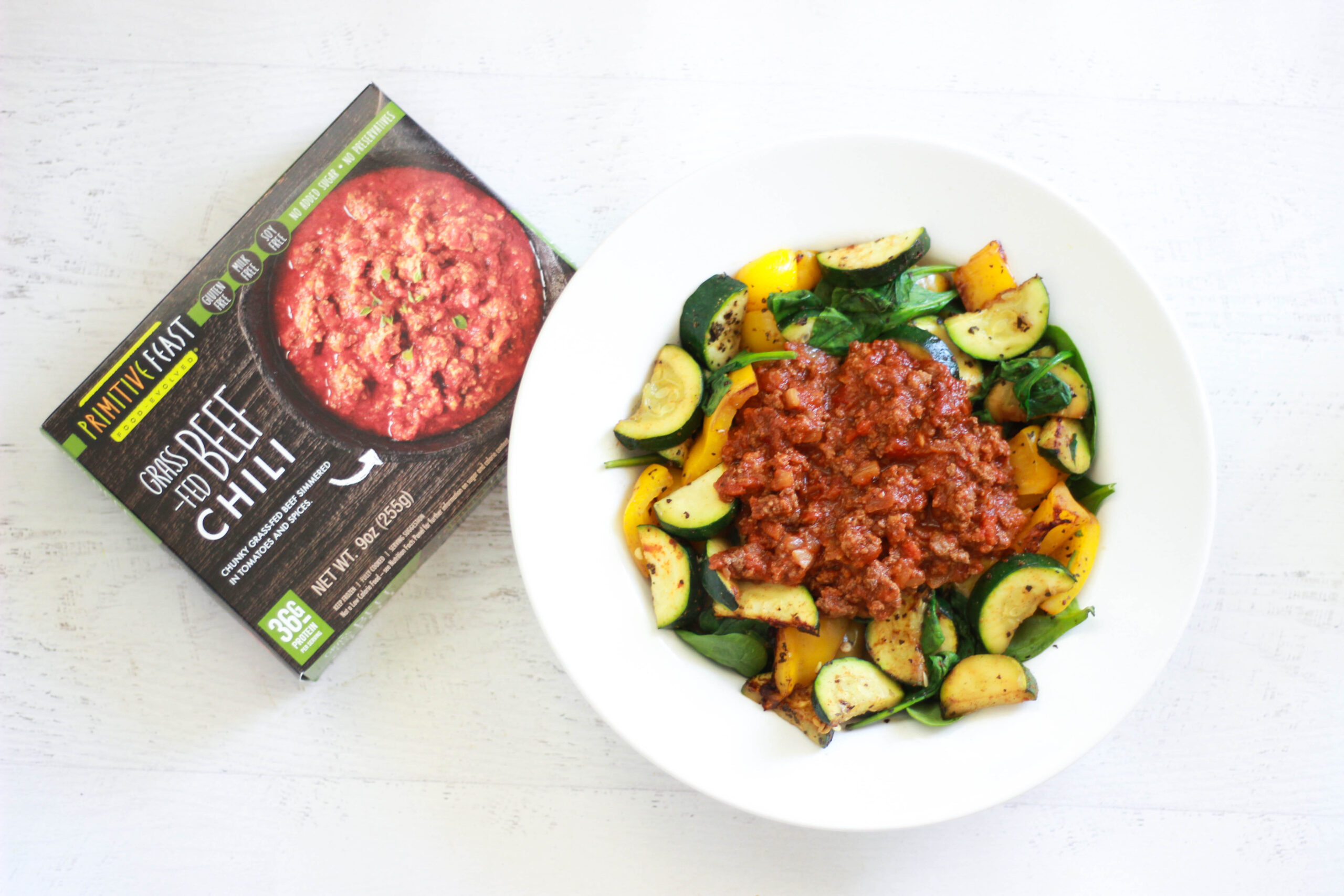
- Always have big containers of salad greens in your fridge. When in doubt, make a salad. If you already have salad greens, all you have to do to make a quick meal is put some greens in a bowl, toss on some oil and vinegar, and throw on some protein like one of the Primitive Feast frozen meals, leftover meat from the day before, or even some canned fish. If you have extra leftover veggies, then add those in too!
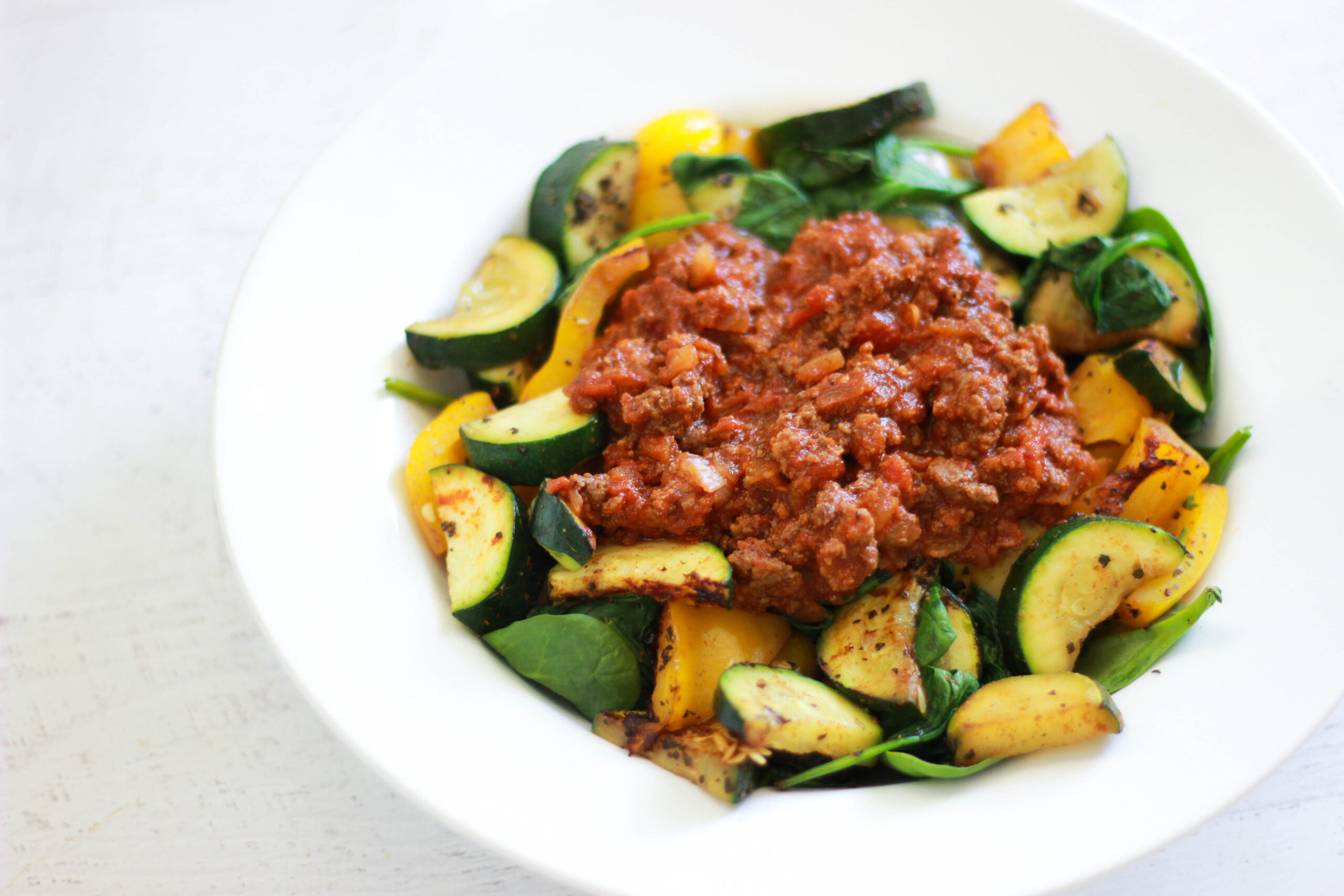
- If you’re short on time, cook foods that cook fast. Vegetables like asparagus, zucchini, yellow squash, bok choy, cauliflower rice, and leeks cook faster than foods like broccoli, brussels sprouts, and cauliflower. Similarly, a thin cut of protein like a thin fish will cook faster than a thick piece of steak or thick chicken thigh.
- Have groceries delivered to your door. Search your area and see what services are available to deliver groceries to you. Oftentimes you can even set up recurring orders so the same thing gets delivered to you each week, and you don’t have to think about it. This will save you the time of going to the store and doing the actual shopping. All you have to do is open your door, and you’re stocked up!
- If you do have time on the weekend, meal prep so that you always have things ready to go throughout the week. Egg “muffins”, chia puddings, roasted chickens, or paleo casseroles are all great things to prep at the beginning of the week if you have time.
- If you somehow literally have nothing at home to cook, head to a Whole Foods or a grocery store rather than eating takeout or going out to an unhealthy restaurant. Logically, this will take you the exact same amount of time. You can pick up some things for dinner at the salad bar or hot food bar just as easily as you could go to a fast-food restaurant and order something. If you don’t want anything at the salad bar, grab some veggies you can steam for a few minutes in the bag, an avocado, and some canned fish to make a super quick meal as soon as you get back. Plus, while you’re at the grocery store, you can pick up groceries for the next day so you don’t run into the same problem again!
I hope these tips helped you realize that it is always possible to cook a healthy meal, even when you are extremely busy. Once you get into a rhythm, start to feel the health benefits of consistently eating healthy meals, and discover how little time it takes, you’ll wonder why you ever made excuses before!
*This post is sponsored by Primitive Feast, but all opinions are my own. I would never work with a company or recommend a product that I don’t truly love and use myself!

by Christina | Feb 8, 2018 | Wellness
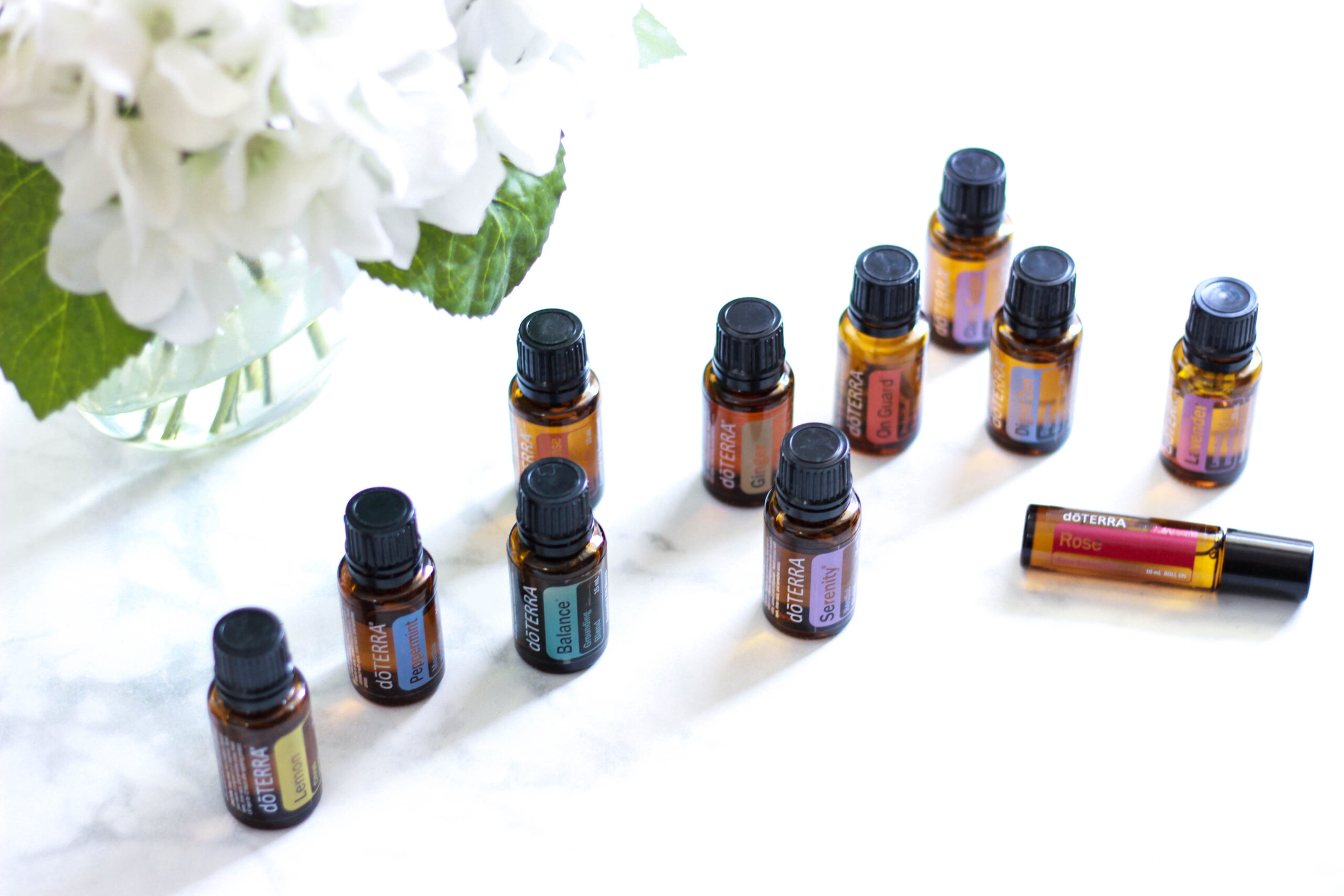
Essential oils have become a huge part of my daily routine in the last year, and I honestly cannot imagine my life without them. Before I really became interested in essential oils, I thought they were a little “woo-woo” and didn’t truly believe they could make that big a difference. Then, I finally got my hands on high-quality oils and started using them regularly. My mind completely changed. Essential oils truly have so many uses for both emotional and physical health. They are nature’s medicine, and I love that I have a natural, nontoxic remedy for almost every issue that comes up in my life.
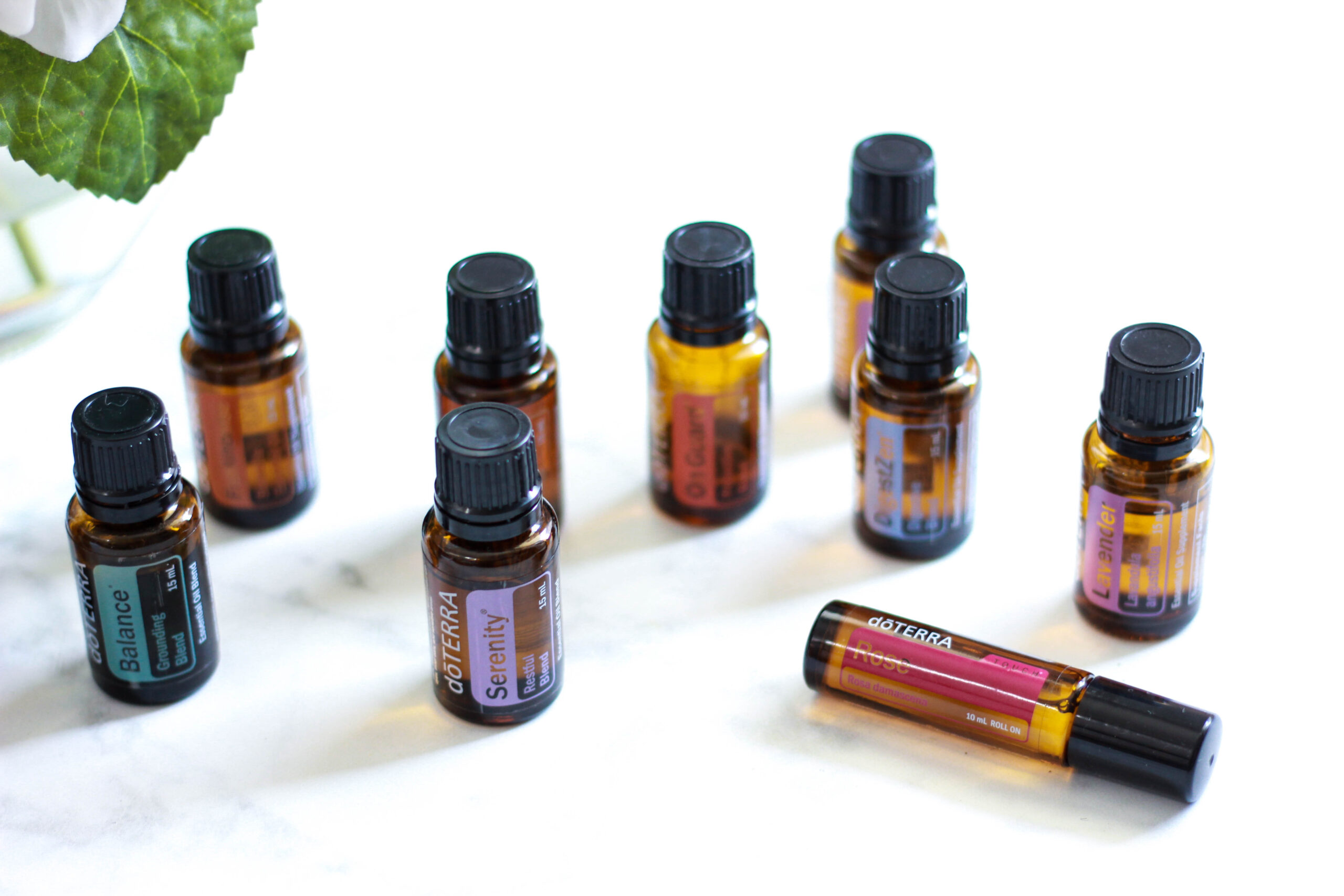
That being said, I wanted to compile a list of my most-used essential oils so you could get a better idea of exactly how I incorporate these into my life. Narrowing down this list was actually incredibly difficult – I didn’t realize how many oils I truly depend on every day. I only use oils from doTERRA because I completely trust their sourcing and feel comfortable putting them in and on my body. Unfortunately, many essential oil brands sell oils that are not 100% pure, so it’s important to do your research. If you’d like to learn more about getting started with essential oils and why I use doTERRA, check out my Essential Oils Start Guide!
Peppermint: Peppermint oil is an extremely diverse oil, and it’s one I recommend everyone start out with. First, peppermint is great for respiratory function, clearing the sinuses, and relieving colds and coughs. Whenever I feel “stuffy,” in any sense of the word, I diffuse peppermint oil. Peppermint oil is also excellent for increasing focus, so I like to diffuse this when I have a particularly stressful workday and need to really buckle down and be productive. I also love to use peppermint for digestion. If I’m having stomach pain, I’ll rub peppermint oil on my stomach, drink it in warm water, or take it in a veggie capsule. Peppermint is also great for pain relief, especially for headaches. If I ever have a headache, I’ll rub peppermint oil on my temples and on the back of my neck. If anywhere else in my body aches or feels sore, I rub peppermint oil on that area as well, and it aways helps reduce the pain. Lastly, I love to use it in cooking! It’s a great substitute for mint extract – I put it in smoothies, brownies, and sauces.
Lemon: Lemon is another oil that I believe everyone should have in their arsenal! Lemon is great for cleaning and detox. I use lemon oil to create cleaning products for around my apartment. Citruses in general are great for uplifting, so I like to diffuse this when I feel like I need some extra uplifting emotionally or when I want the air to be a bit “cleaner.” I also like to put a drop of this in warm lemon water to help with detox and digestion. Lemon oil is also great for baking and cooking! I use this in my Lemon Bar Smoothie, for example.
Lavender – Lavender is the third oil that I truly think everyone should have. Lavender is known for its relaxing and calming properties, both mentally and physically. I use my lavender oil every night before bed in order to help me relax and get ready for a restful night’s sleep. I usually put lavender oil on my wrists and a drop on my pillow each night! I also use this oil any time I am feeling anxious by diffusing it, inhaling it, or applying it to the back of my neck. Lavender is one of my favorite oils for emotional health and can have a huge impact on anxiety and depression. Lavender is also great for skin and muscle irritation. I’ve used this for sore muscles, for bruised body parts, and for burns, and it really helps reduce the pain and discomfort. When I accidentally got my hand trapped in a fan (true story), I put lavender and peppermint on the area and the pain completely went away.
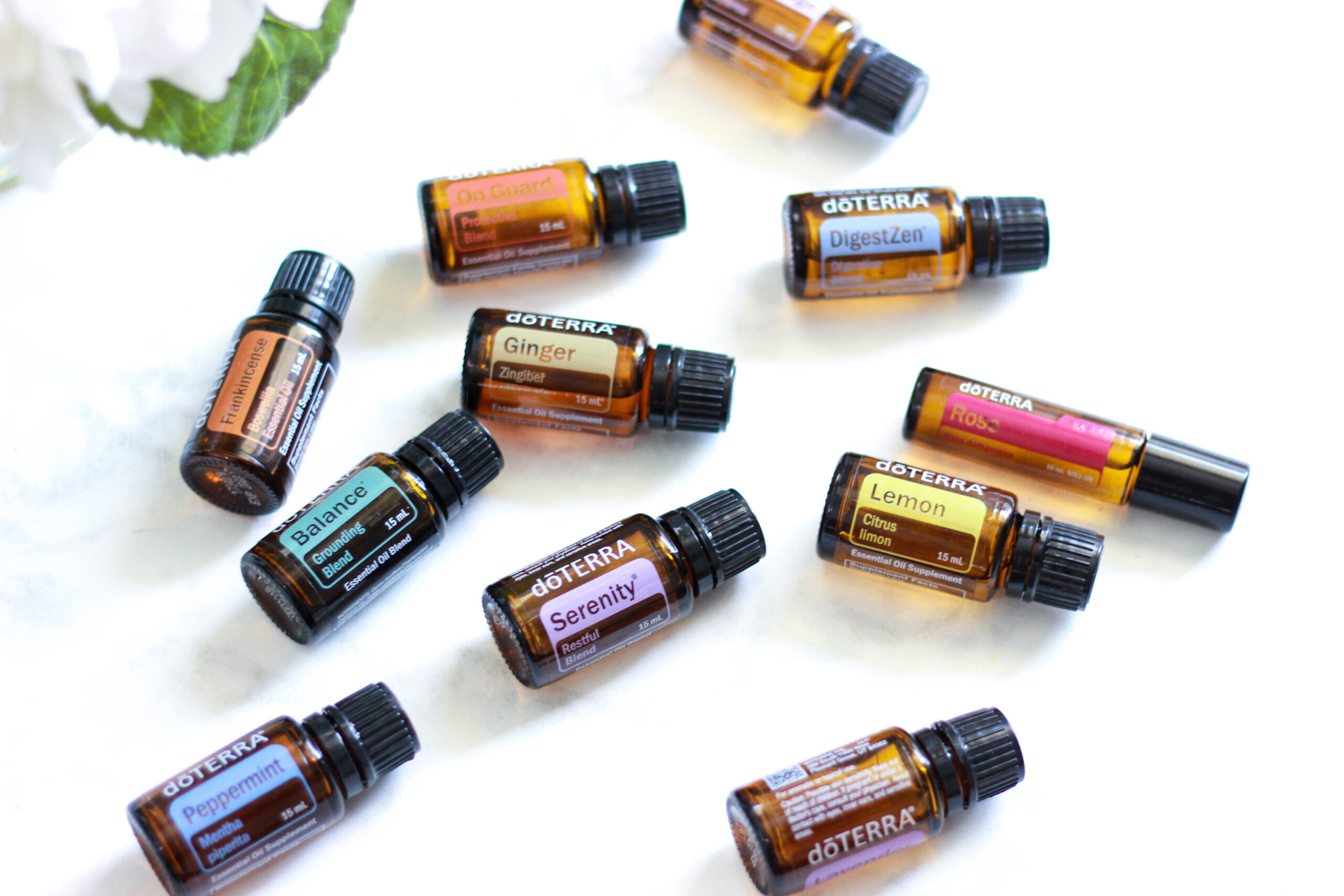
Ginger – Ginger is great for anyone who struggles with digestive issues or nausea. Anytime my stomach is upset, I rub ginger on my abdomen, put a drop of ginger in warm water to drink, or put some ginger in a veggie cap to ingest. I don’t get sick very often, but if I’m ever feeling nauseous, this is my go-to. If you struggle with bloating or constipation, ginger is a must for your oils kit.
On Guard – On Guard is doTERRA’s protective blend for supporting immune function. When you think of On Guard, think antibacterial. I diffuse this anytime I’m worried I might get sick, or if the air needs a bit of “cleaning.” I also ingest this in a veggie capsule as a natural cold medicine anytime I feel like I’m getting sick. It is very powerful and is great if you’re looking for a natural remedy that has antiviral and antibacterial properties. Because of its antibacterial properties, it’s also great for cleaning! I use all of doTERRA’s On Guard products for cleaning, but I also have used this oil alone to create my own natural surface cleaners.
Digest Zen: This is another must for anyone who struggles with digestive issues. This blend from doTERRA is specially designed to address stomach upset, and it definitely works. Whenever I’ve eaten something that doesn’t sit well with me, I rub this on my stomach and/or ingest it in a veggie capsule to help relieve the discomfort. This is also useful for anyone who struggles with constipation or diarrhea. It’s basically gut support in a bottle!
Serenity: I diffuse this every evening like clockwork to get me ready for bed. This blend from doTERRA is extremely calming and relaxing, and it always helps me unwind after a long day. It contains Lavender along with a few other oils, so I also like to use this anytime I’m feeling anxious or overwhelmed. I’ll apply it to the bottoms of my feet or to my pulse points for extra support. This is actually my most used oil – I go through 1-2 bottles a month!
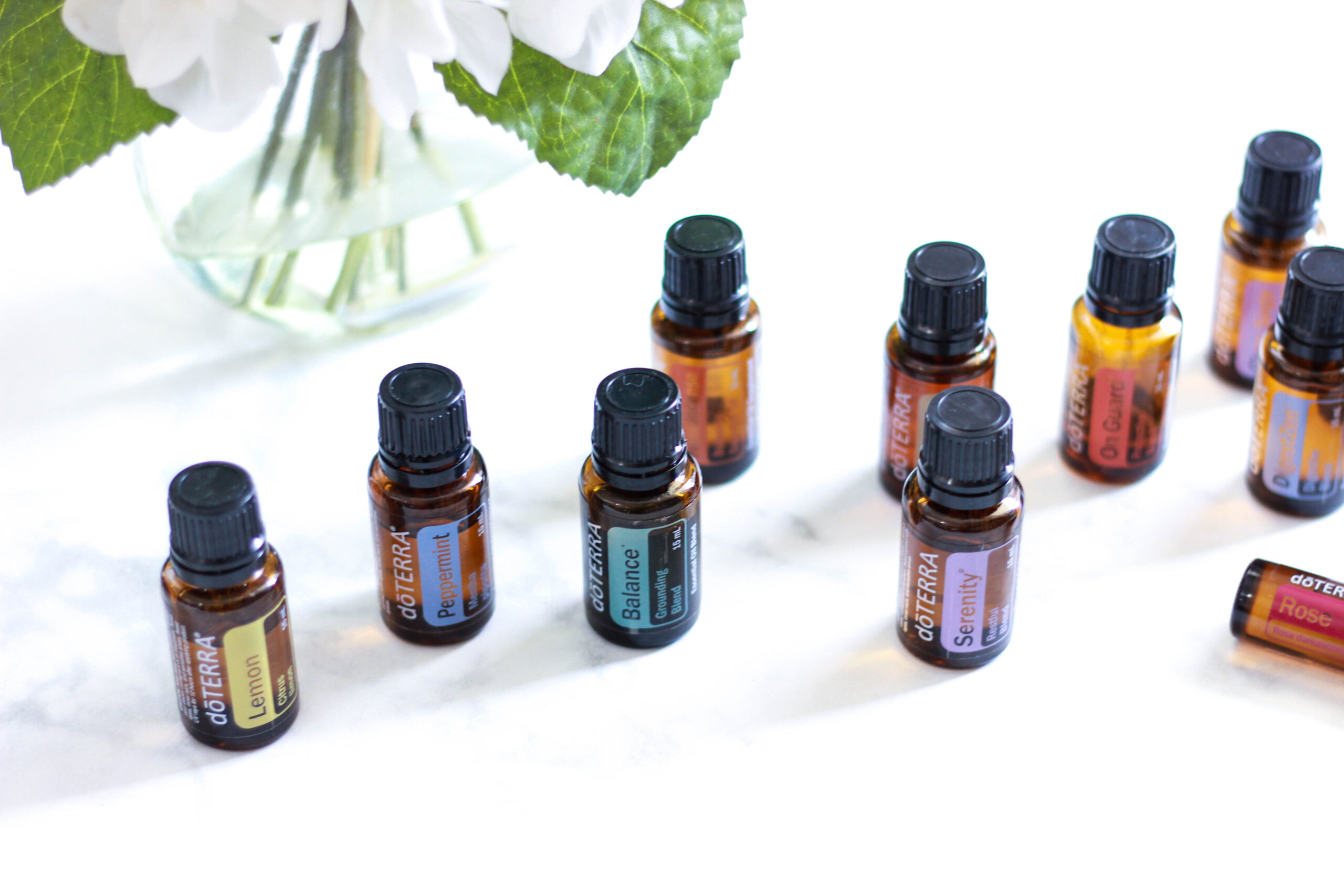
Rose: Rose has become my everyday perfume. I feel incomplete without it! I apply this to my chest and the back of my neck each morning. Rose is incredibly uplifting, and I really do notice a huge difference in my mood on days when I forget to apply it. I’ve told my friends – I feel like rose gives me power. I can’t really describe it. Besides using this as perfume, rose is known to help even out the skin tone and balance out the complexion.
Balance: This is generally my default when picking what to diffuse on an average day. This blend promotes relaxation and calm, helping to ease anxiety. It’s extremely grounding and balancing, which is exactly what I need for a hectic workday. This blend is the perfect mix of sweet, deep, and earthy. It contains Spruce, which has been used by Native American cultures for years for emotional, spiritual, and physical health, and to promote harmony in the body.
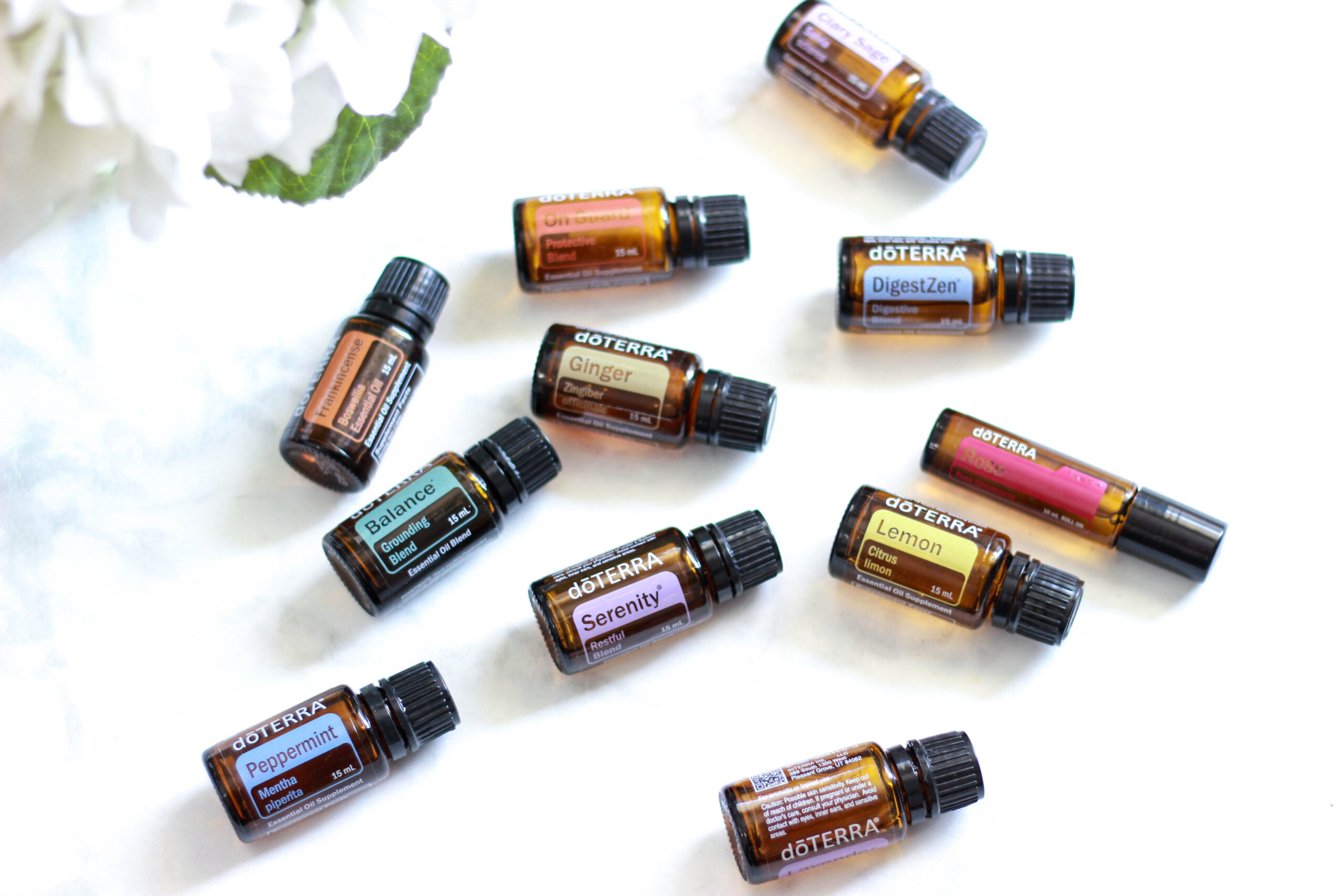
Clary Sage: Clary Sage is very calming and can help promote a restful night’s sleep, but the reason I love it so much is for its hormone-balancing properties. I apply this to my abdomen every day to help regulate my hormones. When you’re menstruating, this is great to apply for any pain / mood / PMS symptoms. It’s also great in baths, or to add into your shampoo and conditioner to improve the health of your hair and scalp!
Frankincense: Frankincense is truly the king of the oils, and a must in my oils collection. Frankincense has almost too many properties to count. It promotes peace and tranquility, so it’s incredibly comforting and grounding in times when you feel like you need some extra love and support. I love to diffuse Frankincense or apply it to the bottom of my feet at times when I need peace of mind or to feel emotional support and comfort. It can also be taken internally to promote healthy cellular function and to support your immune, nervous, and digestive systems. I apply this to my third eye as a form of hypothalamic support, as well. Frankincense can also be applied directly to the skin to help with skin imperfections. It truly does it all!
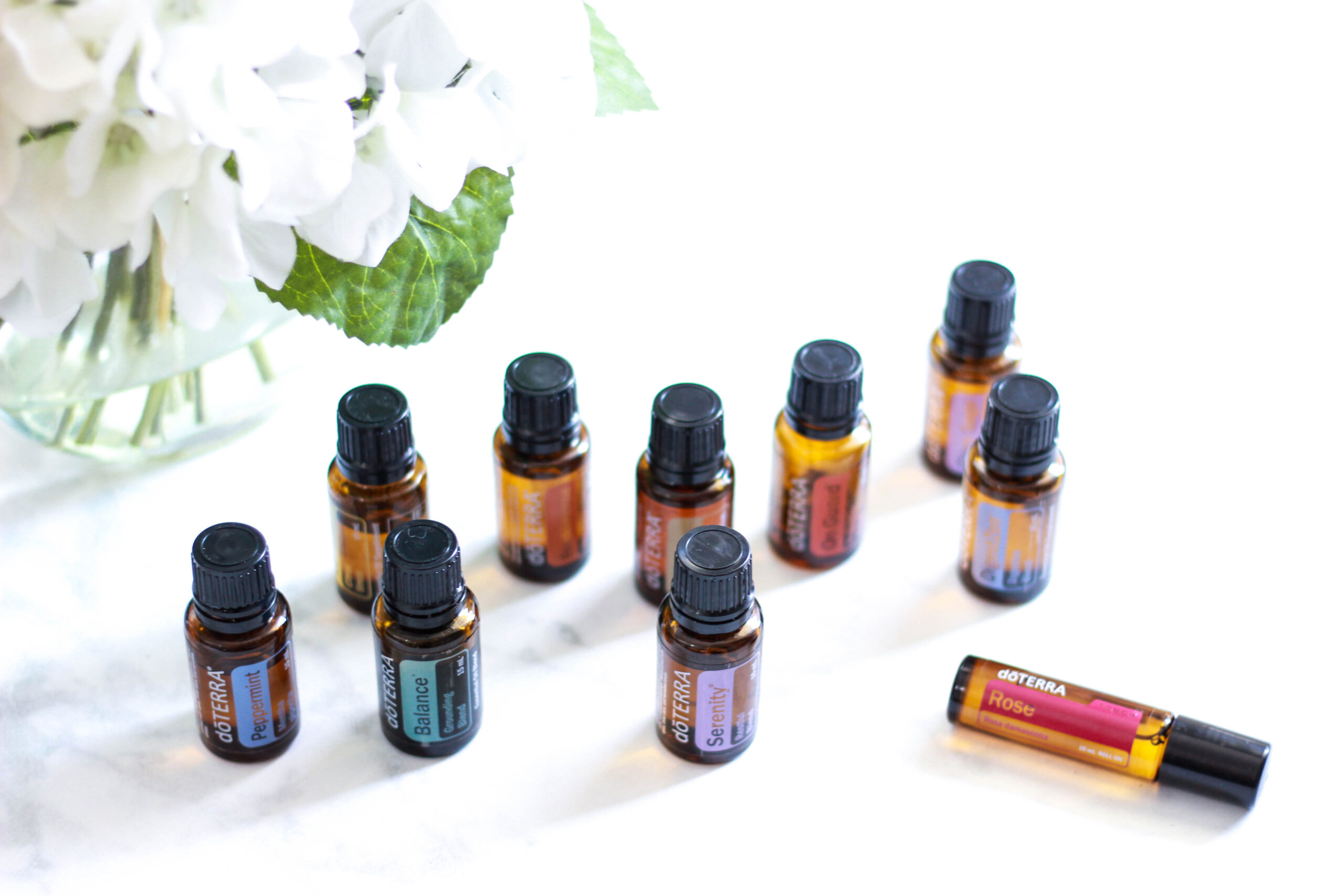
I could go on, but I think I’ll cap it off there. Like I said, these oils are extremely diverse, and I’ve gotten so used to turning to them as a natural fix for almost everything that now I can’t imagine being without them! While these are the ones I use and replace most often, there are many more that I truly love. If you use essential oils, I’d love to hear what your most-used are!
