by Christina | Feb 23, 2020 | Business
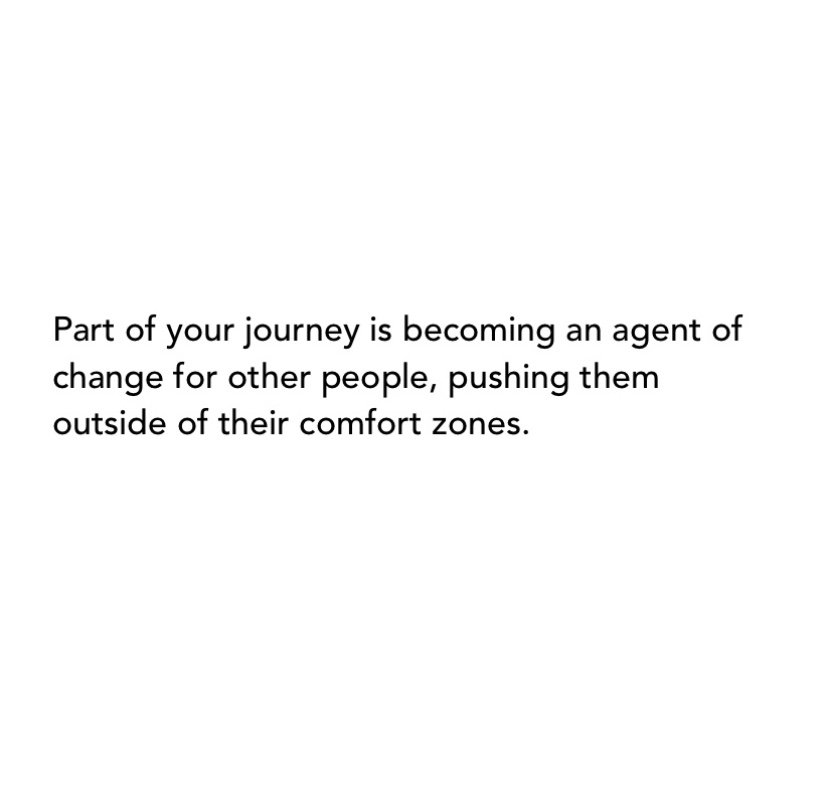
If you don’t already use the app The Pattern, I highly recommend it. It’s one of my favorite apps to break down your astrology in a digestible way, and it always tells me something about myself or “my timing” just when I need to hear it. The above message popped up the morning after a night when I spent a lot of time reflecting on this trait of mine, and I knew the message came to me for a reason. It makes sense that I’m a Type 8 on the enneagram, an Aries, and a Generator with a Human Design chart that says I’m meant to “shake things up in a penetrating, shocking way.” 😉
Sometimes this trait is uncomfortable for me, because it can trigger other people, but I’ve learned to embrace it, own it, and understand the greater purpose. It’s one of my favorite things about myself, because I feel so strongly about the importance of getting uncomfortable. I would not be where I am today without having spent a lot of time feeling wildly uncomfortable.
I was my unhappiest in life when I was stuck in the safety zone. It took me hitting rock bottom to realize that discomfort can catapult you into extreme growth. The best lesson I’ve ever learned is to get comfortable with being uncomfortable.
It can be uncomfortable at first to set boundaries, to say no, to go against the status quo, to listen to intuition instead of logic, to shift your paradigm, to ditch your limiting beliefs, to figure them out in the first place, to invest in yourself, to put yourself out there open for judgment, to work through trauma, to forge your own path, to fully believe in yourself, to release expectations, to replace what you think you SHOULD do with what you want, and to face your triggers. But this is also where the magic happens.
When you feel uncomfortable, triggered, or challenged, I encourage you to see how that situation can actually push you FORWARD into EXPANSION! When things don’t go your way, you can embrace the opportunity to pivot or you can create a story in your head that everyone is out to get you. That’s the victim mindset, and that keeps you rooted in unhappiness and scarcity. If you always stayed in your comfort zone, would you ever move forward?
If you want to inspire people, it is not always comfortable. I get tests from the universe all the time in this arena, but I know that giving into guilt or fear is never for anyone’s highest good. Right now I am setting major boundaries in my life, saying no to people I love, and tossing things aside that I’ve kept there for security. Part of me is scared, but a bigger part of me is insanely excited for how this discomfort will breed expansion.
Have you experienced a period of extreme growth? How were you pushed outside of your comfort zone?
by Christina | Feb 10, 2020 | Wellness
https://youtu.be/zllBa45uqQg
Low-carbohydrate diets, including both paleo and ketogenic diets, can help with mood, energy, weight loss, inflammation, skin health, gut health, and balancing your hormones, but only when done properly! If you’ve ever tried a low-carbohydrate diet and felt like total crap, there are a few common pitfalls you might have accidentally fallen into. I’ve made many of these mistakes myself in the past and see them again and again with clients, so if you’re in the same boat, look into these top 5 reasons for why you might not be feeling great on a low-carb diet.
- Your electrolytes are out of balance. When you switch to a low-carbohydrate diet, it’s important to consume extra salt to help balance your electrolytes. The main electrolytes to track are sodium, potassium, calcium, and magnesium. If your electrolytes are out of balance, you might deal with fatigue, headaches, irritability, sugar cravings, trouble sleeping, or leg cramps. When you reduce your carb intake and your glycogen stores get depleted, your body excretes extra water through your urine, sweat, and breath, excreting electrolytes at the same time. For most people, eating more salt solves the issue. Don’t fear high-quality sea salt – my favorite is Redmond’s Real Salt. Cook your food in salt and add more on top. You’ll know if you’re eating too much salt – your food will taste way too salty!
- You accidentally cut your calories way too low. If you replace all of your bread, pasta, tortillas, and other sources of carbs with low-carb vegetables, that creates a drastic decrease in calories throughout the day. A huge cut in calories will lead to fatigue, headaches, and other unwanted symptoms. I’ve seen people accidentally cut their calories by more than half, especially if they’re still a little afraid of adding more fat to their meals. Sometimes you’ll feel better as soon as you simply eat more food. Remember, non-starchy vegetables are very low in calories, so you need to make sure you eat enough calorically dense foods. You’ll most likely need to eat more protein and fat than you’re used to.
- You’re not consuming enough fat. Sometimes the issue with eating too low-fat on a low-carb diet is that you’re simply not getting enough calories, and sometimes the issue is that your body just doesn’t know what its fuel source is. Many people make the mistake of eating a high protein, low-carb, low-fat diet when they first switch to low-carb or keto, but this is a very stressful state for the body to immediately transition to. Your body needs either fat or glucose for fuel, so when you’re first making the transition to a low-carb diet, you need to give it enough fat for fuel if it’s not getting carbs! Don’t depend on gluconeogenesis for energy when you first switch to low-carb. When your body doesn’t have easy access to fat or glucose, this will leave you feeling exhausted and hungry, with hormonal imbalances longterm.
- There is a mismatch between your training style and your carbohydrate intake. If you’re engaging in high-intensity workouts that use glucose to fuel performance, and then you drastically reduce your carb intake, your workouts might really be suffering and you might be feeling exhausted. The classic example of this is trying to do CrossFit while consuming a ketogenic diet. It works for some people, but most people feel better when they give themselves more carbohydrates to fuel their performance, or they change their training style. Fat can easily fuel other forms of activity, but if you’re an athlete engaging in high-intensity workouts then you might feel much better incorporating carbs before and after your workouts.
- Maybe you need a carb-up! There is a common misconception that you can never eat carbs on a low-carbohydrate diet, but you can definitely incorporate carbohydrates! Many people feel much better when they add in some carbs strategically, and the frequency will be different for everyone. Many women, especially, find they feel much better adding in starchy carbohydrates a few times a week, once a week, every night, or around their workouts specifically to keep their hormones in balance. Don’t think of a low-carb diet as a no-carb diet. There are plenty of benefits to cycling in carbohydrates. In fact, cycling carbs is what I recommend most.
Many people find that one of these adjustments makes a huge difference in how they feel on a low-carb diet so they can finally feel their best. It really can be as simple as one change!
Have you ever fallen into one of these pitfalls? Comment below!
by Christina | Feb 10, 2020 | Spirituality
If you’re not attracting in what you want, whether that be the right relationship, amazing friends, your ideal job, total health, or anything else in your life, the first thing to do is to become AWARE of the energy you’re putting out into the world. Most people make the mistake of jumping ahead in the manifestation process, but it always starts with the inner work. (Check out my outline on how to manifest ANYTHING you want here!) Repeating affirmations, visualizing, and thinking positively does zilch if you haven’t gotten to the root of the issue – your energetics.
It takes extreme honesty with yourself to do this, but this is how the work gets done. Any time I feel like I’m attracting in something I don’t want, or I’m not attracting in what I do want, I have to CHECK MYSELF. There’s something in my energy that’s creating the block.
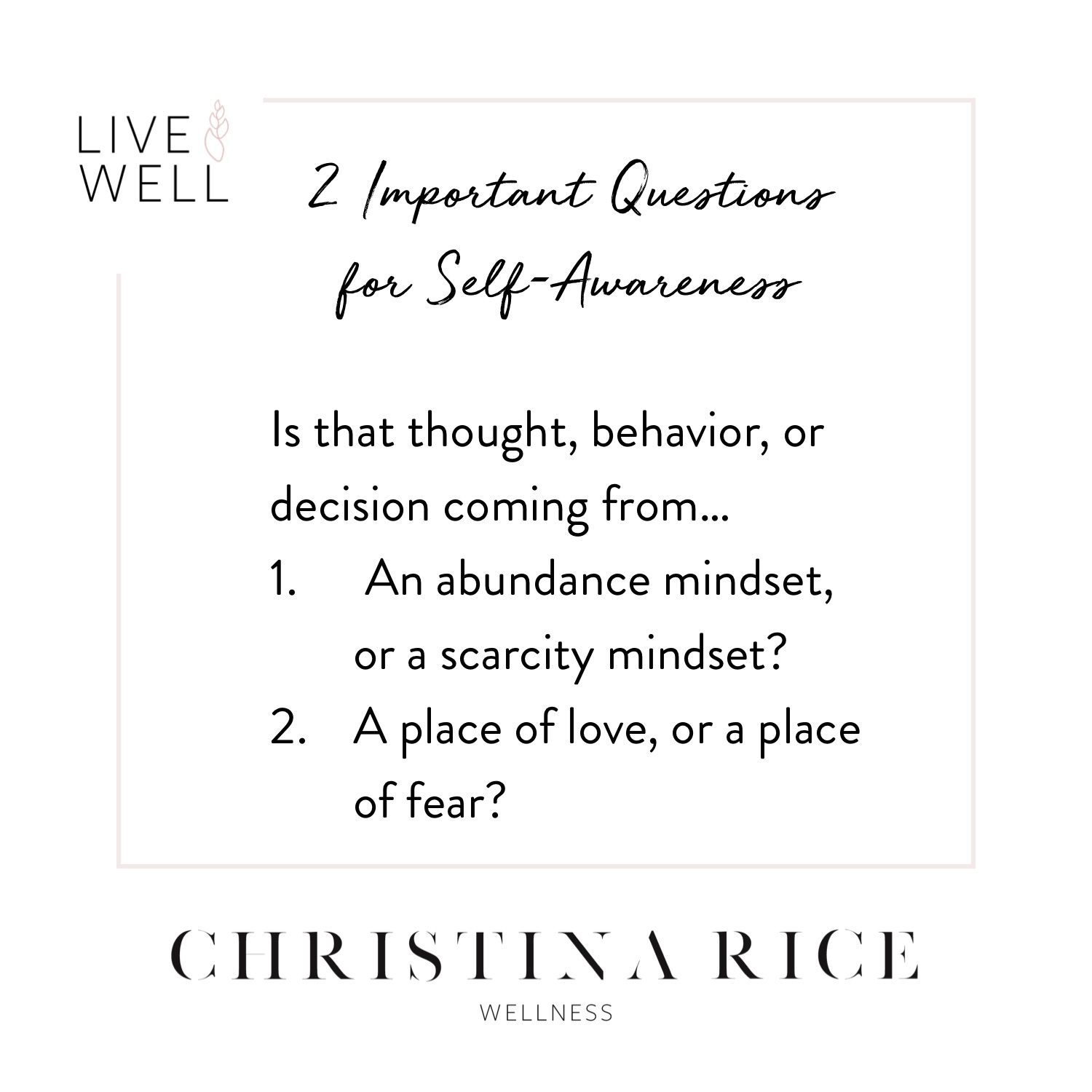
I look at my behavior, thoughts, actions, or decisions related to what I want, and I ask myself:
- Is this coming from an abundance mindset, or a scarcity mindset?
- Is this coming from a place of love, or a place of fear?
Every thought, action, and decision comes from an abundance mindset or a scarcity mindset, a place of love or a place of fear. The former makes you magnetic to what you want, the latter pushes it away. Everything can be distilled down to that when you really think about it.
Why are you staying in that job? Why are you TAKING that job? Why are you making that business decision? Why are you NOT investing in yourself? Why are you in this relationship? Why are you not leaving this relationship? Why are you looking for a partner? Why are you spending time with that person? Why aren’t you setting that boundary? Why are you exercising in that way? Why are you taking that supplement? Why are you eating in that way?
Why did I say that? Why did I think that? Why did I do that? What place am I making this decision from?
Is it from a place of love, or a place of fear? Is it from an abundance mindset, or a scarcity mindset?
Maybe you’re not investing in yourself from a place of love and from an abundance mindset, because you truly believe the best thing for you is to wait for an even better opportunity to come along – you know it’s coming your way. But maybe you’re not investing in yourself from a place of fear and from a scarcity mindset – you think you don’t have the money and you’re scared it won’t be worth it. You’ll never reach your goals that way.
Maybe you’re not leaving your job from a place of love and from an abundance mindset, because the job you have fills your cup and allows you to reach your financial goals. But maybe you’re not leaving from a place of fear and from a scarcity mindset, because you’re not sure you’ll get another job and you don’t know if you’ll be able to make enough money. And if you do leave that job with those fears in your head, you still won’t be putting out the right energy to attract in your dream job. You’ll attract in your dream job when you believe you’ll have more than enough money as long as you make every decision from a place of love and alignment, and you follow through with that.
Those are just a few examples. Do you see the difference in energetics? The people who effortlessly attract in what they want (we call this “good luck,” but it’s not luck…) make decisions from a place of love, and with an abundance mindset.
Ask yourself those questions, and be honest with yourself. It might be uncomfortable at first, but it’s an empowering practice. If you’re afraid to face that truth, step into your fear and trust that you’ll come out better on the other side. Whenever you find the answer to these questions is that your thought, action, or decision is coming from a place of fear, or a scarcity mindset, you understand why you’re not attracting in what you want. This is energy awareness, and shifting your energy is what allows you to expand.
Improvement requires radical honesty with where you’re currently at. Discomfort breeds expansion. Trust it.
by Christina | Feb 8, 2020 | Wellness
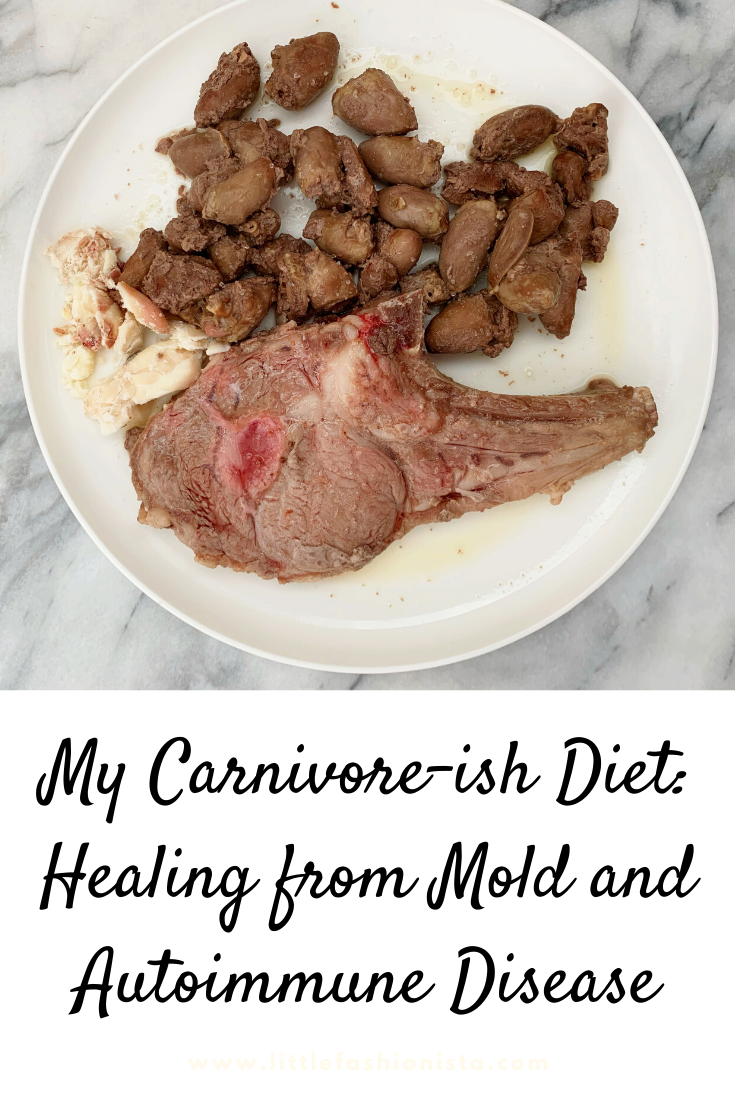
I’ve been eating an animal-based diet for almost 5 months now, and it’s had a huge impact on my digestion, inflammation, mood, and energy levels. I say animal-based because my diet is not strictly carnivore, although it started out that way. I like to say I eat 95% carnivore, 5% paleo – a.k.a. carnivore-ish. (I recently published a podcast all about my carnivore-ish diet and adaptation period, and you can listen to that here!)
I tried the carnivore diet about a year ago for 2 weeks, but this year I gave it a full 30 days to see if it would help support my body as I went through a mold / Lyme protocol. I’ve read a lot of testimonials from people saying that a carnivore diet helped put their Lyme into remission, so I was curious how I’d feel.
The first 30 days were honestly a very rough transition. I stuck to a meat-only diet and ate only beef with some poultry products here and there. I also consumed ghee and later raw better, as well as bone broth and plenty of salt. I drank mostly plain water but had tea a few times. The diet itself was very easy for me, but for the first 30 days I had a lot of flu-like symptoms, extreme fatigue, and horrible diarrhea. The only thing that kept me going was the fact that my body’s reactions were most likely a sign of toxins and bad bacteria dying off – at least SOMETHING was happening.
After that first month, my body evened out and I started to feel better than I had in a loooong time. My brain was functioning properly, I had more energy than I had in years, my bowel movements were great, my digestive symptoms went away, and my inflammation had improved DRAMATICALLY. I was finally starting to feel like myself again, and I loved the fact that I didn’t have to think about food as much and spent way less time cooking. For about 3 weeks around the holidays I was enjoying plenty of foods outside of the animal kingdom (hello holiday treats and Maui acai bowls!), but even within that stretch I tried to eat animal-based as often as possible.
I’ve toyed with adding other foods in here and there over the last five months, and now I’m at a point where I’m very happy with my carnivore-ish diet and have a pretty good idea of what makes me feel my best. My philosophy with my version of carnivore is that I eat carnivore whenever possible, and if I’m in a situation where it’s absolutely impossible or if I simply don’t want to then I don’t. Pretty simple. The situations where it’s absolutely impossible or that I simply don’t want to eat carnivore don’t end up happening too often, and I just let it happen if it happens! I feel my best when I eat as closely to a carnivore diet as possible, which makes me want to stick with it, but I allow flexibility for social engagements if needed. Even when eating out, it’s not too hard to find animal-based options. There’s usually always meat on the menu! If I eat a few plants once every few months, it’s not a big deal – I just try to keep the portions small.
What do I eat on my carnivore-ish diet?
Anything from the animal kingdom! I eat a lot of ground beef, ribeyes, chuck steak, and organ meats. Organ meats are nature’s multivitamin – they are bursting with nutrients. I also think they taste delicious, and they’re usually very cheap! My favorites are livers, hearts, and brains. Sometimes I throw in lamb, salmon, boar, or chicken thighs. I have turkey, eggs, and salmon roe occasionally. I also consume raw beef suet, ghee, raw butter, colostrum, and goat’s milk. And plenty of sea salt. I love pork rinds for a crunch, and beef sticks if I’m on the go!
What about foods that aren’t traditionally part of the carnivore diet? Things I consume daily that are outside of the animal kingdom are mainly in the form of drinks. I drink tea (including matcha), coffee, Four Sigmatic elixirs, coconut milk, and apple cider vinegar (always drink this diluted). I also have my Beekeeper’s Naturals products and Ned hemp oil daily. The BKN products are technically carnivore because they’re bee products, but most people don’t consume honey on the carnivore diet. I usually have EnergyBits every day (my body responds really well to chlorella), and some of my Sugar-Free Apple Pie Gut-Healing Gummies, which are made of gelatin (carnivore) and apple cider vinegar (not carnivore).
What about foods that aren’t carnivore, but that I consume every so often? I’ve figured out that I feel really good when I have carbs in the form of tubers or berries for about 3-5 days before / during my period. I know when I need them because I get the craving for them, so I just eat them! I have them at night for a few days, usually topped with some honey, and I feel like this really helps reset my leptin signaling and helps with my hormones. I know I’ve had enough when I stop craving them and start craving more meat again. I will also sometimes get massive cravings for chocolate, so I eat some 100% cacao, because that’s what my favorite chocolate has always been.
I also do well with coconut oil, coconut butter, paleo bread (I get this bread from Julian Bakery – it’s the only bread I like), and certain paleo-friendly bars, like Bulletproof Bars, Primal Kitchen Bars, and Lara Bars. I do not feel well if I have those regularly, but once in awhile they’re fine. I also actually do well with low-glycemic ice creams, as well, interestingly enough!
I notice that when I consume plants or other carbohydrates, I have more inflammation the next day, I don’t sleep as well, my brain doesn’t feel as clear, my emotions feel all over the place, and my digestion is not ideal. I bloat up like a balloon when I have a bowl of veggies. (And my GI map is clear, if you were wondering.)
I start my day off with fatty tea or coffee, with collagen in it sometimes, so I get a few hundred calories in in the morning. Then I usually eat two very large meals, but sometimes it’s more if I feel hungrier. If I wake up hungry I will eat! It just doesn’t happen too often. I eat to satiety. Did I mention I eat BIG meals? I usually end my day with sparkling water with glycine powder in it to balance out my methionine:glycine ratio, especially if I haven’t had collagen – shoutout to the Armstrong sisters for their “carnivore soda” creation! For people who are afraid of calories: I have actually more than doubled my caloric intake compared to how I was eating before carnivore, but I lost over 10 pounds of extra water weight / inflammation. I am also exercising less.
That’s my version of a carnivore-ish diet right now! I don’t have autoimmune or mold symptoms anymore unless I’m in a moldy place, eat a lot of foods outside of what’s mentioned above, or am severely sleep deprived / don’t take care of myself. Although this might not be for everyone, this way of eating has played a huge role in my healing journey. Eliminating the plant toxins that were causing underlying inflammation allowed my body to truly focus on repairing. People have asked me how long I plan on eating this way, and my answer is… as long as it feels good for my body! I’ve tried every diet under the sun and am more than open to shifting my way of eating whenever my body calls for it. Until then, this is what’s working for me!
by Christina | Feb 1, 2020 | Wellness
The ketogenic diet has gained a ton of popularity in the last few years, but there are a lot of misunderstandings about it. I started a ketogenic diet about 5 years ago, and at first I hardly knew what I was doing or why I was doing it, like many others. I made a lot of “mistakes” at the beginning that left me feeling not so great, and I know many people have the same experience, which is why I think the more education there is around eating a ketogenic diet correctly, the better! The ketogenic diet was personally critical to my healing journey, and I stayed strict keto for about 3 years until starting to dabble in and out of it. I learned a lot about my body during that process! The ketogenic diet is simple to define, but it has many nuances, which is why I want to go back to basics and discuss what a ketogenic diet actually is.
What is keto?!
A ketogenic diet puts your body in a fat-burning state called ketosis, which is a metabolic state in which your body uses fat for fuel instead of carbohydrates. Keto is typically described as a high-fat, low-carb diet, but that’s technically it. You can eat a high-fat, low-carb diet and not be in ketosis. You are in ketosis if you are producing ketones.
This is one of the most common misunderstandings about the ketogenic diet. Just because you eat what you consider to be a high-fat, low-carb diet (people have very different ideas of what this means) doesn’t necessarily mean you’re in ketosis. Foods are keto-friendly, but not keto themselves. Ketosis is a metabolic state. Eating one high-fat meal doesn’t put you into ketosis. Does this make sense? We say things like “I’m keto,” or “this meal is keto” in everyday life, which is totally fine, but I think that language can also lead to some misunderstandings about what ketosis is.
There is a difference between being ketogenic and being low-carb, but many people use the two interchangeably. It’s possible to eat low-carb and not necessarily be in ketosis, and it’s possible to be in ketosis but not necessarily eat what someone might consider to be low-carb. There are plenty of health benefits to eating low-carb even if you’re not in ketosis, so it doesn’t necessarily matter unless you have to be in ketosis specifically for a medical reason. I’m pointing this out because many people who say they didn’t do well on a ketogenic diet weren’t actually in ketosis.
Now that I’ve explained that, a ketogenic diet typically is a high-fat, low-carb diet, at least to start. After someone has been in ketosis for a certain period of time, they can often adjust their macros to eat less fat, more protein, or more carbs and stay in ketosis, depending on their body type, their metabolism, their activity level, and so on. Other people do need to stick with standard ketogenic macronutrient ratios to stay in ketosis. Everyone is different! My main point is that ketosis is a metabolic state. You can’t tell if someone is in ketosis or not just by looking at their plate.
Just because someone eats a high-fat, low carb diet doesn’t necessarily mean they’re in ketosis, and just because someone eats lower fat and higher carb doesn’t guarantee they’re not in ketosis. There was a point when I was easily eating about 100-125 g carbs daily and was still in ketosis, but I had to eat far fewer carbs than that to initially reach a ketogenic state. What people typically think of as a ketogenic diet is the way of eating that most people have to follow when they first get into ketosis – a high-fat, low-carb, moderate protein diet.
The most important part of that description is the “low carb” aspect, because reducing your carbohydrate intake forces your body to search for another source of fuel. Adding more dietary fat can help make the transition process quicker and easier, but reducing carbohydrate intake is the most critical change to make the metabolic shift into ketosis. Your carbs need to be low enough that your liver will turn dietary fats and adipose tissue into ketones.
What exactly does this metabolic shift mean?
Glucose is your body’s go-to energy source. As long as you supply your body with glucose, that’s what it will use for energy. Your body converts the carbs you eat into glucose, which spikes your blood sugar and signals the pancreas to secrete the hormone insulin. Insulin moves glucose from the bloodstream into your cells to be used for energy. When you stop giving your body glucose (when you reduce your carb intake low enough), this depletes your glycogen stores (your body’s stored glucose), and your body has to look for another source of fuel. This encourages the body to burn its fat stores as fuel, converting fatty acids into ketones for energy. When your body is creating ketones, you’re in ketosis.
What are ketones?
Ketones are the byproduct of your body burning fat for fuel. When you’re in ketosis, ketones are now your body’s energy source instead of glucose. The advantage of this is that your body knows how to burn fat for fuel, so it can burn stored body fat for energy when food isn’t available. Whether or not someone stays on a ketogenic diet longterm, it can be very valuable to teach the body to burn fat for fuel at some point, so you have better metabolic flexibility in the long run. Metabolic flexibility refers to the ability to burn fat or glucose as fuel, and to easily switch between the two sources of energy.
What do you eat on a ketogenic diet?
There are many variations of the ketogenic diet, but the standard macronutrient ratios are about 70-80% of calories from fat, 15-25% of calories from protein, and 5-10% of calories from net carbs. Instead of thinking of it that way, many people prefer to focus on keeping their carb intake below 20 g net carbs or 50 g total carbs (although sometimes below 20 g total carbs for people who have more difficulty getting into ketosis). To get into ketosis, people usually have a carb limit and a protein goal (often 0.8 – 1.0 g per kg of bodyweight, although I prefer higher), and then fat makes up the rest of their caloric intake.
After starting with standard ketogenic macronutrient ratios, someone might move into a Targeted Ketogenic Diet, a Cyclical Ketogenic Diet, a High-Protein Ketogenic Diet, lazy keto, or another variation of keto. I won’t be diving into all of those in this post, but know that ketogenic diets don’t all look the same.
What does that actually look like on a plate, though?
There are plenty of people who live on keto bars and In-N-Out on a ketogenic diet, but I don’t recommend a ketogenic diet focused on processed foods. Nutrient density always wins!
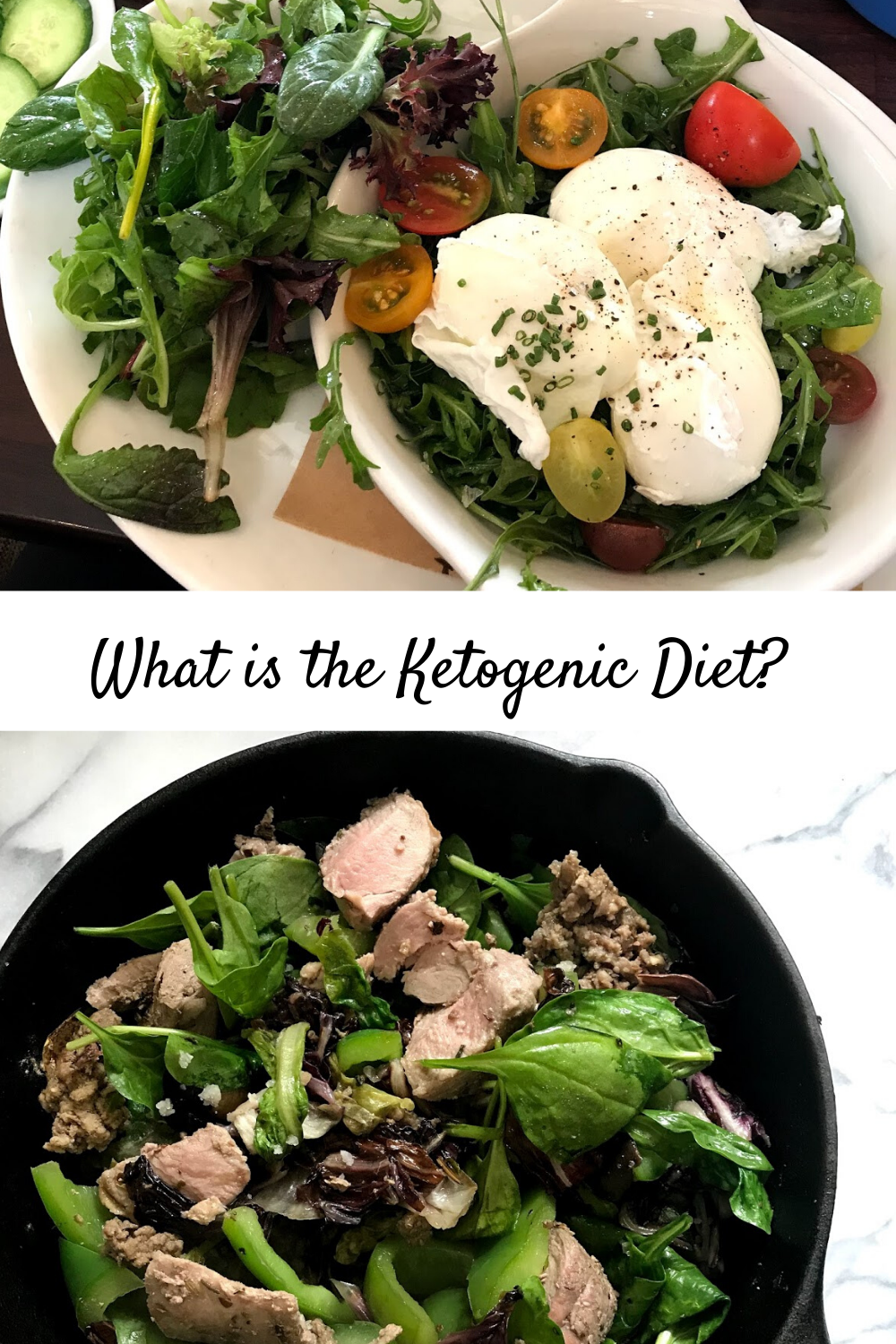
On a nutrient-dense ketogenic diet, you’ll eat grass-fed and organic beef, wild-caught fish, pasture-raised poultry, pork, eggs, bone broth, and other animal proteins. Extra points for organ meats. The ketogenic diet can also include plenty of low-carb vegetables, like leafy greens, lettuces, cabbage, cauliflower, zucchini, mushrooms, asparagus, and celery. A ketogenic diet can be a very plant-heavy diet if you want it to be! You’ll also include plenty of healthy fats like extra virgin olive oil, coconut oil, MCT oil, animal fats, ghee, avocados, and avocado oil, as well as small amounts of nuts and seeds – special shoutout to macadamia nuts! Small amounts of organic, low-glycemic berries are also often included, like blueberries, strawberries, and raspberries. Some people choose to include dairy like grass-fed butter, heavy cream, yogurt, and cheese. You’ll also want to consume plenty of high-quality sea salt.
To shift into ketosis, you’ll want to avoid any foods high in carbohydrates, which includes refined carbohydrates (breads, pasta, etc.), sugar, grains, beans / legumes, high-sugar fruits, starchy vegetables / tubers, and alcohol.
Easy meals include eggs with bacon and avocado, a big salad with animal protein and extra virgin olive oil, and roasted low-carb veggies with some kind of protein source.
What are the benefits of being on a ketogenic diet?
Some potential health benefits include:
- fat loss
- reduced inflammation
- improved cognitive function
- reduced cravings
- more energy
- improved endurance for athletes
- better gut health / reduced IBS
- blood sugar regulation / improved insulin sensitivity
- improved levels of HDL cholesterol, LDL cholesterol, and triglycerides
- improved blood pressure
- improvement in serious conditions like Parkinson’s, Alzheimer’s, epilepsy, and some forms of cancer
Ketones can be very therapeutic, and the ketogenic diet was traditionally used as a treatment for epilepsy. Over time, people figured out that ketosis could offer health improvements for other populations as well. If someone needs to be in ketosis for a medical reason, like epilepsy, then it definitely makes sense to test ketone levels to make sure they’re actually in ketosis. If someone is interested in a ketogenic diet for weight loss benefits or blood sugar regulation, though, then it might not matter if they’re actually in ketosis or not, so testing probably isn’t necessary.
How do you know if you’re in ketosis?
Signs that you’re in ketosis are enhanced brain function, having higher levels of stable energy throughout the day, fewer cravings, a reduced appetite, better endurance, and potentially weight loss. Everyone is different, though, so you might not experience all of those. Personally, the way I know I’m in ketosis if I’m not testing is by my cognitive function. My brain feels incredibly clear – there is a noticeable difference in how well my brain works.
You can test your ketones by checking your blood with a glucose meter (I use a Precision Xtra), by testing your breath with a breath meter, or by testing your urine with a test strip. I don’t usually recommend urine test strips, though, because once you’re in ketosis and actually using ketones for fuel, you won’t pee them out. This means that you could very well be in ketosis, but your test strips won’t show any ketones. Urine strips are more accurate when you first start a ketogenic diet, but not very accurate after that.
If you’re testing, a reading in the range of 0.5-3.5 mmol/L indicates you’re in ketosis. Remember, though, most people don’t need to test unless it’s medically necessary. Testing can be expensive, and for most people what really matters is how they feel.
There are many people who could benefit from this way of eating, even short-term, but it’s not meant for everyone. I know some people who notice no difference whether or not they’re in ketosis. The ketogenic diet played a huge role in my own healing process, but there have also been times when it was better for my health that I was out of ketosis. Always check with your qualified healthcare provider before changing your diet to make sure there are no contraindications.
Have you tried a ketogenic diet? Do you have any questions about keto? Comment below!
