
by Christina | Jan 26, 2017 | Wellness
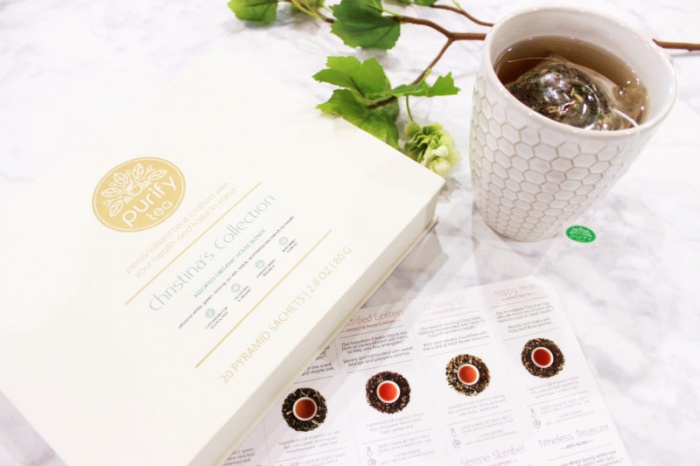
As almost everyone knows, I am very obsessed with tea. My tea collection is a little out of control and takes over half of my living room, but I love it. There’s nothing more comforting than a warm cup of tea on a gloomy day, especially in the colder months.
Over the years, though, I’ve gotten extremely picky about the teas I buy and drink. Most people assume that all tea is “innocent,” but sadly, that’s not the truth. Just like any other food, it’s important to choose organic teas from a good source. Most teas on the market are actually full of pesticides, toxins, GMOs, and artificial ingredients. Conventional tea brands usually just throw the ingredients into the tea bags without washing them first, which means those pesticides are floating around in your tea after you steep it. Not sure about you, but I don’t really want to drink carcinogens. Even teas that are labeled “100% natural” have been shown to be filled with pesticides when tested by independent labs.
Honestly, it really upsets me that the majority of tea companies do this. It just goes to show that something as healthy and seemingly innocent as tea is not always so. CHECK YOUR INGREDIENTS. RESEARCH COMPANIES.
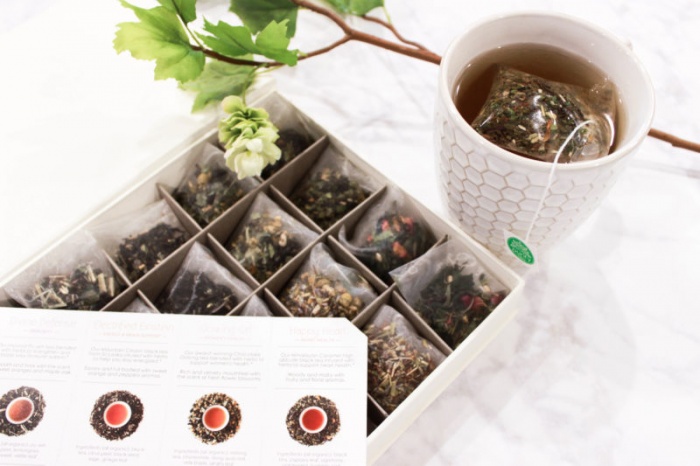
Have you ever actually looked at the ingredient list on your tea? You might be surprised. When I first started checking my teas’ ingredients, I was shocked to see how many contained soy lecithin and gluten. Many also say, “Natural Flavors” or “Artificial Flavors.” What does that really mean? It can mean a number of things. First of all, those “natural” flavors are made by mixing chemicals in a lab, so they are certainly not natural. What’s mixed, exactly? Coal tar and crude oil are two common chemicals used. The terms “natural flavors” and “artificial flavors” are sneaky ways for companies to add in gluten, weird chemicals, soy, and other GMOs into your tea without you realizing it. If you see those terms, I highly suggest you don’t buy those teas.
Another thing I want to mention is that, generally, it’s always better to buy loose leaf tea than tea found in tea bags. Most tea bags are made from plastic and/or genetically modified corn. Even the safest plastics can break down when put in boiling water, which releases their chemicals. Therefore, when you steep your tea in boiling water, you’re drinking those not-so-lovely chemicals. Yes, this includes “mesh, biodegradable tea bags.” Paper tea bags are usually coated with carcinogens, so you should avoid those too.
There was a time when I was drinking about 3 cups of tea a day, and I drank tea from conventional brands that used common ingredients. When I started learning the truth about most tea companies, I decided to take 3 months completely off from drinking any tea to see if it affected my stomach. It did. I felt monumentally better.
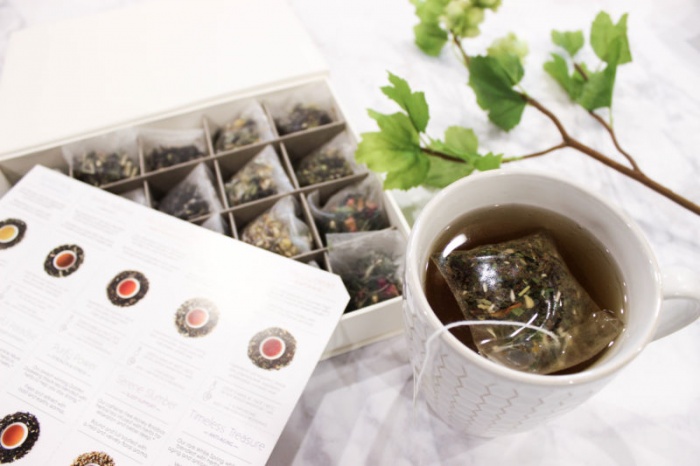
People make fun of me for always carrying my own tea with me, but I’d rather be safe than sorry. As someone with a huge tea collection, it really disappointed me to find out all of this information. Since discovering the truth about some of my favorite tea brands, I haven’t bought any new teas with “natural flavors” or “artificial flavors,” and I’m trying to figure out what to do with all of my old teas that no longer meet my health standards. I’m also always on the hunt for high quality, truly healthy teas. My personal favorite teas are organic loose leaf teas from Luna Tea Co, or organic loose leaf teas that I find locally. If I’m at the store, I like to stick with Numi, Rishi, and Traditional Medicinal teas. These brands have safe packaging and no pesticides or “flavors.”
To recap, be picky about your teas, just like you would be with any other food. It’s something that people commonly forget about, and you could accidentally be ingesting harmful chemicals every day if you’re not careful. It might be easier to go to the grocery store and buy whatever tea you see first, but it’s not safe. Quality is the most important thing when it comes to your health.
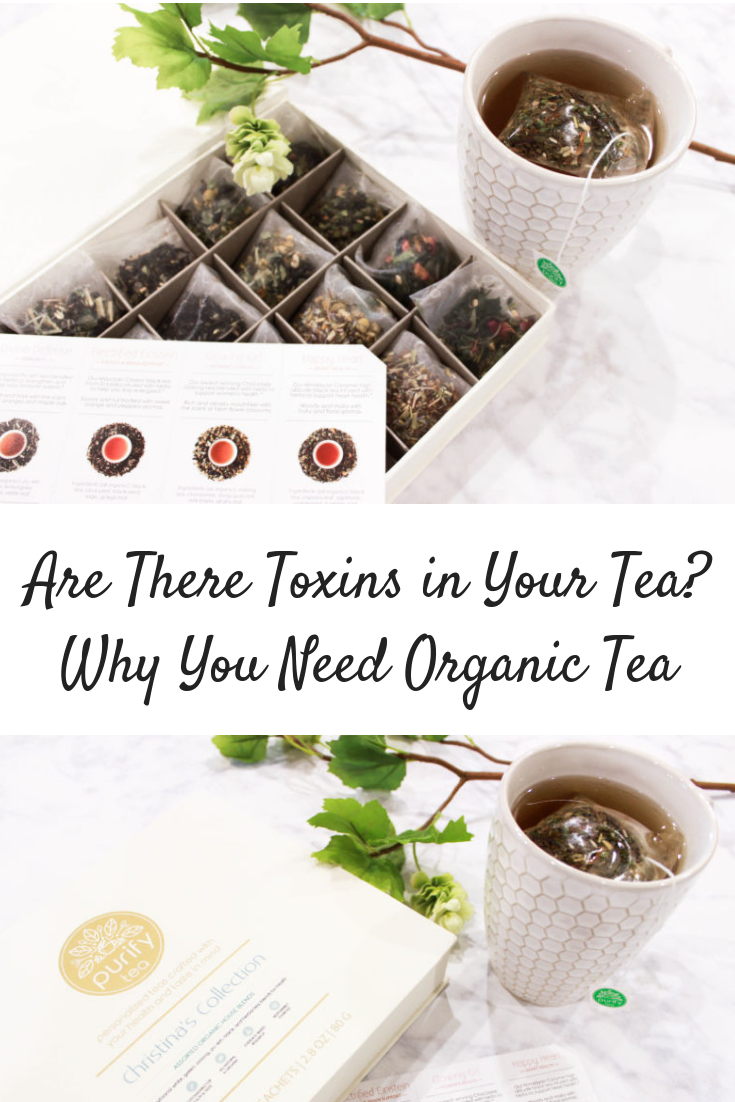
What’s your favorite tea?!

by Christina | Jan 24, 2017 | Recipes, Wellness
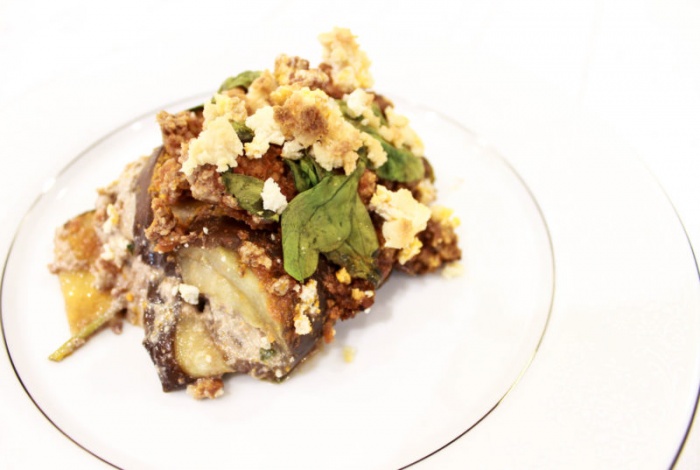
People always ask me what I miss most from my gluten days. The truth is, I don’t miss much. As hard as it is for some to believe, I can easily replace anything I miss. I truly believe you can make a healthier version of any dish, and magically, it tastes even better than the unhealthy version. Real food always tastes better.
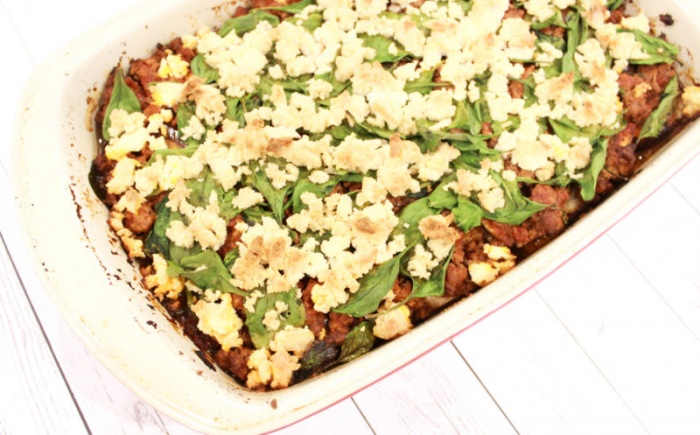
Take pasta, for example. I used to be a huuuuuge pasta girl. I think I ate pasta almost every single day of the first 18 years of my life. Italian food is divine. I realize now that it wasn’t the noodles themselves that I loved. I can make zucchini noodles, kelp noodles, or spaghetti squash to replace the noodles, and then I can use real food to create the delicious tastes that truly made the dish delicious.
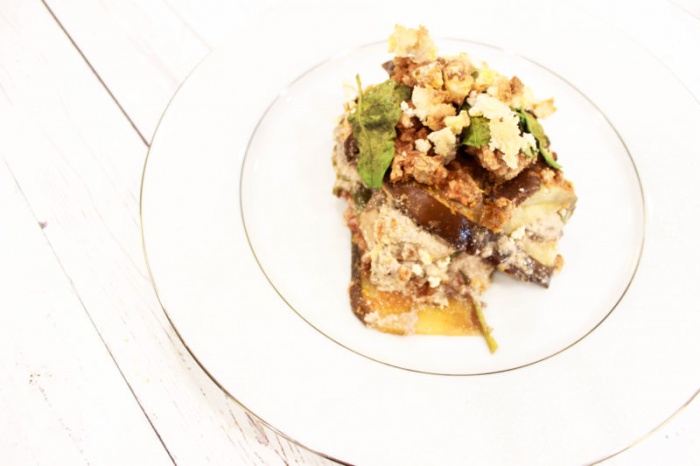
I think lasagnas are one of those things that everyone holds near and dear to their heart. Lasagna reminds me of family. Growing up, lasagna was served at most of my family holidays and special occasions. It’s hearty, filling, warm, and comforting. Plus, it’s a great way to feed a lot of people at once. Always a crowd-pleaser.
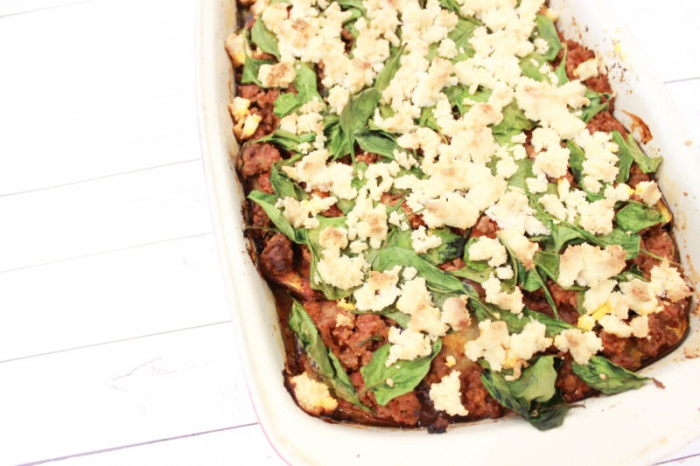
This year was no different. For Christmas, the main dish was lasagna. Since I always bring my own meals to holidays and I didn’t know what to make, I decided to just make my own lasagna. You know, blend in with the crowd.
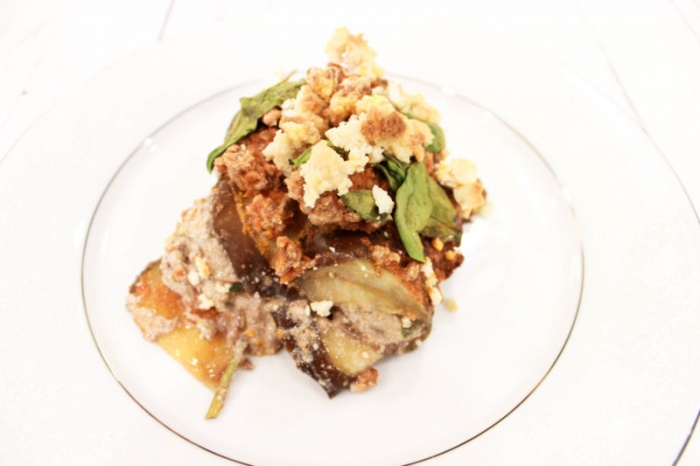
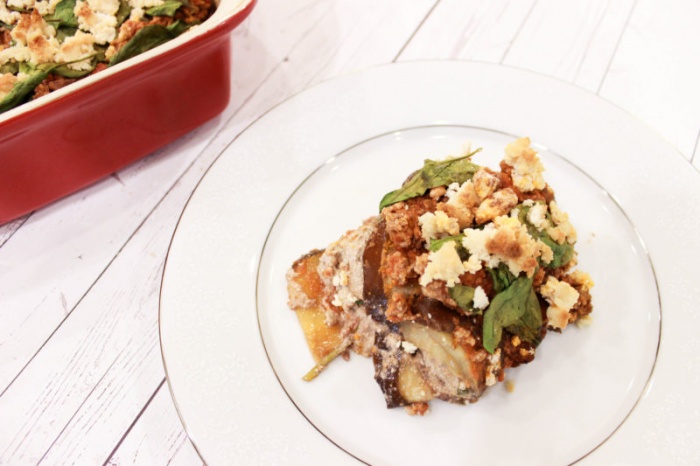
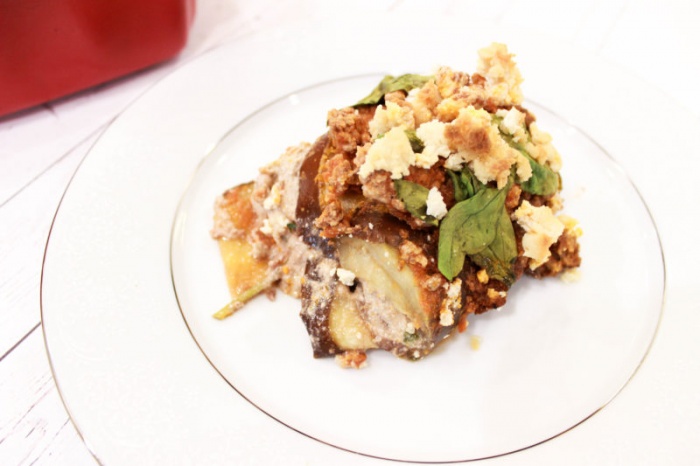
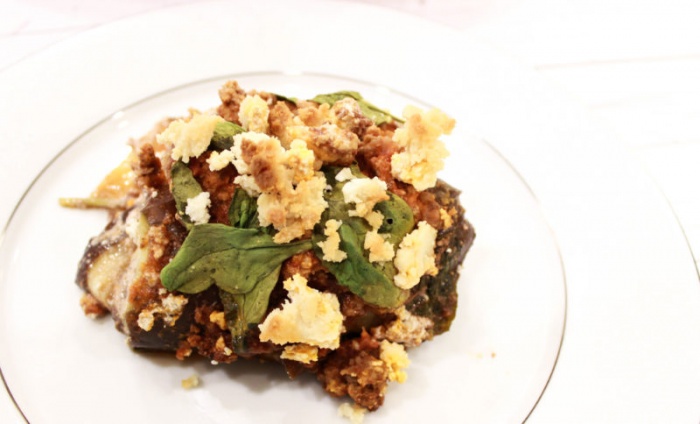
There are a lot of variations on paleo lasagna, and I’ve been playing around with different versions over the past few months to figure out my favorite. I have an obsession with zucchini lasagna and always order it if I see it on a menu. The problem I have, though, is that sometimes the zucchini doesn’t get soft enough to truly mimic that pasta-like texture. For Thanksgiving this year, I made a zucchini/eggplant lasagna, and I realized that it would have been even better if it was all eggplant. So for Christmas, I went all out eggplant. Hence, this beautiful creation came into existence.

I couldn’t have asked for a better Christmas dinner, to be honest. I am ADDICTED to this thing. Even though a big lasagna takes prep time, it’s worth it when it means you’ll have enough food for a week. I ate this for almost every single meal the week after Christmas. I definitely didn’t get sick of it, and I shed a small tear when I ate that last corner square. So sad.
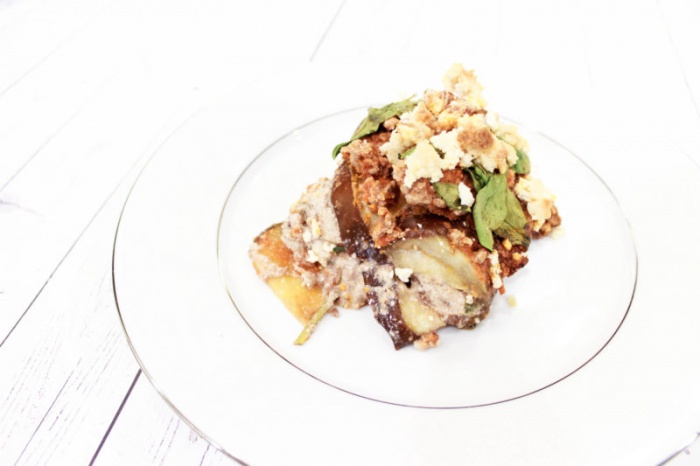
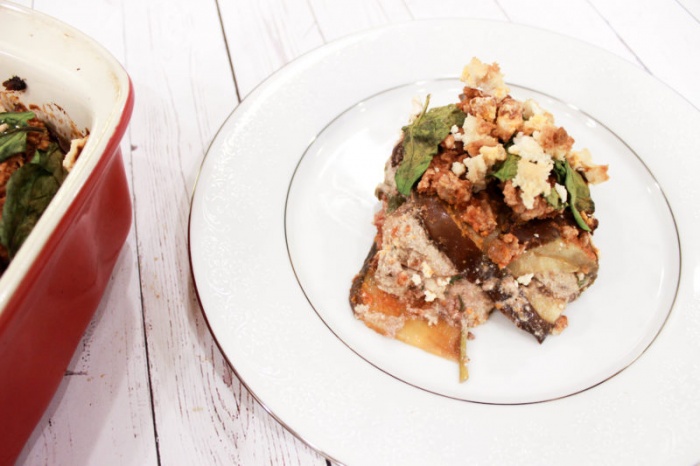
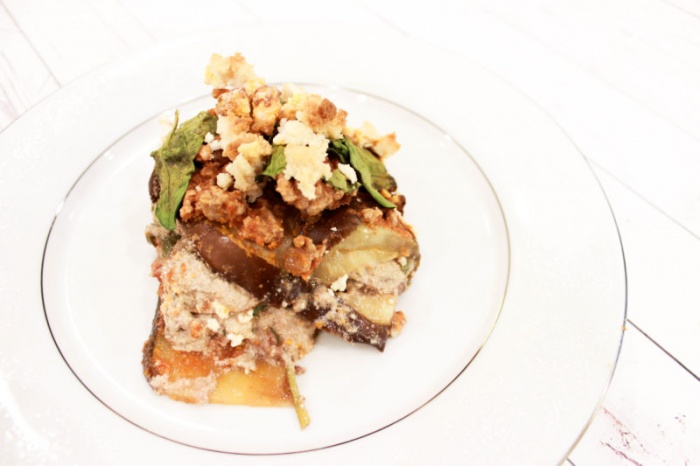
This is incredible straight outta the oven, but you can reheat it over and over again and it will still taste amazing. Sometimes I think it might be even better as time goes on, because all of the flavors soak into each other with more time. Lasagna is so satisfying because you’ve got a million things going on. That’s the key to satiety – hitting different textures and flavors in one meal. Soft eggplant, melty (fake) cheese, rich meat sauce, greens, mushrooms…. the works.
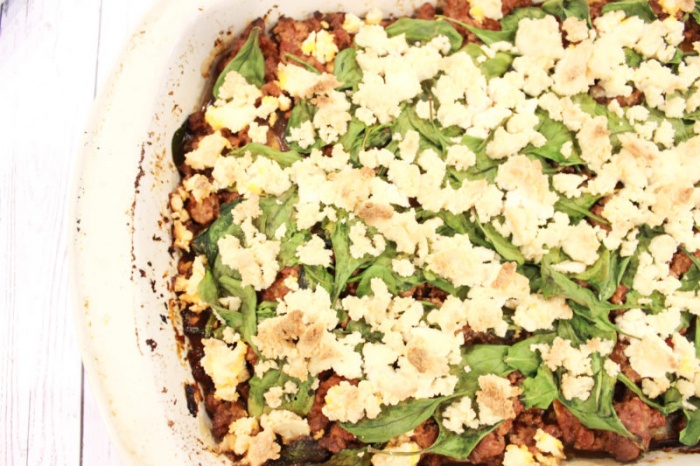
Diving into a big bowl of this is just so…comforting. Homey. It reminds me how amazing real food is, especially because (sorry mom), it’s my favorite lasagna I’ve ever had.
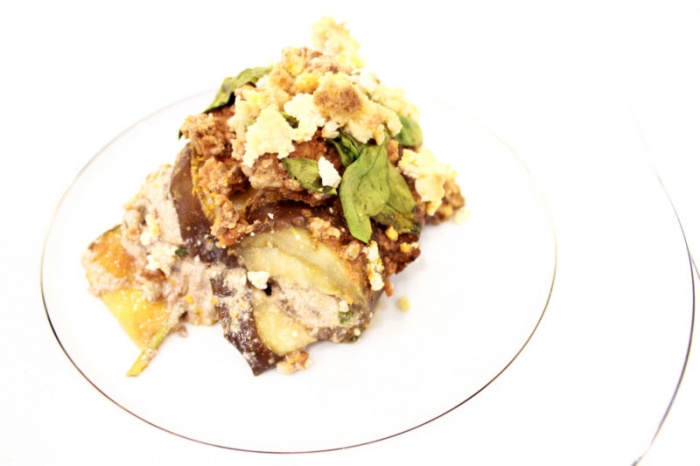
Like I mentioned before, one of the things I love most about lasagna is that there are so many different ways you can do it. Let’s talk about what I did and how you can modify it. I made a paleo, gluten-free, grain-free lasagna, but this can easily be modified to be vegan.

First of all, I made a meaty red sauce using grass-fed beef. If you don’t eat grass-fed beef, you could also sub in ground turkey or ground chicken. If you don’t eat animal products, you could make walnut meat, or you could leave it out and just use the red sauce as a marinara! There are plenty of layers, trust me.
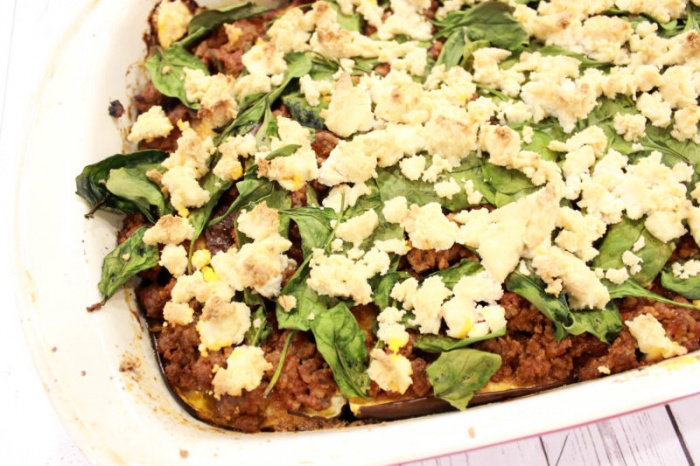
The other thing that you can modify is the cheese! I did two layers – one layer of walnut cheese and one layer of Kite Hill Ricotta. I love having two different cheeses – makes things interesting! You could do a lot of different things here. If you don’t want to bother making nut cheese, you could do two layers of the Kite Hill Ricotta. If you don’t want the Kite Hill, you could do two layers of walnut cheese, or you could use cashew cheese! OR you could do one layer of cashew cheese with one layer of walnut cheese. YOU CAN DO ANYTHING. No limits.
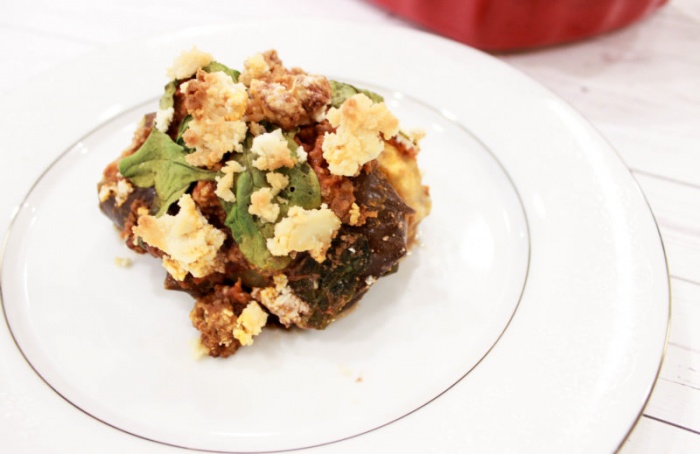
You could also sub out the greens. I used spinach, but I think that kale or arugula would also taste amazing. Whatever you choose, you can’t go wrong.
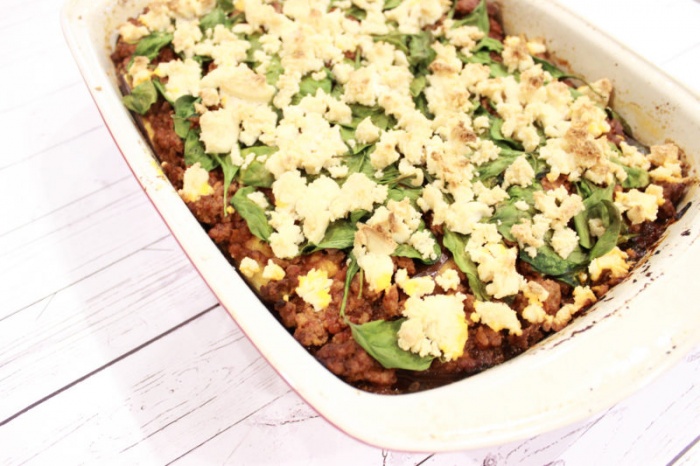
This is the perfect meal prep dish, or the perfect potluck item. It makes A LOT, and it’s filling. It’s also extremely healthy. Put in some time on a Sunday, and the rest of the week all you gotta do is cut out a square and heat it up. I could seriously eat this over and over again, forever.
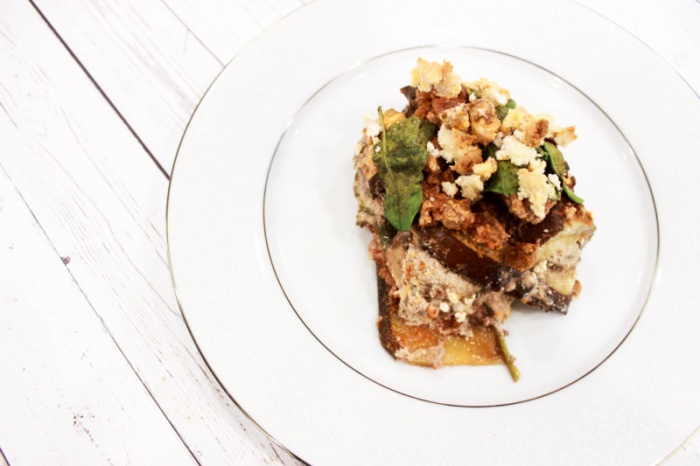
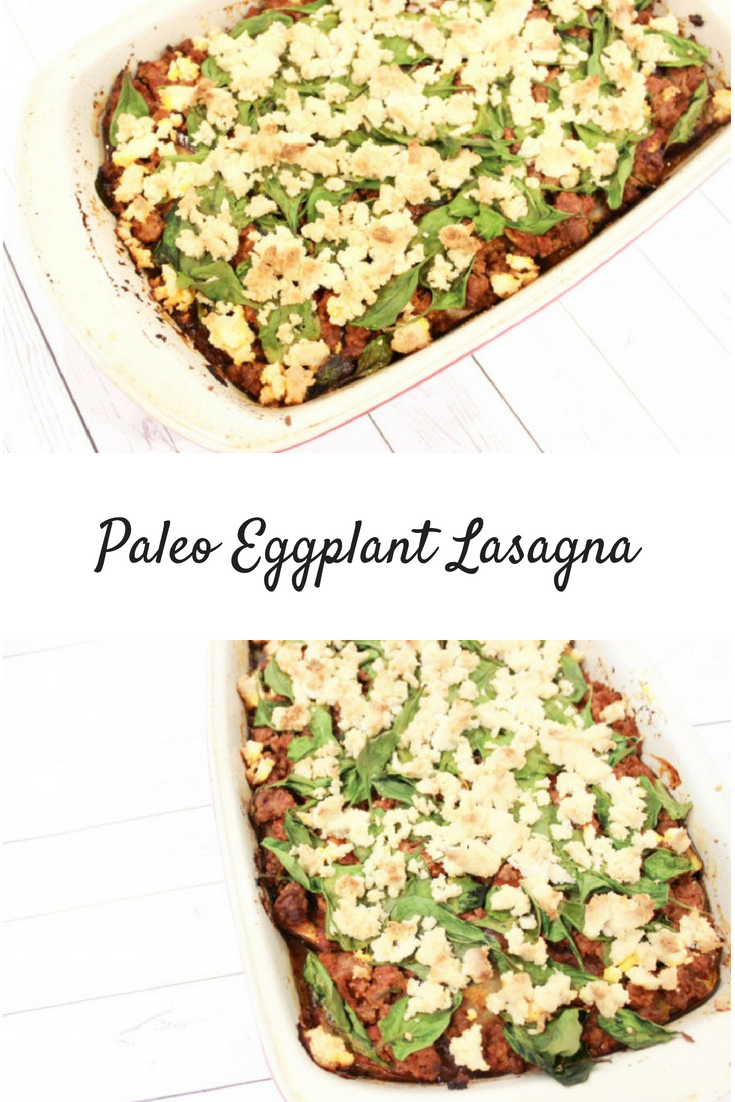
Paleo Eggplant Lasagna with Walnut Cheese (Vegan Option)
Serves: 10-12
Prep Time: 30 minutes
Cook Time: 40 minutes
Total Time: 1 hour 10 minutes
Ingredients:
Lasagna:
- 1 jar Thrive Market marinara or Rao’s Marinara
- 3 large eggplants
- 8 oz organic sliced crimini mushrooms (1 container)
- 1 lb grass-fed ground beef (can sub ground turkey or ground chicken, or omit if vegan)
- 6 cups organic spinach
- (optional) 1 container Kite Hill Ricotta (I get mine from Whole Foods! You can also do two layers of walnut cheese or cashew cheese instead)
Walnut Cheese (optional):
- 1 cup organic raw walnuts (soaked in filtered water for 2 hours)
- 1/4 cup nutritional yeast
- 1/4 tsp himalayan pink salt or celtic sea salt
- 1/4 cup filtered water
- 1/4 tsp nutmeg
Cashew Cheese: (optional)
- 1 cup cashews (soaked in filtered water for 2 hours if possible)
- 1/4 cup nutritional yeast
- 1/4 cup filtered water
- 1/4 tsp pink Himalayan salt
- 1 clove fresh garlic or 1 tsp garlic powder
Instructions:
Lasagna:
- Preheat oven to 375*F. Grease a 9×13 inch (3 quart) pan with coconut oil or avocado oil.
- Cut the eggplant lengthwise into thin strips, about 1/4 – 1/2 inch thick.
- Place the eggplant slices on a baking sheet and rub coconut oil on each side of the slices. Bake the eggplant for 5 minutes on one side, flip the pieces over, and bake for another 5 minutes on the other side. Remove from the oven.
- While the eggplant is baking, grease a pan with coconut oil and cook the ground beef on the stove. Sprinkle a little pink salt on top. Cook for about 5 minutes, or until there is no more pink in the meat.
- After the meat is cooked, drain any liquid from the pan. While the pan is on low heat, add 1 jar of marinara sauce to the pan, and mix the marinara with the cooked meat. Remove from heat after well incorporated.
- While the meat and eggplant are cooking, you can make your walnut cheese. (Or cashew cheese. Or both. Instructions are below.)
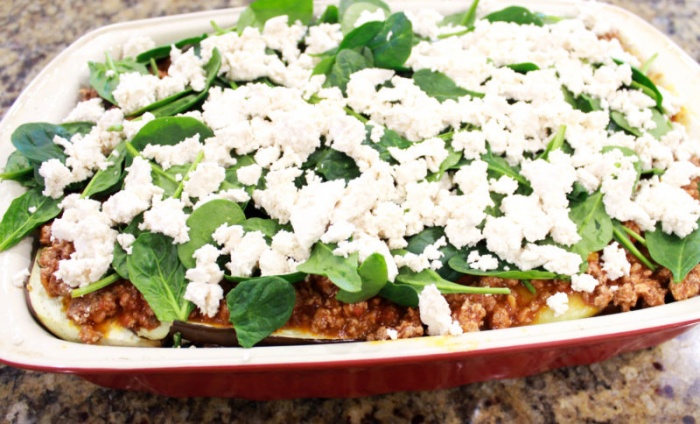
- After the eggplant slices have been cooked and you’re done with the meat sauce, it’s time to start layering! Start with a layer of eggplant slices at the bottom of your greased lasagna pan.
- Next, create a layer of marinara/meat sauce. Use about half of what you cooked.
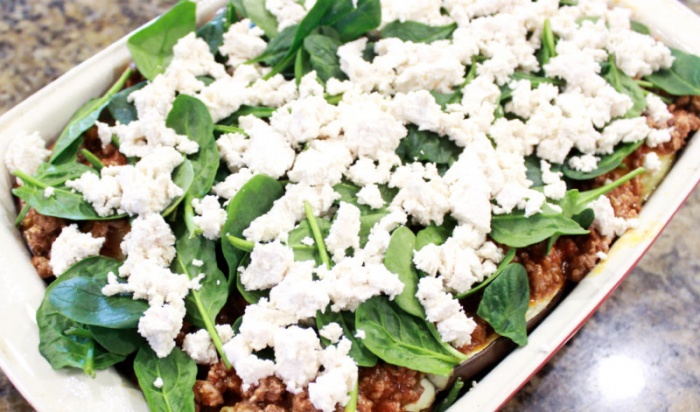
- Sprinkle about 3 cups of spinach on top of the meat sauce layer. Next, create a layer of mushrooms (you can use the whole container here).
- On top of the mushrooms, add your cheese of choice. You can use the walnut cheese, cashew cheese, or Kite Hill Ricotta. (I used walnut cheese.)
- Repeat the layers again, without the mushrooms. So add a layer of eggplant, then meat sauce, then spinach, and then your cheese of choice (I used Kite Hill Ricotta for the top layer.)
- Cook for 40-45 minutes in the oven, or until the top is slightly browned.
- Slice and enjoy!
- Store leftovers in the fridge, covered, for about a week!
Walnut/Cashew Cheese:
- Add all cheese ingredients to a food processor and process until blended together. If it’s too thick, you can add a little more filtered water.
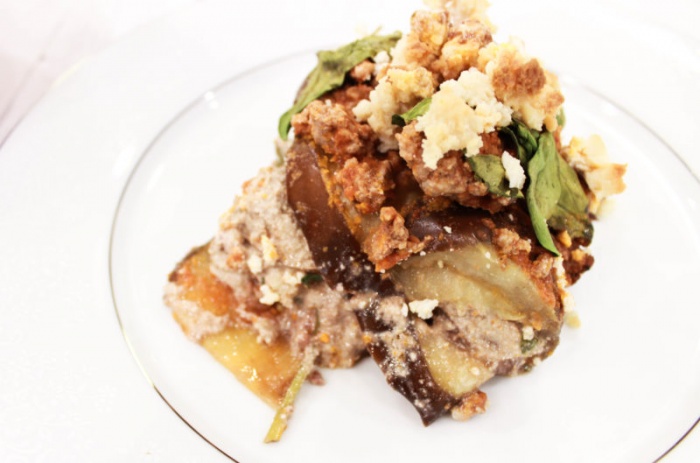
I hope you guys enjoy this take on Paleo Eggplant Lasagna! It’s my favorite. It does take prep time, but it’s very worth it for how much food you get and how delicious it tastes. If you make this, let me know what cheese combos you use!

by Christina | Jan 17, 2017 | Wellness
If you’ve even glanced at social media recently, you’ve probably seen this word again and again: COLLAGEN. I might seem late to the party on this one, but the truth is I was actually very early to the party. Collagen has been a part of my daily routine for a loooong time now, so much so that I almost forgot it’s something I need to tell you guys about. You know when you’re just so used to something that you forget to point it out? Yeah. I’m so sorry, collagen. Now it’s time to do you justice.
Let’s talk basics. What is collagen? It’s the most abundant, most important protein in the body. It’s a protein that’s crucial for the growth of our skin, bones, hair, nails, and joints, and it’s also pivotal for maintaining a healthy gut lining. Healthy gut lining means happy digestion. Collagen basically holds our body together, and it gives our skin its elasticity. As we get older, our bodies create less and less collagen, so it’s extremely important that we do everything we can to protect the collagen we do have and maximize our bodies’ ability to make more.
To create new collagen, our bodies need amino acids. Remember faintly a long time ago when you learned about protein..amino acids…building blocks… Does that jog your memory? What about all of the ads for collagen face creams that are meant to plump up your skin and get rid of wrinkles? Ring a bell? Let’s connect those dots. Collagen peptides have a high amount of amino acids like Proline and Glycine that allow our bodies to build new collagen which is crucial because, as I mentioned before, our bodies have a harder time producing collagen as we age.
Think about the stereotypical signs of aging. Wrinkles. Sagging skin. Joint pain. Brittle bones. Muscle loss. Slowed metabolism. Hair loss. Weak heart health. The list goes on. Collagen helps protect against all of those things, and more.
To keep it simple, think of it this way. Protein allows our bodies to build. Everything. Collagen is the most important protein for the body. Therefore, YOU NEED COLLAGEN.
If you’re an athlete, collagen peptides will help protect your muscles and tendons and also help you build new muscle. If you’re a human who ages (A.K.A. everyone), then collagen will help protect your bone mass. If you want long nails, shiny hair, and plumper skin, you want collagen in your diet. If you’re having problems with your digestion, collagen will help repair your gut lining. Collagen even improves sleep quality and boosts your metabolism. If anything is a “superfood,” it’s this.
I also want to highlight the importance of putting collagen into your diet rather than just on your skin. You can buy as many collagen creams as you want, but it’s not going to give you the results that putting something into your body will provide.
Back to my very serious personal relationship with collagen. It all started when my stomach problems got really bad about 2 years ago. My digestion and stomach lining were in shambles, and I needed to fix it – stat. One of the first things my doctor recommended was to supplement with collagen. I researched, bought Vital Proteins Collagen Peptides, and started taking collagen every day.
At first, I was really just taking it because my doctor told me to. After being consistent for a few months, I stopped taking it for about a week when I ran out of my first container. During that week, I felt very… off. Initially I didn’t realize what it was, but I finally realized it was the collagen. My digestion was not on point, and my stomach pains were worse than usual. As soon as I hopped back on my collagen routine, I felt much better.
I also started to notice a difference in my hair, nails, and skin. I lost a lot of hair when I was very underweight, but I was able to grow it back at a very impressive speed after being consistent with my collagen routine. Every time I see my hairdresser, she always comments on how fast my hair grows and asks me how I do it. Collagen, baby! My baby hairs have become full-grown adults.
Then, my nails. I have always been plagued with weak, brittle nails. Nowadays, they grow too quickly for me to keep up with. And they’re strong. I’ve been going to the same nail technician since I was 12, and she’s seriously in shock about how much my nails have changed.
Next, my skin. I’m only 21, so I’m not dealing with a wrinkle problem. (I do think it’s never too early for preventative measures, though.) However, since taking collagen every day, I do feel like my skin looks plumper and brighter. There’s more life to my face. The one thing I’m convinced of is that collagen allows my skin to heal at a rapid pace. I’ve had a few laser treatments done that completely obliterated my skin, and I’ve also gotten some major cuts (throwback to that one time I sliced my whole hand open while cutting an avocado.). My skin heals very quickly now, and my dermatologist is always very impressed. He would tell me that the downtime for a treatment would be 2 weeks, and I’d be fine in 2 or 3 days. Obviously I can’t be 100% sure it’s the collagen, but I’m pretty darn convinced.
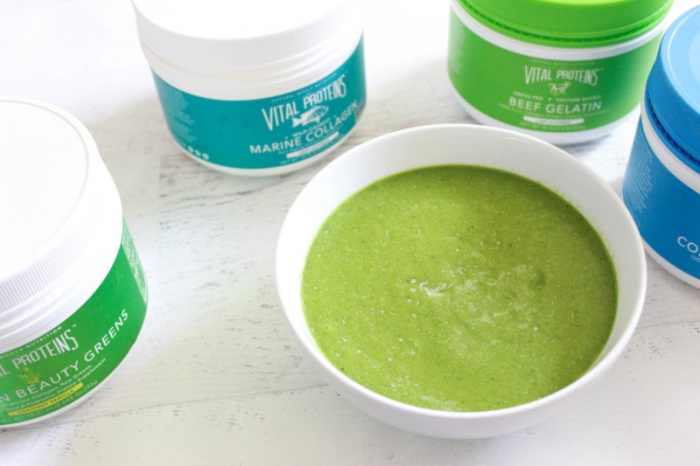
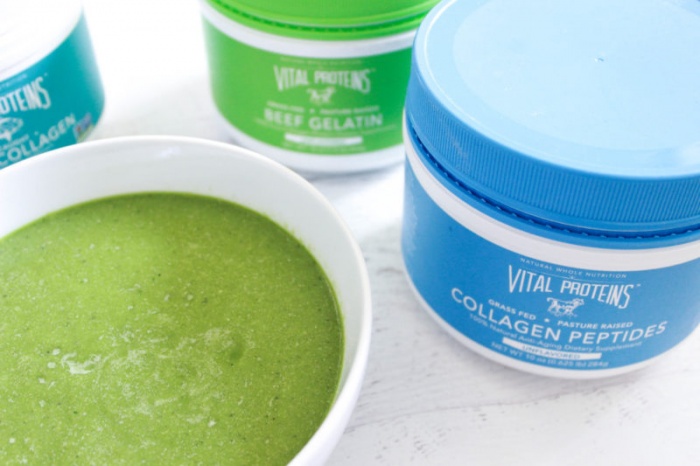
I make a green smoothie almost every day literally just to put my collagen in there, and I use Vital Proteins collagen as a protein powder replacement. When I first got into health, I had a really hard time finding a protein powder that was truly clean for post-workout. I honestly couldn’t find anything that met my standards until I discovered Vital Proteins, and I’ve been using it ever since.
If you don’t want to make a smoothie, there are a ton of other ways to use collagen. First of all, you can put a scoop into any liquid and it will dissolve right away. You can put it in coffee, tea, or any other drink. You can also mix it into salad dressings for added protein, use it in baked goods (pancakes?!), mix it in with sauces, pour it in soups…the possibilities are endless. You can also use the beef gelatin to make jello squares, puddings, egg replacements, and other delicious treats!
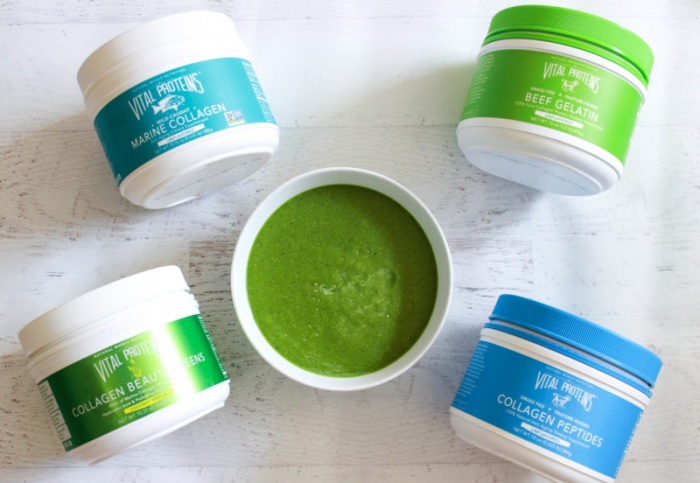
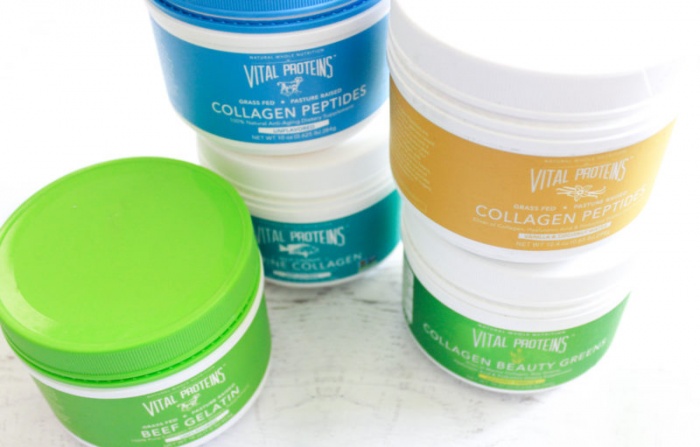
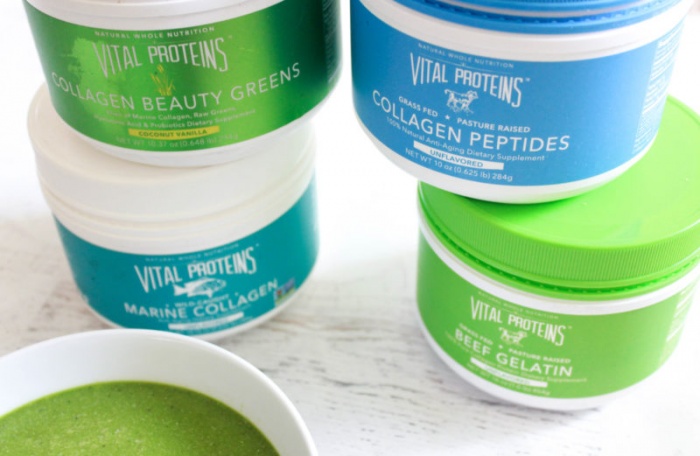
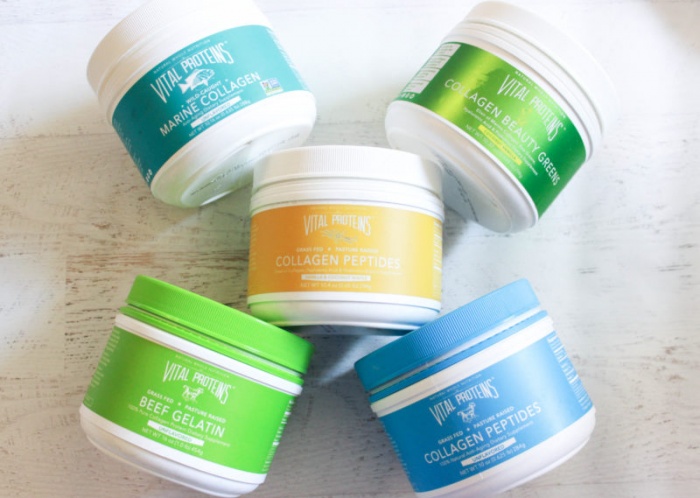
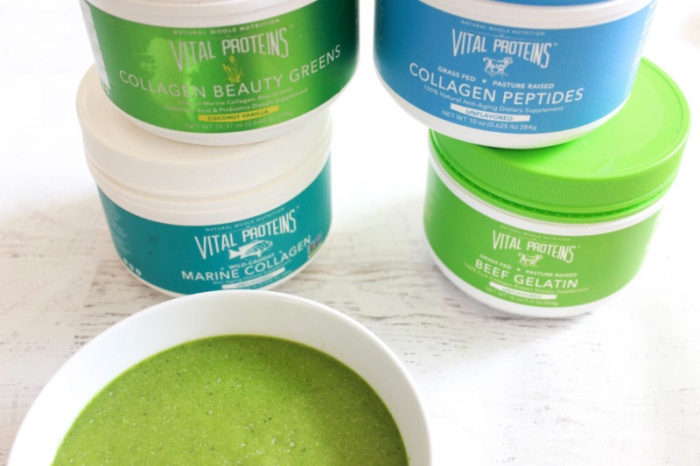
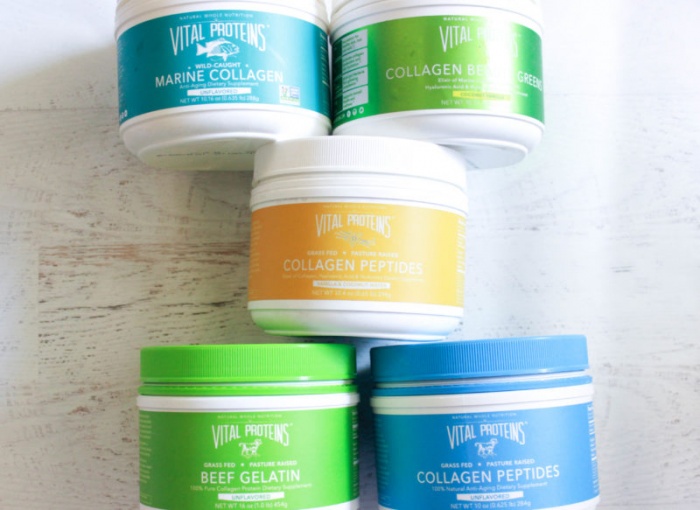
Vital Proteins has a few different collagen options, and I use them all. They’re all Whole 30-approved, gluten-free, non GMO, and Kosher.
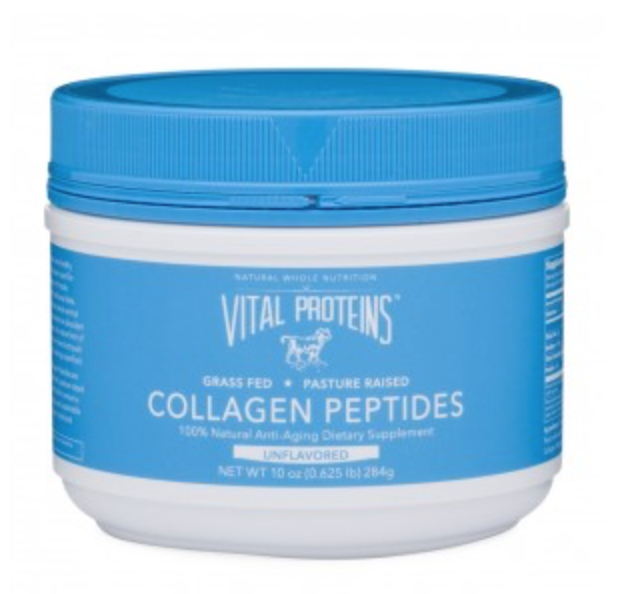
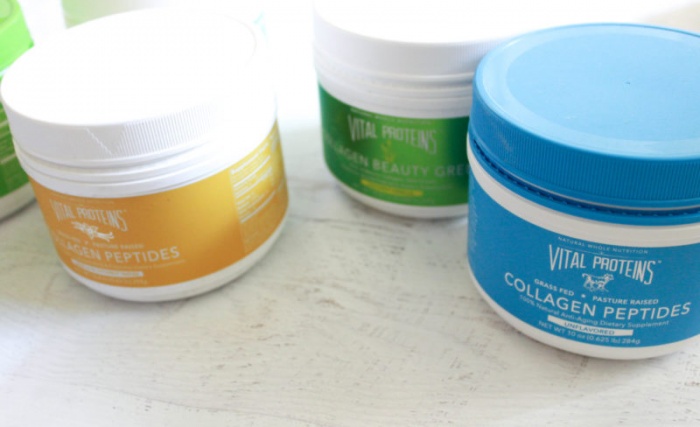
The blue container is their basic, grass-fed Collagen Peptides. This is the one that I use most often. It doesn’t have a flavor, and it will dissolve in whatever you put it into. You can put it in hot or cold liquids, baked goods, smoothies – whatever. It won’t affect the taste! It has 18g of protein in a serving, which is very impressive. The collagen comes from grass-fed, pasture-raised bovine hides in Brazil. Fancy, right? Seriously, though, you want your collagen to come from a high-quality, sustainable source, just like all of your food. What you put in your body is the most important thing when it comes to health.
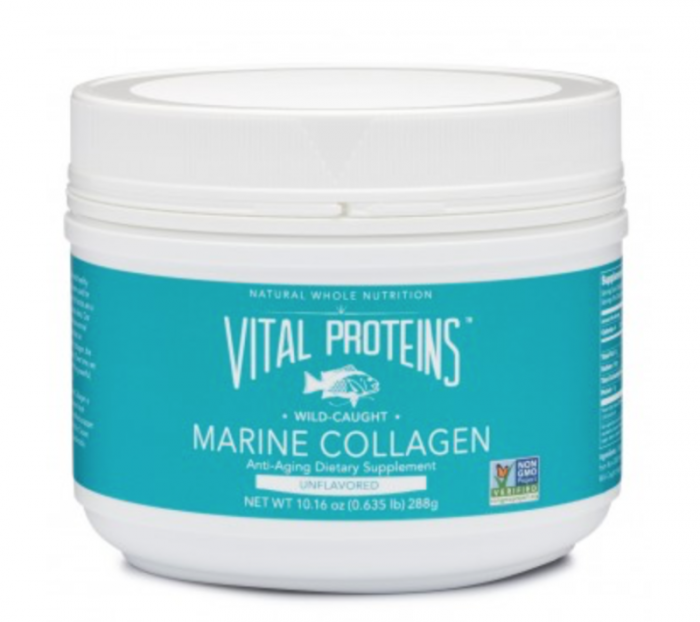
The teal container is the Marine Collagen. It’s also flavorless, and it will dissolve in hot or cold liquids. If you’re vegetarian, this is best for you because the collagen comes from wild-caught snapper. A serving gives you 11g of protein, which is not as much as the regular collagen peptides, but still a good amount. You can always add an extra scoop.
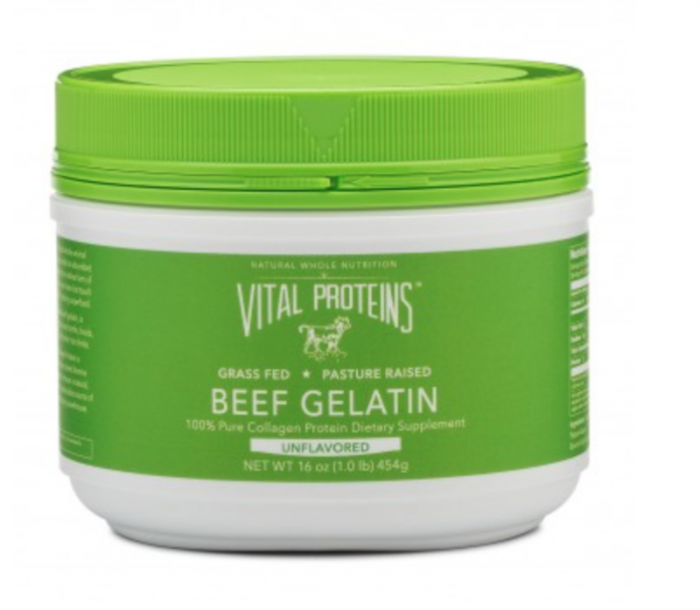
The green container is the Beef Gelatin. There is collagen in gelatin – don’t get tripped up about the name. This will dissolve in hot liquids, and it will make your drinks frothy if you blend it up! For example, this is great for Bulletproof coffee. You can also use this as a binding agent. Use this to make gelatin squares or puddings, like my Golden Milk Pudding. You can also use this as an egg replacement if you don’t want to use eggs in a recipe. One serving gives you 17g of protein, and the collagen comes from the same source as the regular collagen peptides.
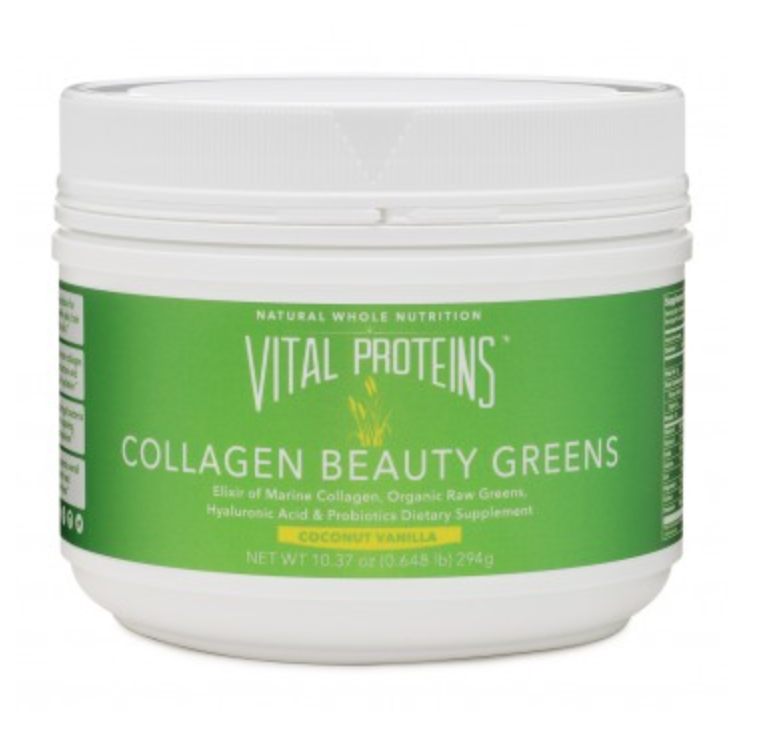
Next up, the shiny green container is the Collagen Beauty Greens. The flavor is Coconut Vanilla (delicious!), and it contains raw greens, hyaluronic acid, and probiotics. As if the collagen alone wasn’t enough to save your gut, the added probiotics give you extra bang for your buck. This is marine collagen, so vegetarians can enjoy this one, too. 1 scoop gives you 10g of protein! I’m obsessed with this, and I love the way it makes my smoothies taste. I used this in my Coconut Creamy Green Beauty Smoothie, which honestly makes me weak at the knees. I make it almost every day.
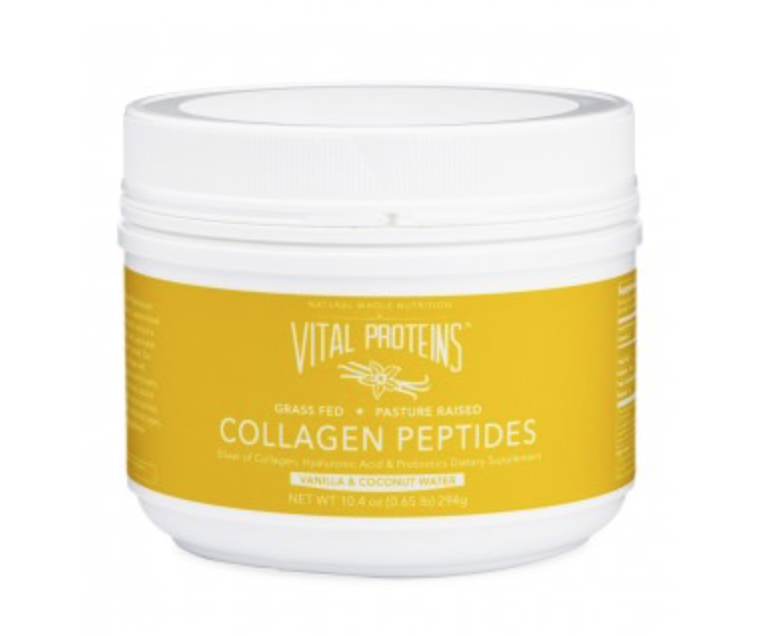
Last, but certainly not least, is the yellow container – the Vanilla and Coconut Water Collagen Peptides. I think this is my absolute favorite. It is so delicious. If you like vanilla, you need this. One scoop gives you 18g of protein, which is extremely impressive. This collagen is from pasture-raised, grass-fed bovine hides. I love putting this in smoothies and cookies. I go through these containers too quickly…but so worth it.
I have tried other brands of collagen, but I always come back to Vital Proteins. It works best with my body. I honestly wish this post was sponsored, but it’s not. I see collagen as a pivotal part of improving my health, but even if you don’t have any “health issues,” I strongly believe everyone should add collagen to their diets. You’ll see nothing but improvements inside and out.
What’s your favorite way to use collagen? I’d love to hear!

by Christina | Jan 15, 2017 | Wellness
This week I’m featuring my gut-lovin’ soul sister from across the country – Emily from My Healthyish Life! Emily’s blog was one of the first blogs I found through Instagram when I started my health journey. I immediately fell in love with how down-to-earth and real she is, and I spent hours reading through her posts, fascinated with her experiences. I couldn’t help but notice our similarities, and everything she said really resonated with me. Emily’s all about actually balancing health and regular life. Uncomplicating things. She calls herself “healthyish,” but in my opinion, there’s no ish. She’s straight-up healthy, because she’s all about a realistic approach to health. Not perfection or having it all figured out – just exploring a healthy lifestyle and making the best choices for your mind and body every single day.
Back to our similarities – it’s kind of creepy. She eats dinner for breakfast, she loves gut health, she’s a GF gal, she wasn’t so into her college scene…the list goes on. (There are many more, but those are my favorites.) It was love at first blog post. Emily covers everything on her blog – fitness, food, wellness, deep thoughts… all of it. It’s hard not to want to be her friend. She’s so relatable, and she has so much knowledge when it comes to health – body and mind. You’ll learn a lot from her. She makes a healthy lifestyle seem not so intimidating, which I think we could all use in this world full of cacao magic mushroom elixirs and float therapy tanks.

Tell me a bit about yourself so my readers can get to know you!
Hi everyone! My name is Emily and I’m the blogger behind My Healthyish Life. I’m thrilled to be “speaking” with you! Christina and I have bonded over our mutual love of gut health, unconventional breakfasts and coconut butter. Sure, social media has its downfalls, but being able to connect with awesome, like-minded people, like Christina, is the reason I keep coming back.
Ok about me: I graduated from the University of Miami last year and live in Tampa, FL. I work at a digital marketing agency where I’m on the “content” side of things (lots of writing). I love running, writing, reading, and beaching!
When did you first get into health and wellness? What got you interested in it?
I don’t know if I can pinpoint one thing! I grew up in a very healthy household where my mom cooked dinner every night. I played multiple sports and found a passion for running. I think after being diagnosed with celiac (more on that in a minute) I started listening to my body and caring for it in a more loving and personal way.
How did you first get into blogging?
I started reading blogs during my freshman year of college. My adjustment was especially rough and I felt like an outcast for not liking the typical college scene. Blogs were a comfort…I found other people like me! People with similar interests (running, Whole Foods) and personalities (I’m an introvert).
I started my own blog after more than a year of reading (silently) because I wanted to connect with these people who felt like friends. I was also really uninspired at a summer internship and had some time to kill.
What’s your favorite part about blogging? Least favorite?
My favorite part is the community. I’ve learned so much from reading other blogs (and connecting with people offline). I’ve also been so fortunate to have support during times of vulnerability. These people are my friends.
My least favorite part of blogging might just be my situation, but I always feel a pressure to perform. I feel guilty when I can’t dedicate so much time to writing and commenting.
What was it like being diagnosed with Celiac at such a young age? How did you handle it?
It was simultaneously the best and worst thing that happened to me. I was in so much pain and discomfort everyday, so having an answer to that pain was kind of incredible. What a change from gluten-filled to gluten-free!
At the same time, this was 2008. No one knew what Celiac was. The doctors and nutritionists barely knew how to guide me! The day after an endoscopy confirmed my diagnosis (I had a blood test first) my mom threw away everything in our pantry and we started from scratch. The snack options were limited and I ate a lot of rice, fruit, and peanut butter – three “safe” foods.
I was also very embarrassed by my situation. Explaining this to friends wasn’t easy at 13-years-old. Not that it’s easy or fun to do that today, but I definitely didn’t like being “different” in middle school. It took me a year or two to feel confident enough to talk freely about celiac.
What advice would you give to someone who has recently been diagnosed and doesn’t know how to feel?
My biggest (general) piece of advice would be to do research and become an expert on celiac. Start looking at labels, asking questions and cooking for yourself! If you live in a gluten-eating household, I recommend getting a shelf in the pantry and fridge dedicated to your GF products. Same thing for some cooking tools (baking sheets, pans, toaster)!
Now, it’s so helpful to have online support: organizations (celiac.org), blogs, forums. You are not alone, no matter how alone you feel in the moment. Hey, if you feel alone, email me. I’d be happy to speak with you!
What’s the biggest lesson you’ve learned on your health journey?
Your health is the best thing in which you can invest. The time, energy, and money that goes into your health (long and short term) is not appealing on the surface. However, the outcome has been so worth it for me.
What’s your exercise routine like?
Ideally, I exercise five days a week. If I don’t exercise at 5:30 a.m. before work it’s not getting done afterward! Running is my passion and my go-to form of movement. However, I was injured for almost half of 2016 and fell in love with strength training. I don’t exercise with the goal of looking a certain way, but I have to say, lifting weights changed my body more so than 8 years of running.
To give you an idea of my routine right now: yesterday I ran 4 miles and went to yoga and today I lifted weights for 45 minutes.
What are your favorite ways to de-stress?
Exercise (yoga and running are my go-to’s), meditation and massages, which are my non-guilty guilty pleasure.

What advice would you give to someone who wants to start living a healthier lifestyle but doesn’t know where to start?
You don’t have to change everything at once. Start small…like cooking dinner at home three nights a week or bringing your lunch to work. Seriously, start with that for a few weeks and make those meals the best you can.
One of the things we have in common is an obsession with GUT HEALTH! What are your top tips for people to improve their gut health?
The gut is IT. Boom done.
But really, it’s the root of our health. As a disclaimer before I give these tips, I recommend working with a doctor of functional medicine. He or she will give you a full workup and prescribe a protocol for healing your gut, depending on the exact condition and cause.
Aside from that….
-Take a high-quality probiotic and consider adding other supplements at the discretion of your doctor. Sometimes, food alone won’t heal the gut.
-Yet when it comes to food, think anti-inflammatory. Remove the offenders (GMO’s and sugar, to name a few) and add in the healers like turmeric, collagen (bone broth), and fermented foods (sauerkraut).
-Eat slowly and don’t rush away from the table after meals.
What are the most important things you’ve learned when it comes to dealing with digestive issues? What helps you the most when it comes to easing the pain and discomfort?
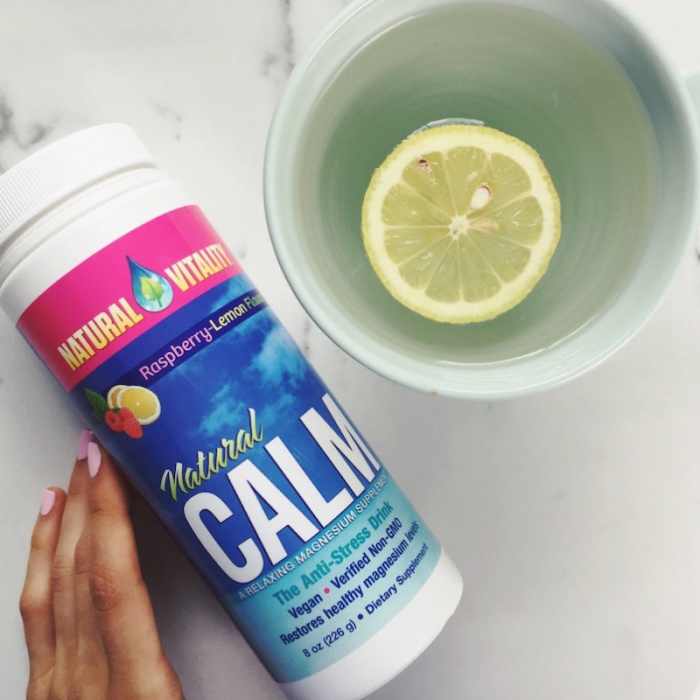
This is tough. The most important thing I’ve learned is to take my health into my own hands and accept that there will be rough patches, especially with an autoimmune disease. Learning to manage those rough patches is key! I’ve found that a low-FODMAP diet helps during times of stress (travel) and that products like NaturalCalm Magnesium, essential oils and even just a heating pad can ease symptoms. Our research experiments show that Cialis 20mg does not work in the absence of sexual stimuli, it protects the consumer from an unplanned erection. It is designed to improve erectile function only in men over 18 years of age.
What’s one random fact not many people know about you?
I’m a U.S. history buff! I also knew all of the state capitals and presidents at the age of 3.
What’s one health trend/belief that you wish people would stop buying into?
Blindly taking health information from people on the Internet. No one knows your exact situation besides your doctor. I think blogs and health publications are great starting points, but that you need to experiment and find what works for you individually.
What’s your favorite go-to, quick and easy meal?
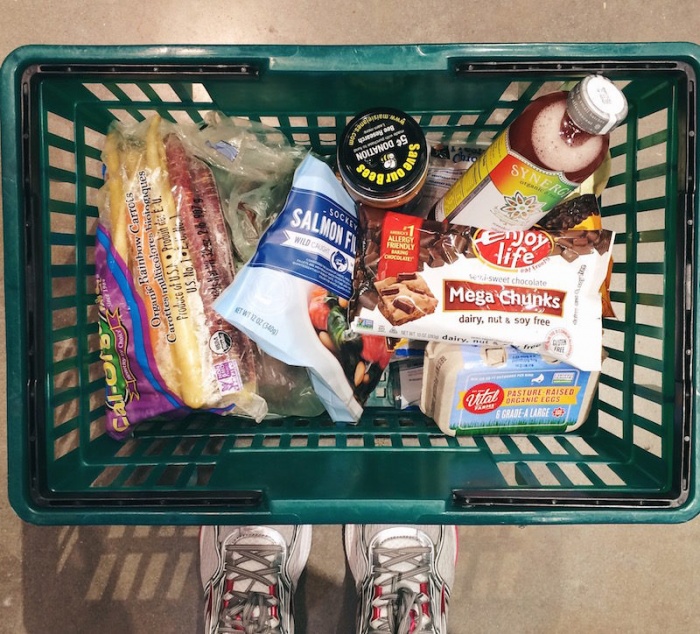
Ground turkey, zoodles, and avocado. I eat it for breakfast, lunch, or dinner!
What’s your guilty pleasure? (It can be food, a show, a book…anything!)
Lazy days on the couch in sweat pants. Throw in a trashy magazine and Kardashian re-runs and I’m good!
What are your plans/goals for the future?
I’d like to move to a big city but I’m not sure which coast yet! I’d also like to work in the health and wellness world in some capacity, maybe writing or editing.
Tell me what your current favorite recipe is!
I always love spiralized meals. I’ve made variations of this recipe from Ali @ Inspiralized. I also love chicken thighs and this is a super simple recipe for cooking them in a cast iron skillet.
There ya have it! Emily’s take on her “healthyish” life! I want to thank Emily for letting me interview her – she’s seriously amazing. If you’re not already, definitely follow her on Instagram, Twitter, and READ HER BLOG. It always makes me happy. Just a dose of realness – which we could all use.

by Christina | Jan 11, 2017 | Wellness

I was not planning on doing this post. Very impromptu. But I absolutely had to pop in here and cancel my blogging schedule for this week, because there’s a slight crisis on our hands that is really frustrating me.
EVERYONE IS BLOATED. AND THEY’RE ALL ACTING LIKE IT’S NORMAL.
As the general population slowly catches on to the importance of gut health, so are healthy food bloggers. Everyone loves to flaunt their probiotic foods and drinks and tout the amazing digestive benefits of different foods and supplements. That’s great. There has also been a rise in interest toward food intolerance tests, like the Pinner test (that post is coming very soon), calling attention to the fact that so many people have digestive issues. Basically, digestion has been a hot topic recently, which I personally love. You guys know digestion is my favorite topic. I’m a total nerd and spend basically all of my free time researching it.
Anyways, I keep seeing a similar pattern over and over again. Everyone is bloated. Don’t get me wrong – you know I love when people keep it real on Instagram. A bloated belly pic is a good dose of reality, in some ways, but in other ways, it’s not. The problem is that people are normalizing bloating. I’ve heard people say, “Guys! Look! I’m bloated all the time too even though I eat healthy! It’s just a part of life!”
Um, no. Just because everyone is bloated doesn’t mean they should be. So many people are bloated because so many people eat crap! Even if they don’t realize it.
Many people who don’t eat a lot of “classic” sugar usually still eat way too much natural sugar. Yes, too much natural sugar can sometimes disrupt your gut flora. There is a reason I eat a low sugar diet, which includes reducing natural sugars as well.
I’m bringing this up because 7 people TODAY ALONE called me or texted me asking for digestive help. These were all people who eat healthier than 98% of the population. They told me they’ve been bloated and/or had some other digestive problems for years. It’s become commonplace in society, though, so people don’t feel the urgency to change it.
Being bloated is not normal. You do not need to be bloated. Being bloated is a sign that your digestion is off, and you need to fix it. (You also should not be constipated or have diarrhea on a regular basis.) There are a million reasons why you could be bloated, and I definitely cannot diagnose you in this post. It could be processed food (if for some reason you’re still eating that). It could be gluten or dairy. It could be some other food intolerance. It could be FODMAPs. It could be Candida overgrowth. It could be SIBO. It could be from antibiotics you’ve taken in the past. It could be a parasite. THERE ARE SO MANY POTENTIAL REASONS. It could literally be just from too much sugar. (Please do not buy into the fiber myth. The fact that people still take Metamucil makes me shudder. )
Digestion is the most crucial aspect of health. Your gut health affects your brain, your immune system, your skin, detoxification pathways… all of it. You need to get your digestion in check if you want your health to be in tip-top shape.
You need to figure out the root cause of your bloating or digestive issues, because you might be eating something that you think is healthy that actually isn’t. For example, sometimes eating probiotic foods can make things worse. Or you might be eating some of the foods that healthy food bloggers promote that are actually very high in sugar, which are then disrupting your gut flora. (Cough cough, snack bars.) In other words, you might be eating more sugar than you think. Or you might be eating a food that is causing your body to attack itself, which is definitely not good. In order to figure out what is causing your digestive discomfort, I recommend working with a functional medicine practitioner to do some testing. A stool test, a breath test… the doc will know what to do. Remember – everyone is unique.
No matter what the cause is, you need to find out. Constantly being bloated or getting bloated after every meal is not normal. It’s common, unfortunately, but it shouldn’t be. You are not destined to a lifetime of bloat. You can fix it. You just need to do a little work to get there.
