by Christina | Jan 15, 2019 | Wellness
As more people make the connection that food intolerances might be causing their unwanted symptoms, food sensitivity tests have become much more popular, and more and more companies are releasing them. While I’m glad that more people are learning about food sensitivities and how food affects the way we feel, I’m concerned about how many people are unnecessarily taking food sensitivity tests, misusing them, wasting money on inaccurate ones, and misunderstanding what the results mean. I get asked about food sensitivity tests all the time, so I wanted to put all of my thoughts regarding food sensitivity tests in this post. Should you take one? Which one? Why or why not?
I want to start off by saying that personally, I am a huge fan of and strong believer in the right food sensitivity test. I think that a high-quality food sensitivity test can provide vital information to greatly improve someone’s results on a protocol to improve their health. In the context of gut health, someone’s results will be much better if they remove all of the foods triggering inflammation in the body for a period of time. That’s why food sensitivity tests are helpful – they help you discover what is causing underlying inflammation in your body, even if it’s from a food you never would have expected. If someone has removed the main offenders – gluten, dairy, corn, soy, sugar, and potentially nightshades – but their diet is still giving them symptoms, it’s probably from a seemingly “random” food that they eat every day. This is an example of how healthy foods might not be healthy for your body, at a particular time.
Food sensitivities develop in conjunction with leaky gut and / or gut dysbiosis. You can read more about how leaky gut causes food sensitivities in this post, but I’ll summarize here. When you have intestinal permeability, food particles can enter the bloodstream when they’re not supposed to, rather than staying in the digestive tract. This creates inflammation in the body, because the body recognizes those molecules in the bloodstream as foreign invaders. This is why, when someone has a leaky gut, the foods that they’re intolerant to are usually the foods they eat most often. If you eat broccoli every single day and have intestinal permeability, then maybe broccoli molecules are getting into your bloodstream every day, and the body tries to attack that “foreigner” over and over, building up antibodies against it – it starts to always see broccoli as the foreign invader. From that, a sensitivity to broccoli might develop.
That sensitivity can manifest in a variety of ways. Maybe it’s acne, eczema, brain fog, bloating, constipation, headaches, anxiety, or depression. On the other hand, it might simply be causing internal inflammation in the body that you don’t notice on the surface, which would make it hard for someone to detect whether or not that food is causing their inflammation. It’s easier when you realize that every time you eat a nut, for example, you get a zit the next day, but it’s almost impossible to tell if consuming a certain food is negatively impacting the healing process if it doesn’t manifest itself in an overt way.
This is why food sensitivity tests can make a gut-healing protocol much more effective – it takes the guesswork out of it, because the test will show exactly which foods are causing underlying inflammation, even if you don’t realize it. When people get food sensitivity test results back, sometimes they say, “Oh, well that makes sense. I notice XYZ whenever I eat that food,” but other times they’re confused and say, “Well I know it says that, but I’ve never noticed a symptom from that food.”
Sometimes foods show up that the person rarely ever eats. Sometimes these really are just randomly causing inflammation in the body, but sometimes these are the more longterm intolerances that probably won’t go away. If the person doesn’t eat those in general, though, it tends to not really matter. When the food is something the person eats regularly, though, this logically makes sense. While those foods are harder (emotionally) to remove from the diet for a particular time, it can make a huge difference in helping reduce inflammation enough for the rest of the gut-healing protocol to really work.
I’ve noticed from personal experience and from working with clients that gut-healing protocols that utilize the results of a high-quality food sensitivity test are much more effective than those without. This is because the food sensitivity test catches foods that they might otherwise think are “safe.” If you don’t realize that you’re consuming a food every day that is causing inflammation, then your body might be so busy “fighting” that food that it can’t use all of its resources to address the underlying root issue. It’s like mopping a house with muddy shoes on.
So yes, food sensitivity tests are incredibly helpful, but there are some MAJOR caveats to this.
Only use a food sensitivity test if….
The first point I want to make is that a food sensitivity test shouldn’t be done unless it’s in conjunction with other testing. Most food sensitivities that people are looking for on these tests are not the “big offenders.” You don’t need to pay hundreds of dollars for a test to tell you that gluten, dairy, corn, soy, or sugar are giving you issues. You also really don’t need a test to tell you if nightshades, nuts, seeds, or eggs are causing you problems – these are all common food intolerances that your own elimination diet could easily clue you in on. If your symptoms warrant getting a food sensitivity test beyond what an elimination diet could help you with, then there is an underlying issue. In that case, then you should be getting a stool test (and potentially hormone tests, too) to figure out what the underlying dysbiosis is so that you can address the root problem.
Remember, food sensitivities develop when your gut health is compromised, so you have to heal the underlying gut problem if you want the food sensitivities to permanently go away. The point of removing the foods you’re sensitive to is to allow the gut to heal. If you’re doing nothing to heal the gut, there is no point!
While a stool test can definitely be useful without a food sensitivity test, it is my opinion that a food sensitivity test should never be taken unless it’s taken alongside a stool test. If you do take a food sensitivity test without a stool test, then what is removing those foods going to get you? Maybe temporary relief, but our food sensitivities are always changing. You might just develop other food sensitivities after changing your diet, because you haven’t healed the underlying dysbiosis. If you want your food intolerances to actually go away, then you need to address the underlying problem, which a stool test will reveal. Maybe it’s a bacterial overgrowth, parasites, or yeast overgrowth. In the case of SIBO, then a breath test will indicate that – but your practitioner will guide you to this. In sum, best case scenario is to take a stool test in conjunction with a good food sensitivity test, or to just take a stool test without the food sensitivity test.
In my eyes, a food sensitivity test without a stool test is a waste of time and money – because removing those foods from your diet is just symptom management for the time being. Will you just keep those otherwise healthy foods out of your diet forever? What will you do when you start noticing symptoms from the foods that didn’t used to cause you problems? Just keep taking food sensitivity tests over and over again?! Most food sensitivities are temporary, as a result of the underlying gut problem, so if you address the underlying gut problem, they’ll most likely all go away. Any sensitivities that remain are usually “real” sensitivities, but most people don’t have many of these. The appropriate plan of attack is to take a stool test and food sensitivity test, go on a protocol for a few weeks or a few months to address the underlying gut issues while removing the foods indicated by the food sensitivity test, and then to add the foods back into your diet systematically after the gut-healing protocol is over and the root issue has been addressed.
I want to explain to you how all of this works, but the truth is that if you’re taking a food intolerance test that’s actually worth paying for, you probably won’t run into this issue anyways, because you’ll be working with a practitioner. The only food intolerance tests I would even consider are two that have to be run by practitioners, who will always have you do a stool test in conjunction with the food sensitivity test if they know what they’re doing.
This brings me to my next important point – which food sensitivity tests are legitimate. It’s important to remember that NO food sensitivity test is 100% accurate, but there are some that are much more reliable than others. Personally, there are only two I trust.
Which food sensitivity tests do I trust?
My favorite food sensitivity test, and the one I always trust, is the MRT. The MRT stands for the “Patented Mediator Release Test,” and it works differently than other food sensitivity tests. The MRT is able to detect sensitivities in both symptomatic and asymptomatic populations because it is measuring proinflammatory and proalgesic mediator release from white cells. Food-specific IgG or immune complexes aren’t always linked with inflammation or symptoms, but those symptoms and inflammation are always linked with mediator release in the body. This includes the release of cytokines, histamine, leukotrienes, prostaglandins, and more from monocytes, neutrophils, eosinophils, and lymphocytes – any of these can produce inflammation that will be picked up by the MRT, whereas most other food sensitivities do not measure that mediator release.
Instead, most other tests are looking for IgG immune responses to foods, but this misses the mark. Sometimes your body produces an IgG response to a food but you don’t actually have any symptoms (in which case you’re removing a food unnecessarily from your diet), and in other cases your body doesn’t produce an IgG response specifically to a food, but it’s still causing inflammation in the body by another mechanism (in which case that food sensitivity test will not pick that food up as a threat to your body, so it won’t show up on the test).
This is why the MRT is my favorite test – it looks at what foods are actually causing inflammation in the body by a variety of different mechanisms. You also don’t need to have eaten a food recently for it to show up on the MRT, unlike other tests. With food sensitivity tests that look at your IgG response, the food might not show up even if you are intolerant to it if you haven’t eaten it recently enough. In addition to foods and spices, the MRT also checks for sensitivities to chemicals, which is very helpful.
Logically, that is why I trust the MRT, but I’ve also seen it work so many times (personally and for others), that experience also has taught me to favor the MRT. I consider the MRT to currently be the most accurate test available. That doesn’t mean it’s infallible, but it is definitely the one test I trust, personally.
If someone doesn’t have access to the MRT, my second favorite test is Cyrex labs, which tests for both IgG and IgA food intolerance responses. They have the best methodology, in my opinion, for IgG and IgA testing, and if you’re not taking the MRT, it’s important to test for BOTH IgG and IgA – not just IgG, like most at-home tests. Cyrex triple tests each sample, and they test for both raw and cooked foods.
I’ve actually personally taken the MRT and Cyrex at the same time before, and the results were very similar, but the MRT picked up more foods. I’ve done two protocols just following the Cyrex food recommendations, and felt a little bit better, but not really a huge difference. I’ve also done two protocols following just the MRT recommendations, and I noticed a big difference. That’s just my own experience.
I take every food sensitivity test with a grain of salt, but I trust the MRT the most. If someone is determined to take a food sensitivity test that’s not the MRT, I recommend Cyrex. When clients come to me with any other test that their practitioner has given them, I ignore it. I certainly do not know everything, and maybe there is another test out there that’s even better, but this is my opinion after having researched and tried as many tests as I could (and I will continue to do so). Food sensitivity tests are not cheap, and I hate to see people wasting their money.
I’ve seen a lot of different food sensitivity tests before – sometimes it shocks me how many are out there! The problem is that there are a lot of scams, which is very sad to me. I just want people to be aware, because food sensitivity tests are expensive, and there are many companies who are taking advantage of people who are simply trying to improve their health. It probably goes without saying that there is no at-home test I would recommend. Even without doing any research, I don’t trust a test that only checks for the IgG response, and I don’t trust tests that get their analysis based on a fingerprick at home. It’s not a big enough sample, and the blood hasn’t been centrifuged.
I’ve chatted before about my experience with the Pinnertest, and also talked about other at-home tests, and I wouldn’t recommend any of them. I do know that when I took the MRT, Cyrex, Pinnertest, and two other at-home tests I was sent but don’t remember the name of, all in the same week, here’s what happened: the MRT and Cyrex had overlap, but Cyrex didn’t pick up as much as the MRT, and the three at-home tests had nothing in common with either of those tests or each other.
Not taking a food sensitivity test is better than taking a bad one, in my opinion, because the results of a food sensitivity test can definitely affect people psychologically and increase anxiety around food. If you believe you react to certain foods, you will. So there is no point in taking an inaccurate food sensitivity test that might actually start causing you to have a reaction to foods when you otherwise wouldn’t. It’s also a shame to see people avoiding otherwise healthy foods when they have no reason to! If I see one more person avoiding broccoli because their at-home test said they’re intolerant to it, I’m not sure what I’ll do.
My last point about food sensitivity tests is that I only recommend someone takes one if they truly understand what the results mean. By that, I mean that I want the person to understand that just because a food shows up on the MRT does NOT mean you are permanently intolerant to or allergic to the food. Maybe you are, but in most cases you’re not. (Remember, though, food sensitivity tests are not the same thing as food ALLERGY tests! Intolerances and allergies are different.)
Food sensitivity tests are meant to be used as a tool, not as a hall pass to restrict your diet. Keep in mind that our food sensitivities change all the time. No matter who you are, the foods that show up on your food sensitivity test today will be different than what shows up on a test you take 4 months from now. So if you’re going to remove foods from your diet based on a food sensitivity test, go in with the intention of removing them for a certain period of time, and then try to reintroduce those foods after you’ve healed your gut. Also, make sure that you take the food sensitivity test around the same time as your stool test!
Now that you understand my “why,” let me conclude with my overall thoughts. I think that a food sensitivity test should only be taken in conjunction with a stool test, and never on its own. If you can only afford the food sensitivity test OR the stool test, I would 100% go with just the stool test. And if you’re taking a food sensitivity test at all, I recommend the MRT, Cyrex, or just saving your money. Again, this is just my opinion.
The MRT and Cyrex tests have to be done through certain practitioners. Many functional medicine doctors offer these, as do functional diagnostic nutritionists. For the MRT, you can also look for a Restorative Wellness Practitioner, who is trained to do this testing. I am not one of them, but you can find NTPs and other holistic nutritionists who have this certification.
Stool tests can also be ordered through the same types of practitioners just mentioned. I prefer the GI Map, Genova, and Doctor’s Data stool tests. Not all stool tests are the same – but that’s for it’s own post. You also have the ability to order stool tests yourself through services like directlabs.com, which allows you to run a number of tests without a lab order from a doctor (this is a useful resource, in general, for bloodwork!).
If you do use that, you can search “comprehensive stool” to find the test I like, which is called “Comprehensive Stool Analysis w/ Parasitology x3 – Doctor’s Data Kit.” This is a 3-day stool test that also tests for parasites. While this is incredibly useful, the downside to ordering a stool test on your own is that you won’t have anyone to interpret it for you unless you are also working with a practitioner who can, so you might get your test back and have no idea what it means, which isn’t very helpful. This is why I recommend getting your testing done with someone who can also interpret it for you – a trained practitioner.
Are food sensitivity tests the only way to go? Do you NEED them to have an effective protocol? In some difficult situations, maybe it is an important piece, but in general, no. I consider food sensitivity tests like the MRT to be a luxury, not a necessity. I’ve seen plenty of effective protocols without the use of a food sensitivity test. In that situation, though, I do encourage the person to try to listen to their body and at least remove the foods they intuitively know worsen their symptoms. If you notice that certain foods give you acne, bloating, fatigue, brain fog, skin rashes, or you feel particularly addicted to them, it might be time to drop those foods for awhile. If you have more severe symptoms and can’t take the MRT, it might also be time to follow a stricter anti-inflammatory healing diet, like AIP, SCD, or GAPS, during the healing process. Again, I recommend working with a practitioner to guide you through this.
While I do find the MRT to be incredibly helpful, and really do love that test, remember that no test can tell you how your body feels. I also don’t want a food sensitivity test to be the first thing people turn to when they have symptoms – the first thing you should turn to is getting to the root of the dysfunction by working with a practitioner (and there is plenty you can do without any testing, by the way – I don’t test with clients!). I worry that people get too “test happy” rather than listening to their own bodies in general. If you get bloated and nauseous every time you eat a certain food, you would be silly to continue eating it even if it did not show up on a food sensitivity test! There is a lot that can be discovered just by truly tuning in to how your unique body responds to foods, and honoring that. If a food intolerance test tells you that you react to 10 different foods, but you feel great all the time and all of your health markers are positive, then would you really take out those foods for no reason? At the end of the day, what matters most is how you feel.

by Christina | Jan 9, 2019 | Wellness
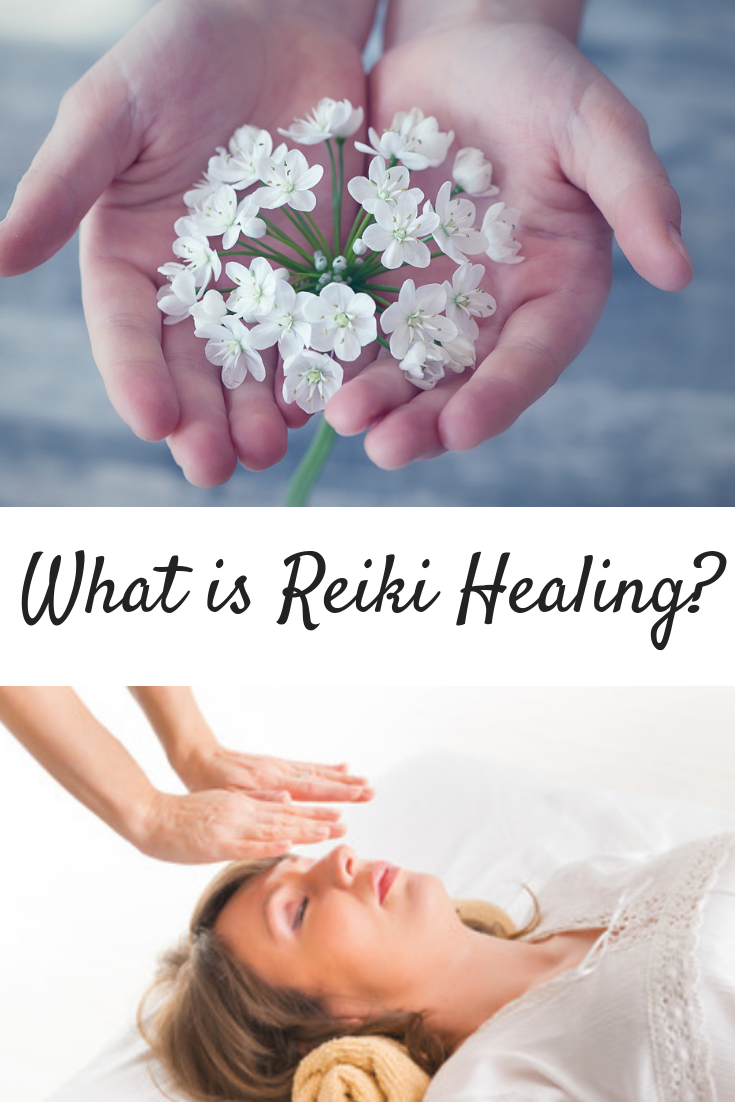
What even is Reiki?! This is a question I get asked often since becoming a Reiki Practitioner and talking more about my experience with Reiki, and it’s also a question I had myself before ever receiving a Reiki treatment. I’m not sure I fully understood what it was until I had my first treatment, but the truth is, it’s not an abstract, difficult-to-grasp concept that many people imagine it to be. I truly believe that energy healing could make an enormous, positive impact on many people’s health, so I want to explain to you what Reiki is and how this type of energy healing works in the body.
What is Reiki?
Reiki healing is a type of energy healing that emerged in Japan in the early 1900s (although, the story differs depending on who you ask) after being discovered by Mikao Usui-Sensei. There was a large earthquake in Tokyo in 1923, and Usui-Sensei used Reiki energy to heal many who were affected. He realized he couldn’t heal everyone himself, though, so he eventually trained others in Reiki healing, and things grew from there. Different versions of Reiki developed over time as Reiki Masters from the original school adjusted the way they taught and gave Reiki healing, which is why today there are different forms of Reiki. Even though practitioners might learn, teach, or give Reiki in different ways, it is still all Reiki.
Back to the question – what is Reiki?! Reiki itself means “Universal Life Force Energy.” Reiki healing is a type of energy healing in which Reiki energy is channeled through a practitioner’s body to someone else (or to themselves). Reiki energy will help rebalance the body energetically, increase the person’s vibrations, and promote the body’s natural healing processes. Reiki will shift the body’s own energy so that it reaches realignment to where it naturally should be, and this results in physical, emotional, and spiritual healing.
How does energy healing work?
To grasp how energy healing works, it’s important to understand that we aren’t just physical bodies living in a physical, unchanging universe. We are made of energy, and there is energy in everything around us. Down to the cellular level. Many people are already familiar with the concept that we are made of energy because they’ve heard of Chi in Chinese medicine, which refers to life force, or energy – the energy that connects mind, body, and spirit. Whatever you call it, there is an energy within our own bodies and in the world around us. We have a physical body (which also contains energy), and then we also have our energy body, which extends out as far as our fingertips. Many people are familiar with this concept by another name – auras. Our energy body has a vibrational frequency and aura that changes depending on our current emotional, physical, and spiritual states.
What does this energy have to do with disease, and how can it affect healing? Physical, emotional, and mental health issues occur when our energy is out of balance and /or blocked, and when we are disconnected from high vibrations for too long. We feel healthy when our energy is flowing easily and fluidly throughout the body, but if our energy is stuck in the wrong place, if it can’t move easily to communicate between the healing centers of the body, or if we don’t have enough high vibration energy, this can result in pain, illness, depression, anxiety, and other disease.
We can store energy in the form of emotions, memories, and beliefs, and if they build up, this can create disease in the body. This is related to our chakras, which are the body’s energy centers. If our chakras are out of balance, this can cause emotional and/or physical symptoms. Energy healing is important because imbalances typically show up on our energy body before our physical body, so if we are taking care of our energy body and correcting any imbalances there, we can help prevent it from manifesting in our physical body in the form of disease or illness.
Reiki is all about enhancing the flow of our body’s energy and rebalancing it properly in order to prevent physical illness and promote the healing of any disease, illness, or discomfort already present. Remember, our bodies want to be in balance, and we are all born with the power to heal ourselves. The energy within us helps the body to repair, and Reiki balances this energy.
The Reiki practitioner acts as a channel of Reiki energy to facilitate the healing process. Reiki energy flows through their hands (the energy from a practitioner’s hands actually creates a measurably larger biomagnetic reading than a non-practitioner’s hands, in frequencies associated with physical healing) to the client, and the energy flows wherever it is needed in the body. It’s important to remember that the practitioner doesn’t send the client his or her own personal energy – the practitioner is simply acting as a channel of healing energy. The client’s own body decides what it is ready to release and how it is ready to heal. One thing that makes Reiki unique is that once a practitioner is attuned to be in direct contact with the universal life force energy, they are connected with that energy forever. This happens when a Reiki Master transfers the ability to perform Reiki to a new practitioner through a process called attunement, which is a powerful spiritual experience.
What can Reiki help with?
Receiving Reiki healing from a Reiki practitioner can help with any type of emotional, spiritual, or physical health issues. Reiki can help reduce physical pain, stress, negative energy, emotional blocks, anxiety, depression, or anger. It can help you work through past trauma, rebalance your chakras, and improve your personal growth and wisdom. It can provide mental clarity and help you in many aspects of your life – relationships, work, finances, personal goals, and inspiration. It will increase the positive energy in your life. I highly recommend Reiki for anyone with chronic or unresolved health issues. I’ve seen Reiki reduce chronic pain, facilitate the rebalancing of hormones, reduce digestive symptoms, and more. It works on many systems of the body, including the muscular system, endocrine system, and lymphatic system. Reiki is particularly great for anyone who feels any type of emotional block or is caught in the sympathetic state.
What is a Reiki session like?
Every Reiki session is different, but most begin in the same way. You’ll be laying down, usually on a massage table, relaxed, with your eyes closed (although they can be open if you want!). The most important thing is that you’re relaxed and ready to receive healing. The Reiki practitioner will place his or her hands on or directly over different areas of your body, and the practitioner will transfer universal life force energy from their body, out of their hands, into the client’s body. The Reiki energy will then flow wherever it needs to go.
Different Reiki practitioners might have other parts to their Reiki sessions, but most usually begin by balancing your chakras. When I’m working with Reiki clients, I start with an aura scan, then I balance their chakras, and then I start the actual Reiki healing. If something comes up that I need to ask them about during the session, I will ask, but usually it’s after the session that I’ll go over what I noticed / felt / saw, and we will have a dialogue. We’ll go over which chakras were out of balance and recommendations to keep them in balance, and then everything else is customized to whatever I saw for the client. This can include their aura, any visions, past lives, spirits or guides, emotional chords blocking their energy, or anything else that I intuit.
Reiki itself doesn’t always include intuitive work, but I personally do utilize it – this was one reason why I chose to study Reiki under my Reiki master, Firestar, who does psychic work and is my spiritual mentor rather than just my Reiki master. I want to point this out because I know many people get confused and think that Reiki also means intuitive / psychic work, but it doesn’t, even though some reiki practitioners also do include this in their sessions if they’re tapped into their intuition. If you’re looking mainly for psychic work, then look for someone who markets themself as an intuitive / psychic (Firestar does this work!) specifically. Many energy healers, in general, are not just “one type” of energy healer, though, which is what makes each healer’s sessions unique. Everyone offers something different and does things a bit differently. I recommend going to the practitioner whose focus is what you’re looking for.
Reiki is traditionally performed in person, but it can also be performed over distance, and I find it is just as effective with my distance clients as in-person clients. In a distance session, the client simply lays down in a quiet area at the set time, relaxes, and lays there while the practitioner performs the Reiki via distance. I usually have my clients set a timer for however long the session will last, and then they get up after the timer goes off. After that, I talk to them about everything that came up during the session.
What does it feel like?
There are many different experiences you might have during a Reiki treatment. One of the most common is to have a strong emotional response. You might start crying on the table and not know why. You might feel sad, angry, or confused. You might also feel elated, joyous, and excited. You could laugh or smile without knowing why. Another one of the most common experiences is feeling strong heat or very cold in certain parts of your body – this has to do with the energy flow. You might also see colors, lights, visions, or shapes, your stomach might rumble, or you might get hungry. You might also perform some involuntary movements like twitching – often people don’t even realize this happens. Many people also fall asleep, which is totally fine!
It’s also completely possible that you won’t noticeably feel anything during the session. Whether or not you feel anything in the moment, you’re still receiving Reiki, and the Reiki is working in the body. You don’t have to have any extraordinary reaction or sensation to have a very effective session! Many people are stuck in the mindset that they need to “notice” something physically for it to be “working,” but that’s not the case with energy healing.
What can you expect after a Reiki session?
After a Reiki treatment, you might notice you’re extra sensitive to your environment and the energies around you. You might feel detoxification symptoms – fatigue and tiredness are common. You’ll probably sleep very hard that night. Others might experience the exact opposite and be unable to sleep as the body detoxes. You might also feel the complete opposite of tired – many clients leave their sessions feeling extra energized and ready to tackle anything.
In terms of emotions, most people leave the session with a sense of happiness, peace, and calm, but if you’re still releasing energetically, you might need to release emotions like sadness or anger after the session. Remember, it’s a type of energetic detoxification. No one responds the same, and you might have different responses to every Reiki treatment you get, depending on what came up in that session.
No matter what, it’s important to be gentle on your body and mind for the rest of the day. Allow your body to rest! I don’t recommend planning to do anything that requires a lot of energy (emotional or physical) directly after a Reiki treatment. It’s also important to drink extra water after a session and stay hydrated. You might be hungrier than usual after Reiki, which is totally normal. Sometimes I feel completely ravenous after I get a Reiki treatment! Make sure you eat nourishing foods to help your body recover.
Becoming a Reiki Practitioner was something I never expected in my path, but it fell into my journey effortlessly after I realized that receiving Reiki was such an important step on my road to healing. Now, I’m happy that I can help others experience that same thing. I truly hope that more people start learning more about energy healing and decide to give it a shot! It is something I wish I had looked into long ago on my own healing journey, and unlike other types of treatments, there are really no downsides. I know that many people are struggling despite doing “everything right,” and sometimes energy healing really is the last missing link to help those people heal. If you’re feeling blocked from physical or emotional healing in any way, energy healing might be just what you need to help rebalance your energy so that your body’s natural healing processes can finally start to work properly again!
by Christina | Jan 1, 2019 | Business, Wellness

I wasn’t planning on writing a blog post about my “goodbye 2018, hello 2019” thoughts this year, but after finishing up my personal reflections on New Year’s Eve, I decided I did want to publish something. When I looked over my New Year’s Eve post from last year, I realized how much things have changed since then, and how encouraging it is to see that I stuck with my goals. The things I wanted to happen ended up happening. I do have selfish reasons for posting this – publishing some of my intentions for the upcoming year holds me accountable on a deeper level than just writing them down in my journal (more on this in a moment). It also helps keep my brain more organized.
Beyond that, though, I personally like to hear what other people’s intentions / resolutions / reflections are, because it gives me more ideas for my own self-improvement, so I figured some of you might want to hear mine, as well. I also thought this would be the perfect time to give you some of my favorite tips for setting truly reachable goals, so you don’t set yourself up for feeling like a failure when you have no reason to feel that way.
I talked a bit about this in my podcast about my New Year’s resolutions for 2019, but I always like to take time on New Year’s Eve to write out my thoughts about the last year and what my goals are for the year ahead, and I wanted to explain a bit more about that process. It’s important for me to close out the year on a positive note, and to make sure I learn something from all of my experiences in the last year. I use my past experiences and emotions to inform my future plans and goals.
This basically looks like a huge brain dump at first, and then it gets organized later on. The important part, though, is the brain dump. I start off by writing everything that stands out to me from the last year – events, people, places, emotions, accomplishments, etc. Then I’ll usually scroll through photos from the last year, just to make sure I didn’t forget anything. Next, I’ll make a few lists from there.
The first is a list of accomplishments, because it’s good to give yourself credit where credit is due. When I say accomplishments, these could be anything – making new friends, trying something new, learning a skill, completing an important work project, getting a promotion or raise, sticking with a healthy diet or exercise routine, reaching any type of goal, etc. It’s easy to get caught up in the hustle and bustle of life and never really stop to say, “Hey, it’s pretty awesome that I did XYZ.” Now’s the time. Humans also have the tendency to pay more attention to negative events and emotions than positive ones, so sometimes looking back at a situation with some perspective can entirely flip the way you view it. Maybe something you thought was a disaster at the time wasn’t actually so bad, after all, now that you’ve had some time and space. If something negative did happen, then I always try to pull at least one positive thing out of it. This exercise always makes me feel like my last year was a total success, no matter what!
After I write my list of accomplishments, big and small, I then make two more lists. One is a list of things that I want to continue in the new year – things that went well for me last year and I should keep up with. What made me happy? What felt good? What worked? The next list is things that didn’t make me feel that great – anything I was uncomfortable with or unhappy about and would like to see improved. It’s not about getting down about those things, it’s about using that information to make next year even better.
From there, I start to make a list of goals and resolutions. I often start with big picture goals (not necessarily for this year, but sometimes for the whole year), and that helps me create my list of more actionable steps to get there. After I make my list of intentions for the year, then I dream big. I write down all of the things I want to, and will, accomplish at some point – whether or not it’s this year…but maybe it is. I don’t need to put time pressure on it, but I won’t close the door on the opportunity for things to happen sooner rather than later.
Before I share some of my reflections on last year and intentions for 2019, I want to give a few tips for creating reachable goals for the New Year, or in general. I used to write goals without taking any of these tips into consideration, and I was never able to follow through. That discouraged me from even bothering to set any intentions for awhile… mostly because I was scared to disappoint myself. These quick tips were game-changers, and have been key in allowing me to manifest exactly what I want.
- Focus on what you will add in or start doing, rather than things you’re going to cut out. The human brain responds more positively to addition rather than to subtraction. If you tell yourself you want to stop doing something, you’ll just be thinking about not doing it, and that will make it harder to stop! Instead, focus on a positive, new behavior that will help naturally crowd out the negative one, and set the intention to engage in that new behavior.
- Choose measurable goals. Instead of saying “drink more water,” write down exactly how much water you’re going to drink. Instead of saying “read more books,” how many books will you read? How often will you read? What will you read? Get as specific as you can. When people set general goals like “lose weight,” “exercise more,” or “eat more greens,” rather than specific, quantifiable goals, they’re less likely to follow through. When a number is attached, it will be easier achieve that goal because you’ll know what you’re aiming for! Plus, it forces you to commit to a behavior. Saying “I’ll exercise more” without saying how much is an easy excuse to not actually exercise more.
- Break apart any larger goals into smaller goals. Sometimes writing something “big” can be too intimidating. Instead of saying you’ll write a book this year, maybe break it down into how many chapters you’ll have done each week. Instead of saying that you’ll lose weight, break it down into how much you’ll exercise and what exact dietary changes you’ll make. Instead of saying you’ll be more social, what exact social activities can you do, and how often? Better yet, pick only one of those micro-goals for the whole year. Remember, you can always add as the year goes on, but don’t overwhelm yourself at first. If it feels like “too much” subconsciously, then that could paralyze you from even starting.
- Write your intentions down where you can see them, and / or tell someone. This will hold you accountable much more effectively than writing them down in a journal you’ll never see again, or not writing anything down at all. I highly recommend having an intention-setting partner – you can both tell each other your intentions and goals and act as each other’s accountability partners! Even if there is no follow-through with your partner (although I hope there is!), there’s something about verbally telling someone that will change things for you mentally and make you much more likely to follow through. When we tell other people our goals, we’re more motivated to make them happen.
- Write down your intentions as if they are already happening. This is manifesting. This is making it happen. I don’t usually talk about my intentions this way when I’m sharing them with other people, just for ease of sharing, but I wanted to point this out in this post so you understand what I actually practice. Instead of saying, “I will go to sleep by 10 P.M. every night,” I would write, “I go to sleep by 10 P.M. every night.” Instead of saying, “I will take 10 minutes of my day to meditate,” you would write, “I meditate for 10 minutes every day.” Act as if it’s already happening, and it will. When you frame your intentions as, “I will do XYZ,” the “will do” gives you wiggle room to put it off. It’s important to identify as someone who already performs the habits you want to practice. Telling your brain that you already do something makes it easier for your brain to comply – forming the habit is that much easier if your brain thinks it does it!
Hopefully those intention-setting tips give you some direction to make truly attainable New Year’s goals! Remember, though, that your self-worth is not attached to these intentions or goals. It’s amazing if you achieve them. If you don’t reach the exact goal you hoped for, though, you can set the intention in a new way. What is life meant for if not to continually improve ourselves?
Anyways, I wanted to wrap this up with a few things that stand out to me from 2018 and some of my intentions for the year ahead.
2018 was quite the year. I accomplished a lot of things, and I changed a lot, which is exciting. It’s been interesting for me to think about my mindset going into 2018 and how much my opinions on so many things have shifted. I can only imagine what I’ll be like in 2020! Here are some highlights from the past year…
- I graduated from the NTA and became a Nutritional Therapy Practitioner.
- I began a very strong spiritual journey, became a Reiki Practitioner, and have tapped into a whole new side of my intuition. 2018 was the year I became infatuated with energy healing, crystals, and intuitives.
- I grew to understand, more strongly than ever, that there is not just one road to healing. It’s important to incorporate as many different healing modalities as possible, to individualize the approach for every person, to look at every person as very unique, and to open yourself up to new ideas you haven’t before. Write nothing off.
- I traveled quite a bit. I felt like I was constantly on the move this year! Canada, Chicago, Indiana, Austin, South Carolina, and San Francisco were just a few of my stops. I am lucky to have so many incredible friends in so many different cities and states!
- I rebranded my website and podcast! It’s hard to believe that happened in 2018, because I’m so used to it now, but it did! The Actually Adultish podcast became the Wellness Realness podcast, and Addicted to Lovely became Christina the Channel. Growing up, ya know.
- I hosted my first retreat, and I still can’t believe it happened! It was such a rewarding experience. This retreat was in Austin, Texas, with a group of incredible women, and I can’t wait to do something similar again in the future.
- I moved out of Los Angeles and found a new place in San Diego. Living in L.A. was very much a part of my identity, and I still haven’t fully processed that I moved. It will always feel like home on some level, but I had outgrown it, and it wasn’t serving me anymore. I have wanted to live in San Diego for a long time, and I am so so happy that I finally made the move.
- I released another ebook, #NoSugarNoProblems Part 2. This ebook is filled with over 30 paleo sweetener-free / sugar-free dessert recipes, and it contains my absolute favorite recipes to date! I am SO proud of this ebook.
- I finally figured out what was at the root of my chronic health issues for so many years. It has been a journey, to say the least, but I’ve found out a ton of answers in the last few months, and all of the pieces are finally fitting together. Discovering 3 parasites, heavy metals poisoning, and mold toxicity were game-changers after addressing my CBS / COMT mutations and trying to figure out why I had reccuring Candida and SIBO the last few years. I am finally on the final leg of my healing journey, and I am so happy to finally have gotten the answers I was looking for.
Those are just a few of the main things that stood out to me… and here are a few of my intentions / big ideas for this upcoming year.
- Protect my sleep. Getting at least 8 hours of sleep a night will be my usual.
- Fine-tune my waking and sleeping hours. I’m hoping to regularly be sleeping from 10 P.M to 6 A.M., or close to that.
- Keep the mornings and evenings to myself, rather than letting emails or messages take time from me. This relates to keeping strong phone boundaries, and only having certain hours during the day when I’m allowed to check my phone and email. (Don’t worry, I’m specific about this in my own notebook, :P).
- Keep to “work hours” during the day, and don’t let other people disrupt those hours.
- Less time on technology in general, and more time in real life. This means more regular social media detoxes, and turning my phone on airplane mode as often as I can.
- I’ll be reading for at least 30 minutes every night before I go to bed, and reading a lot more fiction this year. My brain needs a break!
- Say “no” to anything that drains me, even moreso than ever before. Always. I’m pretty good about this now, but I think it will always be on my list.
- Getting ahead on my work rather than procrastinating, which makes sticking to my work hours and phone-use hours even more important!
- Tuning in to myself and tuning out the outside noise. Recently I have spent a lot less time consuming other people’s content, and it’s made the world of a difference in terms of my mental clarity. I’m excited to continue this trend!
- Focus on continuing my spiritual journey and opening my third eye. This will only enhance my reiki practice and make me even better able to help others and myself.
- I plan on running my Paleo Women Lifestyle Program at least twice this year, and cannot wait to meet even more incredible women and have them join our tribe.
- I have a lot of exciting changes coming to my blog this year. I’m changing up my website a bit, shifting the focus of my content, and expanding the membership portion of my site!
- I created a huge secret project in 2018 that I’ve been waiting to release in 2019, so this will be the year that I finally show the world what it is! I can’t say much, but I can say I know it will help a lot of people transform their lives.
- I’m doing a lot of brain retraining work this year. Recently I’ve learned a lot more about how training the brain to respond differently can help with a number of chronic health issues and can help mitigate the effects of past trauma, and this is something I’m focusing on this year.
- Slowing. Down. Lots of “me” time whenever I need it. I definitely got trapped in a go-go-go cycle last year, and this year I want to shift in the opposite direction.
- Overall, 2019 is the year of taking no B.S., only focusing on things and people that enhance my life, and continuing to follow my own path.
Those are just a few brief highlights from my NYE reflections, but hopefully it gives you a helpful glimpse into what my intention-setting process is like! I like to keep the specifics a bit more private, but you get the idea. I think everyone can feel the shifting energy of the New Year on some level, so use it to inspire you and motivate you to reflect on where you’re at and plan where you want to go. Remember – you can take this year in any direction you want. I have a feeling 2019 is going to be an amazing year for us all!
Do you have any intentions for this year? Share below!