
by Christina | Nov 19, 2018 | Member Exclusives, Wellness

People argue left and right over the best way to lose weight – high fat, low fat, high carb, low carb, high protein, vegan, vegetarian, keto, paleo…so which is it? That’s a topic for its own post, but the truth is that anything can work, depending on how it’s done and who’s doing it. That being said, many people try something to lose weight, get great results for a certain period of time, and then reach a plateau. Oh, the dreaded plateau!
“I’ve been at a stall for 6 weeks!”
“I was doing great, stalled for a bit, and then went backwards! But I didn’t change anything!”
I see it all the time, and I think many people know deep down what they need to do to get out of the stall, but they just don’t want to admit it to themselves. There are three key parts to addressing the “plateau.” While I’m talking about weight loss in particular in this post, this also applies to other health issues, as well.
___________________________
This complete post is only available for The Channel Collective members. Click here to become a member, or click here to log in!

by Christina | Nov 16, 2018 | Wellness

The holiday season tends to be the time of year when people stray from their usual routines, indulge in extra treats, and eat more than they normally do overall. Because of that, you might find yourself on the dreaded “blood sugar rollercoaster” come holiday season. Blood sugar dysregulation can manifest in a variety of ways, including mood swings, irritability, anxiety, shakiness, “hanger”, cravings, excessive thirst, waking up throughout the night, blurry vision, headaches, and excess sweating. Many people don’t realize that food could be at the root of those symptoms, and it’s important to become aware of how what we eat affects our bodies so that we can troubleshoot it.
Side effects like those previously mentioned are obviously unpleasant in the moment, but it’s even more important to consider what constant blood sugar swings can do to our bodies longterm. Chronic blood sugar dysregulation can lead to weight gain, obesity, type 2 diabetes, and cardiovascular disease. Our blood sugar control and adrenal function are tightly linked because both the adrenal glands and pancreas help in the process of regulating blood sugar. Because of this, poor blood sugar regulation over time can also take a big toll on our adrenal glands, and eventually this might lead to HPA axis dysregulation (adrenal fatigue).
Let’s talk about how blood sugar regulation should work. When we eat food, glucose enters the bloodstream, and our blood sugar levels rise. The pancreas then secretes insulin to help reduce your blood sugar levels. Insulin tells the cells in the body to take in that glucose from the bloodstream to be used as cellular energy or stored as glycogen. When your blood sugar dips a few hours later, the pancreas secretes glucagon, which tells your liver and muscle cells to change that stored glycogen back into glucose. The cells release the glucose back into your bloodstream to be used as energy if needed, and your blood sugar is balanced again. To simplify, I like to imagine insulin and glucagon on opposite ends of a seesaw. When blood sugar is too high, insulin takes action, and when blood sugar is too low, glucagon takes action. They balance each other out.
There are a number of reasons why this process could get disturbed, resulting in huge blood sugar swings, but the main thing to understand is that foods higher in carbohydrates will raise blood sugar levels higher and at a faster rate than foods low in carbohydrates. This is why refined carbohydrates like white bread and pasta will raise your blood sugar much higher and much more quickly than something like a green vegetable. The rapid spike in blood sugar is then followed by a hard crash, and this pattern is what creates the negative symptoms you feel in your body. That’s exactly what we want to avoid!
Refined sugar consumption tends to increase during the holidays, but even if you’re not eating refined carbohydrates, even healthier sources of carbohydrates can cause blood sugar swings. In general, anything that tastes sweet will have a stronger impact on your blood sugar than something savory. Treats made from fruit, dates, honey, maple syrup, and other healthier sweeteners can still have a huge impact on blood sugar for some people, as can foods like sweet potatoes and plantains.
Luckily, there are plenty of simple ways you can keep your blood sugar balanced this holiday season so you can avoid excess cravings, energy crashes, mood swings, and even those extra holiday pounds. I’m not going to tell you to avoid all carbohydrates or desserts, because that is unrealistic and unnecessary. I do, however, want to offer some advice on how to consume them more wisely. The key thing to understand is that sometimes you can eat the same exact food in two different contexts, and your body will metabolize the food very differently in each. I want to share five easy tips for you to focus on that will help you keep your blood sugar balanced throughout the holidays (and all year long)!
- Pair whatever you’re eating with protein and/or fat. When you eat a carbohydrate with protein and fat, this helps blunt the blood sugar response so it doesn’t spike and crash. Instead, you can expect a slow and steady increase in your blood sugar (normal response to your meal), with a nice and steady decrease later on. This is why I recommend always centering meals and snacks around protein or fat. Don’t tell yourself you can’t have carbs or dessert, just make sure you have protein and fat first or alongside it. That way, anything you eat with a higher carbohydrate content won’t have as big an impact on your blood sugar levels as it would alone!
As someone who is extremely sensitive to blood sugar swings, this has been a game-changer for me. If I eat a piece of fruit or starch alone, for example, my heart races, my energy spikes and crashes, I start craving more carbs, and I usually get cranky. If I eat that same piece of fruit or starch alongside some nuts or a piece of protein, I don’t struggle with any of those side effects. This is just another excuse for ALWAYS getting toppings on my desserts! It’s also why I mostly make desserts that are high in plenty of healthy fats (like all of the desserts in my ebook), rather than high in carbohydrates.
- Add cinnamon to your food! This is a delicious way to help balance your blood sugar, which is another reason why I love cinnamon-roasted vegetables. Have you noticed that I try to sneak cinnamon into as many recipes as I can?! Studies suggest that adding cinnamon to your meals, especially regularly, creates a statistically significant reduction in blood glucose levels, as well as total cholesterol, LDL, and triglycerides. This is an easy tip to utilize because cinnamon goes so well with holiday-inspired dishes! Top off your sweet potatoes, squashes, carrots, and fruits with a dash of cinnamon, add cinnamon to all of your desserts, put a few shakes into your hot cocoa, and sprinkle some in your coffee. It will taste delicious and help your body manage its glucose response!
- Use vinegar in your meals. Studies have shown that adding vinegar to a meal can help lower the insulin response while also increasing satiety from your food. Vinegar is great because it’s filled with polyphenols, but the positive effects on glucose metabolism come from vinegar’s acetic acid content. My favorite types of vinegar are raw coconut vinegar and organic raw apple cider vinegar with “the mother.” Apple cider vinegar is also great for naturally increasing stomach acid, which can aid in digestion.
Apple cider vinegar and cinnamon also pair incredibly well together, so you can get double the benefits! I love to drink hot water with apple cider vinegar and cinnamon, and I also like to use those two ingredients together in my Apple Pie Gut-Healing Gummies! These are great to snack on right before a meal to help promote a healthy blood sugar response to whatever you’re going to eat while also stimulating stomach acid production. You can also get the blood sugar balancing effects simply by tossing a little apple cider vinegar, coconut vinegar, or balsamic vinegar on top of your meal! This is why olive oil and vinegar make my favorite salad dressing.
- Prioritize your sleep. Sleep deprivation has a huge impact on our blood sugar regulation. Even a single night of inadequate sleep can cause up to a 25% decrease of insulin sensitivity in healthy people, with the effects becoming more profound after even more nights of poor sleep. This is a great example of how lifestyle habits have a major influence on our metabolisms. Even if you don’t change what you eat, changing your sleep can change how your body responds to the same food! Make sure you get plenty of sleep every night to ensure your body’s insulin sensitivity is at its peak so it can properly metabolize your food.
- Take a walk after you eat. Exercise in general is important for healthy blood sugar regulation because it helps to increase insulin sensitivity, but let’s not get ahead of ourselves. Even if you can’t get all of your workouts in, it’s easy to fit in a quick walk after you eat. Studies have shown that a 10-15 minute post-meal walk is all you need in order to optimize the insulin response to your meals. Aim to take a quick 15-minute walk after your meals, especially any meals that are larger than usual or contain foods higher in carbohydrates (I’m lookin’ at you, Thanksgiving dinner).
The most important tip I could give you to balance your blood sugar during the holidays, though, is to manage your stress. High cortisol levels will increase blood sugar levels no matter what you’re eating, which is why stress management is key at this time of year. I’ve excluded this as one of my top 5 tips, though, because I wanted to give you options that were quick and easy to implement, and stress management is a lifestyle. Just something to keep in mind, though!
If you’re looking for healthy, delicious recipes to enjoy this holiday season that will keep your blood sugar nice and balanced, make sure you check out my holiday ebook, Gratitude! Not only does it contain all of my favorite paleo holiday recipes, but it also contains a ton of content similar to this blog post with plenty of tips about digestion, stress management, exercise and activity, self-care, and more! If you really want to have a stress-free holiday season (which, again, is the key to keeping blood sugar regulated,), I highly recommend getting this ebook!
And if you’re looking for plenty of blood-sugar-friendly DESSERTS to enjoy this holiday season that contain no sugar or any other sweeteners, check out my ebook, #NoSugarNoProblems: A Lovely Collection of Paleo Sweetener-Free Desserts!
I’d love to hear from you in the comments – which of these tips will YOU be implementing?!

by Christina | Nov 7, 2018 | Recipes, Wellness
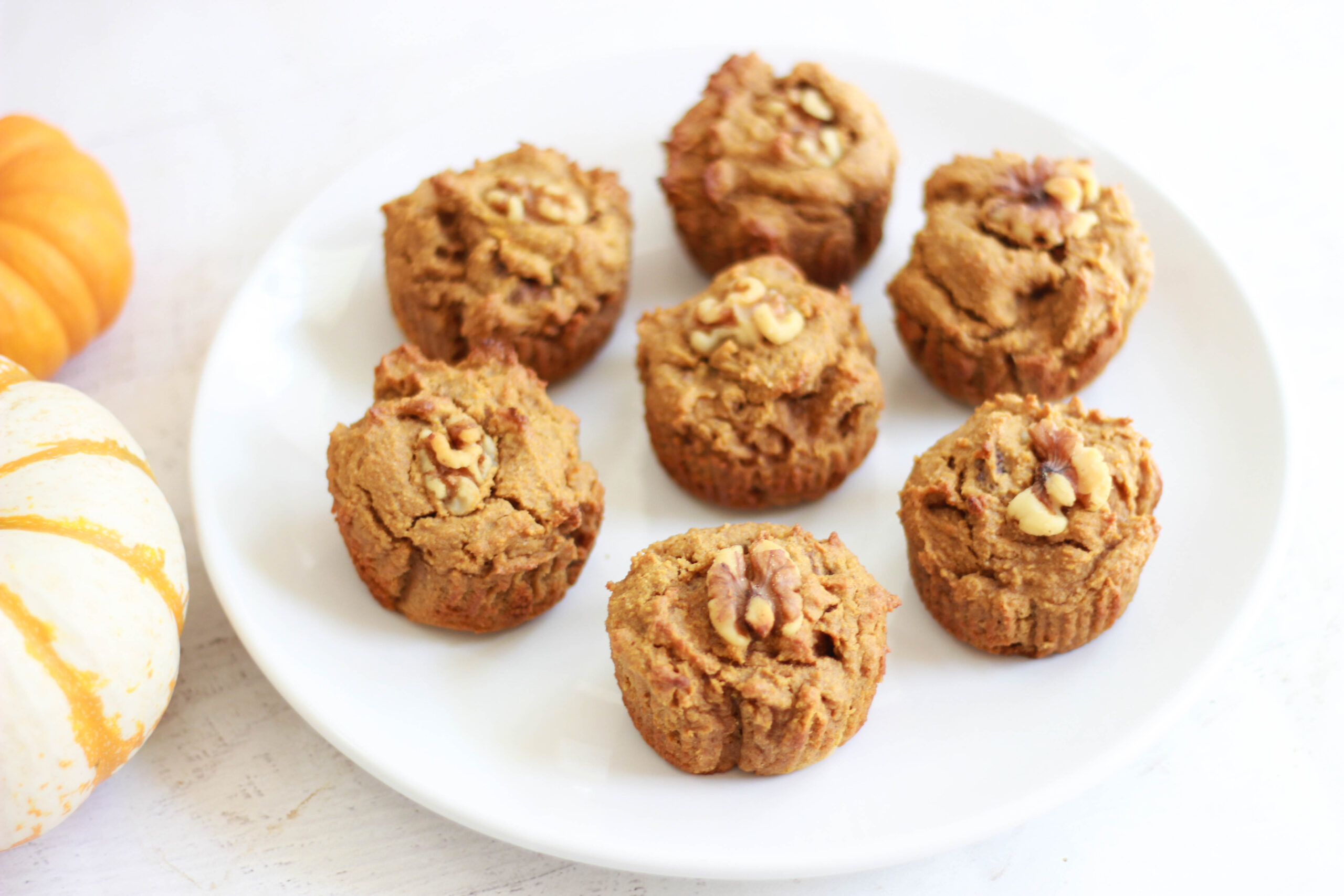
To say I’m on a sugar-free (sweetener-free, specifically) baking kick would be an understatement. After making so many sweetener-free recipes for my new ebook, #NoSugarNoProblems Part 2 (you can find part 1 here), it’s pretty much automatic for me to make my recipes sweetener-free unless a sweetener is absolutely required.
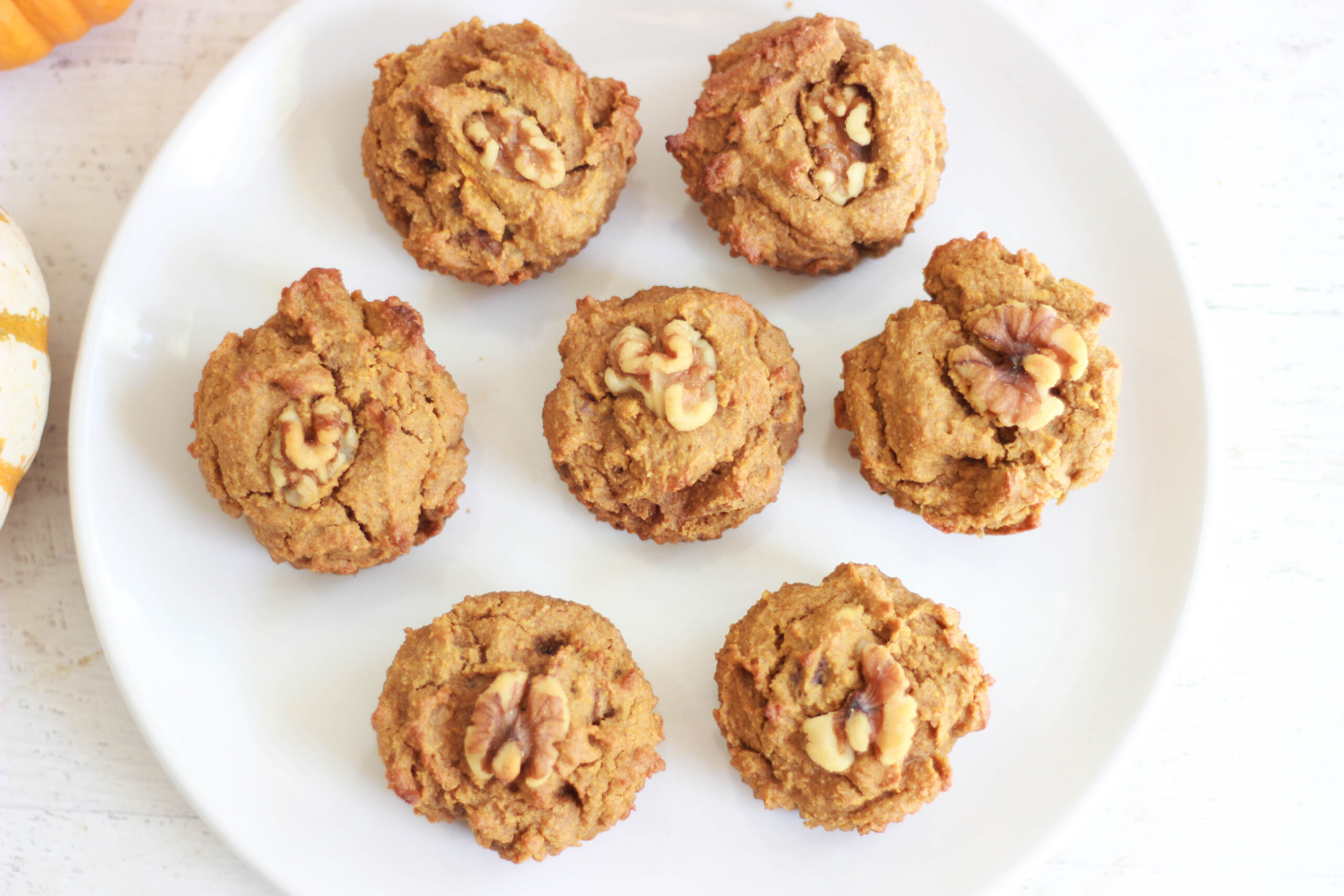
There are some treats that really do need a touch of honey, maple syrup, or other sweetener to get the flavor and texture just right, but there are plenty of recipes that could easily be made just as delicious without the extra sweeteners. If you don’t need it, why add it?
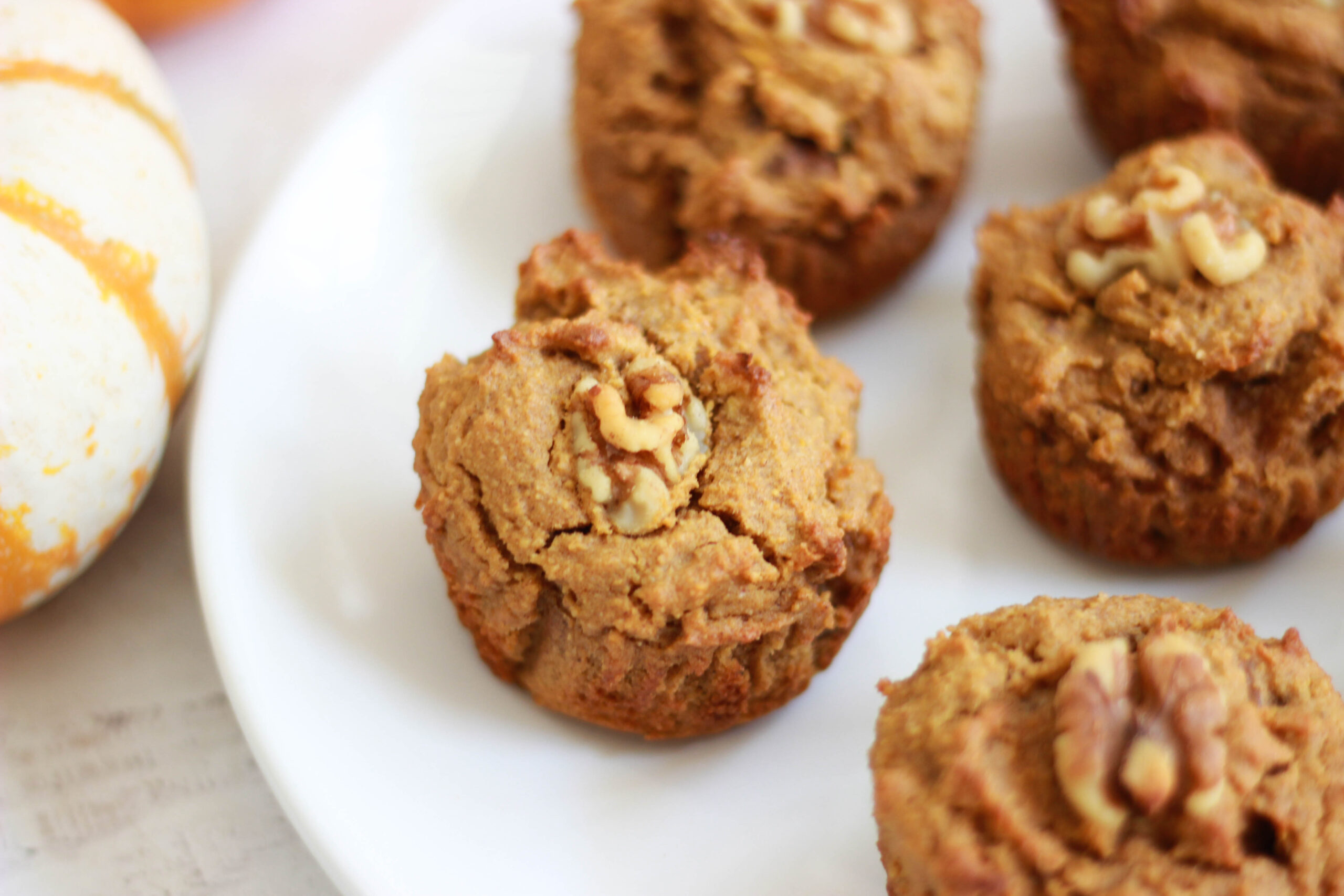
That’s exactly how I feel about muffins, which I consider to be a baked good that’s not meant to be super sweet. To me, a muffin shouldn’t be too overpowering or taste like a sugar bomb. I like a muffin that can be used as a dessert, an afternoon snack, a bite with some tea, or something to quickly grab in the morning if you need to. These muffins do just that.
When I first became interested in paleo baking a few years ago, I made every pumpkin muffin recipe I could find on the Internet. I don’t know what it was about pumpkin muffins specifically, but I had a particular proclivity for them. I loved making them for myself, and for other people. I was determined to find the best recipe. I could never find one that stopped me from wanting to keep trying others, though. When you’re never fully satisfied with a recipe, the best thing you can do is make one yourself!
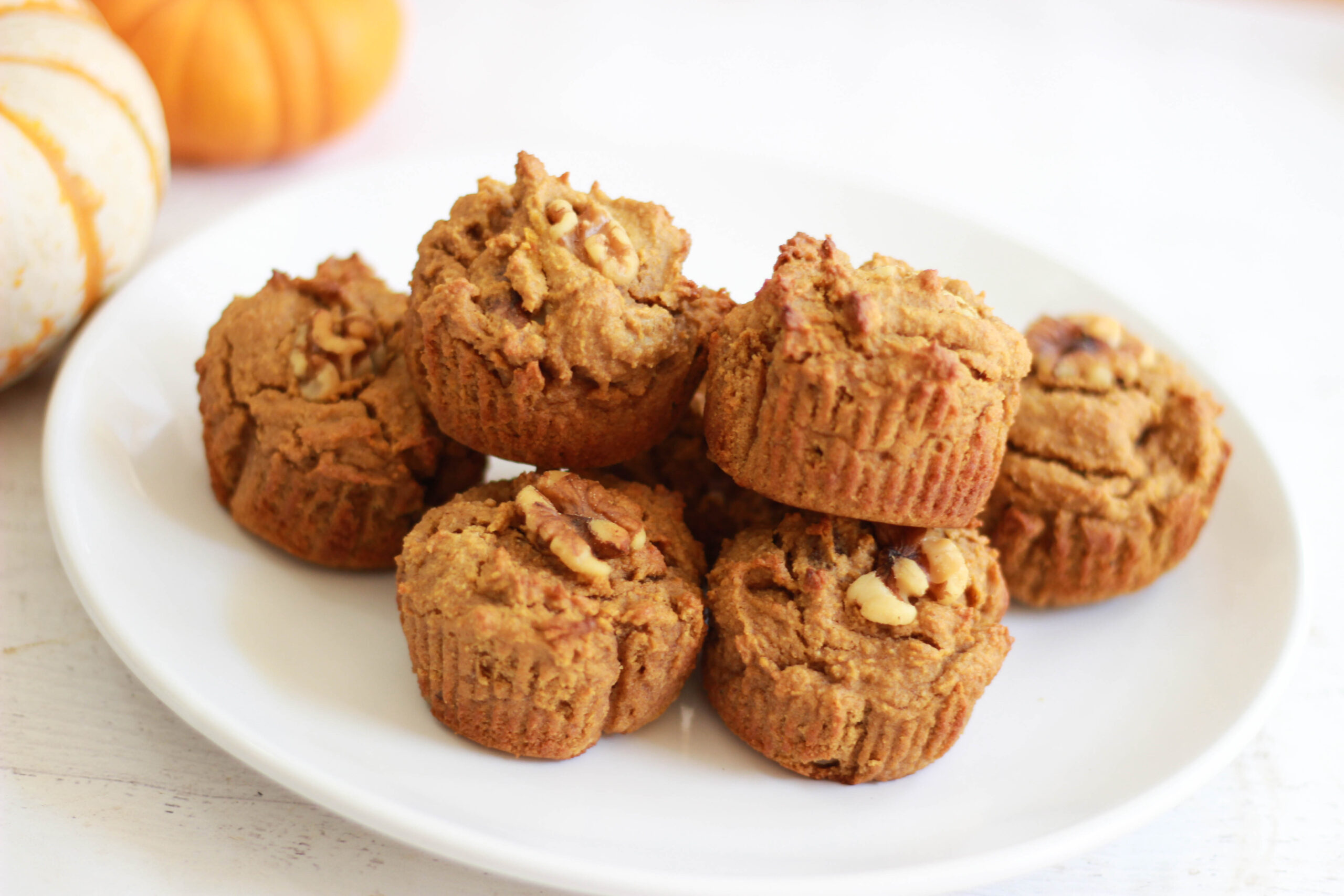
Plus, I’m very happy that pumpkin season is far from over. I think of October and November as my main pumpkin months, so I’ve got a few weeks left to live it up. I don’t think I’ll ever get sick of pumpkin! I’ve been making so many extra-sweet pumpkin recipes recently, though, that I wanted to make a pumpkin treat that was a little more toned down than regular desserts – something everyone would enjoy! Enter – muffins.
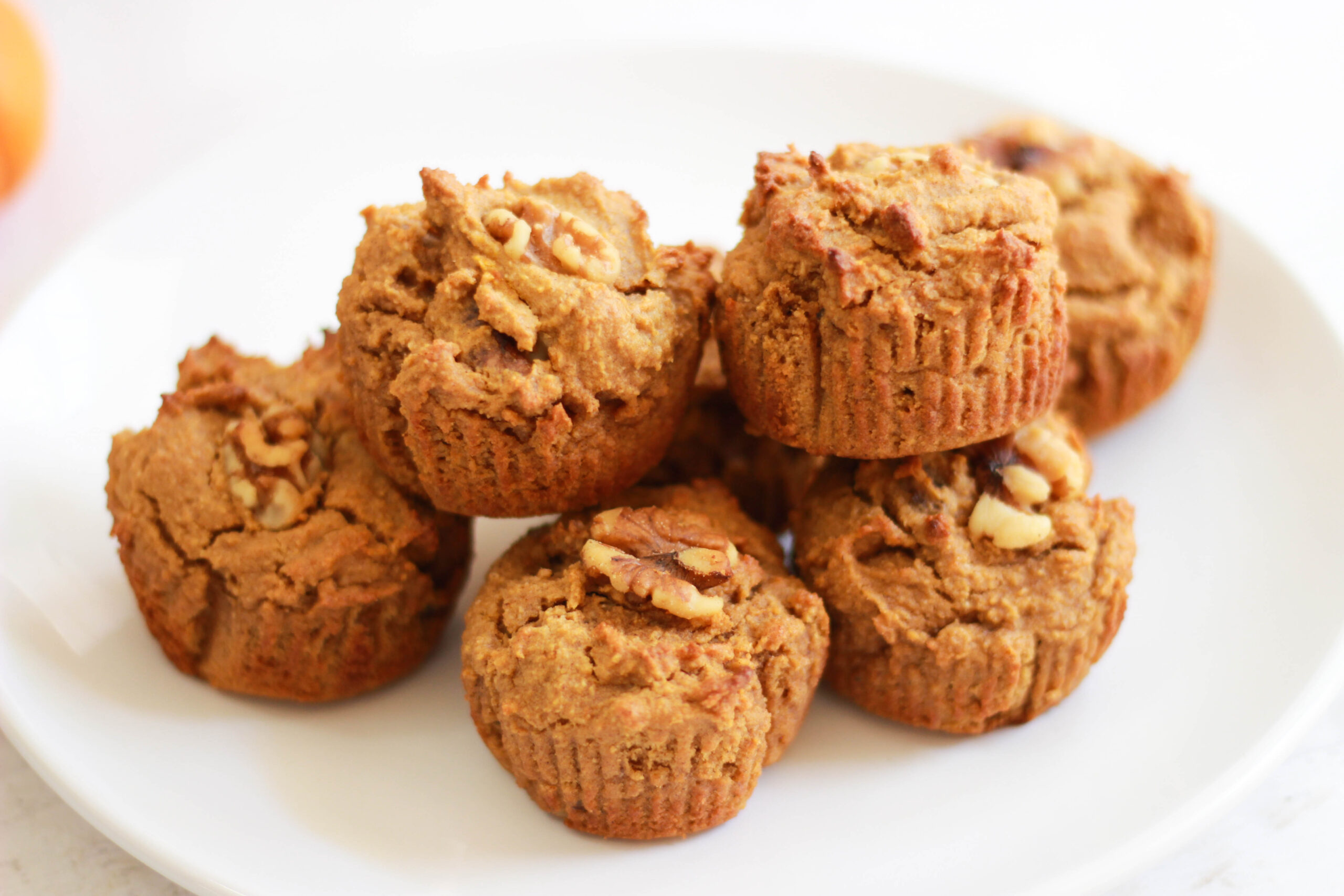
These pumpkin muffins are moist, dense, and rich. They have substance, which is very important to me. I like my muffins like I like my relationships – not just a load of “fluff,” if ya know what I mean. If it’s too light and fluffy, I’m not satisfied. I need depth. I also love that these muffins can be used as a dessert or a snack at any time of day. The pumpkin and cashew butter provide natural sweetness to the recipe – no extra sweeteners needed!
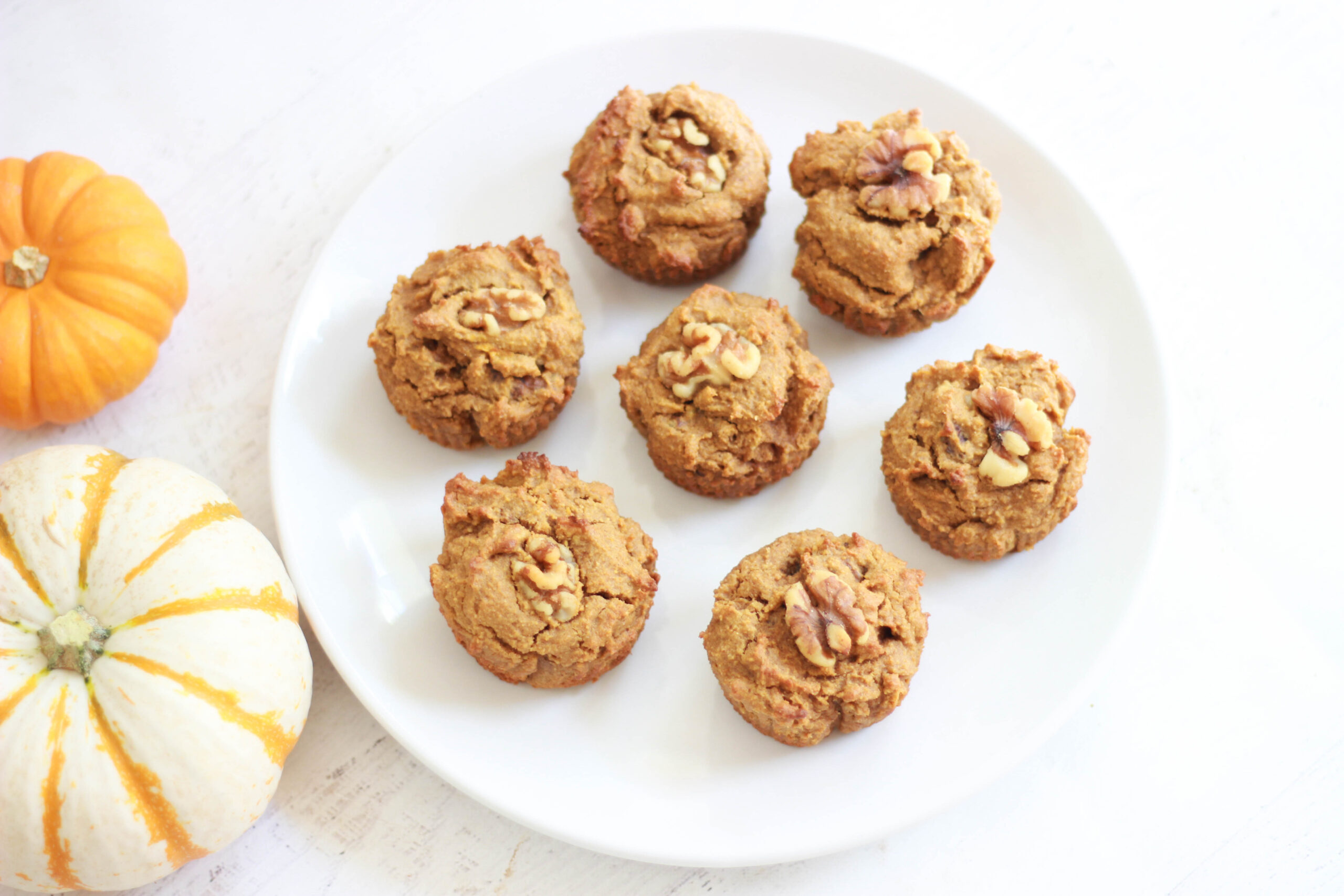
Plus, these are super simple to make! Like almost all of my recipes, I stick to one bowl. Toss it all in, mix it together, and bake. I’m a big fan of minimal cleanup and easy directions. Baking should be easy, and fun! No fuss, no problems.
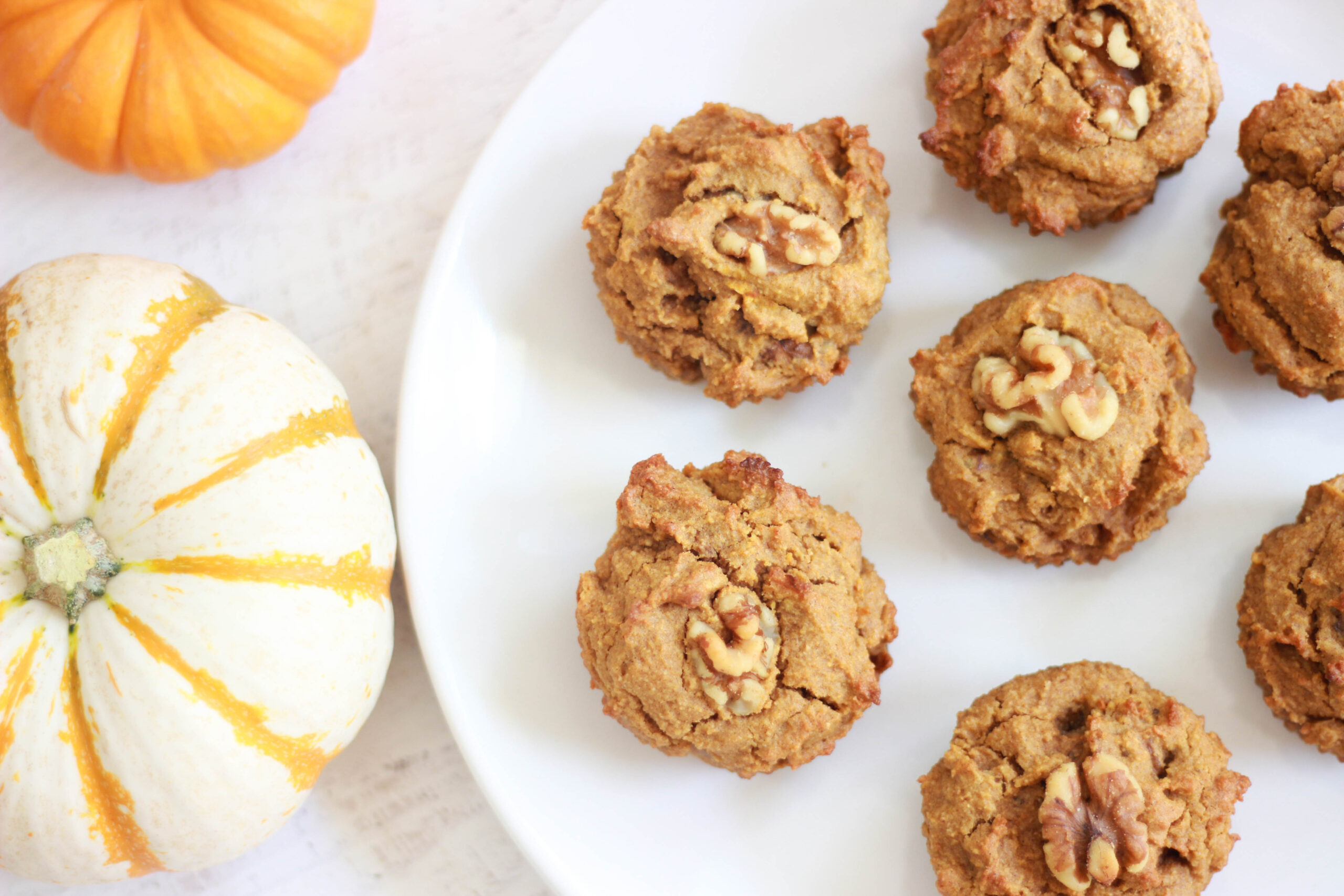
Somehow, these pumpkin walnut muffins have quickly become one of my family’s and close friends’ favorite recipes of mine. I didn’t think a simple pumpkin muffin recipe would blow anyone away, but every person I’ve made these for has come back and pointedly requested more, and asked for me to post the recipe immediately! That shocked me considering a few of the people who asked for this recipe have probably never even looked at my website. That’s how you know they’re good.
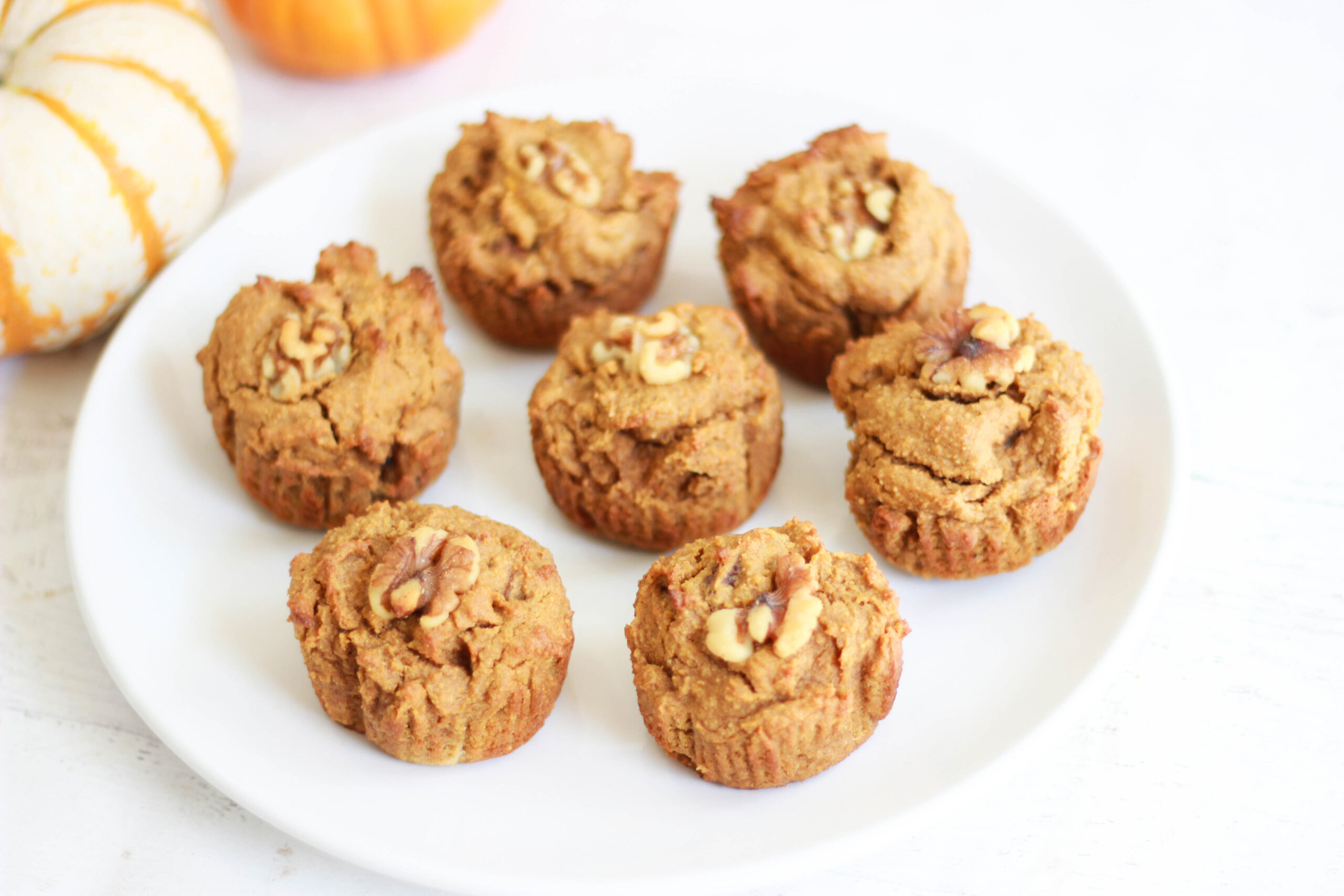
I think it’s always nice to have an easy muffin recipe on hand, especially when it’s paleo and sugar-free! These pumpkin muffins are perfect to make for a work event, night in with friends, snacktime for kids, or any other potluck-style event! Those types of events come up often during the holidays, so these muffins are just what you need! You can also make a batch for yourself and freeze any extras in the freezer so you always have something to go back to when you want a sweet treat. I always do this!
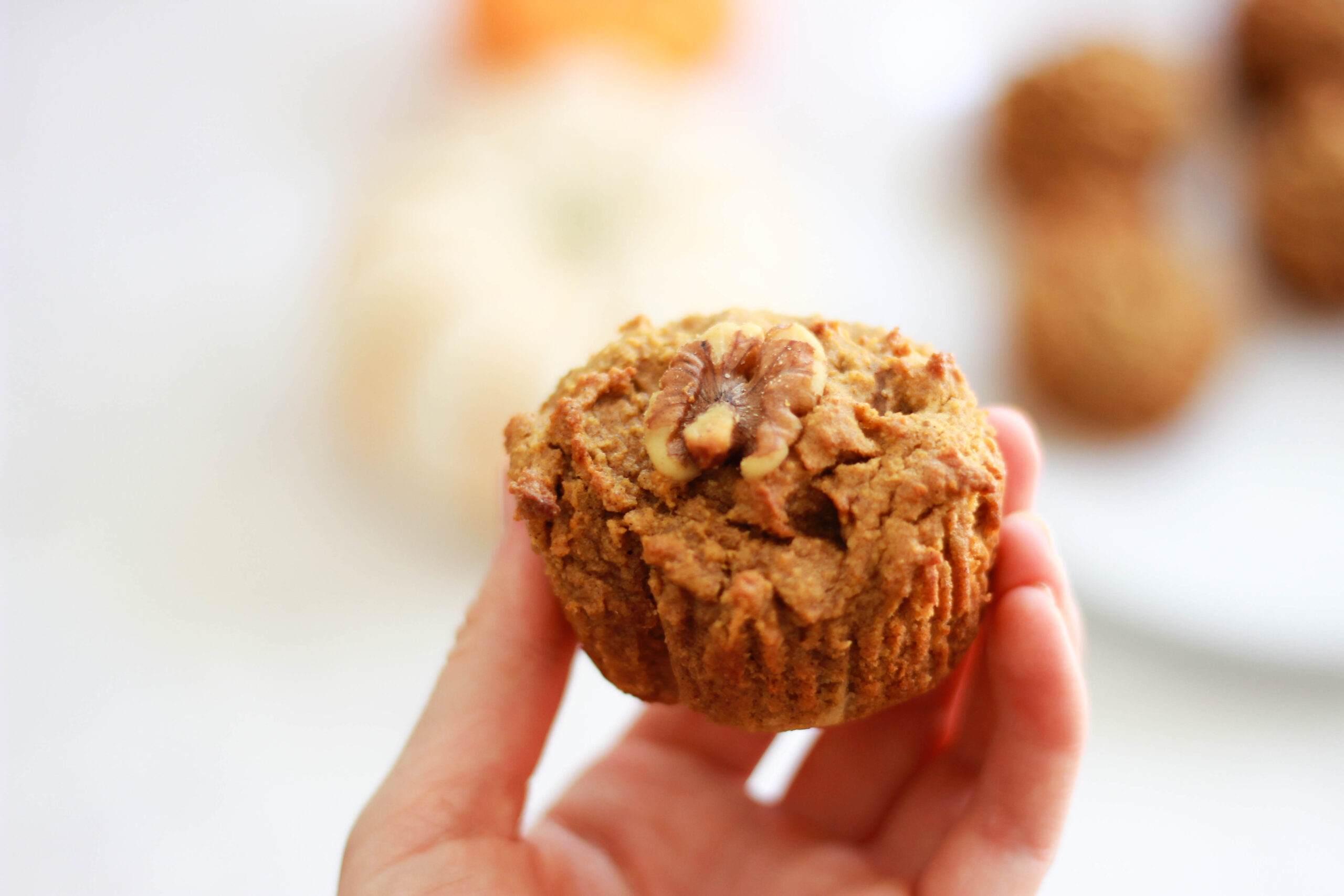
If you love all things pumpkin, these are obviously for you, but I also recommend trying them even if you’re not usually a pumpkin person! The pumpkin flavor is definitely not overpowering – they really taste more like a generally fall-spiced muffin. My dad didn’t even know there was pumpkin in them when he tried them (he’s not a pumpkin person!).
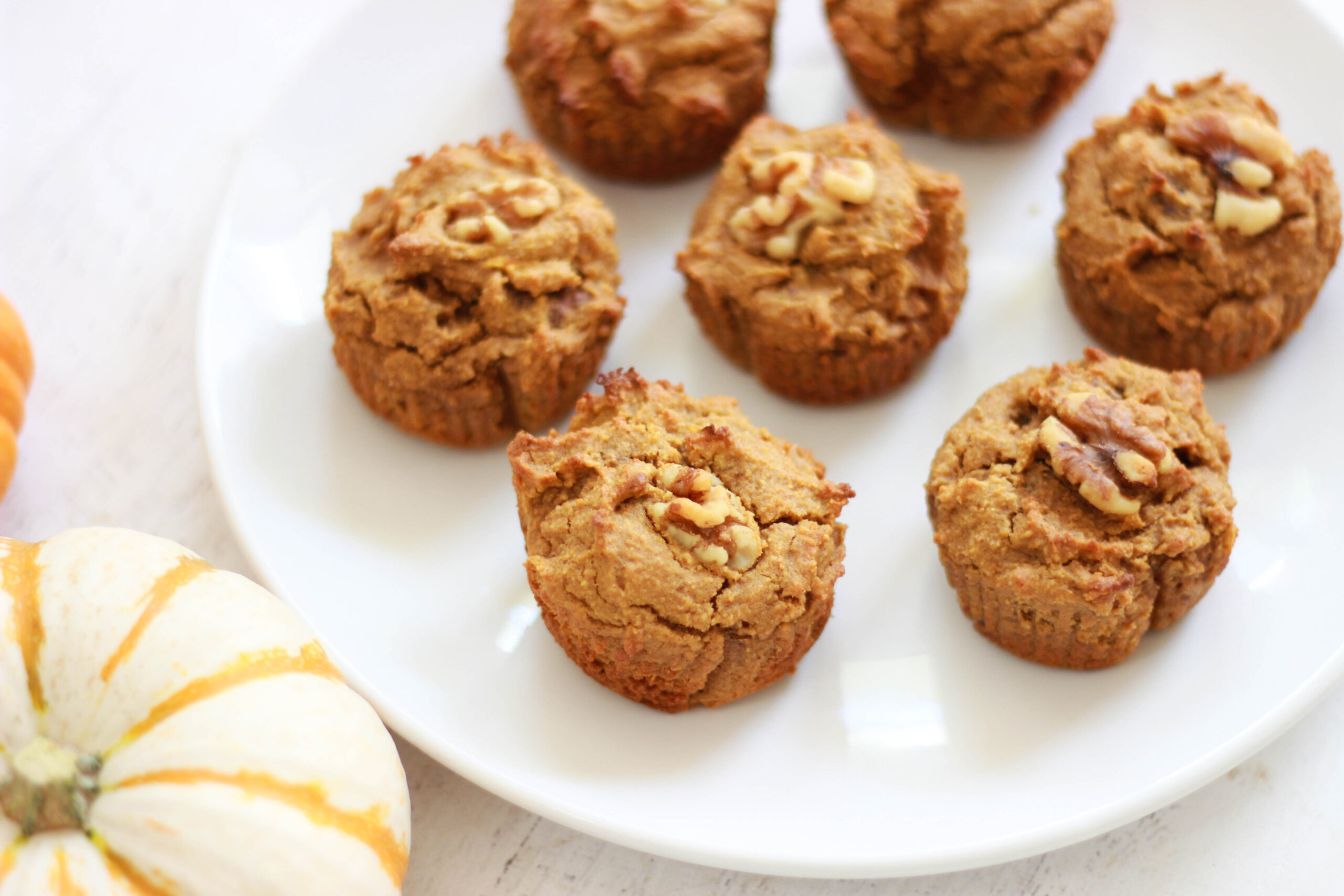
One of the many reasons why pumpkin works so well in recipes is because it adds natural moisture. It also helps to create a really smooth and rich texture and flavor, no matter what it’s added to! This works in baked goods, smoothies, or soups, so try it out. The flavor of pumpkin pairs well with a number of spices and isn’t too in-your-face when combined with other ingredients, whether they’re savory or sweet.
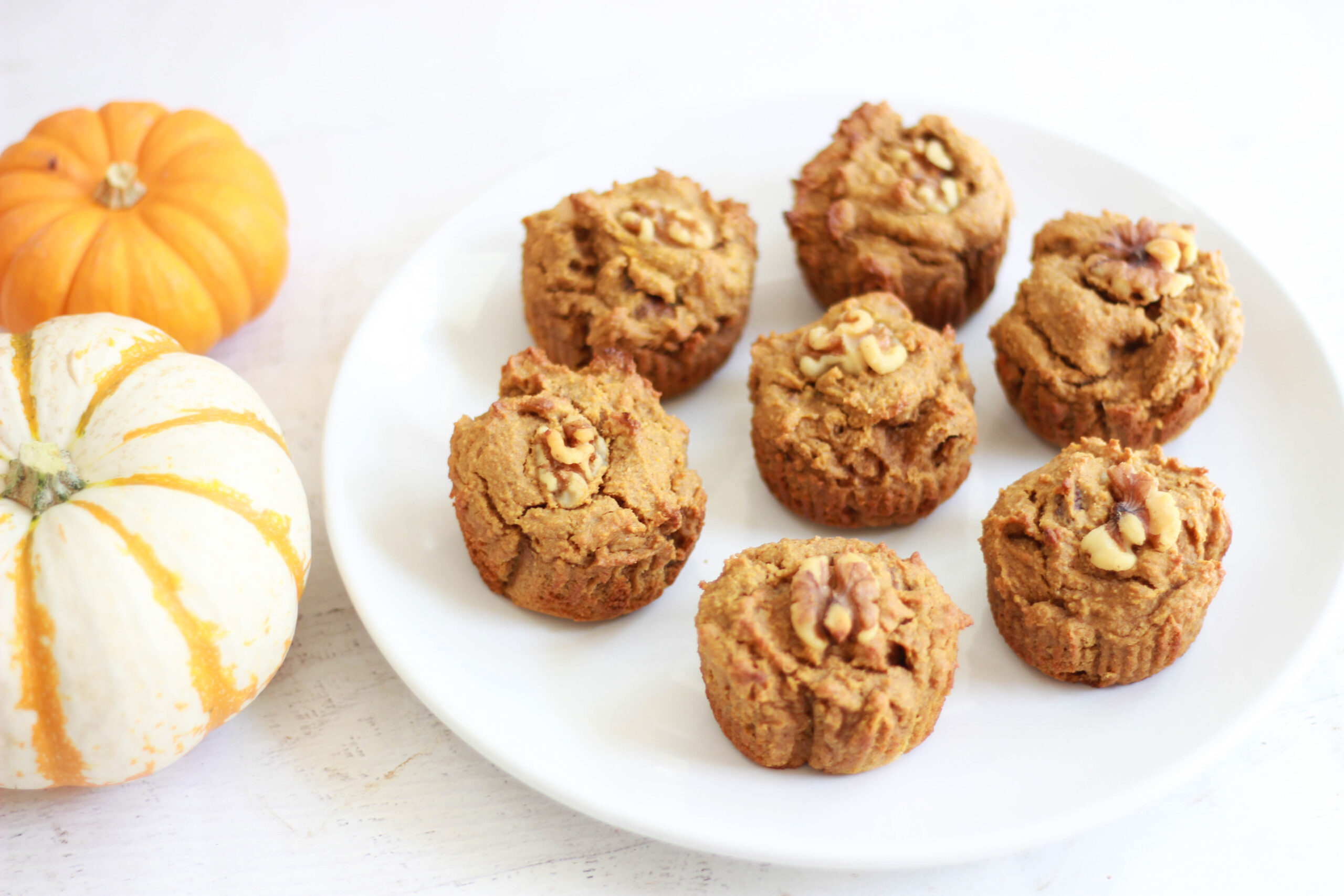
These pumpkin walnut muffins can be made without the walnuts, or with another nut in place of the walnuts. Pecans and slivered almonds are great substitutions. If you’re a chocolate-lover, these are also delicious with cacao nibs or chocolate chips. Personally, I like to always have some type of added crunch whenever possible! Don’t feel like you have to add it, though.
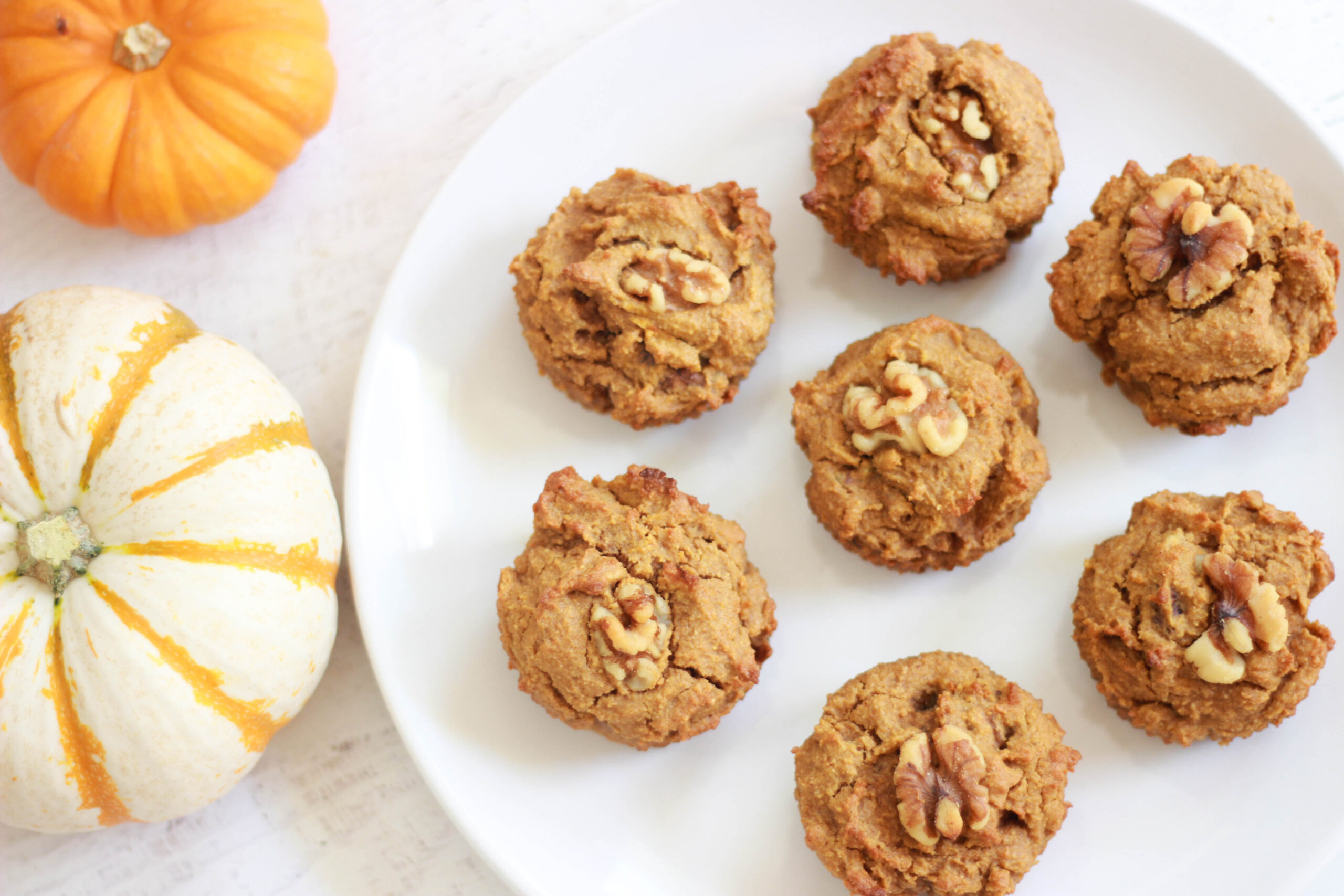
I used cashew butter in these muffins, and I really do think the cashew butter is an important part of why they taste so delicious! However, you can certainly sub out the cashew butter for another nut butter. Just beware that it might not taste the exact same! Cashew butter does have a very naturally sweet flavor, which is perfect since we’re not using any sweeteners.
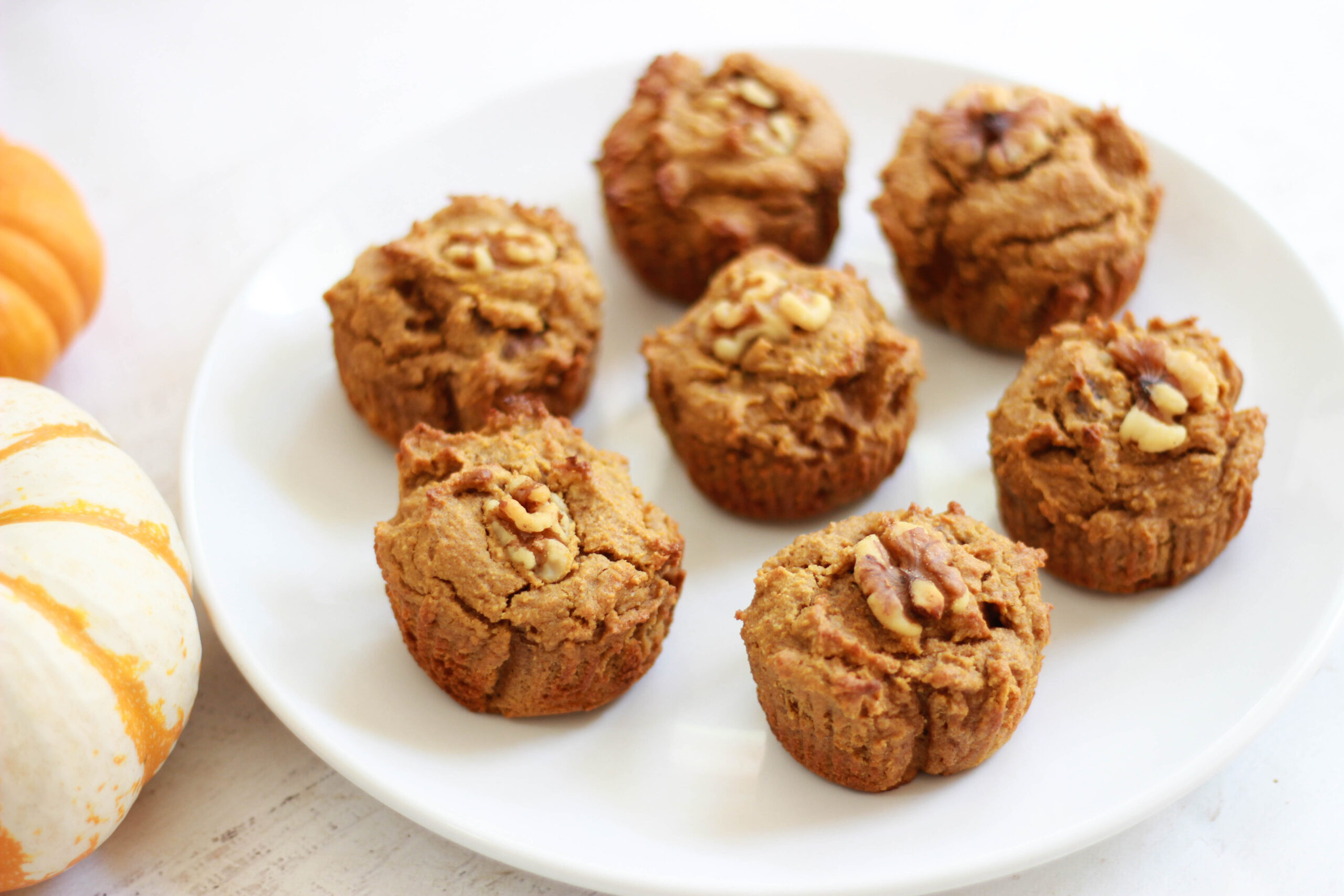
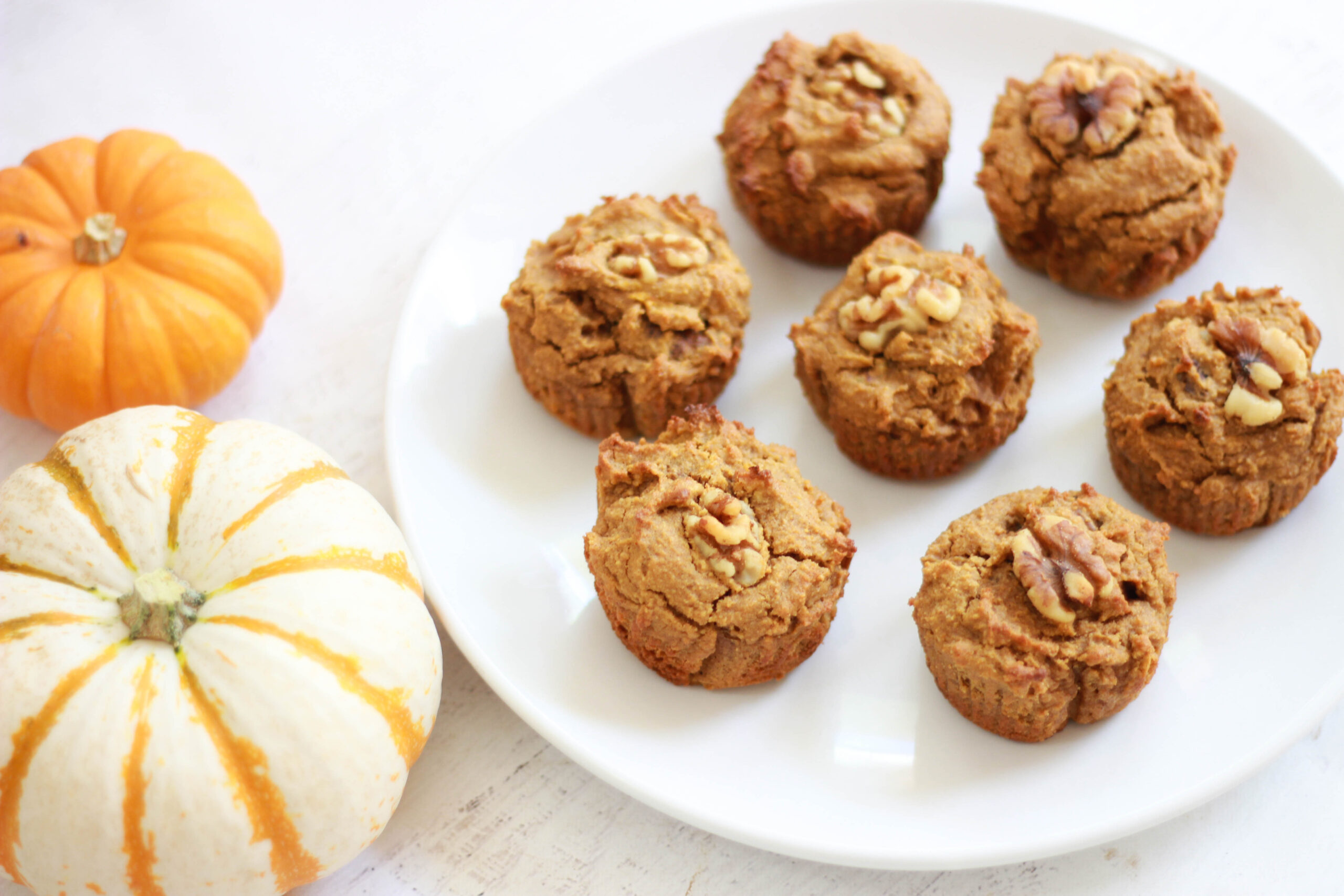
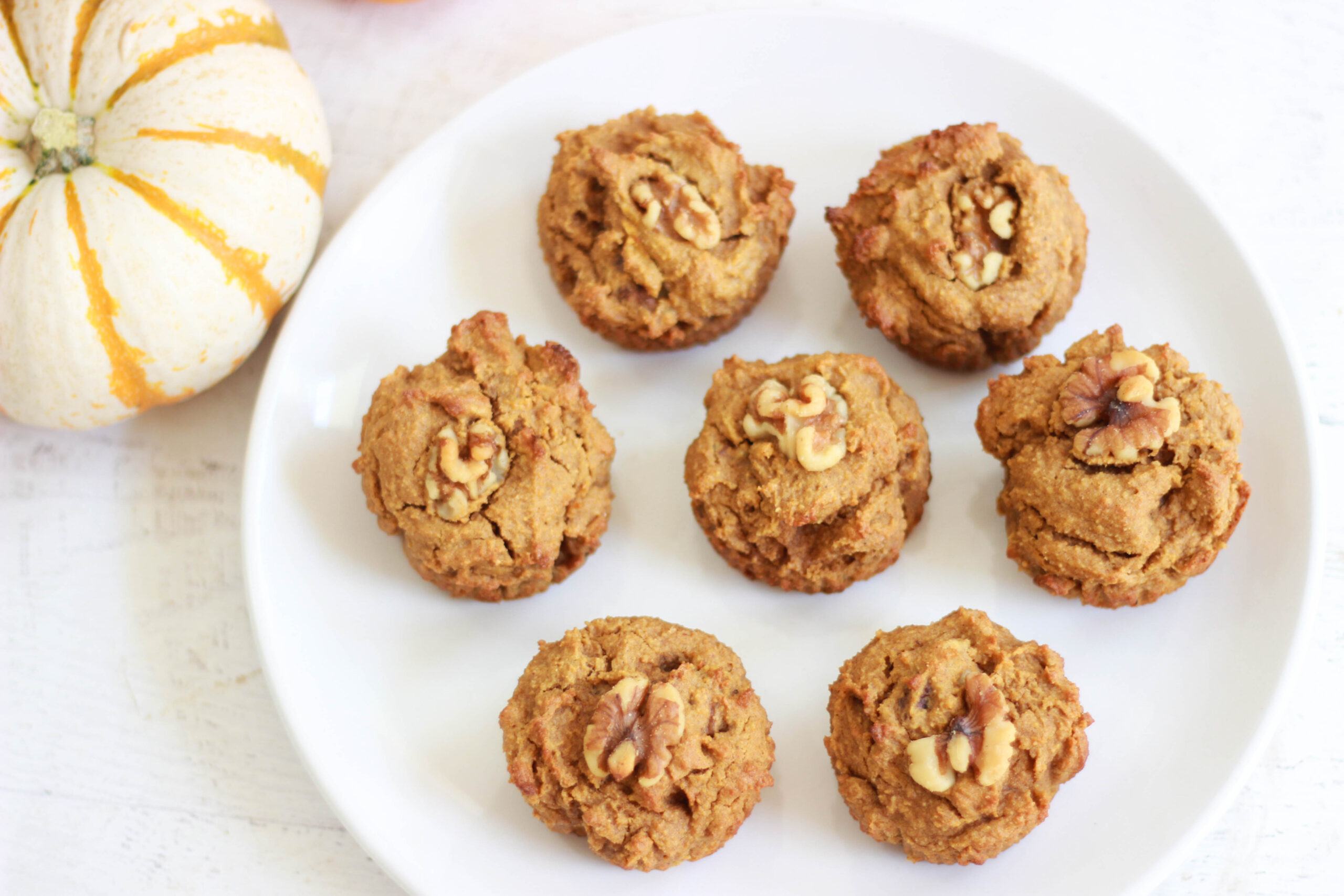
These muffins are the perfect healthy fall treat for everybody! They’re paleo, gluten-free, dairy-free, soy-free, sugar-free, and sweetener-free. They’re also great if you’re on a low-carb or ketogenic diet and want a little pumpkin in your life! All you need is a muffin tin, one big bowl, and a few ingredients… and you’re good to go!
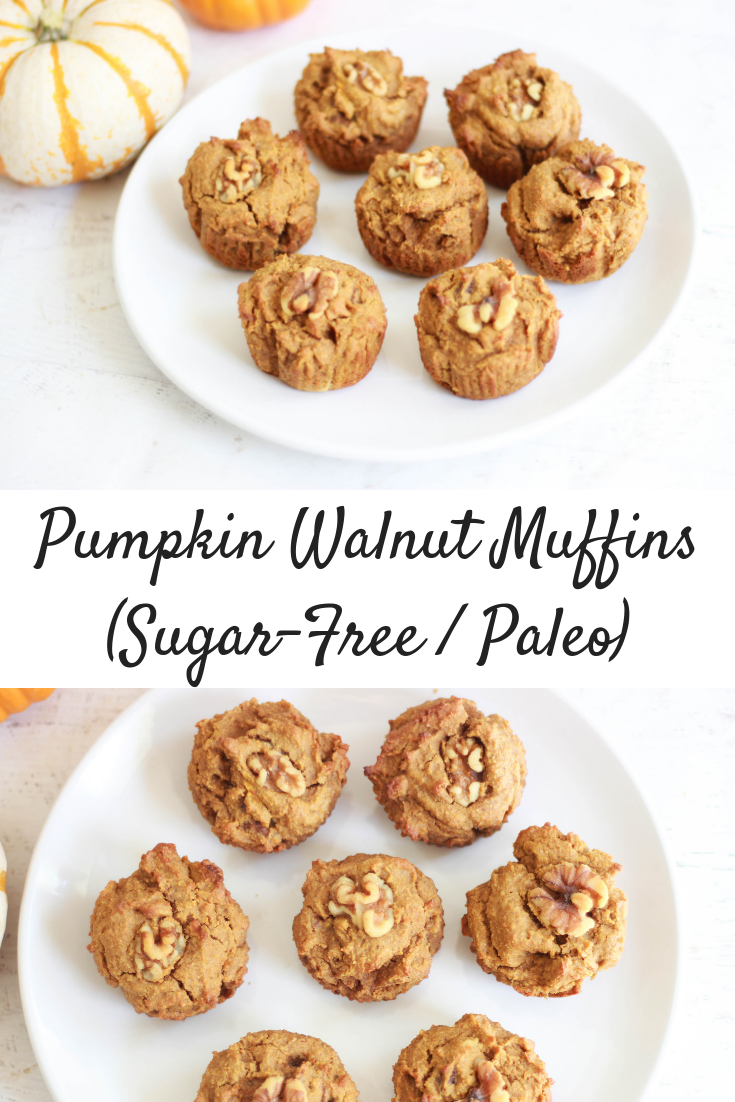
Pumpkin Walnut Muffins (Sugar-Free / Paleo)
Total Time: 30 minutes
Makes: 10-12 muffins
Ingredients:
- 2 cups almond flour
- ¼ cup coconut flour
- 1.5 tsp cinnamon
- 2 tsp pumpkin pie spice
- 1 tsp baking soda
- 3/4 tsp salt
- ¾ cup pumpkin
- ¼ cup melted coconut oil
- ⅓ cup cashew butter
- 2 eggs
- 1.5 tbsp vanilla
- 3 tbsp coconut milk
- ½ cup walnuts (You can also use another nut or leave them out if you want!)
Instructions:
- Preheat your oven to 350*F. Line a muffin pan with cupcake liners or grease the pan with coconut oil.
- Add all ingredients into a large mixing bowl. Stir thoroughly to combine.
- Once everything is well mixed, pour a bit of batter into each muffin tin until they’re about 3/4 of the way full. The batter will be thick! I like to use a spoon to scoop it out and add it into the muffin liners.
- Bake the muffins for 15-18 minutes, or until a toothpick or knife comes out clean and the edges are slightly golden.
- Allow the muffins to cool completely, and then enjoy!
What’s your favorite pumpkin treat?!

by Christina | Nov 6, 2018 | Member Exclusives, Wellness
Candida albicans is a type of yeast found in the gut, and its overgrowth can lead to a number of unpleasant symptoms like bloating, nausea, diarrhea, constipation, gas, acne, brain fog, depression, anxiety, fatigue, and more. When addressing Candida overgrowth, adjusting your diet is a main part of the process, while proper supplementation is the most important part. I want to emphasize that going on the anti-Candida diet alone is not enough to fix the problem. You might get symptom relief through dietary adjustments, but you won’t actually be getting rid of the overgrowth. That being said, the Candida diet is a very important part of the protocol, especially because the most common cause of Candida overgrowth is an inflammatory, high-carbohydrate, high-sugar diet. Candida albicans feeds off of sugar and can cause inflammation in the body, so it’s important to remove the yeast’s fuel.
___________________________
This complete post is only available for The Channel Collective members. Click here to become a member, or click here to log in!

by Christina | Nov 6, 2018 | Member Exclusives, Wellness
The vitamin B-complex refers to 8 B-vitamins that tend to “live together” in the body. They are all water-soluble and often support each other and overlap in function, but each is distinct in its chemical structure and function. B vitamins are involved in pretty much every single process in the body – they are either the building blocks for it, act as a coenzyme for the process, or contribute to the process in some other way. They allow us to make energy from the food we eat, form red blood cells, and maintain proper cognitive function. For example, B vitamins have been shown to slow brain shrinkage by as much as seven-fold in areas of the brain that are specifically known to be most impacted by Alzheimer’s disease. B vitamins can help lower our levels of homocysteine, a marker of inflammation in the body, and also help to protect our mitochondria! Mitochondria are like the battery cells in our body that fuel all of our body’s functions. B vitamins also make the fatty myelin sheath that protects our nerve cells and helps our nerves communicate with each other.
___________________________
This complete post is only available for The Channel Collective members. Click here to become a member, or click here to log in!
