
by Christina | May 1, 2017 | Wellness
This post might seem like it’s coming out of nowhere, but I promise it’s not. I’ve been dying to write about this for awhile, but I didn’t want to share it until I had done self-experimentation for long enough to really be able to tell how it’s been working for my body.
I also want to preface this with some classic, but always necessary, disclaimers. I want to remind you that the purpose of my blog, and this post, is to share my personal experiences with you. This is not medical advice. I’m not telling you to do anything I do or recommending you do anything I do. In general, posts on the Internet should be taken for what they are – just information and sharing. Not treatments or diagnoses or direct orders. I’m just sharing something that I’ve discovered works for my body. I am not responsible for what you do with your body, and what works for me won’t work for everyone else.
That being said…what’s been working for me?
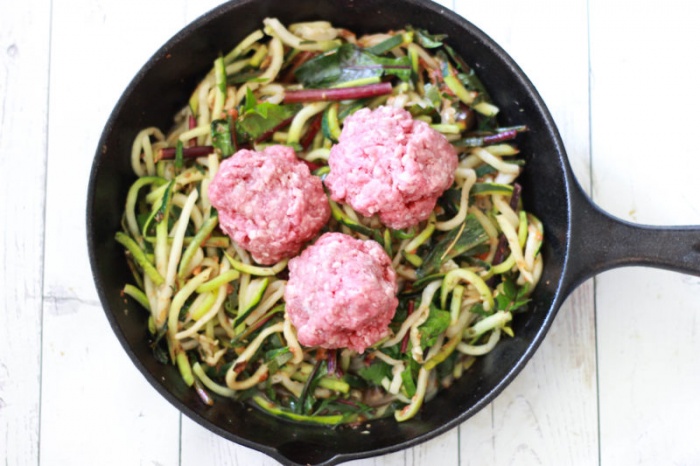
I have been eating raw meat.
If you’ve been following me for awhile, you’ll already know I lead a paleo/primal lifestyle. However, it wasn’t until very recently that I tried eating raw meat. I became intrigued with the raw paleo diet because it’s something my NTP has written about, and through her I’ve stumbled across a few other people who eat raw paleo as well. One of those people is Melissa Henig, who I consider to currently be the “face of” raw paleo right now. By that, I mean that she’s talking about it openly and bringing it to a more mainstream audience, so I would definitely head to her website to learn more about the raw paleo diet if you’re interested. She was also recently interviewed on Ben Greenfield’s podcast and talked all about the benefits of her raw paleo diet. If you’re interested, check out that episode here – I loved it!
If you’re confused about what the raw paleo diet is, it’s exactly what it sounds like. It’s the paleo diet, but raw. So the typical paleo outline – no grains, gluten, legumes, sugar, soy, etc., but everything is left unheated. People who follow the raw paleo diet eat raw eggs, raw meat, raw chicken, raw fruit and veggies, raw unpasteurized dairy, and any other paleo foods…just raw. While I haven’t personally been following the raw paleo diet exclusively, I have been eating raw meat.
Before I actually tried raw meat, I did a lot of research. I interrogated my NTP about it, because I had so many questions. Is it really safe? If it’s safe, why don’t more people do it? What’s the point? What are the benefits? How will this affect my digestion? Is it really raw? After talking with her and reading a lot about raw paleo, I became very intrigued and finally decided I was ready to try it out. That’s the wannabe biohacker in me. When I’m curious enough about how well something “works,” I’ll always try it out on myself. My own personal experience is what I care about most.
I slowly came to understand that mainstream society has it backwards in terms of how to cook our food for optimal digestion. If you use google or ask a random person on the street, they’ll probably tell you that the “best way to eat” is to eat lots of raw vegetables and cooked proteins. Turns out, cooked veggies and raw proteins are actually easier for our bodies to digest than the other way around.
Most people with gut issues eventually realize that cooked vegetables are easier on their stomachs than raw ones. That’s something I’ve known to be true with my own body after struggling with so many gut issues throughout my life. I definitely still eat raw vegetables, I just prefer cooked vegetables when possible and eat them cooked about 90% of the time. Roasted, steamed, sautéed, etc. Raw vegetables can be very hard for our digestive systems to break down, but cooking them makes that process much easier. People might tell you that raw vegetables will heal all of your problems, but when it comes to DIGESTION specifically, cooked vegetables are usually easiest on our digestive systems.
When it comes to protein, however, raw meat is actually much easier for our bodies to digest than cooked. Think about it logically. Raw meat has always been a part of our ancestors’ diets. Raw meat has been a staple in the diets of different cultures around the world for centuries. You probably don’t think sushi is weird, right? It’s the same thing. What about steak tartare, or ceviche? If you’ve traveled to other countries, you’ve probably come across some kind of raw meat – maybe even seared. And again, sushi!
There are other aspects of the raw paleo diet that you probably wouldn’t think are that strange – raw dairy, for example. Raw milk and cheese. What about raw eggs? I know it’s not for everyone, but there are many people who toss raw eggs into their smoothies! And I KNOW you’ve eaten raw cookie dough before. (That’s not the raw paleo diet, obviously, but you get my point!)
When we cook meat, it actually destroys a lot of the enzymes found naturally in that meat that help with the digestion process. When it’s raw, all of those enzymes remain intact, and the nutrients in the meat are more bio-available. This can have a number of effects on how most people feel when they eat raw meat, and I experienced them all.
First, I notice a huge difference in my digestion when I eat raw meat. It’s much easier on my stomach. When I eat raw meat exclusively for a few days and then add in a cooked protein, I can feel the difference in my stomach immediately. The cooked protein physically hurts my stomach, and it feels like a brick is scraping the inside of my intestines. Now that I have something to compare it to, I really always notice the difference.
Second, it takes a lot less meat for me to get full. The nutrients are just so available to the body that I feel satisfied with much less protein. I’m usually satisfied with about half the amount I would have to eat if the meat was cooked. This ends up saving me a lot of money, because I don’t have to eat quite as much for satiety!
Third, it gives me an insane amount of energy. I don’t drink caffeine, but this is basically my version of the energy boost. Sometimes I don’t like eating raw meat at night because I feel like it keeps me awake for longer. I really don’t know how else to describe it – it just gives me a ton of energy and mental clarity. I love it.
When I read about my NTP’s experience with the raw paleo diet, I thought it was really interesting when she said that she truly craved raw meat after trying it for the first time. And after I tried it, the same thing happened to me. It’s like my body just wants it. NEEDS it. It’s something I crave all the time now, which tells me my body loves it. It makes me feel good, and I love the taste, so I’m sticking with it.
The most important thing when it comes to eating raw meat is the sourcing. I do not just go to the grocery store, buy some meat, and eat it raw. I will probably get very sick if I do that. Sick animals make us sick, but healthy, well-raised ones do not. I only eat grass-fed, grass-finished meat that I get from the farmer’s market, and I also don’t let it sit out on the counter. I usually freeze the meat for a week or two just in case, and then I let it thaw in the fridge right before I want to eat it. Then I keep it in the coldest part of my fridge and eat that batch within the next day or two.
That’s another thing I love about raw meat – it’s super fast. You literally just take it out of the fridge and eat it – no prep required. This might sound weird, but I also love how primal I feel when I eat raw meat. Kind of like when you eat a huge drumstick and just go for it. It’s like I’ve tapped into my primal instincts!
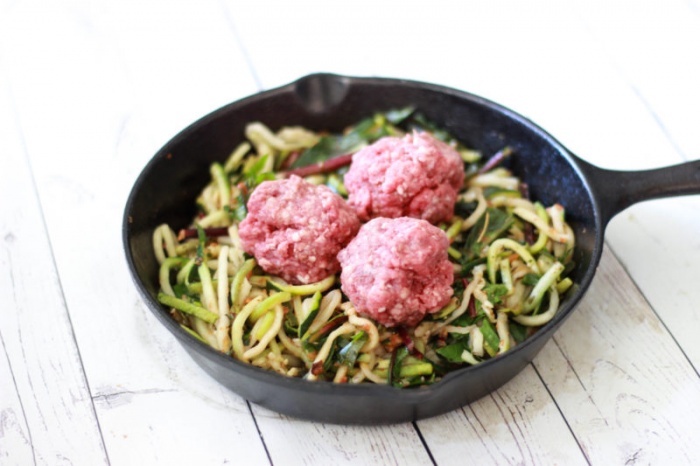
One question I always get asked is about the taste. Obviously I can only speak for myself, but I love the taste, especially of raw lamb. That’s my favorite thing to eat and what I eat most often. It tastes…cold. Ha. And like… raw lamb. I can’t really describe it, but it’s really not that different from the taste of cooked lamb, in my opinion. It is a different texture than cooked meat. Kind of gummy, chewy. I personally love it. Like I said, I crave it. 😉
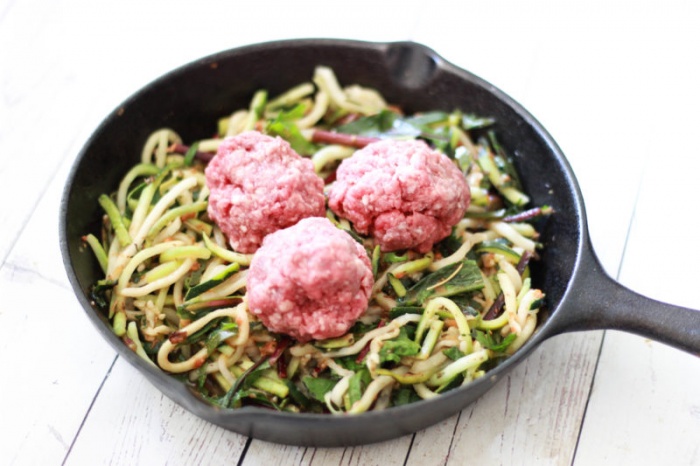
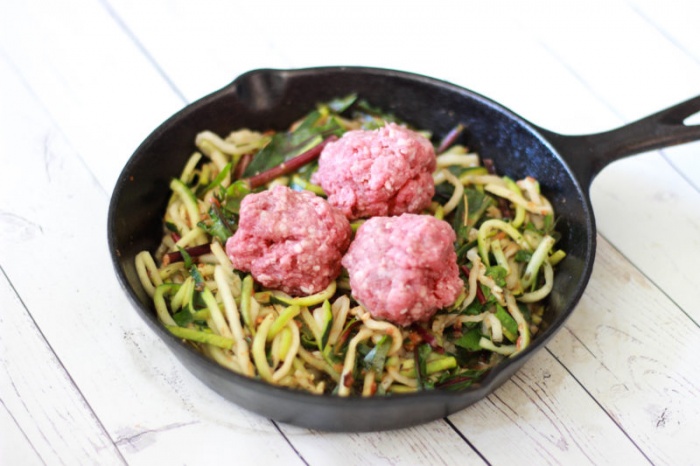
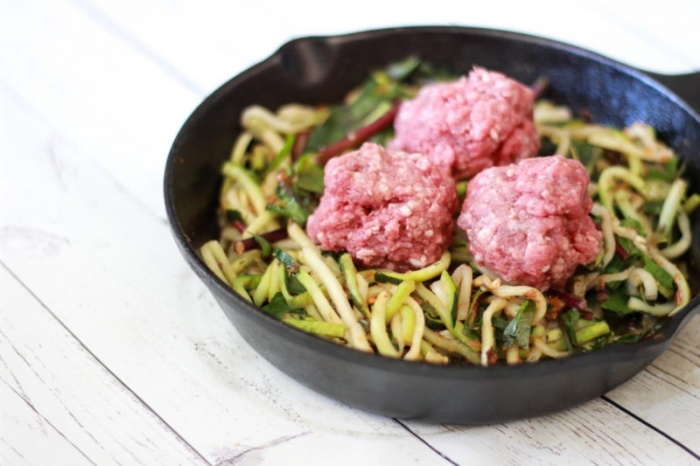
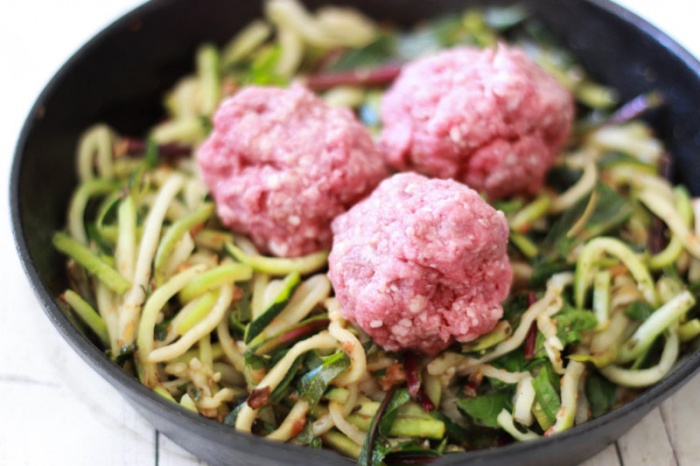
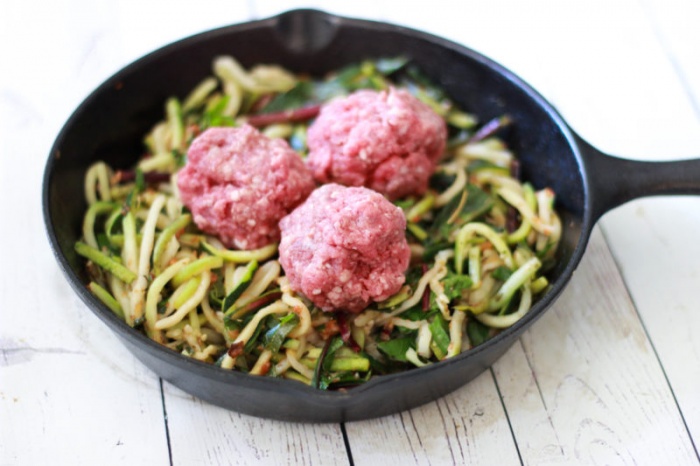
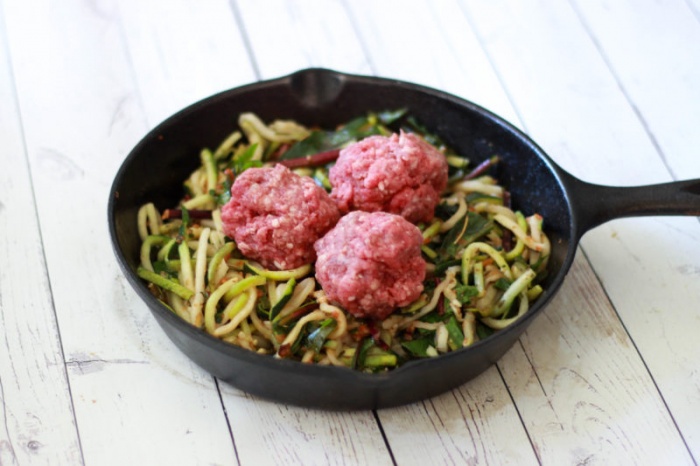
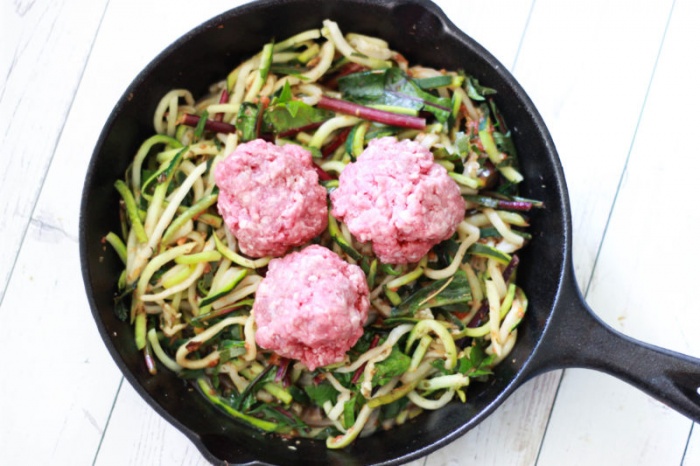
How do I eat it? There are a few different ways. You can eat it plain, you can let it soak in lemon or lime juice, or you can mix it with oils and spices. When I eat ground lamb, I usually either eat it plain, dolloped on top of my food, or I will mix it in with spices and a bit of fat. The zoodles in these pictures, for example, are plain, but a lot of times I like to make “meatballs” by mixing the meat in with basil, oregano, rosemary, and a little bit of lard. My version of raw pasta.
I don’t follow a raw paleo diet, I just incorporate raw meat into my diet. I’ve been doing this regularly for a few months. I was worried at first, but after that first day, I kind of became obsessed. I don’t eat raw meat every single day – it’s something I would only do when I know the source of my meat and when I’m eating at home. I know it’s not for everyone, and that’s fine! I just wanted to share my experience because it’s such an interesting topic, IMO. If nothing else, maybe you’ll be inspired to keep an open mind and do some research of your own!

by Christina | Apr 28, 2017 | Wellness
WELCOME WELCOME to Part 2 of the story of my fitness journey! This is where it gets interesting. If you haven’t read Part 1 yet, you can do that here. If you’re already caught up, I’ll pick up where I left off. The addiction.
I was very disciplined with my fitness routine. Over time, I started to feel really tired. Mentally and physically. Every day my body ached. I remember the torture of walking to class. The hills! I didn’t want to get out of bed. I laid in bed as often as I could, but I mustered up the energy to do my workout each night. That’s about all I could gather the strength to do. But I HAD to do it – or so I thought.
In the back of my mind, I knew something wasn’t right. But exercising is healthy. It’s good for you. It was me taking care of myself, right? In fact, it was the only way I knew to take care of myself at that time, while everything else fell apart. My stomach was a complete mess, and I was in so much pain that I could barely think straight. I was still a mystery case – no doctor seemed to know what to do. I was sick of taking pills and running tests.
I asked every doctor I saw about my exercise routine, and each told me to keep exercising. They told me to stick with it, because it could only help. Looking back, I shudder at this advice. I became obsessed with learning about other people’s exercise routines, and mine seemed similar or even “less than” theirs. I kept comparing. I kept searching. I just wanted reassurance, but nothing reassured me. In the back of my mind, I wanted someone to tell me I was doing too much. I was desperate for someone to tell me I didn’t have to feel so tired or so chained to an exercise regimen. However, everything I read and every person I asked, up until that point, told me that I was doing the right thing. In fact, sometimes I felt like I still wasn’t doing enough. That’s the damn Internet, for ya.
I worked out 6 days a week, and I had severe anxiety if I didn’t. I would have a panic attack at the thought of skipping a workout or deviating from my routine. I followed my split exactly. Leg day. Chest and back. Cardio and abs. Leg day. Arms. Cardio and abs. Rest. I worked out in the afternoon, and all I could think about the entire day leading up to my workout was my workout. I was scared I would get home too late and not be able to fit it in. I was nervous someone would invite me to do something and I would have to say no because I had to work out. It was controlling my life. I would make up excuses to not go places, when I was actually just working out. I was embarrassed that I was prioritizing exercise so much, and I didn’t want anyone to find out how much I thought about it. I thought that if I skipped a day, my entire split would be off. If I messed up my routine, what would I do then? What if I couldn’t get back on track? What if it threw everything off?
I knew I was addicted to exercise, but I didn’t want to say anything. I didn’t know who I was without exercise. It was my drug. It was truly the only thing left in my life that I could control. Doctors still didn’t know what was wrong with me, after months of testing and seeing way too many “specialists” to even count. I felt like I had lost most of my friends. I hated school, and I was sick of work. My relationship with my family was strained, to say the least. As I lost more and more weight, though, I knew in the back of my head that I needed to stop. I didn’t want to, though. I was afraid of what would happen if I did. The one thing I was trying so hard to control was actually spiraling out of control, but I didn’t want to face it.
Meanwhile, I was actually becoming increasingly embarrassed of the way I looked. I didn’t want people to see me. I felt like I was too skinny, and too muscular. My arms were my biggest insecurity because my biceps jutted out so far. I didn’t want to look the way I looked, and it was the first time in my life that I really felt insecure in my own body. I wore baggy clothes to hide it.
I sent my workout plan to my doctor, and he told me it was fine. I felt let down. I was secretly hoping he would tell me to scale back. I then sent it to my cousin – the one who originally taught me everything about strength training. He hadn’t seen me in a long time, and I didn’t even know if he knew how much weight I had lost. He revised it, big time. He told me to stop doing so much, and that it was unnecessary. I couldn’t let myself believe him. Throughout my life, I had learned that nothing could be easy. Everything had to be a fight. I was used to struggling, and I didn’t know any other way to be. I was afraid to change anything. I ignored his advice because it scared me, and I kept doing what I was doing.
Eventually I saw a nutritionist who explained to me, very bluntly, how dangerous my situation was. She told me she had never seen someone with body fat as low as mine. She explained how much stress that was putting on all of my organs, especially my heart. She told me that I was at risk for a heart attack at any time. Tears welled up in her eyes, and they did in mine, too. Part of me was relieved, because someone was finally telling me I shouldn’t feel the way I felt. Why had it taken so long?
The other part of me was angry. She told me I wasn’t allowed to exercise until I reached a safe weight. When would that be? No exercise at all? What about walks? What about just fewer days a week? 30 minutes instead of an hour? I couldn’t stop. It was the only thing that reduced my stress. It was the only thing that helped my stomach. I gave excuse after excuse. I tried to argue and reason. She told me I could do gentle yoga, stretching, every so often, but that was it. She preferred I do nothing at all. I cried the whole way home.
When I got home, I called the few friends I had left and told them what happened. I explained that my nutritionist told me I wasn’t allowed to exercise anymore, and I didn’t know what to do. She was being ridiculous, right? I gave them the same excuses I gave her. While these excuses might have been valid for someone else, they weren’t valid for my physical and mental state at that time. Yes, exercise reduces my stress levels and helps with my digestion. But under those circumstances, it did not. Under those circumstances, exercise was a much bigger harm to my health than a help.
My friends all told me the same thing. “If she says you need to quit, you should quit. You’ll be fine.” I didn’t want to hear it. They tried to help me, but I could tell no one was going to tell me what I wanted to hear, which was that she was being ridiculous and that I should keep exercising. I didn’t know what I wanted anymore. It was a mess. My friends tried to support me. They told me to fill my time in other ways. They reassured me nothing bad would happen if I stopped exercising. I felt like no one understood me – none of them were interested in health or wellness. I was frustrated and mentally unhinged. I spent the next few days crying.
The first week without exercise was the worst. During my scheduled hour and fifteen minutes of a workout, I had a panic attack every day that week. I hid in my bathroom, hyperventilating, head spinning. Eventually, I learned to fill the time with other things. I started to work on my blog more. I spent more time researching my mysterious illness, being my own doctor. I read more books and research studies about nutrition than I ever thought possible. I watched movies. I read books. I tried to make plans with friends when I could, to hold myself accountable. I learned a lot of tricks to distract myself.
Eventually I decided to switch out that hour with yoga and meditation. I went on YouTube and found a few beginner yoga videos. Yoga for digestion. Yoga for breathing. Yoga for relaxation. Basically, stretching with directions. A few days a week I would do my yoga, which usually consisted of me laying on the floor and accidentally falling asleep. Other days, I sat on my yoga mat, cross-legged, and went deep into meditation.

Over time, I felt a lot of relief. My life wasn’t ending. Yoga and meditation were truly changing my life for the better. Calming me down. Giving me perspective. Helping me to find myself and get in touch with my inner being. This post is already too long for me to go fully in depth about how I changed during that time period, and how yoga helped me recover. But it was pivotal. I didn’t do any traditional “workouts” for months, and I found myself with a lot more free time on my hands. Not only did I have extra time in the day when I wasn’t working out, but I wasn’t spending all day stressing about when I would work out or what I would do if something came up and I couldn’t. It was a huge weight lifted off my shoulders. Literally.
As a few months passed, my weight still wasn’t budging. That was very enlightening for me. I thought that as soon as I stopped working out, I would easily put on a few pounds. It didn’t happen, though. My weight stalled, unfortunately, but quitting my regular workouts and really resting made me feel better than ever before. I could sit down without being sore. I could walk up the stairs without getting winded. I finally had energy. I felt like I had time to have a life. I felt free.
Eventually, my nutritionist told me I could start adding in some exercise. I was nervous. The tables had turned, and now I was actually scared to exercise again. I didn’t trust myself. I didn’t know how to add in just SOME exercise. I’m such an extremist that the only thing I could fathom was an all or nothing approach. We went over options. Would I rather do less days a week but a little more time, or more days a week but less time? She told me to start with twice a week of strength training for 20 minutes each time, and to see how I felt. I was pessimistic. What was the point of that? I didn’t know what to do, because all I knew was my old split. How would I pick which exercises to do? I was used to doing every exercise I knew during every workout.
I tried it, though. I started slow, and each week I added a little more, until eventually I was able to strength train 3 or 4 times a week, 30 minutes each time. It took me awhile to get there, but I finally did. I loved this new way of training, and I didn’t feel like my body was “worse” than before. It was interesting to me, because I realized I didn’t have to do so much to feel satisfied with exercise. I didn’t have to feel completely wiped out after exercising. I could leave a workout actually feeling energized. I also finally realized that at the end of the day, diet has the most profound effect on body composition.
That launched me into a time period of having a really good relationship with exercise. I did it as something that made me feel better, not worse. Now that I knew what it was like to not do anything at all, I knew that any movement was good for my body. I wasn’t worried about doing “enough.” I never incorporated cardio again, because I realized there was no point in doing something I hated. I worked out to feel good and strong and happy, nothing else. So I did what I wanted. What I actually enjoyed.
As my health improved and my weight normalized, I fell into a routine with an upper/lower split. On off days, I did what I felt like. Sometimes I did yoga, sometimes nothing, sometimes a bodyweight circuit. I still did all of my workouts at home in my room. Still hated the gym. I had read so much about lifting in the past few years that I felt like I could easily justify my program, and I felt good about it. I alternated between gaining muscle and maintaining, and everything was going swimmingly.
Fast forward almost a year. I was stuck in a routine. My body felt fine, but mentally, I was bored. Every week was the same, and I started dreading my workouts because of it. There was no excitement – I knew exactly what I was going to do each day, and I didn’t feel a challenge. I liked sticking to my routine and knowing my plan ahead of time because it was one less thing I had to think about, but I didn’t like it because I was bored. Tradeoffs.
I still spent a lot of time learning about fitness. I learned about different training styles, splits, philosophies, and more. There were so many things I wanted to try, but I was scared to change anything. I knew how my body felt with my routine. It felt good. I was never really tired, and I felt like I was in shape. Still, something was off. Even though I felt strong, it wasn’t functional. I could do a bicep curl, but that didn’t translate to my real life.
I was really afraid of overtraining again because of my past, and I still didn’t trust myself. What if I switched something out and it was too much for my body? I didn’t want to accidentally spiral into overexercising. So I stuck with what I knew, but I was bored out of my mind. I wanted to experiment and try different programs, but I didn’t. Too scared. I became really curious about how doing more plyometrics and bodyweight workouts would affect me. I wanted to learn more about Crossfit moves. Just something to switch up the basic weight training I was used to. I researched and researched, but never did anything.
Meanwhile, I grew extremely irritated with the things I was seeing on social media and the Internet. So many girls were posting their workout routines, and to me it seemed like major overtraining. Girls were talking about how they used to overtrain and finally had a good relationship with exercise, but then they would post their current routine and it was still overexercising. What kind of message was that sending to other girls who were trying to figure out if they were overtraining, too? It started playing mind games with me. What if I was overtraining again, too, and didn’t realize it? What if what I thought was “normal” was actually too much? I felt like I couldn’t trust anything or anyone. I realized everything I read on the Internet was basically bullshit. I found out how many bloggers, some of them my own friends, were either lying about their exercise routines or still unknowingly promoting overtraining. Or still had exercise addiction but didn’t want to admit it to their followers or themselves.
At that point, I turned to probably the one person on this planet I trust completely when it comes to fitness – Les. She is a certified personal trainer, so she has actually studied this information (a.k.a. knows science), but also has years of real-life experience training others and herself to back up her opinions. Personal experience is always what I value most. She also just gets it, emotionally. She had her own struggles with overexercising and body image, and she overcame them. She is strong and confident, and I respect the hell out of her.
I also really love her training style. It’s unlike anything I have ever seen before, because it incorporates basically every type of training. (Except traditional, boring cardio, thank god.) I follow a lot of fitness professionals, but I have never seen anyone really give the best of every world. Trainers usually gravitate towards one style alone. And Les’s workouts are all about real strength and feeling good, not just aesthetics. It’s the type of training style I always dreamed of having, but didn’t really know how to do it. I could easily build a basic bodybuilding split, but I didn’t know how to create a workout plan that incorporated so many different styles of exercise. The Internet couldn’t help me with that one.
So I started being really annoying and asking her all of my fitness questions, instead of asking Google. I got much better answers from Les, and I saved a ton of time by avoiding the Google trap. She made me realize, even moreso, how much bullshit is out there when it comes to fitness. How things aren’t so clear-cut, and fitness is so different for every person. In talking with her, I realized that what I wanted, and what I needed, was a way to switch up my routine while still feeling “safe” about it. So I asked her to train me, because she is literally the only other person I would trust to ever train me at this point in my life, and she obliged.
I was extremely excited at first – we talked about my goals and how I wanted to feel. What my time commitment could be like, the equipment I had access to, etc. I loved having someone focus on me exclusively, as a unique individual, because I finally was going to have a workout routine tailored to MY body and created by someone who genuinely knows what she’s doing. That’s the problem I have with a lot of guides — I want something customized for me personally. I want to workout from home, I only have access to certain equipment, and I refuse to do steady state cardio, so I needed someone to take that into account and make the most of what I have.
Then, I got scared. Just really scared about change. The workouts she sent me were really different from my usual workouts. I was no longer going to be doing the same exercises I was used to. Ever single workout was different. She gave me exercises I had never tried, or even heard of, before. She incorporated traditional weight training alongside Crossfit moves, plyometrics, and bodyweight movements. It was basically exactly what I asked for, so I’m not sure why it scared me so much that it was right there in front of me. The other thing was, it was less than I was used to. Or so it seemed to be less, on paper. And WAY less than what those crazy girls on social media were posting. I was afraid I was going to lose muscle and progress. I didn’t want to get weaker.
Les had to be my therapist at first. She talked me through it, and she convinced me to just give it a chance and trust her. So I did.
I quickly realized that she could completely kick my ass in under 30 minutes, sometimes even 15, and that was much more efficient than the 45 minutes I used to spend lifting weights. The first two weeks, I was sore as hell. I was honestly shocked that I was so sore. I began to understand the importance of switching up your workouts to keep your body, and mind, guessing. I started to genuinely look forward to my training sessions. It was like a game. What was I doing today?! I never had the same workout twice, and for the first time in a long time, I felt challenged.
My relationship with exercise feels better than ever before. My body right now feels better than ever before. I feel stronger than ever. Functionally strong. Like, actually useful. I also feel like I have so much progress to make, which is exciting. I’m being pushed out of my comfort zone constantly, and I’m learning to love that. I love that I’m not committed to one style of training anymore, and that I can incorporate it all. I feel like my workouts are so efficient and effective. I’m getting more out of less – less time, less equipment, less weight, less stress! Get in, get out, sweat hard (most times), have some fun. I am never bored.
I also feel like I’ve been learning how to really listen to my body. I’m getting closer and closer to being able to actually intuitively train. I know a lot of people throw that term around, but being able to truly intuitively train is not an easy skill to learn. It’s bizarre to me how sometimes I will wake up and just know what my body needs. I never used to be able to know that – I just followed my schedule. Now, it’s like I crave a certain movement the way you might crave a certain type of food. Each day I’m learning more and more how to tell what my body wants from me.
I love fitness. It’s a huge part of my life, and it always will be. It makes me feel strong. It boosts my mood. It calms me down. Yes, it helps with my digestion. It fascinates me. More than anything, fitness has been a learning process for me. About exercise itself, and about me personally. I learn so much from Les, which I value a lot because I have such a hard time trusting pretty much anything on the Internet anymore. That’s also why I started studying to become a certified personal trainer. Who knows if I’ll pass the test – I really just want to learn about fitness as much as I can. I’m done with all of the random info put out there on the world wide web. I want some unbiased information in addition to more real life experience to figure out the myths and truths in the fitness world. Basically, my resources right now are Les, my own body and experience, my CPT program, and a few select other science-y people/studies that I have deemed worthy of my attention.
There you have it. My fitness journey. Always evolving and changing, but I wouldn’t have it any other way.
P.S. Head to Les’s website, thebalancedberry.com, if you’re interested in getting trained one-on-one! She can do it online, from afar, like she does for me. She’s also running her online bootcamp again soon, so you can sign up for that too!

by Christina | Apr 27, 2017 | Wellness

I’ve talked about my fitness journey here and there before, but I’ve never really put it all in one place. It’s not all that riveting, minus the exercise addiction part, but I do want to share my journey with you, because fitness is such an important part of my life now. My relationship with fitness has evolved a lot over time. I spent most of my life hating exercise, but about two years ago, I fell completely in love with it. Now, I cannot imagine my life without it. My relationship with fitness went from nonexistent to half-assed to misinformed to unhealthy to unsure to comfortable to confident. I’ve had a big mindset shift about it very recently, and I feel better about exercise than ever before.
Let’s start from the beginning. I was never the kid who liked to be active. I always preferred to sit inside and read. I hated walks. Hated sports. Hated going outside at all. Hated getting off my butt. LOATHED P.E. I was always the worst at it. And four square during recess? You didn’t want me on your team. Academics were my strong suit.
When I was in first grade, I started Irish dancing. It quickly took over my life. I lived for curly wigs, socks glued to my legs, and cardboard dresses. I danced for hours every day of the week and went to competitions on weekends. Not to toot my own horn, but I was pretty damn good. Long story short, I got to the highest level in competitions fairly quickly, and then I got bored. I ended my Irish dancing career at the end of third grade, at which point, I turned to sports.
I played volleyball and basketball at school in fourth and fifth grade. Was good at volleyball, sucked at basketball. I continued to play volleyball until my Senior year of high school for school teams, and played on club teams from sixth grade up until my Junior year. Volleyball and school were my entire life, and most of my pre-college memories are related to volleyball.
I never thought of volleyball as “fitness.” It was just something I did, because you’re supposed to play a sport in high school…right?! That was my form of exercise, whether I realized it or not. The reason why I liked volleyball, though, was because it wasn’t really exercise. At least, not with my coaches. There were a few seasons where we did have to actually get in shape, but that wasn’t the norm. I hated coaches who actually made us do conditioning. Volleyball was mostly just standing around in line waiting for your turn to hit the ball, which was a total of maybe five minutes of actual movement over the span of two and a half hours of practice. It was probably realistically more than that, but that’s what it felt like. I mean, we did run the track, we did some conditioning, we squatted for hours, we had tournaments from 6 A.M. to 10 P.M. 2 days in a row, practice every day, and so on.
Anyways, for me, exercising never went beyond volleyball in high school. As my volleyball career ended, I kind of just didn’t do anything to replace it. I had off seasons for the first time in my life when I was a junior and senior, but I didn’t change anything. I just had way more free time. I knew other girls my age were actually going to the gym, but that seemed like a completely foreign concept and unnecessary activity to me. First of all, I had it in my head that I hated “working out.” “Working out” was much different to me than a sport. Second of all, why the hell would I pay for a gym membership?! Third, I wouldn’t know what to do at the gym, anyways. Fourth, I didn’t really have any motivation to go. I wasn’t worried about my weight, and I was lazy. I didn’t care about any other potential health benefits, and I liked having extra time for school. I thought it was weird that girls were going to the gym. Like, isn’t that something we only have to deal with when we are 25? Or only if we have a weight problem?

Flash forward to college. I entered my freshman year with chronic mono, and I laid in bed all day for over a year. I wasn’t playing sports anymore, and I was eating complete shit. My sophomore year, I started binge eating out of depression. My digestive issues became unbearable. Things were spiraling out of control, and for the first time in my life, I felt truly unhealthy. I didn’t know how to fix my mental health, but I realized I could at least attempt to take control of my physical health to try to turn my life around. So I did what the girls around me were doing – I started “working out.”
I started off with the only thing I knew how to do – run. I have always hated running, and I don’t have the body for it. I have horrible knees, and when I go on a run, I basically can’t walk for a few days afterwards. It happens with long, fast walks, too. My joints are really weak, and they can’t take the impact. I tried to run 2-3 miles 3 times a week, like I used to do in volleyball conditioning. My miles were slow, and I was bored AF. I hated it, and I dreaded going to the track. But I felt good mentally, because I felt like I was doing what I was “supposed” to be doing. At least I was getting out of bed!
After about two weeks of that (short-lived, I know), my body felt like hell. I could barely walk to class because my knees and hips hurt so badly. My friend suggested I try the elliptical at the gym, and at that point I had never even heard of an elliptical. I went to the gym, though, very nervously, and I found the mysterious machine. It took me an awkward amount of time to figure out how to use it. I went backwards the whole time the first time I hopped on. I couldn’t figure out why it felt so strange. I didn’t know what I was doing, but it was way easier on my joints than running, so I stuck with it. I decided not to run ever again.
I turned into an elliptical bunny, because that’s all I knew how to do. I had zero idea how to use any other machines. It’s what other girls at the gym were doing, too. I slowly got into my routine. I started seeing familiar faces at the gym, and I liked the ritual. Going to the gym made me feel like an adult with her life put together. Ha! I would do 45 minutes on the elliptical while I watched TV. 50 minutes if I was feeling extra feisty (or ready to torture myself). I covered the numbers on the machine with my iPad or phone, because I got so irritated when the girls next to me would try to catch a glance. So competitive. I still hated working out, but at least it didn’t hurt my knees. I thought it would get easier with time, but it didn’t. I couldn’t distract myself from how bored I was, or how out of shape I felt. Every gym session was torturous, but I pushed through.
I did start to feel better, though, as I became more active. There was something about just making the effort to do something “healthy” that made me feel good about myself. I felt like I was taking control of my life, but I still wasn’t satisfied. There had to be another way – one that I didn’t dread, and one that made me feel like I was actually making some kind of progress.
I reached out to the only person in my life who I knew was interested in fitness – my cousin. He explained to me the importance of strength training, introduced me to the world of weights, and gave me a workout plan. At first, I couldn’t believe it. It seemed too easy. So formulaic. I loved that aspect of it. I love things that are clear-cut and straightforward, so it seemed too good to be true. At first I was really intimidated by lifting weights. Could I really do that?! He sent me videos to show me how to do the moves properly, FaceTimed me to demo proper form, and took me to the gym with him when I came home during spring break. I practiced my form with him until I got it right. He drilled the importance of safety into my brain, as well as quality over quantity, taking me around the gym and showing me all of the people who comprised their form for the sake of lifting heavier weights. I did not want to be that person. .
It was during this time that I fell in love with fitness. It relieved so much of my stress and anxiety. I felt like I was actually making progress with something. Lifting weights made me feel strong, capable, and productive. I loved my routine. With my foot in the door, I started doing my own research. I spent all of my time looking up information about weight lifting – reading blogs, forums, books, articles… everything I could find. Bodybuiding.com was pretty much my home page. I wanted to learn about different splits, training styles, cardio vs weights, circuits vs straight sets, and every other topic I could think of. I’m not sure why, but I loved the whole bro culture of weight lifting.
My routine was very formulaic. It was very bodybuilder-style, but never super heavy weights. I realized I hated the gym and didn’t want to go there if I didn’t have to, so I invested in adjustable dumbbells so I could do most of my workouts from my dorm room. I realized how much more I liked working out when other people weren’t watching me, staring at me, and comparing. I was also way more efficient when I wasn’t at the gym, because I didn’t have to wait for equipment. Plus, I could wear a sports bra and spandex and call it a day. So I lifted weights in my room, and on cardio days I would go to the gym to use the stair master and stationary bike. My elliptical days were very much over.
Lifting weights made me feel amazing, and it truly transformed my body. I saw muscle definition really quickly, and I toned up like never before. I was getting stronger, and my clothes were getting looser. I could hardly believe how effective my training was, even as quickly as a month into it. As I learned more on my own, I adjusted my split, and I eventually cut out the cardio completely. I hated it, and based on everything I read, I deemed it unnecessary for my own personal goals.
At this point, my health started to spiral out of control. I was losing weight for a number of mysterious reasons, one of which was my exercise routine, but I wouldn’t change it. It made me feel so good and had shown me such great progress that I was too afraid to adjust anything. As my weight got lower and my stomach pains got worse, I clung to exercise more and more as a way to reduce my mental stress levels and help my stomach feel better. I realized that exercising was key to helping with my digestion, which was a wreck. I didn’t want to face the fact that exercise was actually a huge stressor on my body, as well.
My exercise routine felt like the only thing I could control, and I became addicted to it. It was my hour and fifteen minutes of “me” time. That was my magical number. The one time a day no one and nothing could touch me. I didn’t have to think about anything else. I started working out harder, adding more exercises, making sure I was always doing “enough.” I didn’t even know what that was, but I thought it was definitely no less than what I was doing. The overachiever in me told me that more was always better. I didn’t know any other way. I had severe body dysmorphia and didn’t realize how much weight I had lost. When I looked in the mirror, I saw the body I had before I ever started working out. At this point, things started to hit rock bottom very quickly…
Part 2… the REAL stuff.. is coming very soon!

by Christina | Apr 20, 2017 | Recipes, Wellness

Shakshuka had always been something I saw from afar, drooled over, and subsequently dreamed of, but I never actually tried it until recently. I’ve seen it quite a few times on different brunch menus, but it seems to always contain something I’m intolerant to when it’s made in a restaurant. They usually toss some bread or cheese or butter in there, so it’s not usually an option for me when eating out.

I’m not sure what inspired the craving, but a few months ago I randomly started thinking about shakshuka and couldn’t stop. I guess that’s what happening to me now that my sugar cravings are gone … I crave baked eggs.

The dish looks extravagant, so I was intimidated at first. I really had no idea what defined “shakshuka,” I just knew it looked good. So I turned to the Internet to discover what, exactly, shakshuka is, and I was pleasantly surprised to discover how easy it is to make.

I quickly realized there are a ton of different versions of shakshuka, but the general idea is that it’s a dish with eggs baked/poached into some kind of tomato sauce. The eggs are sometimes surrounded by veggies, as well. Like I said, there are so many variations, which is why I love it. You can be creative!

Most traditional shakshukas are made with a few eggs baked into spicy tomato sauce, red bell peppers, and other spices, but I’ve even seen a few without tomatoes at all. To cook the eggs, you can either put your skillet in the oven, or you can just put your skillet on the stovetop, cover the top, and call it a day.

I’ve made this a few different ways, but they’re all pretty similar. I like to use tomatoes, tomato puree, spices, greens, and eggs. The spices I use aren’t too “spicy” because I don’t do well with spicy food in general. Can’t take the heat! If you love spicy food, throw in some cayenne! I also prefer to cook it on the stovetop because I’m impatient and generally too lazy to use the oven in the morning, but I do think it turns out better when you cook it in the oven. I’m going to give directions for a few different versions here. More like a template. The beauty of this is that you can be flexible and use whatever you have on hand!

There are a ton of pre-made shakshuka sauces you can buy, but I think it’s pretty easy to just use your own veggies and spices and whip it up. Honestly, the whole point of this is just to have some eggs nestled into sauce and veggies. There’s something so satisfying about that, and it’s really that simple.

Shakshuka has been one of my favorite ways to shake up my breakfast routine while on my protocol. It’s paleo, gluten-free, dairy-free, grain-free, candida-diet friendly, healthy, and delicious! Hopefully you enjoy this shakshuka “template” – make it your own!


Paleo Shakshuka
Serves: 1
Time: 25 minutes

Ingredients:
- 3 eggs
- coconut oil/ghee/duck fat/lard (I think this tastes best using ghee or duck fat or lard)
- 1/3 cup tomato puree (make sure there is no added sugar – should just be pure tomatoes)
- 1 chopped tomato or 1/2 cup chopped cherry tomatoes (the cherry tomatoes will give it a sweeter flavor)
- 2 cups of greens (You can use one type of green or a mixture. Some ones that I like are kale, arugula, spinach, and watercress. In the pictures above – I used all kale in one skillet, and a mix of arugula and watercress in the other skillet.)
- 1 tsp basil
- 1 tsp oregano
- 1 tsp paprika
- 1 /2 tsp red pepper flakes
- 1 tsp pink salt
- 1 tsp black pepper
- 1 tsp chili powder

Instructions:
- Heat a cast iron skillet on low with your oil of choice (I prefer to use animal fat). If you’re going to use your oven, preheat your oven to 400*F.
- Cook your tomatoes in the skillet for 2-3 minutes until they start to soften (I usually cover with a lid to speed things up). Add in the greens, tomato puree, and spices, mixing everything together. Allow to cook for another 2-3 minutes or so, until the greens start to wilt.
- Use some kind of utensil to create three spaces/“holes” in the skillet for the eggs. Once you’ve created the three openings, crack an egg into each hole.
- If you’re going to use the skillet only, put a lid on top and allow the eggs to cook until the whites aren’t runny anymore.
- If you’re going to use the oven, place the skillet in the oven and bake for about 10 minutes.
- When the egg whites are cooked (leave in for longer than 10 minutes if not done), remove from the oven or stovetop.
- You can top with extra red chili flakes or hot sauce if you want!
- Enjoy!

How do you like to make YOUR shakshuka? Favorite veggie combinations? Please share!


by Christina | Apr 17, 2017 | Wellness
Cryotherapy. Cold magic?
Maybe.
Cryotherapy has been the very cool thing to do lately (pun intended), and it seems to be popping up everywhere. I had my first cryotherapy session as a surprise birthday present from Jordan last week, and after posting about it on social media and in my birthday blog post, I received a ton of questions about cryo. What was it like? What are the benefits?! Is it torturous?

For anyone unfamiliar with cryotherapy, I wanted to do a quick little recap of my experience, what it is, my thoughts, etc.
Cryotherapy is, simply put, cold therapy. There are different types of cold therapy, and cold therapy has been used for a very long time for health/medical benefits. Think ice baths to soothe sore muscles – that’s one type of cold therapy that most of us are familiar with.
The cryotherapy I’m talking about in this post, though, is when you step into a freezing chamber where liquid nitrogen is sprayed into the air for a few minutes. It’s pretty chilly.
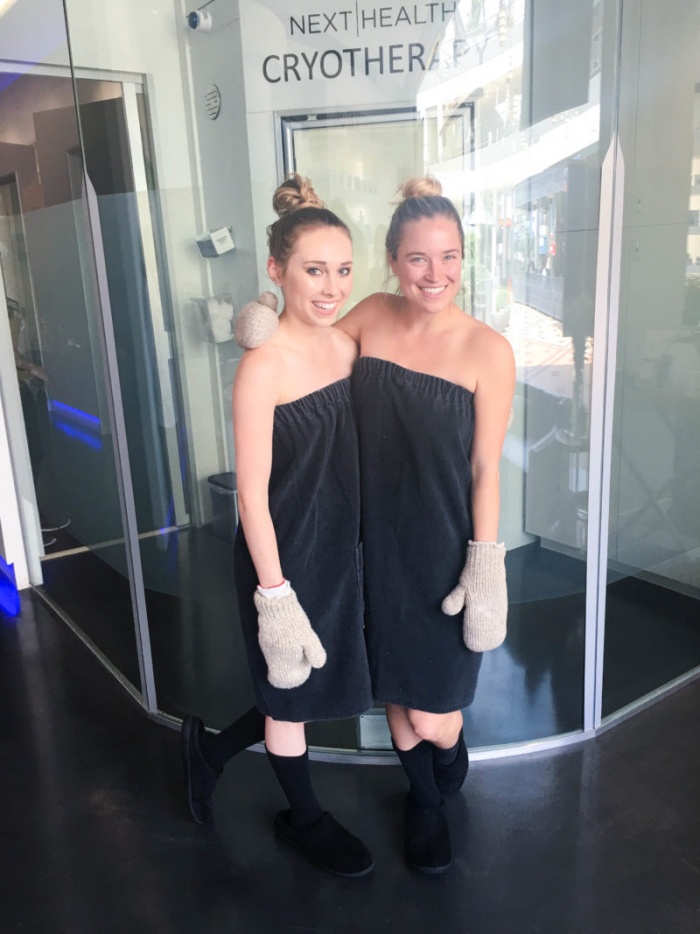
This type of cryotherapy has recently become quite popular in the U.S., probably because a lot of celebs post photos doing it. The chambers are also called “cold saunas,” and the technology came over here from Japan. Like I said, though, cold therapy in general has been used for hundreds of years. Cold therapy is used in surgeries (like in Grey’s Anatomy when they put organs on ice, LOL), helps athletes overcome soreness, reduces general inflammation, and more. Even though cold therapy, also called contrast therapy, has been around for centuries, the chamber is the most advanced way of doing it.
The chamber we went into at Next Health in West Hollywood was a full-body chamber that covered our heads, but most chambers only include the neck and below. You’ve probably seen photos of people with their heads sticking out of a big tube while they’re doing cryo. The chamber Jordan and I went into was below -150 degrees, but you can pick different “levels” of chill.
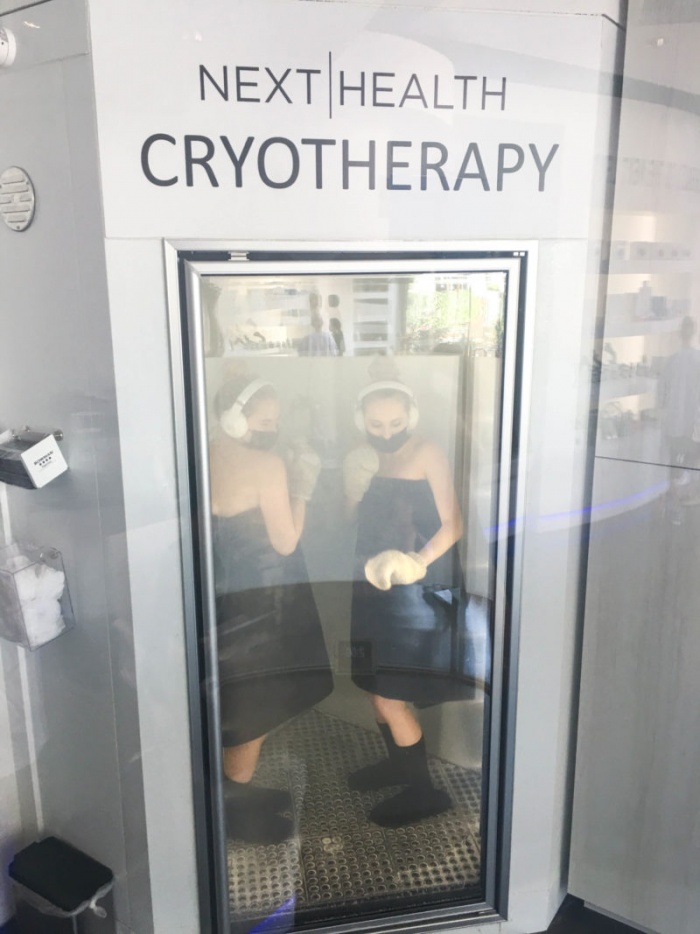
What are the actual benefits? Well, there many. Whole body cryotherapy was actually originally created for people with rheumatoid arthritis, because it’s the most effective way of taking inflammation out of the body. Besides getting rid of inflammation, cryotherapy increases blood flow and circulation, is great for muscle repair and recovery, accelerates the healing process of muscles by about 40%, boosts your immune system, improves your energy levels, and heightens your metabolism.
To me, the cognitive benefits are the most interesting part. When your body is exposed to that cold of a temperature, your brain release hormones – endorphins, serotonin, adrenaline – that make you feel like you could climb a mountain. You actually feel like you’re on top of the world, in terms of energy and mood.
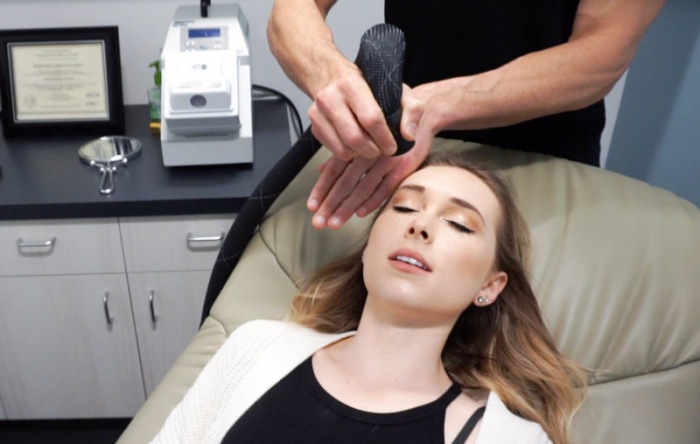
We also received cryo facials at Next Health – something I had never seen before. Basically, a tube blows out really cold air, -120 degrees, onto your face for a few minutes. The person holding the tube goes in circular motions, covering different parts of your face over the span of the whole facial. The point is to get the skin temperature to drop 30-40 degrees so the fluids vacate the area under the skin. When the cold pulls away, the healthy deoxygenated blood floods the area and improves skin complexion, accelerates the skin’s healing process, helps tighten the skin, helps with fine lines and wrinkles, and promotes collagen production. The body’s natural defense mechanism against cold is collagen production, and you know how I feel about collagen.
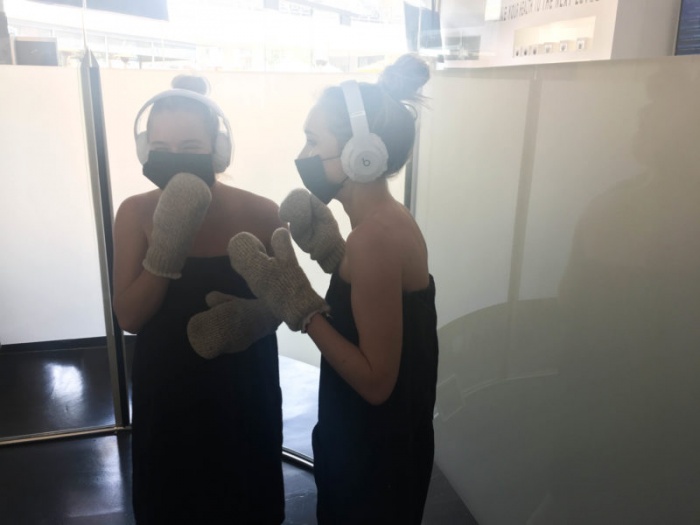
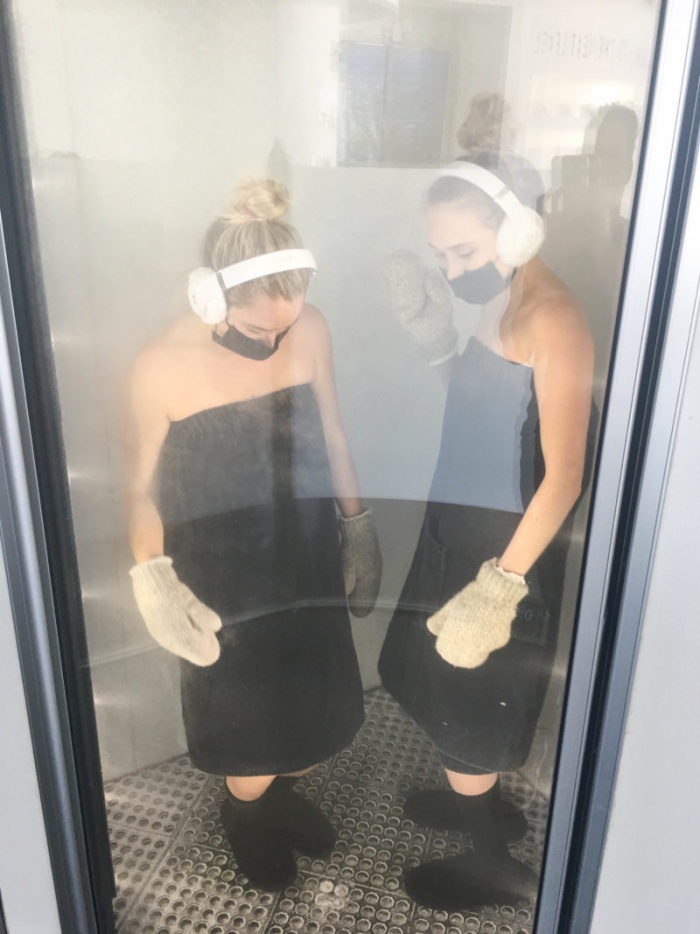
In terms of the actual experience, I was a huge fan. For the full-body cryotherapy, Jordan and I went into the chamber together, which made it much more bearable, for two reasons. First, you have a pal to freeze your butt off with/distract you. Second, two people means more body heat, so it’s not as cold. I also loved that they gave us Beats and we got to pick a song to jam out to during the cryo. That was reallllly helpful in terms of distraction. J picked a Rihanna song, so we just danced around the whole time. They also put a timer outside so we could see how long we had left in the chamber.
You basically wear a towel, socks, slippers, gloves, mittens, and a face mask. We stayed in the chamber for 3 minutes, and it was set to a “medium” temperature. So not the coldest possible, but cold. I honestly expected it to be torturous, but it wasn’t that bad. It was cold, yes, but mostly just like being outside on a really cold day. I could definitely handle it. If you live on the East Coast, you’ll have no problem. My eyelashes got frosted white and the hair on my arms was standing up straight, which really entertained me. I honestly don’t know if I could’ve handled the coldest temperature, but I would definitely be willing to try it out. I would probably start with a minute at the coldest temp, though, instead of three.
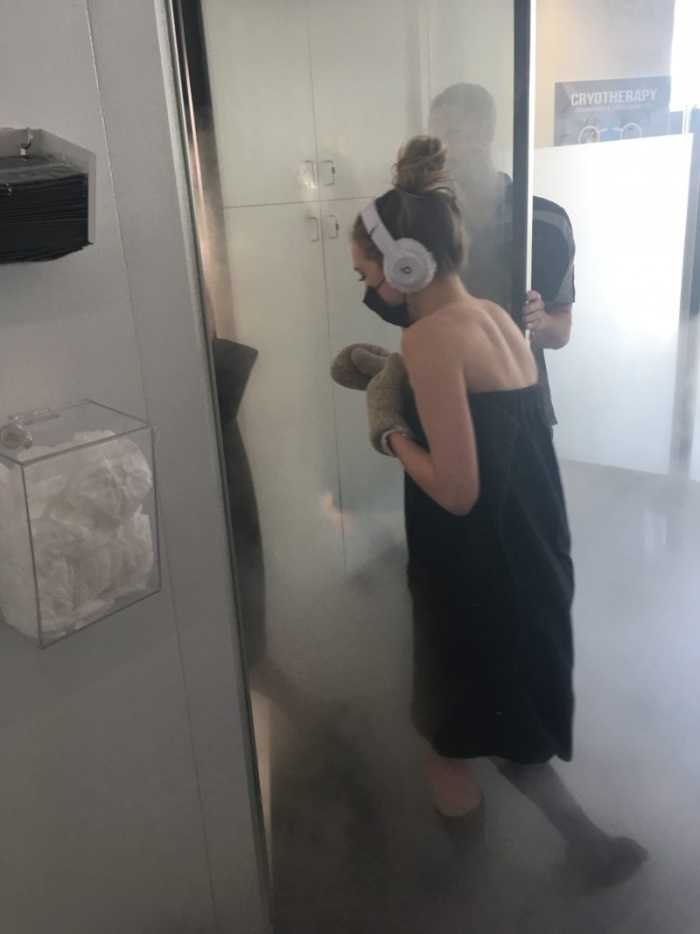
I was amazed at how incredible I felt afterward. I really did feel on top of the world. Jordan and I both went into it feeling pretty tired and sluggish. I could’ve used a caffeine boost. After, though, I felt like I had just been on a rollercoaster. The adrenaline was pumping. I couldn’t stop smiling, I felt like I had just downed a huge cup of matcha without the stomachache and the headache, and I felt an incredible kind of mental clarity. It was really strange. I felt great.
I also felt the effects on my actual body. As someone who works out a lot, I noticed how much better my body and muscles felt after the cryotherapy. It was like how you feel the day after a really good massage, except without the soreness. I used to do ice baths in high school, and this gave me the positive effects I used to get from those, without the dreadful ice.
I also loved the cryo facial. It was really relaxing. It feels like sticking your head out of a car window, without the headache, air pressure, and loss of saliva. Just imagine the feeling of cold air blowing on your face. The air is circling around, so it’s not blowing over your whole face at once. When it went over my nose and mouth, it was a little hard to breathe, but that ended in a second. I felt like the cryo facial reduced redness in my face, but who knows if that was real or not. I was wearing makeup, too, so probably not a totally accurate measure. (It was my birthday and this was a surprise!)
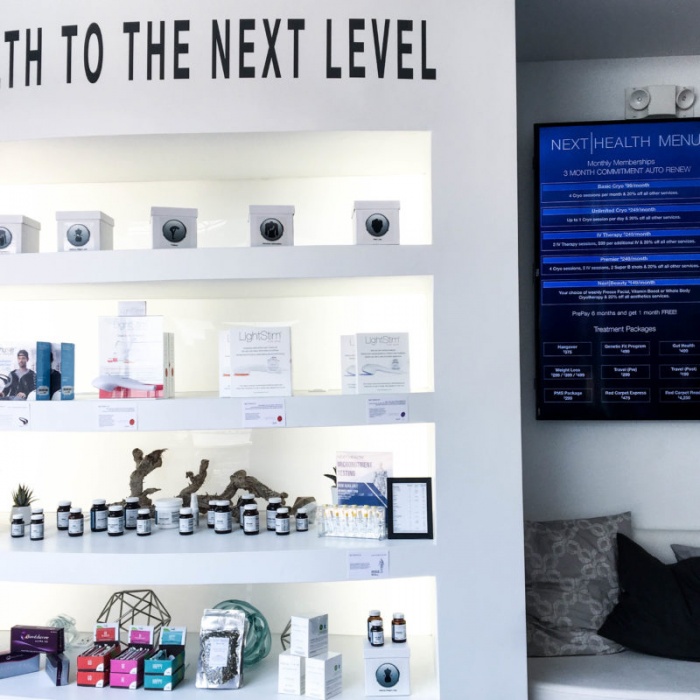
Overall, I had a great time getting cryo and I would definitely love to go again. Do I think it’s something necessary for health and wellness? Of course not. But if you’re interested and have the opportunity and money, try it out! Don’t be afraid! You’ll feel great afterwards, and you don’t have to go to the most extreme temperature to start out with. If I could only pick one or the other, I would get the whole body cryo over the facial. Loved both, but why limit the benefits to just my face?!
Have you tried cryotherapy? I’d love to hear about your experience!
