My Top 6 Beautycounter Makeup Products
https://www.youtube.com/watch?v=G7GQGhJIyKQ
Interested in switching to nontoxic makeup products and trying Beautycounter?
Here are my 6 favorite Beautycounter makeup products:

Interested in switching to nontoxic makeup products and trying Beautycounter?
Here are my 6 favorite Beautycounter makeup products:
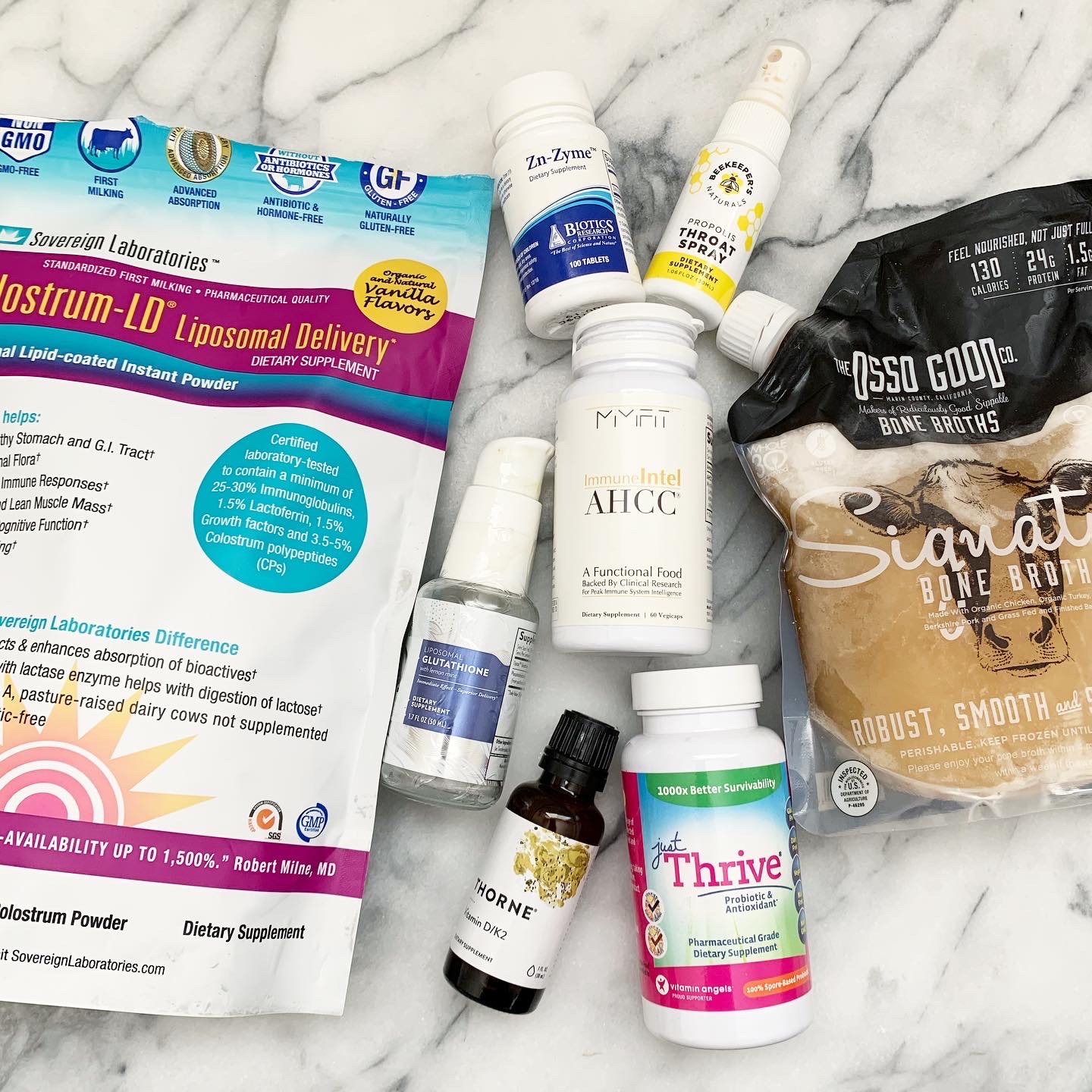
With cold and flu season upon us plus the fear of coronavirus, people are more interested than ever in supporting their immune systems. Wearing a face mask is probably not going to be the answer for you, let’s be honest. Doing everything you can to boost your immunity on an internal level is always a good idea. The way I do this is by:
Here’s a list of some of my favorite supplements to boost my immune system naturally:
This list could go on because there are so many amazing natural ways to boost your immune system, but these are some of my favorites. You can head here for even more natural remedies for cold and flu season. What are your favorite immune-boosting supplements? Share below!
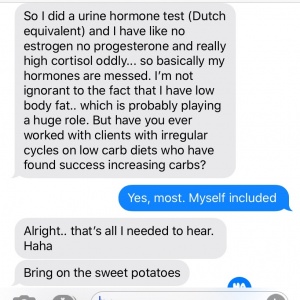
I got this text message last week, and I wanted to share it because I receive messages like this very often. In a sea of information about the benefits of low-carb, ketogenic diets (and there are many benefits), there aren’t as many voices discussing the potential downsides or longterm negative effects. I am a huge believer in low-carb diets, but I don’t think they’re for everyone, and I definitely don’t think they’re for everyone longterm. Age, activity level, sex, underlying health issues, ancestry, emotions, and other factors all affect how our bodies respond to different foods and macronutrient ratios. Something that you don’t usually read on posts about “why keto is so great for you” is the problems that can arise for women in their reproductive years on low-carb diets.
I want to reiterate that this does not happen to everyone, but I see it commonly with my demographic of health-conscious women who are mainly 18-35. Many of them feel great on a low-carb or ketogenic diet at first, but then they start to experience problems when they stick with it for an extended period of time without cycling in more carbohydrates. Longterm low-carbohydrate diets without carb-ups tend to work better for men and for post-menopausal women, but I would argue that cycling macros / foods / calories can benefit everyone.
I started a ketogenic diet when I was 20 years old, and it helped me heal my gut and reverse my prediabetes. However, after a few years of my strict low-carb diet, my hormones were in the post-menopausal range, I didn’t have my period, my cortisol was sky-high, I was having issues with my sleep, and I felt chronically hungry no matter how much I ate. Many of my female clients have experienced some of the same symptoms when eating strictly (very) low-carb for an extended time, in addition to hair loss, mood swings, and energy depletion.
Many people forget that just because something gave you benefits initially doesn’t mean it will forever, and sometimes doing the same thing for too long can cause other problems. What do you do if your low-carb diet starts causing even more issues? It depends how long you’ve been on the low-carb diet, how severe your symptoms are, and how tanked your hormones are. Some women feel better if they just start carbing up a few times a week, or even just the week before their period.
For others, though, their hormones need a lot more work. If that’s the case, I’ve seen a lot of success with increasing carbs consistently to 100-150g at least every day until things balance out again, which often takes a few months. However, sometimes increasing carbs alone isn’t enough. Some women’s hormones only normalize once they reduce the intensity / volume of their workouts or stop them completely, eat more calories overall, put on some healthy weight / body fat, get rid of the chronic stressors in their lives, and support the liver. Sometimes all of those steps are necessary, and sometimes only a few of those are needed. Check out this post and this post if you’re missing your period after being on a low-carb diet.
My hormones were in the post-menopausal range for almost 4 years – I had no period and my cortisol was sky high. Making the changes above for over a year (consistency was key!) helped balance out my hormones and get my period back on track. After I rebalanced my hormones, I was able to return to a low-carb diet and feel great, but I cycle in carbs when needed so I don’t run into the same problems again.
Have you had hormonal shifts from a low carb diet?
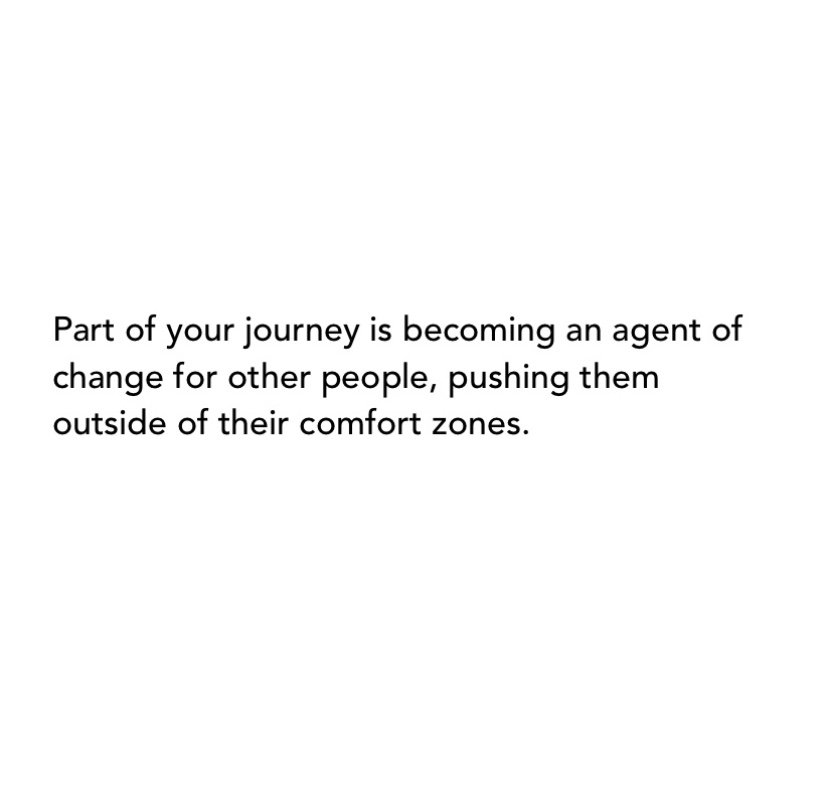
If you don’t already use the app The Pattern, I highly recommend it. It’s one of my favorite apps to break down your astrology in a digestible way, and it always tells me something about myself or “my timing” just when I need to hear it. The above message popped up the morning after a night when I spent a lot of time reflecting on this trait of mine, and I knew the message came to me for a reason. It makes sense that I’m a Type 8 on the enneagram, an Aries, and a Generator with a Human Design chart that says I’m meant to “shake things up in a penetrating, shocking way.” 😉
Sometimes this trait is uncomfortable for me, because it can trigger other people, but I’ve learned to embrace it, own it, and understand the greater purpose. It’s one of my favorite things about myself, because I feel so strongly about the importance of getting uncomfortable. I would not be where I am today without having spent a lot of time feeling wildly uncomfortable.
I was my unhappiest in life when I was stuck in the safety zone. It took me hitting rock bottom to realize that discomfort can catapult you into extreme growth. The best lesson I’ve ever learned is to get comfortable with being uncomfortable.
It can be uncomfortable at first to set boundaries, to say no, to go against the status quo, to listen to intuition instead of logic, to shift your paradigm, to ditch your limiting beliefs, to figure them out in the first place, to invest in yourself, to put yourself out there open for judgment, to work through trauma, to forge your own path, to fully believe in yourself, to release expectations, to replace what you think you SHOULD do with what you want, and to face your triggers. But this is also where the magic happens.
When you feel uncomfortable, triggered, or challenged, I encourage you to see how that situation can actually push you FORWARD into EXPANSION! When things don’t go your way, you can embrace the opportunity to pivot or you can create a story in your head that everyone is out to get you. That’s the victim mindset, and that keeps you rooted in unhappiness and scarcity. If you always stayed in your comfort zone, would you ever move forward?
If you want to inspire people, it is not always comfortable. I get tests from the universe all the time in this arena, but I know that giving into guilt or fear is never for anyone’s highest good. Right now I am setting major boundaries in my life, saying no to people I love, and tossing things aside that I’ve kept there for security. Part of me is scared, but a bigger part of me is insanely excited for how this discomfort will breed expansion.
Have you experienced a period of extreme growth? How were you pushed outside of your comfort zone?
https://youtu.be/zllBa45uqQg
Low-carbohydrate diets, including both paleo and ketogenic diets, can help with mood, energy, weight loss, inflammation, skin health, gut health, and balancing your hormones, but only when done properly! If you’ve ever tried a low-carbohydrate diet and felt like total crap, there are a few common pitfalls you might have accidentally fallen into. I’ve made many of these mistakes myself in the past and see them again and again with clients, so if you’re in the same boat, look into these top 5 reasons for why you might not be feeling great on a low-carb diet.
Many people find that one of these adjustments makes a huge difference in how they feel on a low-carb diet so they can finally feel their best. It really can be as simple as one change!
Have you ever fallen into one of these pitfalls? Comment below!