by Christina | Jul 14, 2019 | Wellness
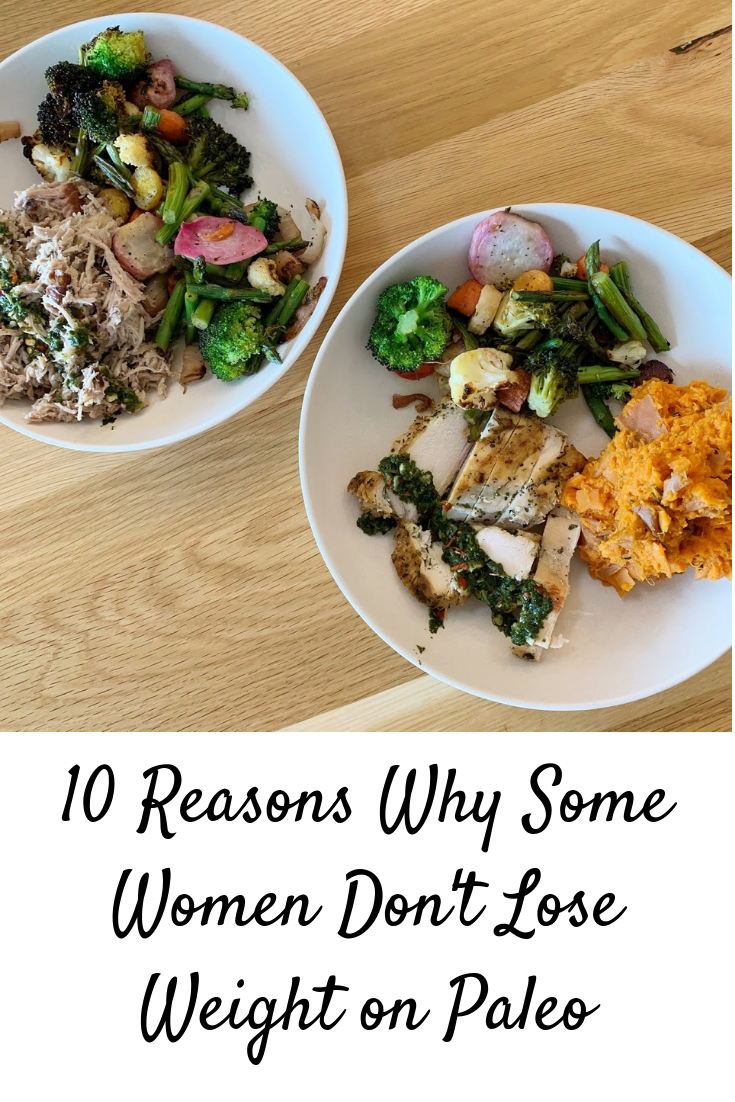
Many people find that when they start eating paleo, they naturally lose any excess weight as a function of supporting their health from the inside out, eliminating processed foods, supporting their hormones, regulating their hunger signals, and allowing their bodies to be nourished in the way they were designed to be nourished. For anyone with weight loss goals, I always recommend they start with a paleo-based diet. That being said, while many people do have that experience of natural weight loss without even trying, some might find that they don’t lose their excess weight or might even gain some weight. What’s going on?!
You can make “mistakes” with any way of eating, and there are a few common reasons why certain women don’t lose weight when eating paleo even though others lose weight easily. While there are many reasons that come to mind and this list is far from exhaustive, here are a few of the most common factors I see preventing women from losing weight while eating a paleo diet.
- Not eating enough food. Most women who come to me are undereating – sometimes because they are still stuck in diet mentality, and other times without even realizing it. Chronically undereating can cause weight gain because the body thinks it’s starving, which increases levels of cortisol (our stress hormone) in the body. When cortisol is chronically elevated, you are more likely to store fat. Think about it this way – if the body thinks it’s starving, it’s only logical that it will downregulate your metabolism to preserve what little food it is getting. When your body does get more food, it’s more likely to hang onto it as fat to store for when it’s “starving” again, which is what it expects. Undereating can also often lead to weight gain because restriction often perpetuates binge-eating behavior later on. Someone might undereat all week long, but then feel the urge to binge on the weekends – causing them to gain weight in the long run.
Paleo foods are also generally much lower in calories than processed foods, so it can be easy to accidentally drastically slash your calories way too low when eating a real-food diet. For example, replacing rice with cauliflower rice or pasta for zucchini noodles is a dramatic difference in calories, especially when you add up all of your meals throughout the day. Some people move from 3000 calories a day to 1000 overnight without realizing it! Most people don’t realize the volume of food they have to eat to get their calories up. Veggies are not calorically dense.
Some of the most nutrient-dense foods that are critical to include in your diet for overall health also happen to be more calorically dense, like animal proteins and healthy fats, but sadly most women shy away from these because they still worry about how many calories they’re eating. Undereating protein, specifically, is a really common problem I see. Protein is the most satiating food, and eating more in the long run can actually help you lose weight.
- Working out too much. Most people believe that the answer is to move more and eat less, but that’s not usually the case. While exercise is important, I actually have more women coming to me overtraining than undertraining. Plus, when it comes to weight loss, nutrition is really the key. You don’t really lose that much weight from exercise alone unless you are spending a lot of time at the gym every single day – far more than most people. But even that could cause weight gain if it’s too much of a stressor on the body! I see many women working out 6-7 days a week for 1-2 hours every day, not realizing the stress that’s putting their bodies under. Even if it worked for you at first, in the long run that much exercise might be too much stress on your system and cause your body to store excess weight, especially if you’re also dealing with other life stressors. Exercising too much can cause inflammation in the body, and water retention in your muscles is a common way that inflammation shows itself, which looks like weight gain. Many women find that when they pull back on their training and allow their bodies to calm down, they drop excess weight.
- Eating too many nuts / seeds. Raw nuts and seeds can be great for a snack or to add as a topping on different meals, but I find that many people rely far too much on nuts and seeds. Nuts and seeds can be very calorically dense, and I’ve had many clients not even realize that their “handful” of nuts during the day is actually 1,000 calories worth! Nuts are very easy to overeat – our ancestors didn’t have access to bags of nuts like we do nowadays, and they would only eat them in small amounts when they found them. Nut butters in particular are very easy to overeat – I think we’ve all accidentally downed half a jar of nut butter before without even realizing it! Nuts and seeds can also cause inflammation in the body for certain people, especially those with autoimmune diseases. They can also cause digestive stress when overconsumed and potentially negatively impact gut health, which plays a huge role in weight management.
- Eating too many paleo packaged goods. Just because it’s labeled “paleo” doesn’t mean it’s healthy or okay to consume in large quantities! A packaged food is a packaged food. Many paleo packaged foods are just as addictive and calorically dense (sometimes even moreso) than their non-paleo counterparts. They’re very easy to overeat and probably contain ingredients that dysregulate your hunger signals and could potentially cause inflammation in the body. Sticking to whole foods is the best way to naturally regulate your weight. Paleo bars, paleo cookies, and paleo cupcakes are not whole foods – they are still packaged / processed, and should be kept as a treat instead of a daily staple. If you’re consuming packaged paleo goods every single day, this could prevent you from losing weight.
- Eating foods that you’re sensitive to. Unfortunately, sometimes our bodies are sensitive to even “healthy” foods, like certain animal proteins, vegetables, or fruits. Not all food sensitivities manifest as digestive issues, as many people expect. Food sensitivities can make people retain water, making them look “puffy ” and like they’re holding onto more weight – this is inflammation! Some of the most common paleo foods that people are sensitive to include eggs, nuts, seeds, nightshades (eggplant, potatoes, peppers, tomatoes, etc.), and coconut, although sometimes a food sensitivity can be another seemingly “random” food that simply just doesn’t work for your body. More often than not, food sensitivities are caused by leaky gut, and will go away after you heal your gut.
- Not getting enough sleep. Sleep affects your levels of cortisol, ghrelin, leptin, and growth hormone, which impact how much fat you store, how much fat you can lose, your hunger / satiety signals, and how much muscle you can build. Some women are shocked to find that even just a week of sleeping 8+ hours a night allows them to drop anywhere from 3-10 pounds. Getting more sleep will help reduce your body’s cortisol levels so you can release any excess inflammation and your body won’t feel like it needs to hold on to extra weight for safety.
- Not addressing your underlying health issue. If you want to lose excess weight, the most important thing to do is to address any underlying health issues. After you do that, the body typically naturally balances out to its ideal weight because it’s not “stressed” anymore while fighting that underlying health problem. Some of the common underlying health issues that prevent people from losing weight are thyroid issues, adrenal dysfunction, hormone imbalances, blood sugar dysregulation, gut dysbiosis, and autoimmunity.
- Following the wrong macronutrient ratio for your body. The right macronutrient ratio is very individual, but many women can’t lose weight until they switch up their macros. If you’ve been eating one way for awhile and you’re not seeing any change, switch it up. If it’s not working, change it. One of the most common things I see is women not eating the proper amount of carbohydrates for their bodies, which can lead to food cravings, insomnia, and hormonal dysfunction. For some women, this means eating lower carb, and for others, this means eating higher carb. For example, if you are an athlete eating low carb and not getting the results you want, you probably need to increase your carbs. If you’re post menopausal eating high carb and gaining weight, you probably need to decrease your carbs. It’s also very common for me to see women in “low carb purgatory,” where they’re not eating enough carbs to fuel their bodies, but they’re eating too many carbs to be in ketosis, so their bodies are confused about where to turn for fuel. It’s common for women to feel better when they pick a direction – higher fat and lower carb (make sure to increase your fat!), or lower / moderate fat and higher carbs. And, as mentioned before, increasing protein intake tends to lead to easier weight loss.
- High stress levels and negative self-talk. I put these two together because they often go hand in hand (although not always). If you have a lot of life stress, your cortisol is probably high, and your adrenals might be dysregulated, causing your body to hang on to excess weight. This is why prioritizing stress relief can be a game-changer for weight loss. Cut negative people out of your life, find a job you love, meditate, do yoga, go for a walk outside, read a book for pleasure, spend time with people you love, orgasm, lay on the floor with your legs up the wall. All of these things will help you to reduce your cortisol levels and better manage your stress.
Highly-stressed individuals also often engage in a lot of negative self-talk, picking apart their physical appearance or emotional traits, believing they’re not good enough. This can be conscious or subconscious. What we think, speak, and believe comes into existence. The more negative self-talk you engage in, the higher your cortisol levels will be, and the more you will tell your brain to be the things you are saying. Focusing on changing that language and truly learning to love yourself can have a huge impact on shedding excess weight.
- You don’t have any excess weight to lose. There are many women who are frustrated they can’t lose excess weight, yet they don’t have any extra weight to lose. We live in a culture of unrealistic ideals, and many women struggle with body dysmorphia and see themselves as much larger than they actually are. It’s important to be realistic about if you really have weight to lose. Sometimes your happy weight is higher than what you would like it to be, because you might have gotten a certain arbitrary number in your head at a young age that stuck with you for a long time. A number does not define your worth. Losing more and more weight will not make you any happier or better. I put this here because there are many thin women who want to lose “extra” weight that they don’t actually have, and they fight their bodies so much in the process that they actually might gain even more!
The stress of trying to lose weight and fighting against your body can sometimes do more harm than good. However, if you are a woman who does have excess weight or inflammation to lose, there is absolutely nothing wrong with pursuing that goal – you deserve to feel your best. Start with the suggestions above. The important thing is to be honest with yourself about if your results are realistic and coming from a desire to be healthier, or if your results are coming from a place of vanity and trying to accomplish something for others’ approval or just to avoid other things going on in your life
Interested in learning more about the most common health mistakes women make and how to avoid them? Check out my Paleo Women Lifestyle Program, my online course where I teach women everything they need to know about health and living a paleo LIFESTYLE to finally reach their health goals, so you can avoid all of the common mistakes women make. We cover nutrition, building balanced meals for your goals, exercise, stress management, sleep hacks, digestion, balancing your hormones, and everything in between. Head here to learn more. (Enrollment for the GROUP PROGRAM, where you have access to me for any personal questions in our private Facebook group and in our live video coaching calls, opens on MONDAY, JULY 15th before the program starts on Monday, July 22nd! After that, this course will only be available as a DIY / self-study course without direct access to me.)
by Christina | Jul 12, 2019 | Member Exclusives, Wellness

If you struggle with digestive issues, inflammation, or autoimmune symptoms while eating a clean paleo diet, it might be time to consider food sensitivities as part of the culprit. When you consume foods that you’re sensitive to, this can trigger a stress response in the body and contribute to overall inflammation. There are a lot of popular food sensitivity tests on the market that usually require a blood sample, but these tests are generally inaccurate and very expensive.
___________________________
This complete post is only available for The Channel Collective members. Click here to become a member, or click here to log in!
by Christina | Jul 10, 2019 | Wellness
All you’ll need for this lower body workout is a set of dumbbells! The heavier your dumbbells are, the less reps you’ll need to do for each exercise.
Adjust the rep ranges to your fitness level, and make sure that you’re doing each rep with proper form. If your form breaks down, you’re doing too many reps! Stop 1-2 reps before fatigue. Make sure you warm up / prime your body before getting started.
This workout uses supersets. Perform each exercise in the superset one after another, and then rest 30 seconds. Repeat the superset 3 times total. After you’ve completed the superset 3 times, rest 1 minute before moving onto the next superset.
For straight sets, perform one set of reps, rest 30 seconds, and then repeat for the prescribed number of sets. After completing all sets of the given exercise, rest 1 minute before moving onto the next exercise.
Bodyweight Squats, 10-15 reps (video), 3 sets
Superset 1:
Dumbbell Romanian Deadlift, 10-15 reps (video)
Dumbbell Reverse Lunge, 8-15 reps each side (video)
Superset 2:
Dumbbell Goblet Squat, 8-15 reps (video)
Dumbbell Side Lunge, 8-15 reps each side (video)
Superset 3:
Dumbbell Glute Bridge, 8-15 reps (video)
Dumbbell Hamstring Curl, 10-20 reps (video)
Straight Sets:
Dumbbell Staggered Stance Romanian Deadlift, 8-15 reps each side (video), 3x total
Bulgarian Split Squats, 8-15 reps each side (video), 3x total
Finisher:
Jump Squats, 10-20 reps (video), 3x total
by Christina | Jul 10, 2019 | Recipes, Wellness
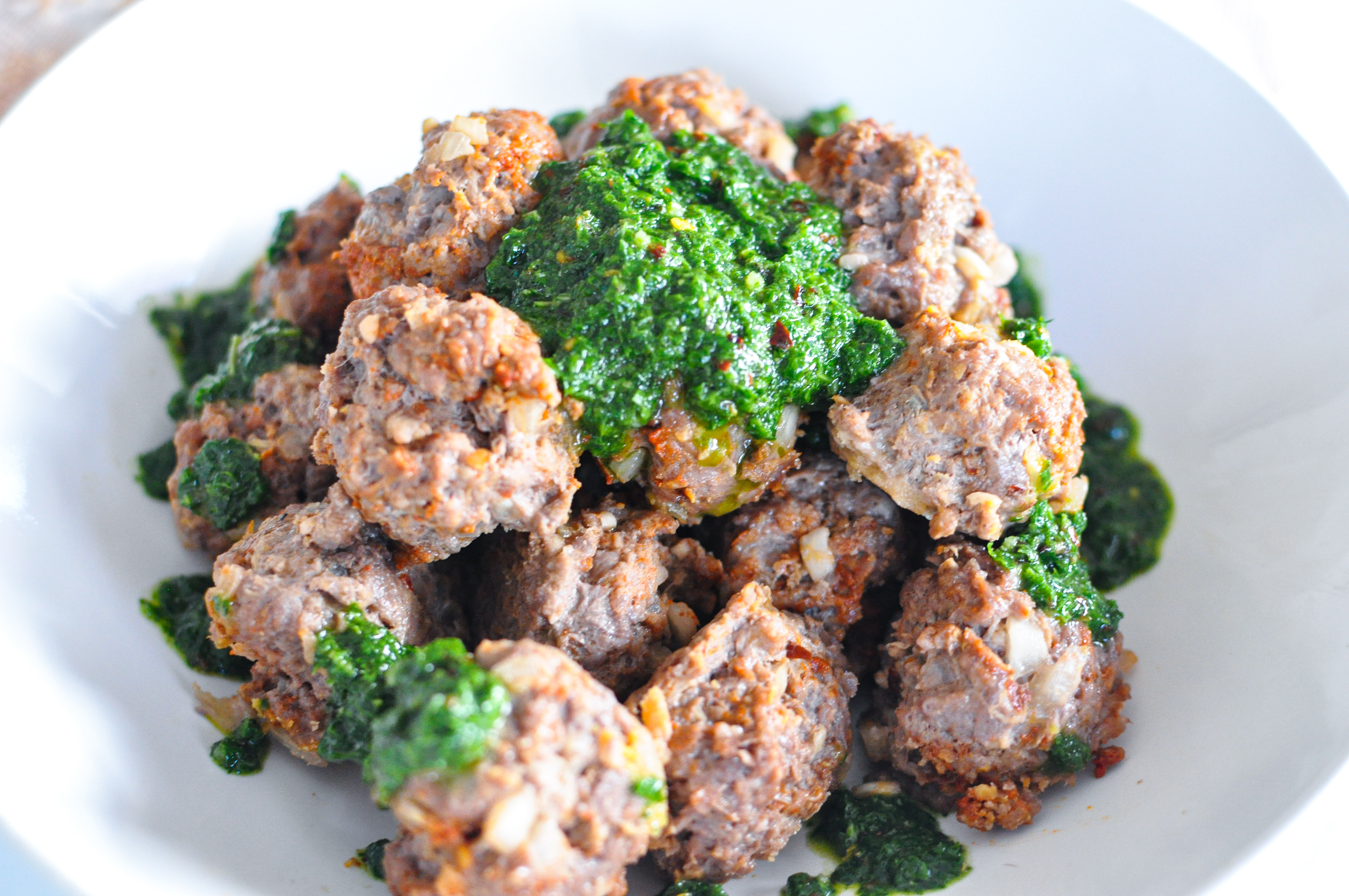
There is nothing like a quality meatball. Am I right, or am I right?
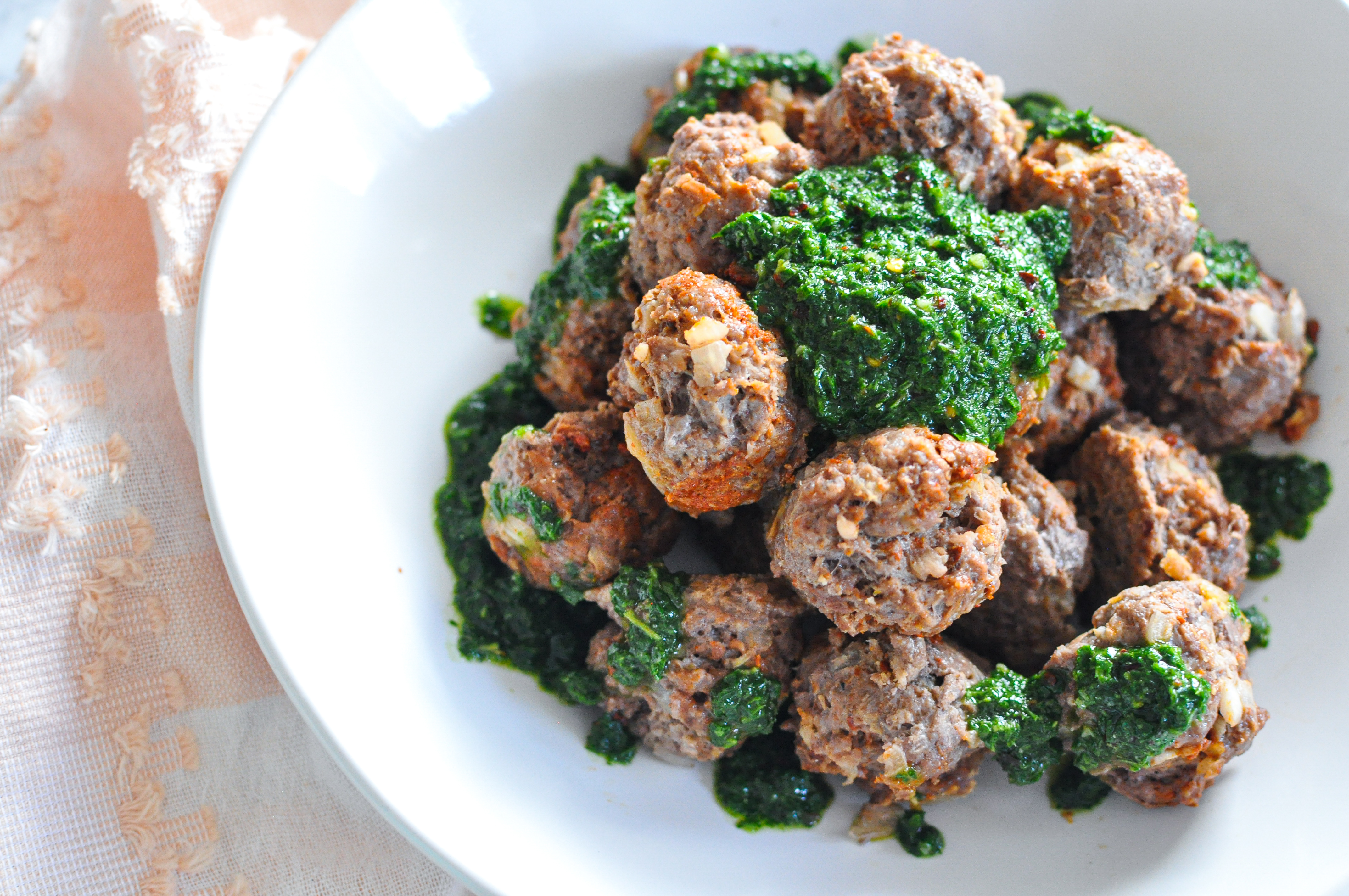
There are a few things that make the perfect meatball, though. One is the quality of the meat, and the perfect balance of texture and flavors.
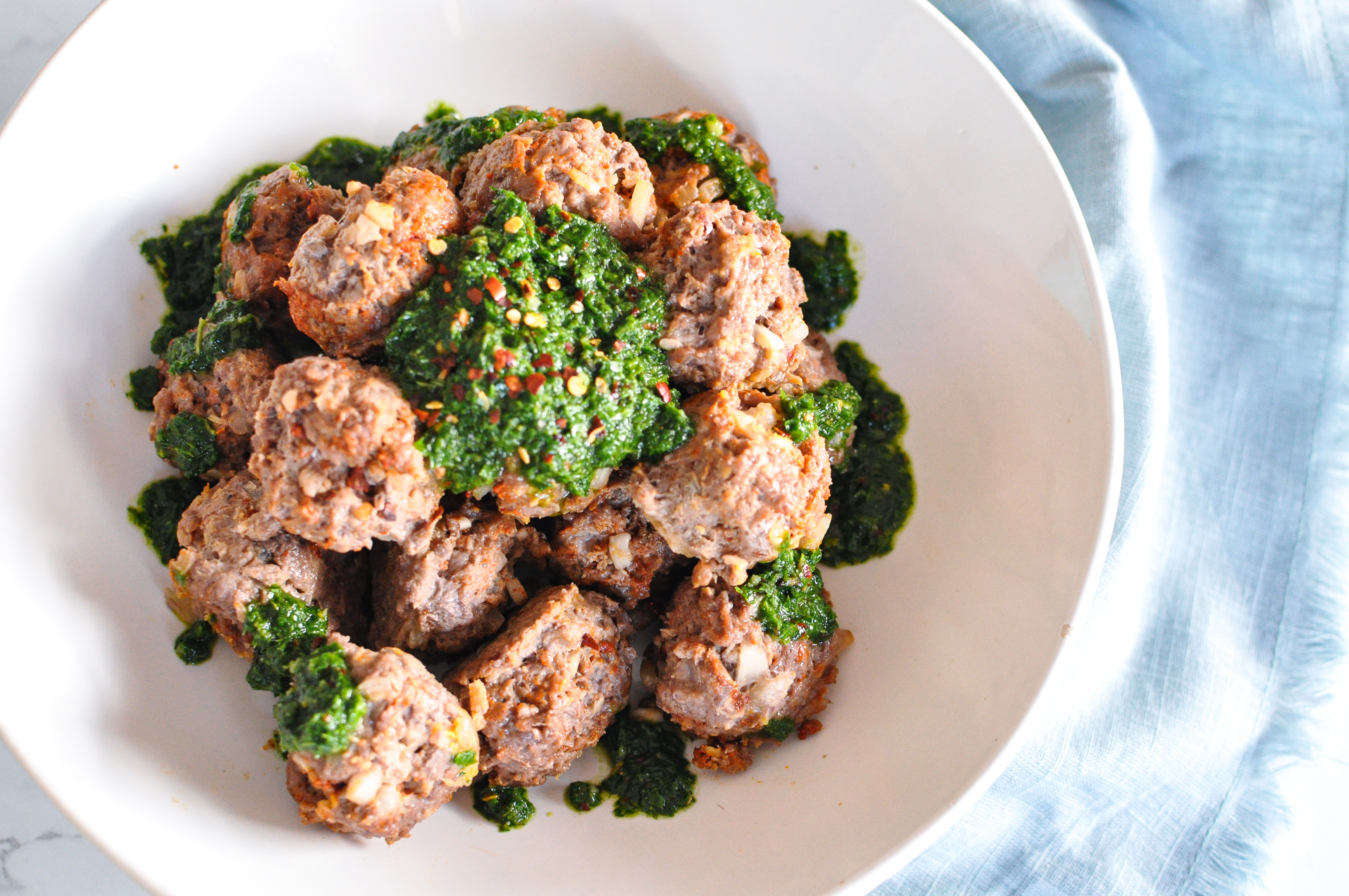
The second is the sauce. Meatballs are much better with a sauce, don’t you think?
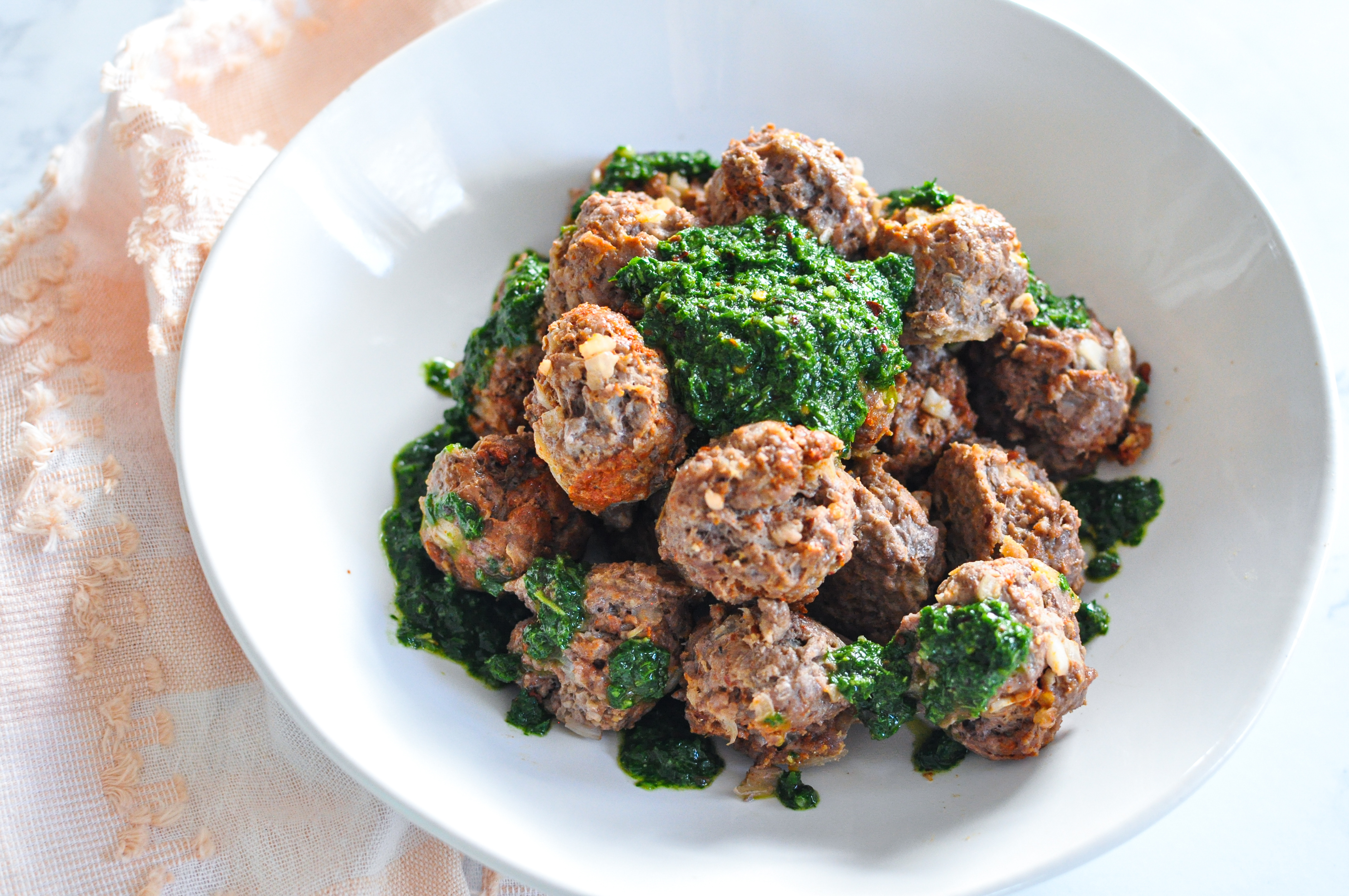
Chimichurri is one of my favorite sauces to make because it’s uncooked, which means it’s very fast to pull together and lasts longer in the fridge if there are leftovers. It also truly goes with anything, so you definitely want to have a staple chimichurri recipe in your back pocket.
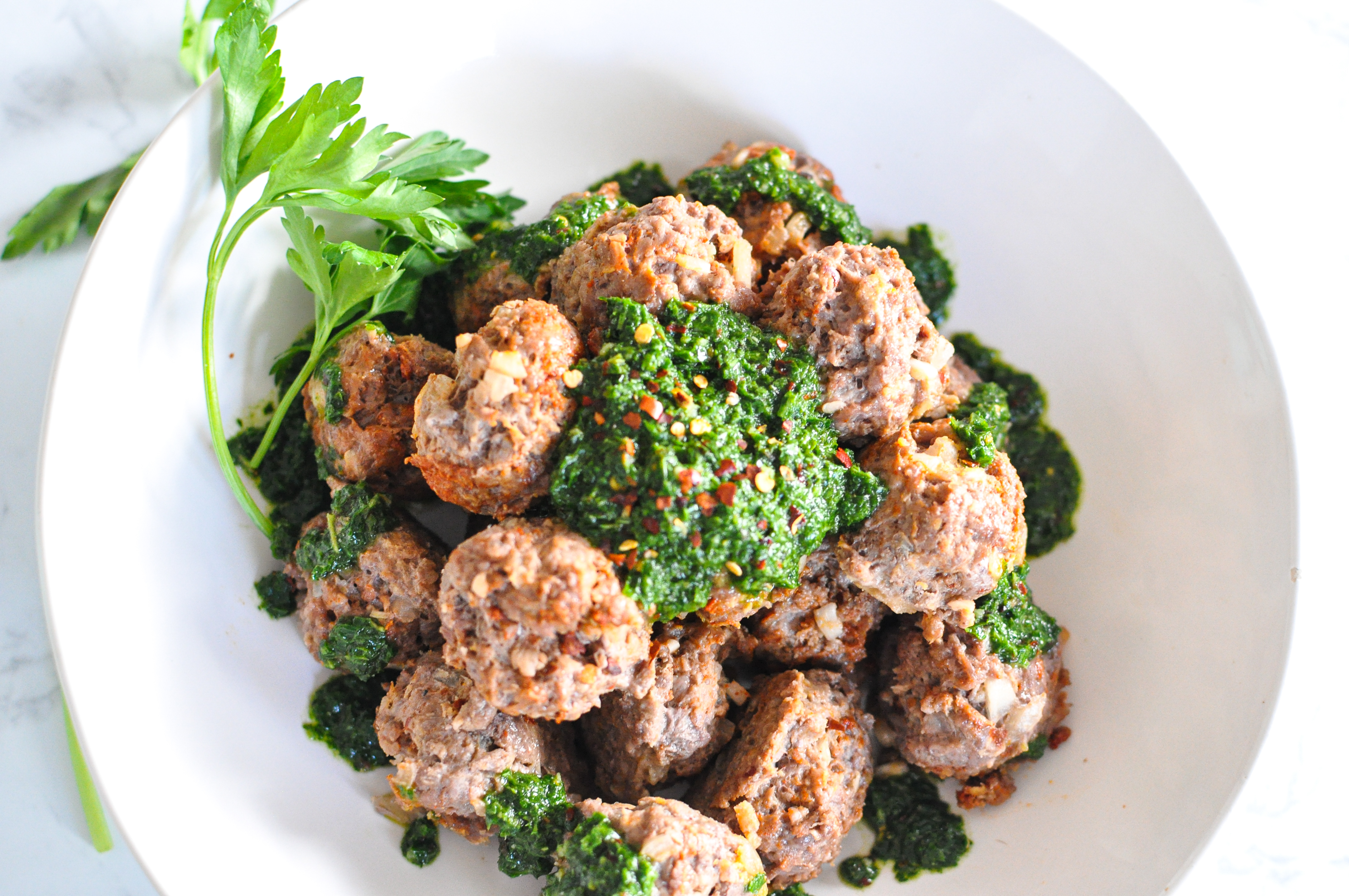
Did you know that chimichurri comes from Argentina? And that there is a red version and a green version? I knew nothing about chimichurri until about a year ago, but now I know! I’ve actually never had a red chimichurri, but the green one has definitely stolen my heart.
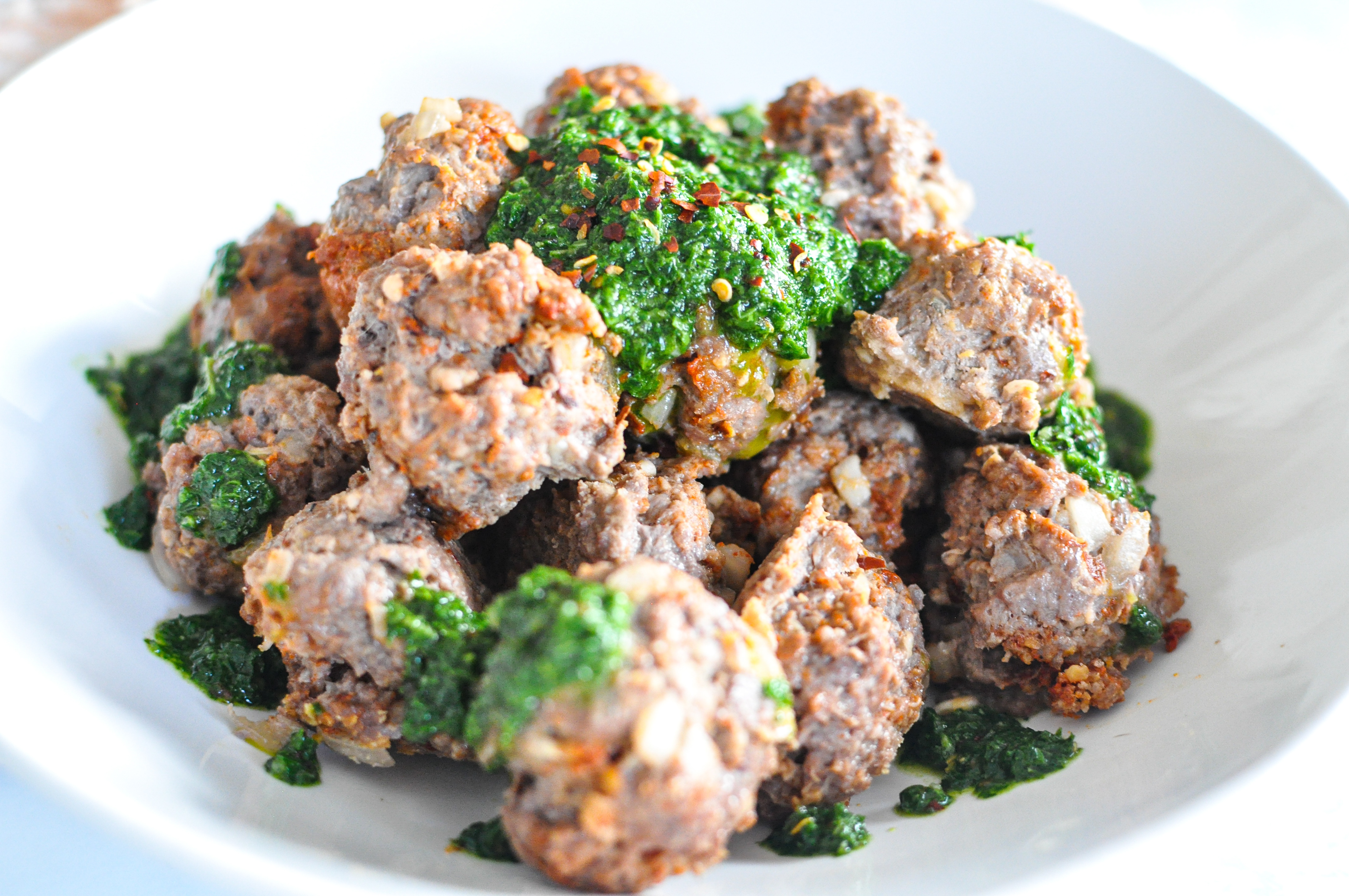
This dish packs a big punch with flavor but takes hardly any time to pull together! It’s got a little bit of a kick thanks to the savory spices, which pair perfectly with the fresh herbs!
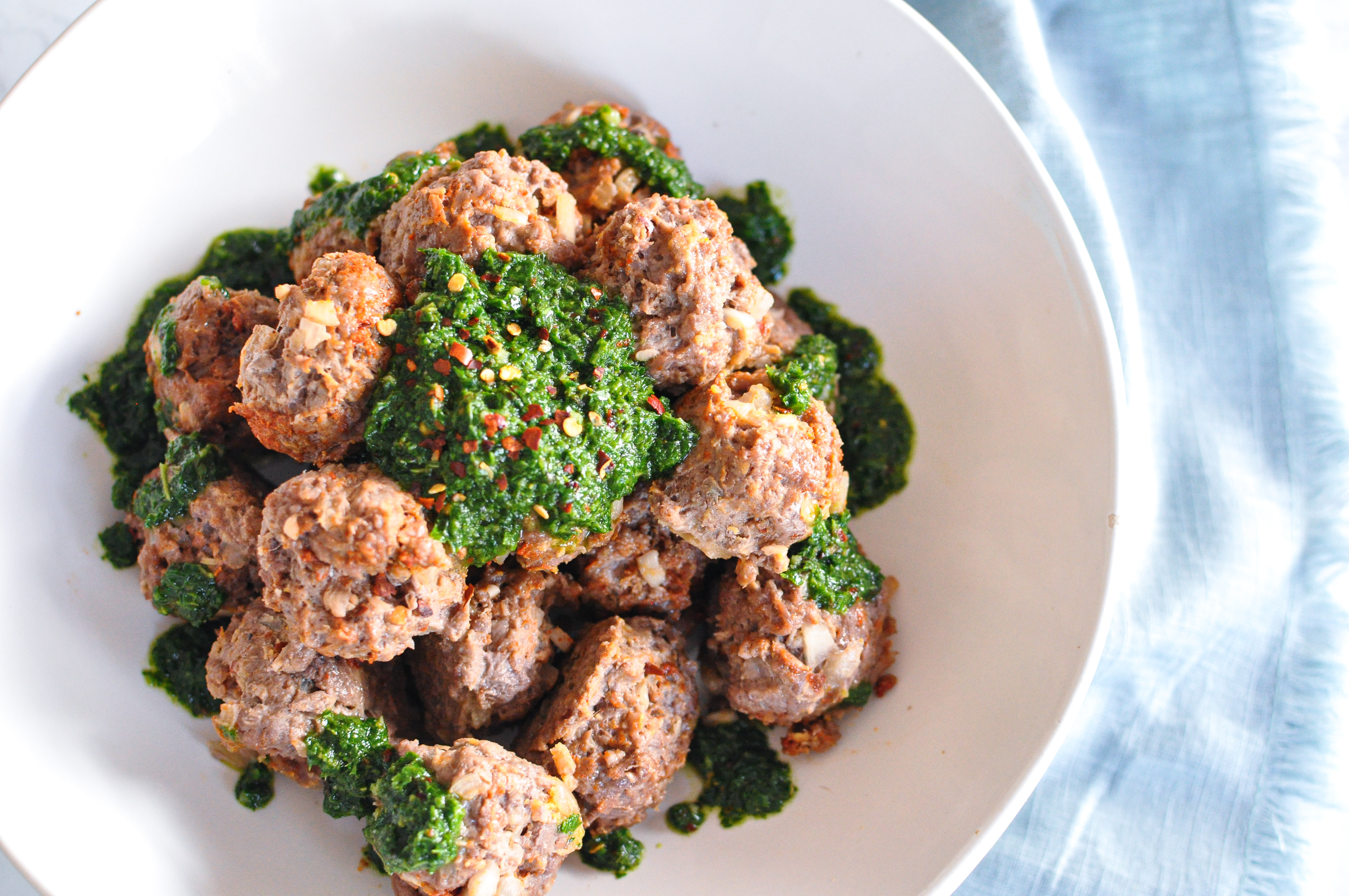
If you love rich, smoky dishes with a lot of depth, this is for you! These meatballs are bursting with South American flavors that are to die for and are sure to impress anyone.
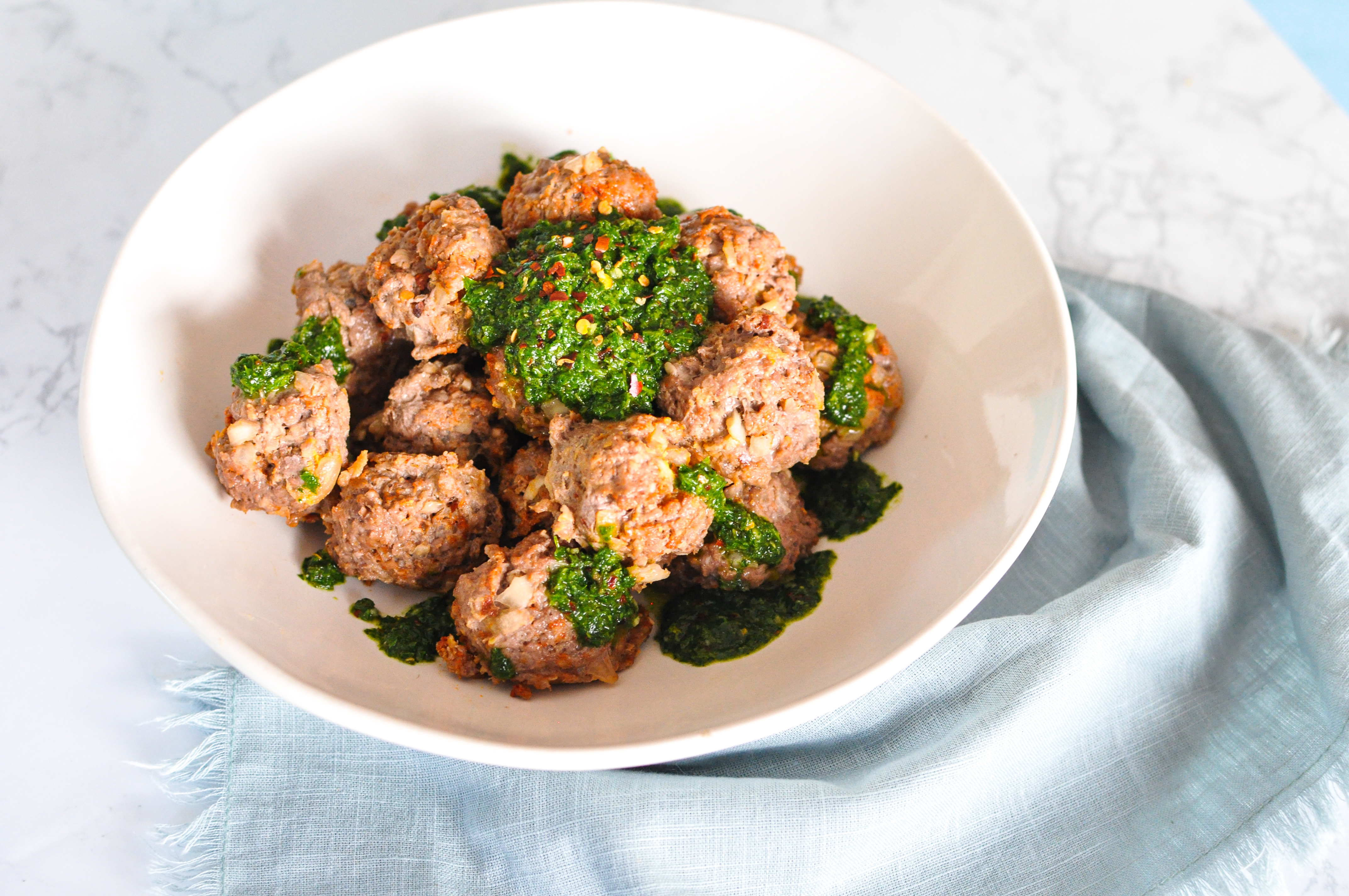
This is also a great dish to meal prep ahead of time, because you can make the meatballs quickly and store them for later, and store the chimichurri sauce in the fridge in a separate container.
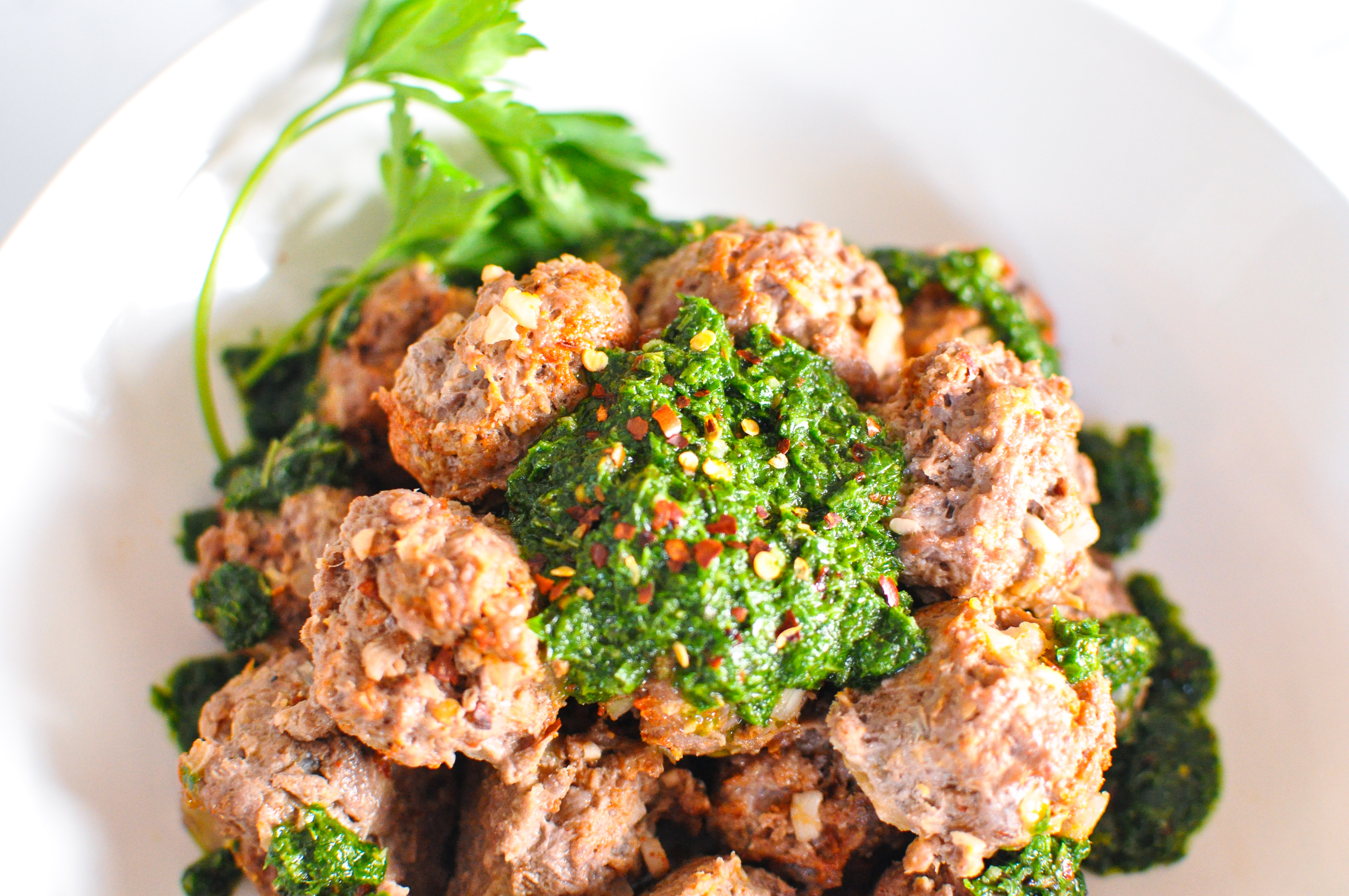
These two are an absolute dream paired together, but they’re also incredible when served separately as well. You can eat the meatballs on their own, or add the chimichurri sauce to another dish if you’d like! That’s why this is so great for meal prep – you can use the components to mix and match for different meals!
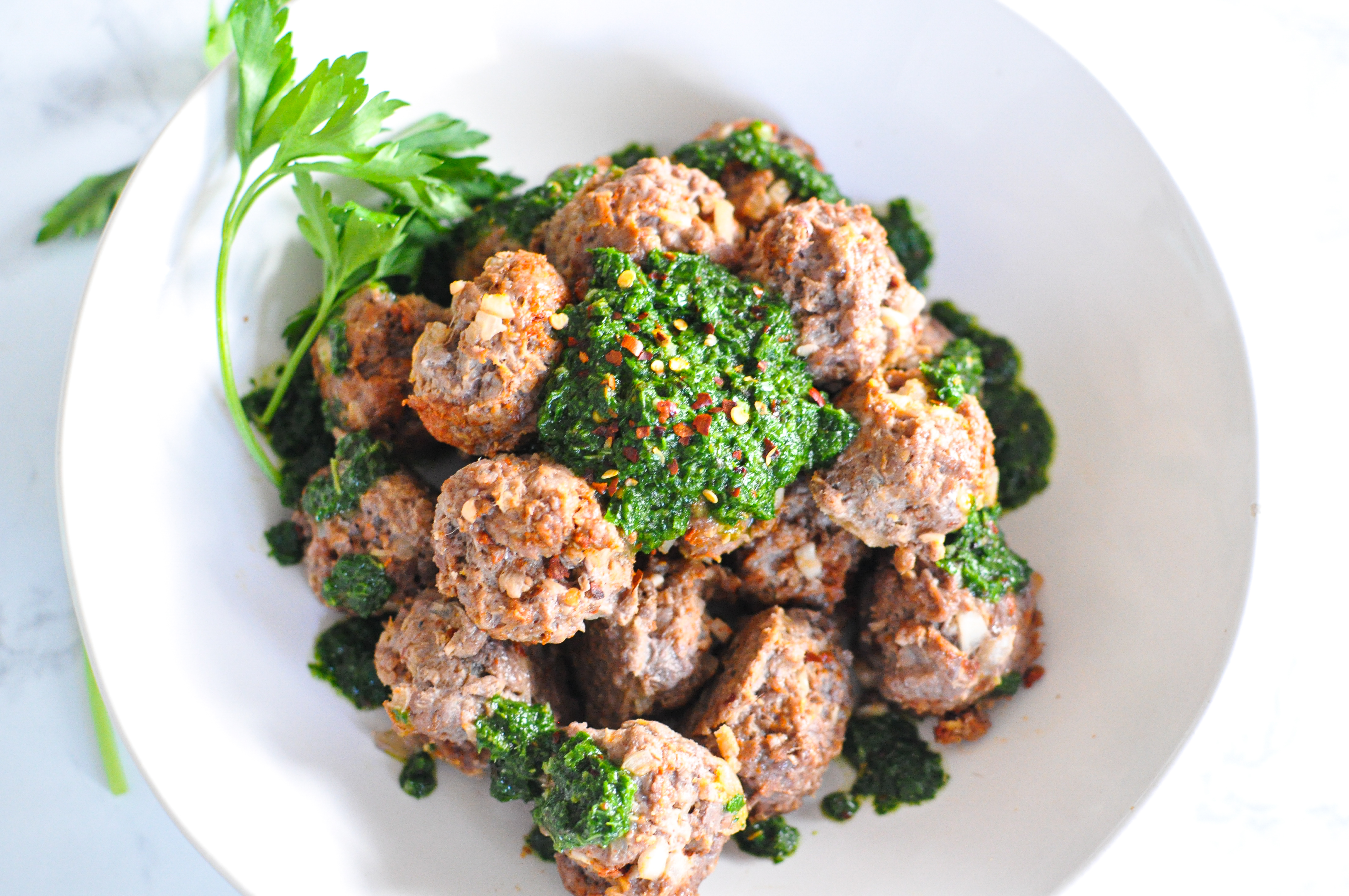
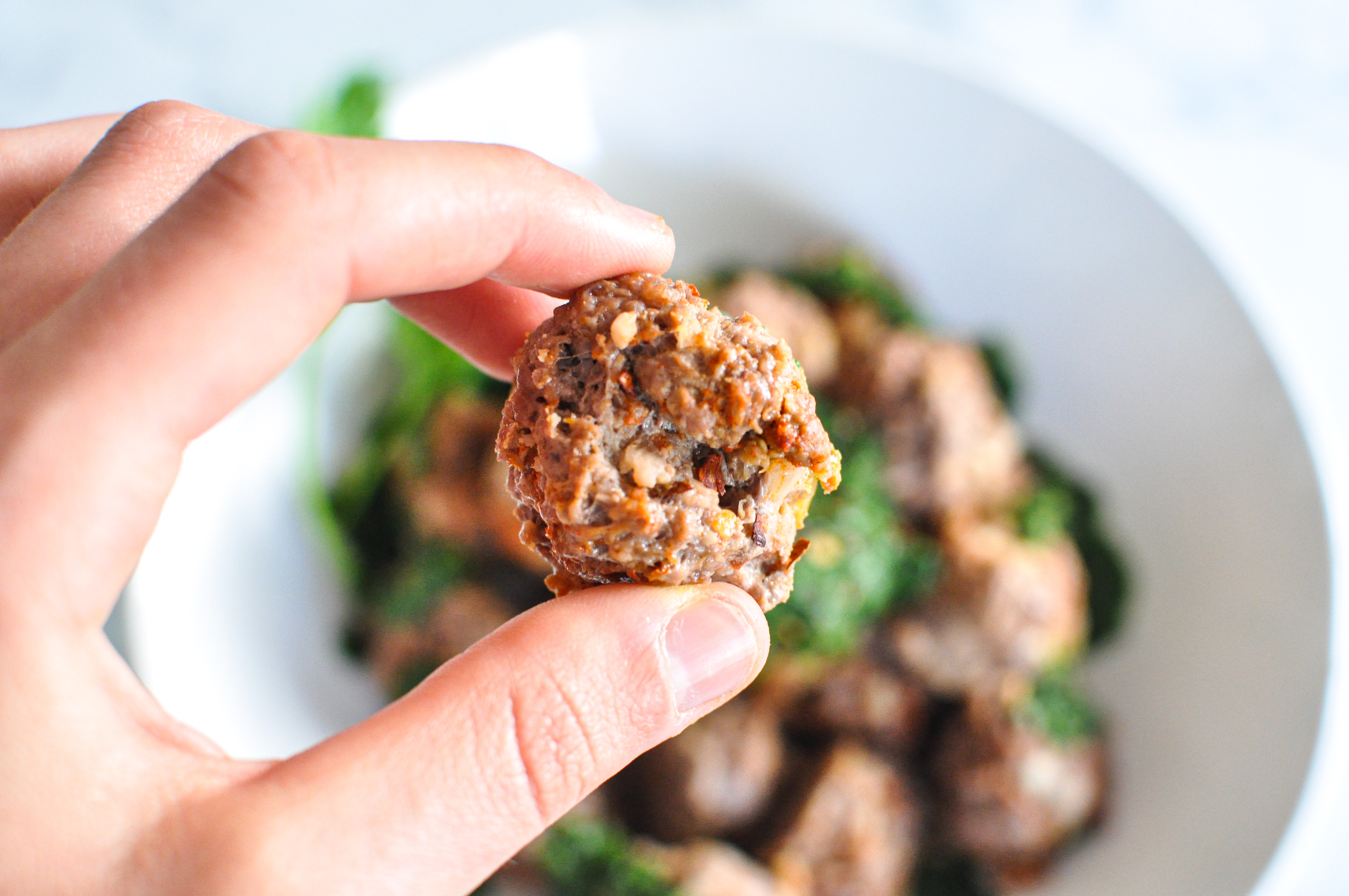
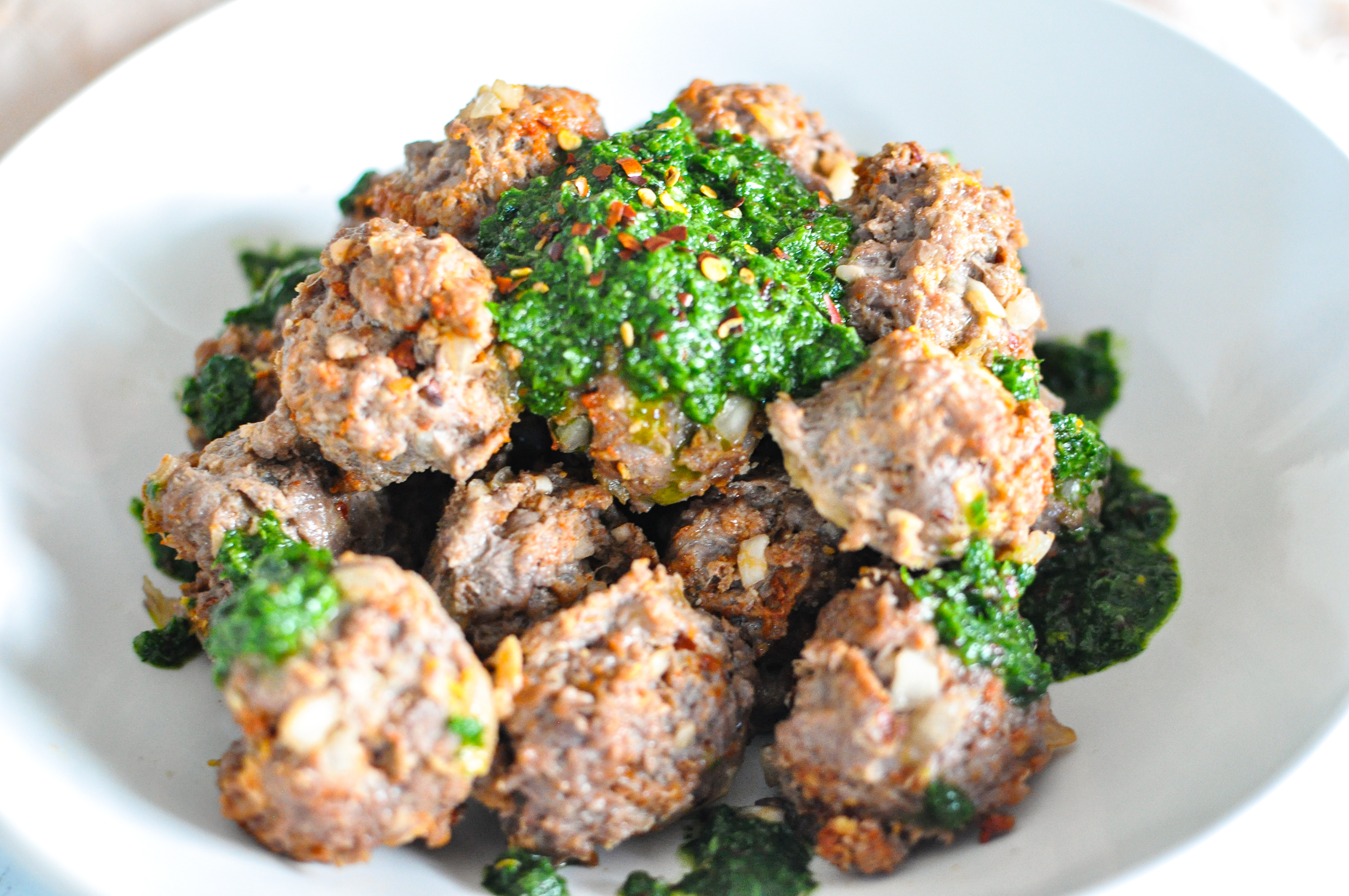
This recipe is paleo, low carb, and keto-friendly. You can pair it with any vegetables you’d like – but I think it goes especially well with zoodles or leafy greens!
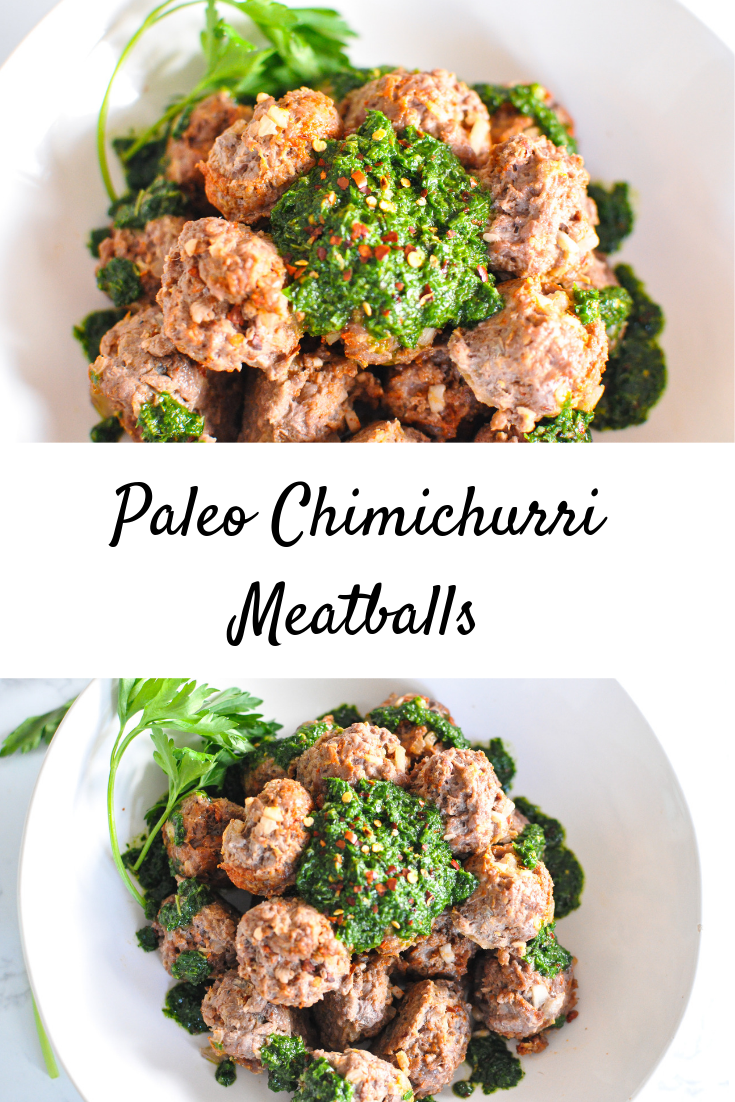
Paleo Chimichurri Meatballs
Yield: 20 meatballs
Time: 25 minutes
Ingredients:
Meatball Ingredients:
- 1 lb ground beef
- 1/2 an onion, minced
- 2 tsp almond butter
- 1 tsp red pepper flakes
- 1.5 tsp minced garlic
- 1 tsp sea salt
- 1 tsp fish sauce
- ½ tsp smoked paprika
Chimichurri Sauce:
- 2 cups packed parsley
- 1 cup cilantro
- 1/4 cup oregano
- 1 tsp minced garlic
- 1/4 cup red wine vinegar
- 1/2 cup olive oil
- 1/2 tsp red pepper flakes
- 1/4 tsp cumin
- 1/2 tsp sea salt
Instructions:
- Preheat your oven to 400*F. Line a baking tray with parchment paper.
- Mince your onion and garlic. Mix all of the beef ingredients together in a big mixing bowl.
- Scoop the meatball mixture into balls. Add the balls to the sheet pan, and bake for 12-15 minutes (or until a thermometer registers 160*F).
- While the meatballs are baking, add all of the chimichurri sauce ingredients to a food processor and process until smooth. If you need more liquid to process, add a tad more olive oil and / or vinegar. Scrape the sides as needed, taste to see if you want more seasoning, and feel free to adjust if needed.
- After the meatballs are done baking, serve with the chimichurri sauce!
by Christina | Jul 7, 2019 | Wellness
(If you haven’t read my blog from last week about starting to write more personal updates / diary-style / random reflection posts again, make sure you check this one out.)
The last week hit me like a big yellow school bus.
I got home from my trip to Denver a week and a half ago (which was wonderful, by the way), and immediately came down with a bad case of food poisoning. Yikes.
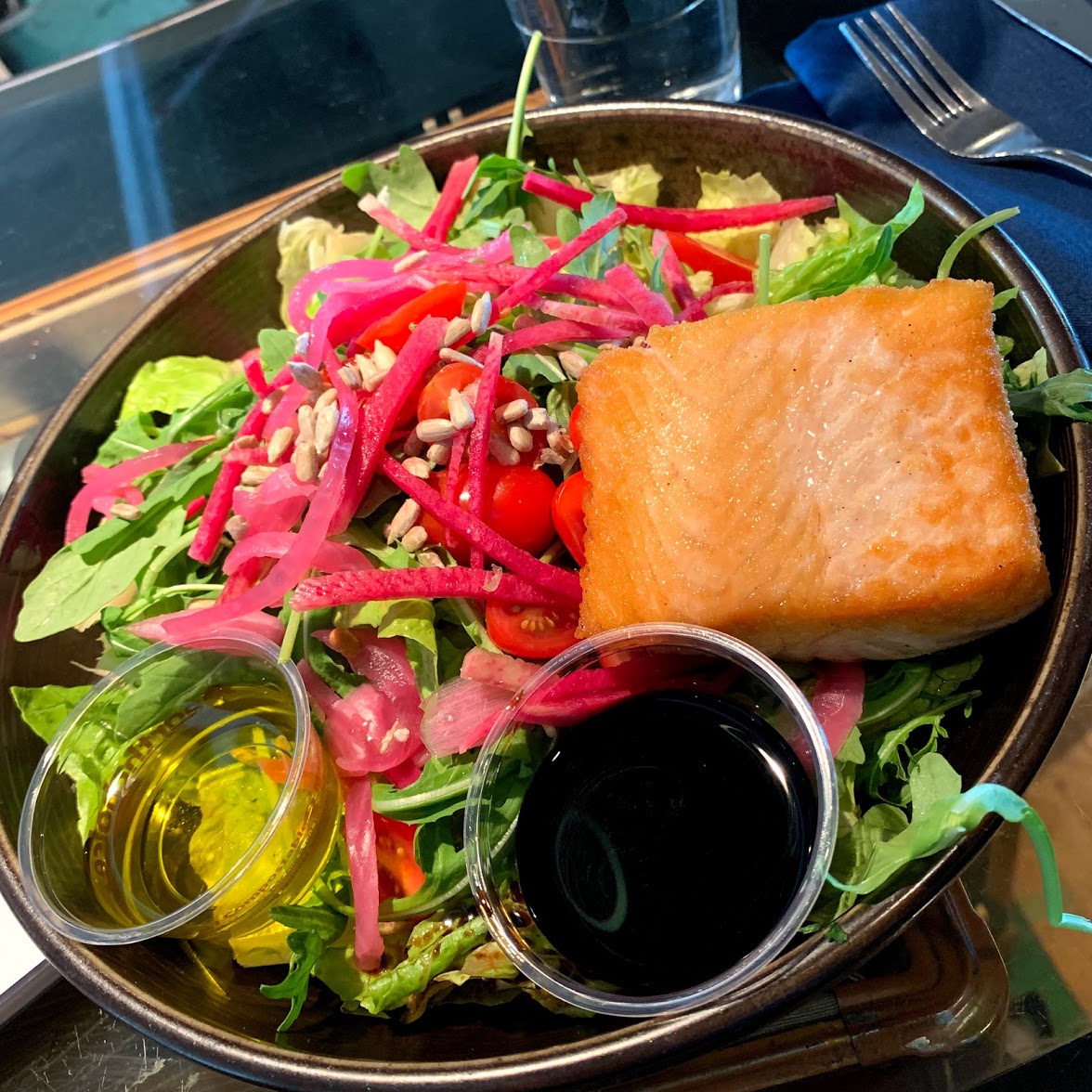
I am 99% sure I got the food poisoning from the salmon on this salad from Root Down at the Denver airport. I know, I know – don’t eat fish at the airport. But Root Down is a pretty nice restaurant, and I didn’t get a chance to visit the original restaurant during my trip, so all of my friends recommended I go to the restaurant at the airport because it was basically the same thing. Root Down in the airport is a sit-down, nice restaurant, so I didn’t feel like I was getting sketchy food. The ironic thing is that I chose this salad thinking I was “playing it safe” instead of getting something more adventurous because I just wanted a simple meal after 5 days of restaurant food.
So much for playing it safe!
Anyways, when I got home that night I made myself a lovely, home-cooked dinner that included a lot of kabocha squash and chicken, and I wanted a good night’s sleep because I knew I had a long week ahead. Whenever I get back from travel I’m extra exhausted and have about twice as much work to catch up on, so I needed to be in the zone. Unfortunately, I didn’t sleep at all that night because I felt so nauseous, got sick by the morning, and spent the next two days with a fever, unable to get out of bed. I quite literally felt like I got hit by a bus.
That might have been the universe’s way of forcing me to slow down, because I had actually decided to schedule in a day of complete rest the weekend after I got back home. First, though, I had to crack down on my to-do list of about 50 things, but I definitely couldn’t get to them once the food poisoning hit me. Thank you, universe. I am generally the kind of person who can’t be stopped by anything, so you know I’m feeling really bad if I can’t even check my emails. It took me a full 12 hours to record 5 minutes of a podcast intro because I pretty much kept falling asleep for an hour after every 20 seconds of recording. (That math definitely doesn’t work out, but you get my point.) I was not feeling like myself, to say the least. I could also pretty much only stomach apple sauce, paleo bread (this is the kind I like), and sliced turkey deli meat.
I was back on my feet in about 3 days, but my stomach took about 5 or 6 days to get back to normal. For about 6 days, I truly thought I was never going to be able to look at a vegetable again, which was very concerning. Don’t worry, though – all is well now.
Part of why the food poisoning hit me so hard was because it emotionally took me back to 4 years ago when I had my “trigger episode” that really launched the worst part of my health struggles. I ate some froyo, got some type of food poisoning (years later discovering it was a parasitic infection) that made me extremely ill for over a week, and after that my gut stopped working properly. I couldn’t digest food, I dropped down to 73 pounds despite eating 8,000-10,000 calories a day, and my whole life felt like it was spiraling out of control. I truly didn’t know if I was going to survive, and doctor after doctor told me I was a mystery case and there was nothing they could do for me. Good times.
Anyways, I have come a long way since then, and I also have not been that sick since then. This stint of food poisoning reminded me of that trigger episode, and for a moment it felt like total deja vu. I thought, Have I been here before? Is it happening again? That whole experience four years ago left me with some type of PTSD (I know that is a serious term, and I use that term because that is what both my psychologist and psychiatrist at the time used to describe what I experienced), and certain feelings, objects, and emotions can bring me back there. It’s a very uncomfortable place to be. But it was good to tap back into that fear again, because I was able to show my brain that this was not the same as last time, and it wasn’t going to happen again. It was just a brief, unfortunate food poisoning accident that lasted a few days, and it wasn’t going to flip my life upside down like what happened four years ago. It’s easy to shy away from uncomfortable thoughts and feelings, but it’s actually most beneficial to sit with those emotions and use the experience to shift any negative brain pathways.
And it didn’t flip my life upside down. I feel fine now. I definitely need some extra gut love after the food poisoning, so I’m supporting myself as if I have leaky gut for the next 1-2 months, just to heal and seal my gut. I was a little frustrated that I had sent in a GI map literally the week before this happened, but such is life.
Anyways, it ended up being a blessing in disguise. First of all, it forced me to lay in bed and sleep, which I needed. Second, that experience helped teach my brain that what happened before (when I got sick in college) would not happen again. Third, it ended up being a very useful, although strange, sort of elimination diet for me.
I toy around a lot with my diet, as I’m sure you know, and the last two months I’ve been eating very high carb (for me, that is), and much lower in fat than I typically do. It’s a total 180 from how I’ve eaten the last four years of my life, but I’ve been having a lot of fun with it and really enjoying it. It cracks me up how shocked my friends are – they are definitely not used to me eating this way. I’ve been feeling great in a lot of ways, but I could definitely tell I was intolerant to some foods I was eating, so I needed to figure out exactly what they were.
That’s why this ended up being a helpful kind of elimination diet. I could only stomach a few foods for a few days, and during that time my inflammation decreased by a lot, so I used the reintroduction process as an opportunity to figure out what has been making me more inflamed recently.
I found out that some of the foods that I’ve been eating every single day were giving me issues – including chicken and certain kinds of squashes. It was very sad to face this, but I’m so glad I found out because I was eating chicken and squash every single day, with almost every single meal.
Even though it wasn’t the most ideal route to get there, there were some benefits to getting food poisoning. I have been feeling much better since cutting certain foods out of my diet in the last week, and I’ll probably need to keep them mostly out until I’ve supported my gut more. I never would have figured out those intolerances had I not gotten sick and felt nauseous from so many foods for those few days!
So, there is the silver lining in the experience! There always is. I plan on writing a post that goes more in-depth about my transition from a low carb to higher carb diet, because it’s been a huge change for me (one that you’re probably shocked by if you’ve followed along for awhile), and I’m loving it. Also, for anyone struggling with chronic illness, remember that just because you used to be “the sick one” doesn’t mean you will be forever. I could’ve wallowed in the food poisoning and took it as a sign that I will keep getting sick and always will, creating a self-fulfilling prophecy, but I’ve rewired by brain to know otherwise. There’s major freedom in that.
In the meantime, I’ll be focusing mostly on turkey, salmon, beef, and eggs as my protein sources, and switching up my veggies and fruits. I was so scared I would never be able to eat kabocha squash again since that’s the food I ate right before I got sick, which would be a tragedy since I adore kabocha. I can definitely look at kabocha squash again, but it might be awhile before I’m ready to swallow it! 😉
